KC Animal Health Corridor touts region’s biggest strengths: talent, industry leaders
September 1, 2026 | Nikki Overfelt Chifalu
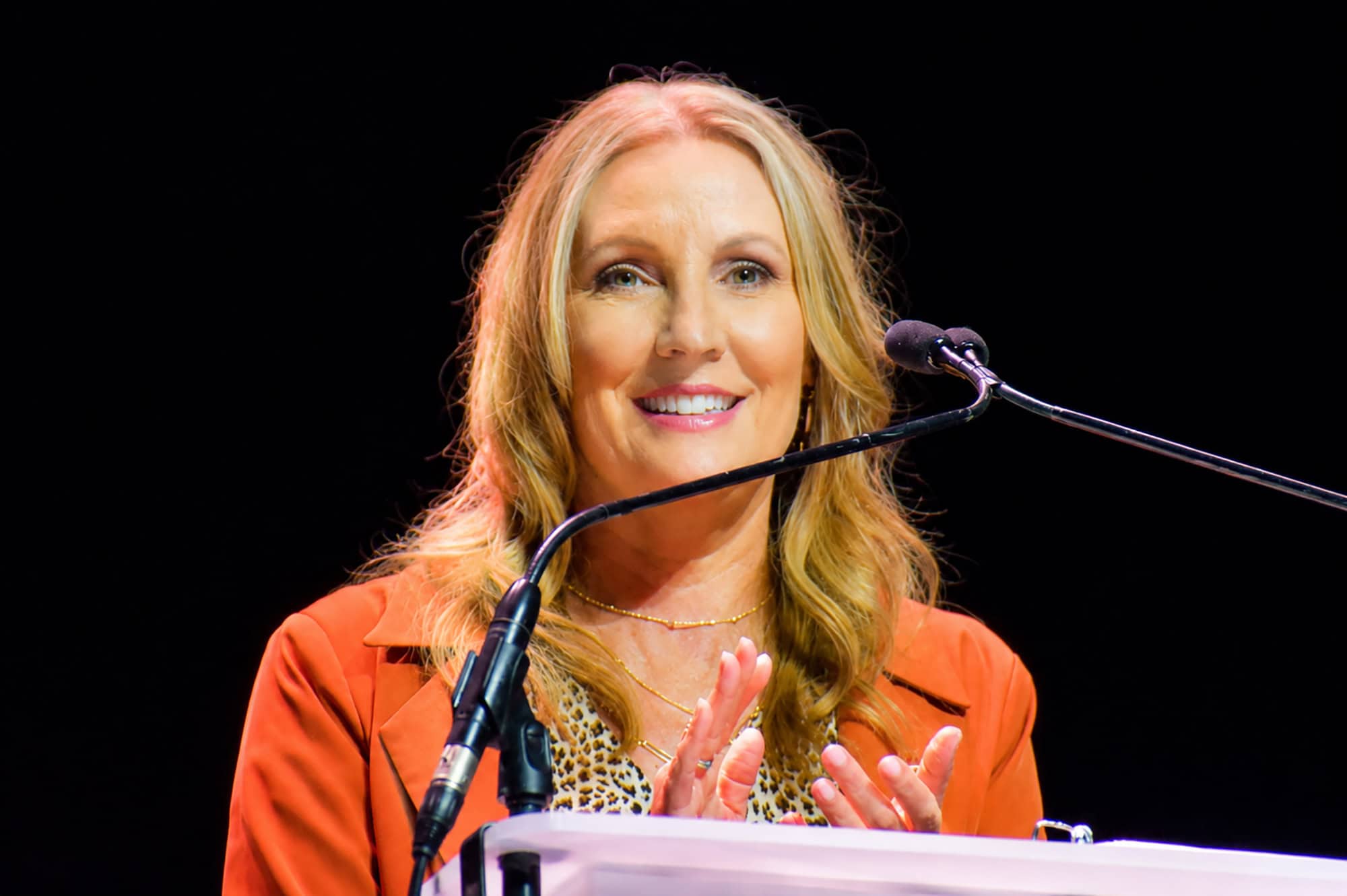
Kimberly Young, president of the KC Animal Health Corridor, speaks during the annual Animal Health Summit; photo by Nikki Overfelt Chifalu, Startland News
Champions don’t emerge in isolation, said Kimberly Young, emphasizing that at a time when protecting the food supply and promoting public health have become critical priorities for the nation, Kansas City’s innovation ecosystem powers the heart of the region’s animal health corridor.
“(Champions) grow in places where ideas are supported, where talent is concentrated, and where relationships are strong, and collaboration just comes more naturally,” said Young, president of the KC Animal Health Corridor.
Industry and regional leaders gathered Monday for the organization’s Animal Health Summit at the Midland Theatre — an annual gathering centered on strengthening sustainability, advancing animal care, and recognizing trailblazers supporting wide-ranging efforts that have come to define the animal health corridor.
“This event has served as a stage for innovation, a catalyst for connection, and a reflection of the strength of our industry,” Young said.
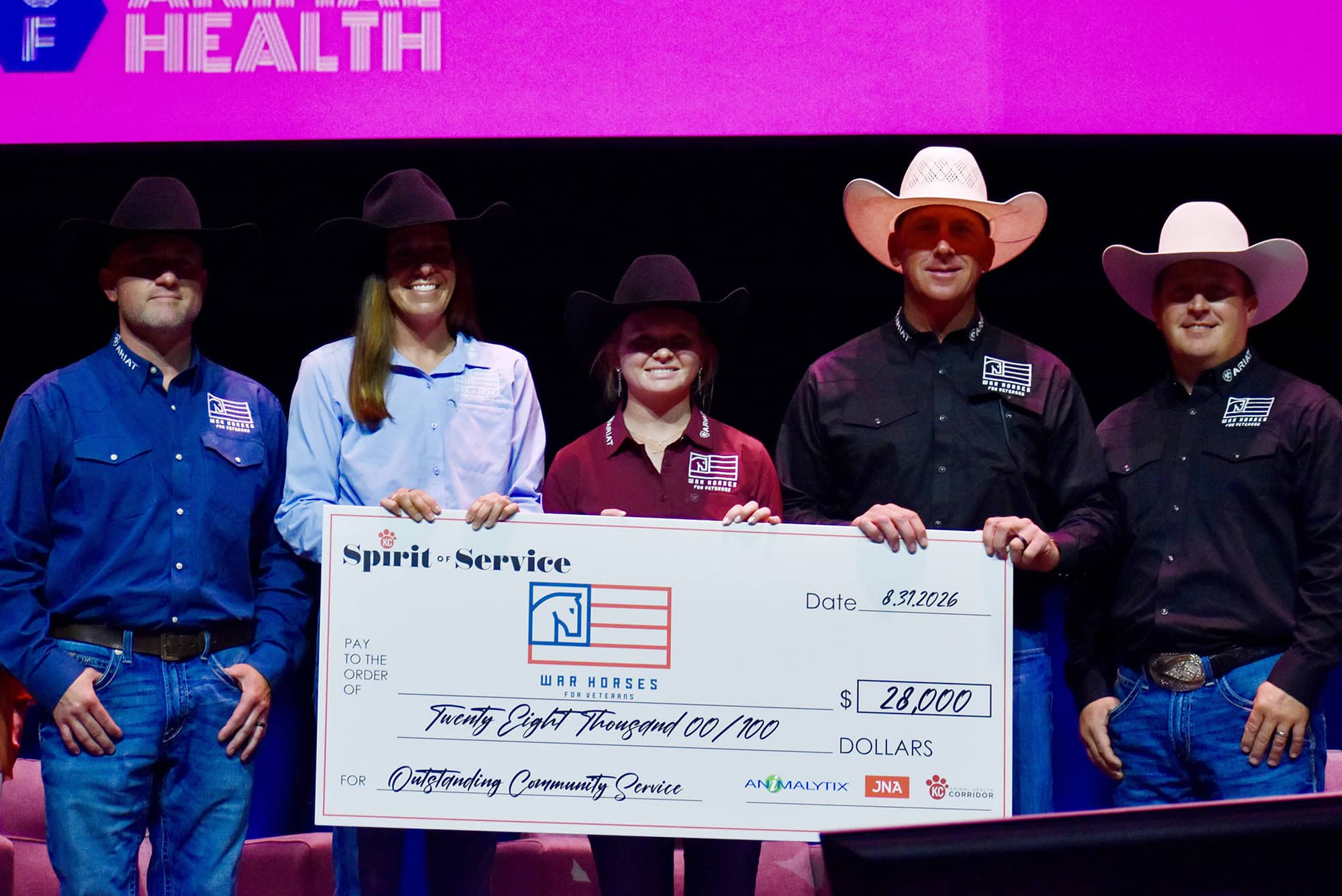
Representatives of War Horses For Veterans accept the Spirit of Service award during the KC Animal Health Corridor’s Animal Health Summit; photo by Nikki Overfelt Chifalu, Startland News
Stillwell-based non-profit War Horses for Veterans — which equips combat veterans and first responders with skills for successful leadership after adversity — was recognized with the Spirit of Service award and a $28,000 donation.
“War Horses for Veterans shows us how powerful the bond between animals and people can be in restoring strength, purpose, and hope,” said Shannon Kellner, chair of the advisory board for the KC Animal Health Corridor and vice president of U.S. Livestock Business for Merck Animal Health.
Being able to partner alongside leaders within the region is imperative to the success of the nonprofit, noted Bret Cortright, executive director for War Horses for Veterans.
“Having support from the Animal Health Corridor is only going to help us grow internally, externally,” he explained, “being able to help more people, being seen, being understood, and also recognized for doing the right thing.”
Organizations like War Horses for Veterans can benefit from the unmatched geography of the corridor — which stretches from Manhattan, Kansas, to Columbia, Missouri, and from Emporia, Kansas, to St. Joseph and Maryville, Missouri — with the world’s largest concentration of animal health businesses and assets, Young said.
More than 300 companies and 20,000 people work in animal health within the region, representing 56 percent of total animal health, diagnostics, and pet food sales worldwide, she added.
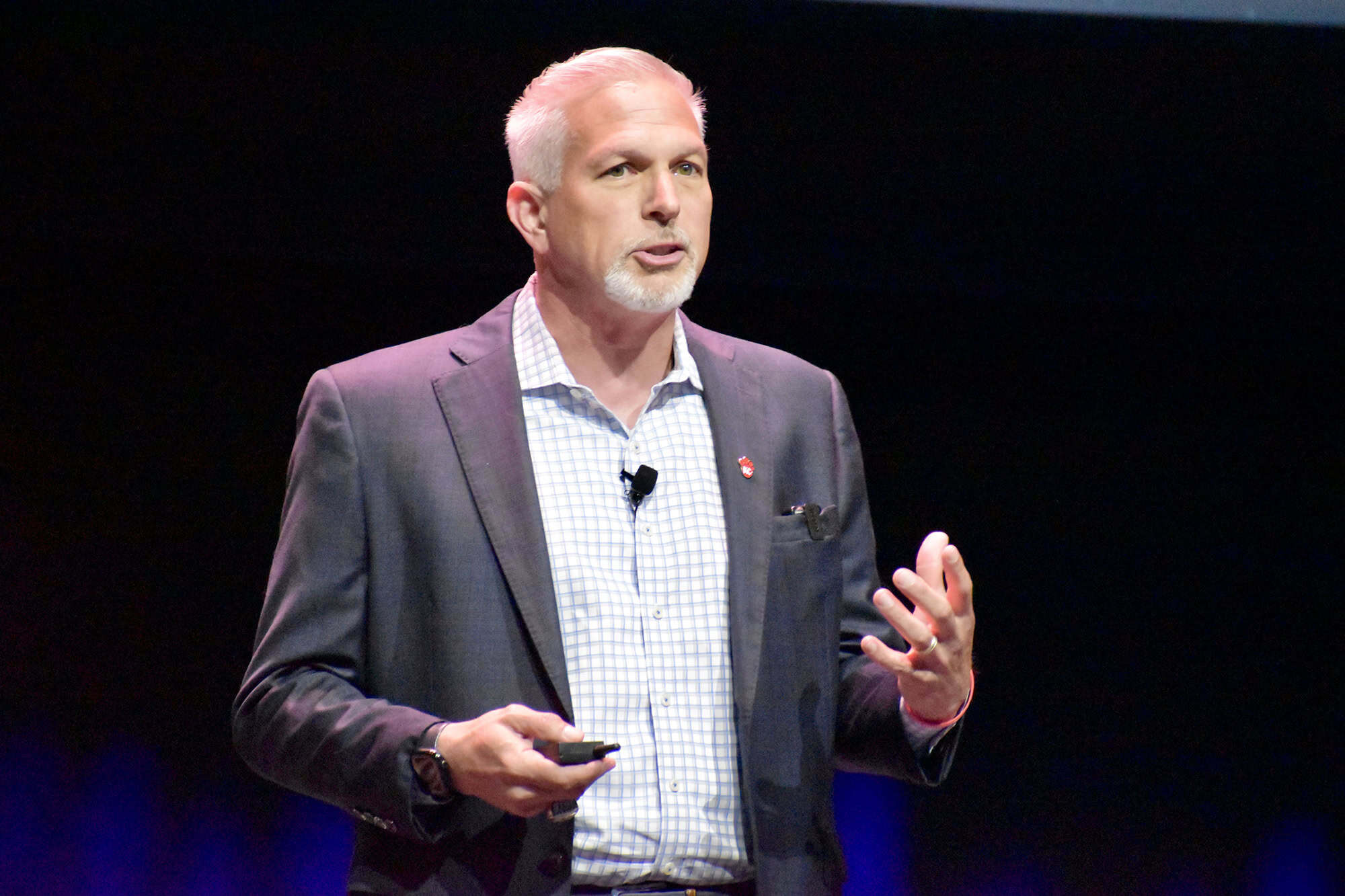
Sports broadcaster Joel Goldberg delivers a keynote during the KC Animal Health Corridor’s Animal Health Summit; photo by Nikki Overfelt Chifalu, Startland News
“Concentration creates connection, connection creates opportunity, and opportunity creates the conditions for innovation, growth, and long-term success,” Young explained. “This is more than a region on a map. It is a connected ecosystem of global companies, emerging innovators, research institutions, investors, specialized service providers, and workforce talent that all come together and are working in and around animal health.”
That kind of density is not common and it gives this region a distinct advantage,she noted.
“It means entrepreneurs can find mentors, partners, and customers,” Young continued. “It means companies can access specialized expertise. It means students and professionals can see career pathways, and it means industry leaders can come to one place and find the relationships, insights, and momentum that help move ideas forward.”
Those connections are on display at the Animal Health Summit, which brings together leaders from global companies, emerging innovators, investors, and strategic partners from within the industry for two days of networking and programming.
Highlights of the summit included a keynote from Emmy-winning broadcaster Joel Goldberg about the role trust plays in building strong teams, lasting relationships, and respected brands; as well as panels with industry executives and investors.
Among the companies featured as part of discussions about global and consumer trends: Roeland Park-based Pawlytics, an animal welfare software platform which serves as the operating system for animal rescues and shelters, replacing fragmented spreadsheets, outdated legacy tools, and manual workflows.
RELATED: Rescuing a dream: Why Lizz Whitacre sees a future for shelter pets in Pawlytics
“They bring vision, determination, and the willingness to take real risk in pursuit of progress,” Young noted of the emerging companies. “Past participants in this program have gone on to raise nearly a billion dollars, secure licensing and development deals, complete acquisitions, and build the relationships needed to advance their technologies.”
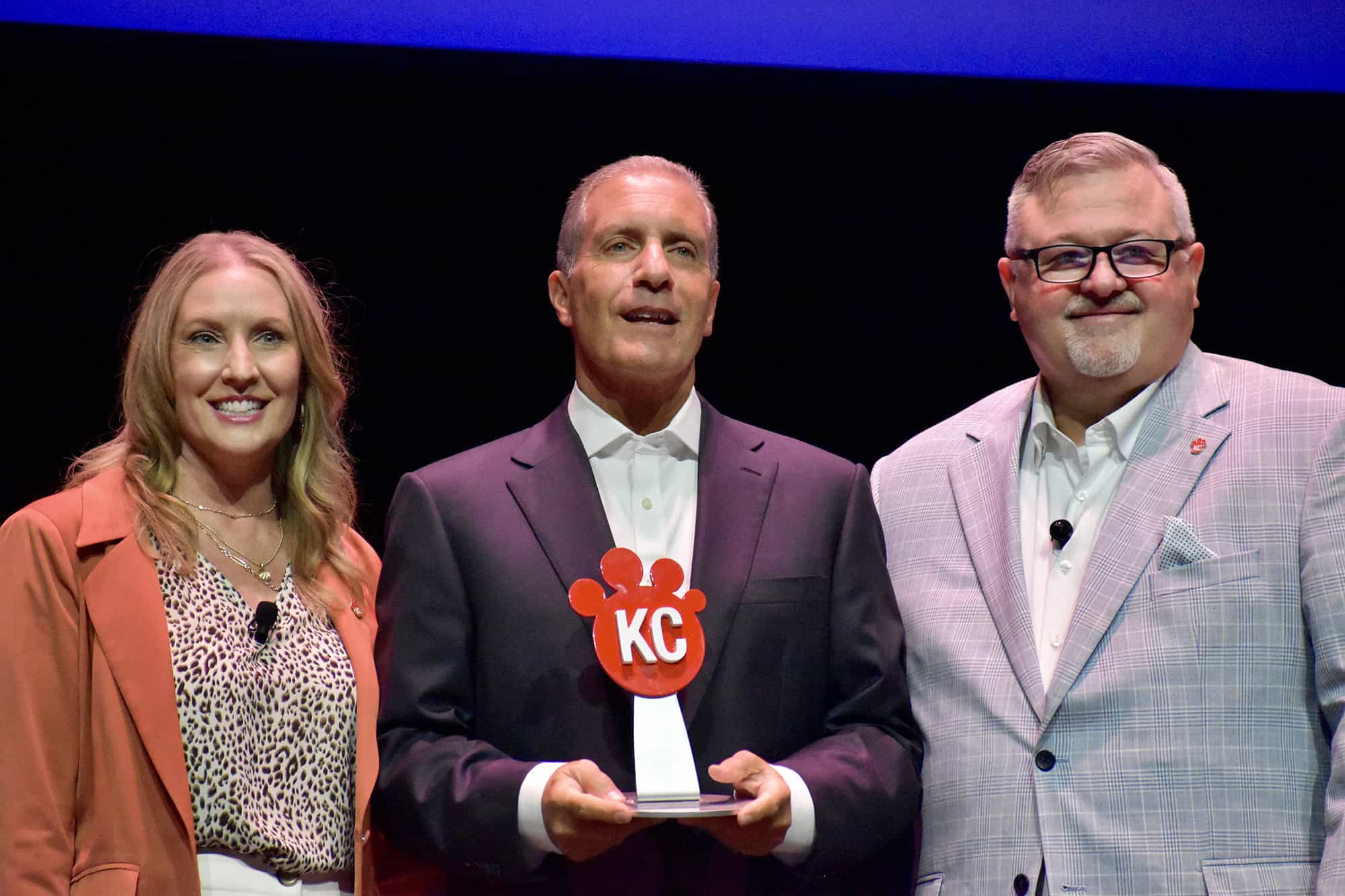
Rick DeLuca, executive vice president and president of animal health for Merck, accepts the Iron Paw award from Kimberly Young, president of the KC Animal Health Corridor, and Shannon Kellner, chair of the advisory board for the KC Animal Health Corridor and vice president of U.S. Livestock Business for Merck Animal Health; photo by Nikki Overfelt Chifalu, Startland News
On the corporate side of innovation, a Merck executive was honored during the summit’s Impact Awards ceremony.
The Iron Paw award — recognizing an individual whose contributions have made a significant and lasting impact on the global animal health industry — was awarded to Rick DeLuca, executive vice president and president of animal health for Merck.
“It is the highest individual honor presented by the KC Animal Health Corridor and it recognizes excellence across research, academia, industry, and government,” Young explained. “Rick’s career reflects many of the qualities this year’s theme is meant to honor: leadership, vision, dedication, service, and lasting impact.”
Fund More Stories
This story was made possible by readers like you. Join them — make a one-time contribution or become a monthly member to sustain our work.