Closing time: KC nixes 23-hour drinking plan for World Cup; select bars, restaurants can stay open until 5 am
May 15, 2026 | Tommy Felts
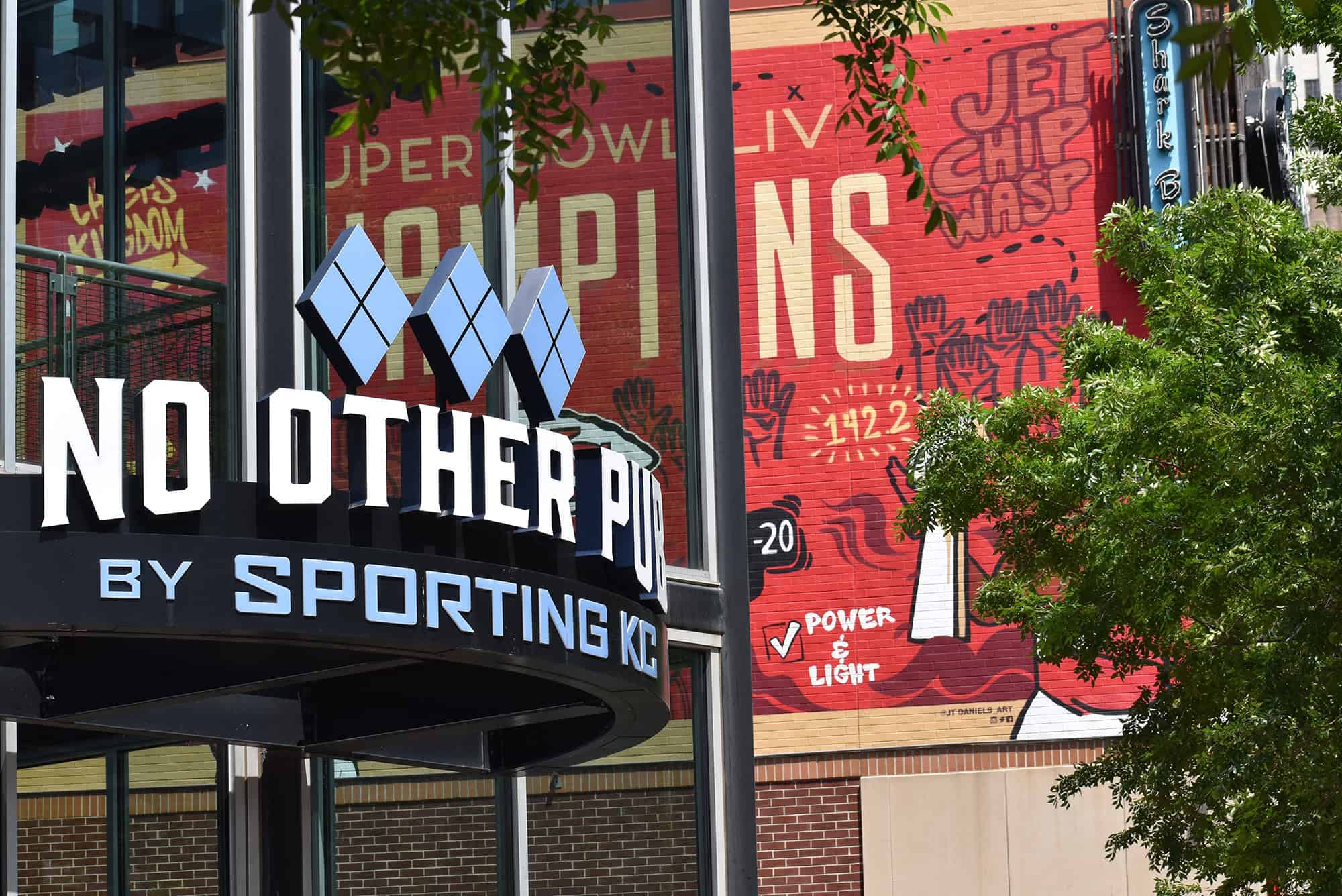
No Other Pub in the Power & Light District, May 2026; photo by Austin Barnes, Startland News
A measure allowing extended World Cup hours for Kansas City bars and restaurants — while cutting short the 23-hour drinking window opened by state law — is being viewed as a common-sense compromise by hospitality leaders and safety advocates.
Mayor Quinton Lucas said the move tailors hours “to local conditions, prioritizing public safety and economic opportunity.”

A Kansas City soccer fan holds a beer in the air, cheering the city’s selection in June 2022 as a host city for the FIFA World Cup in 2026; photo by Channa Steinmetz, Startland News
The city council for Kansas City, Missouri, on Thursday passed a World-Cup-specific ordinance setting a 5 a.m. closing time for establishments licensed to serve alcoholic beverages in the city’s entertainment districts — including the Riverfront, River Market, West Bottoms, Downtown-Power & Light, Midtown, Crossroads, 18th and Vine, Westport, and Country Club Plaza.
Participating businesses must first submit security plans describing how they will mitigate risks associated with extended operating hours, including potential impacts on the surrounding area. Security plans will be reviewed by the city and Kansas City Police Department.
“Kansas City is ready to host the world, and we want our restaurants and bars to be part of that celebration,” said Lucas. “The ordinance expands opportunity for our businesses while ensuring the police department, first responders, and the City have the tools to keep residents and visitors safe.”
All bars and restaurants across Kansas City that are licensed to serve alcohol are allowed to stay open until 3 a.m. under the plan. (Standard hours are typically limited to 1:30 a.m. and 3 a.m., depending on the business.)
Businesses are not required to extend hours.
Representatives from MOCSA (Metropolitan Organization Countering Sexual Assault) were pleased the city is requiring businesses to consider plans for security, and encouraged even greater proactive steps to safeguard residents and visitors.
“MOCSA recognizes that the World Cup presents an important opportunity for bars and restaurants to welcome visitors and benefit from increased economic activity,” said Julie Donelon, president and CEO of MOCSA. “At the same time, we know alcohol is frequently involved in sexual violence cases, and extended hours may create environments where people are more vulnerable to harm. Our concern is not with responsible alcohol consumption or local businesses, but with ensuring safety planning keeps pace with increased activity.”
Ahead of the World Cup, MOCSA has been working with bars and restaurants across the metro through its free SAFE Training program, which equips staff to recognize concerning situations, intervene effectively, and support survivors. Nearly 50 establishments and counting have already completed the training.
ICYMI: Hospitality workers learning to play defense during World Cup
“MOCSA welcomes consideration of SAFE Training as one component of security plans for establishments seeking extended operating hours,” Donelon said.

Mayor Quinton Lucas cheers alongside fans June 16, 2022, at Power & Light as news breaks that Kansas City will host during the 2026 World Cup; Photo by Channa Steinmetz, Startland News
Hours of opportunity
Missouri Gov. Mike Kehoe signed a statewide exemption in July 2025 allowing bars and restaurants across Missouri to serve from 6 a.m. to 5 a.m. from June 11 to July 19, 2026, in anticipation of the FIFA World Cup.
Backed by the Greater Kansas City Restaurant Association, the unprecedented move was meant to target sales to fans — especially out-of-town visitors — who might venture into local businesses hoping to watch live broadcasts from other host cities in wildly different time zones.
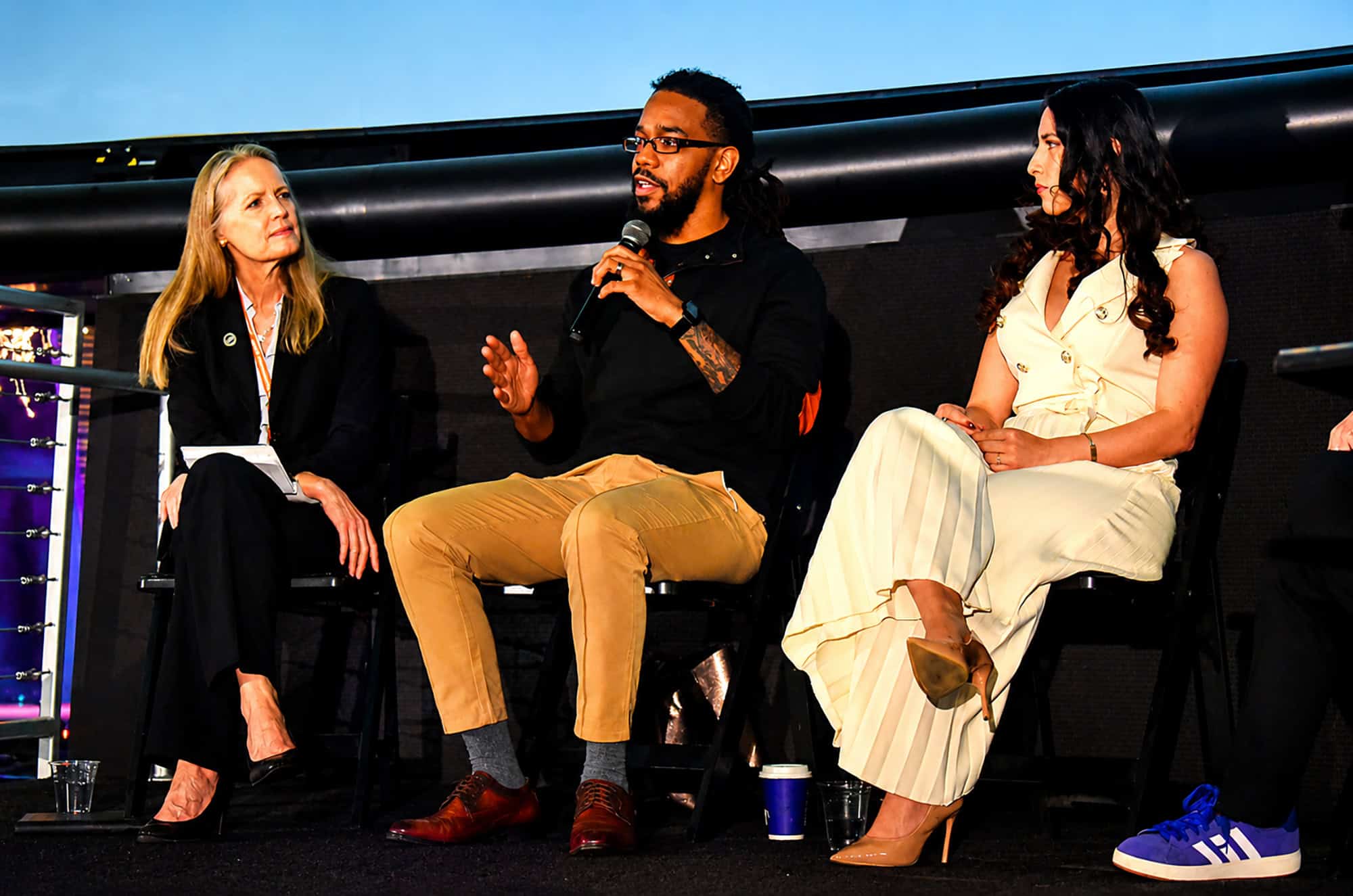
Alan Kneeland, The Combine KC, center, speaks during a panel conversation about World Cup business opportunities in the Planetarium at Union Station during GEWKC; photo by Tommy Felts, Startland News
Kansas City’s update mirrors the intent of the original exemption, simply shortening the window.
“For me as an operator, if I have a crowd of fans in my establishment — either watching a game or celebrating afterward — I don’t want to have to kick them out,” Alan Kneeland, owner of The Combine, told Startland News in November, shortly before the World Cup match schedule and base camps were announced.
RELATED: KC preps for World Cup all-nighter, taste testing 23-hour drinking window for summer games
“We want to welcome all these different cultures and put Kansas City on the global map in a way that we haven’t before,” continued Kneeland, who also served as chairman of the restaurant association. “To do that, we need to be able to give them a taste — through our restaurant, bars and businesses — of our culture, of our offerings. We want them to see what Kansas City can do with this big of a crowd.”
Other World Cup host cities saw similar opportunities. Philadelphia extended last call to 4 a.m. Boston is keeping closing time at 2 a.m., while nearby Providence, Rhode Island is allowing 23-hour sales. Atlanta is sticking to a 2 a.m. cut-off, but opening a downtown “public entertainment district” where fans and revelers can drink on designated sidewalks and streets.
Kansas passed legislation mirroring Missouri’s 23-hour plan — signed into law by Gov. Laura Kelly — in March, but the Sunflower State version requires local municipalities to opt-in to the extended hours for businesses to participate. Park City, Kansas — near Wichita — approved the allowance Tuesday.
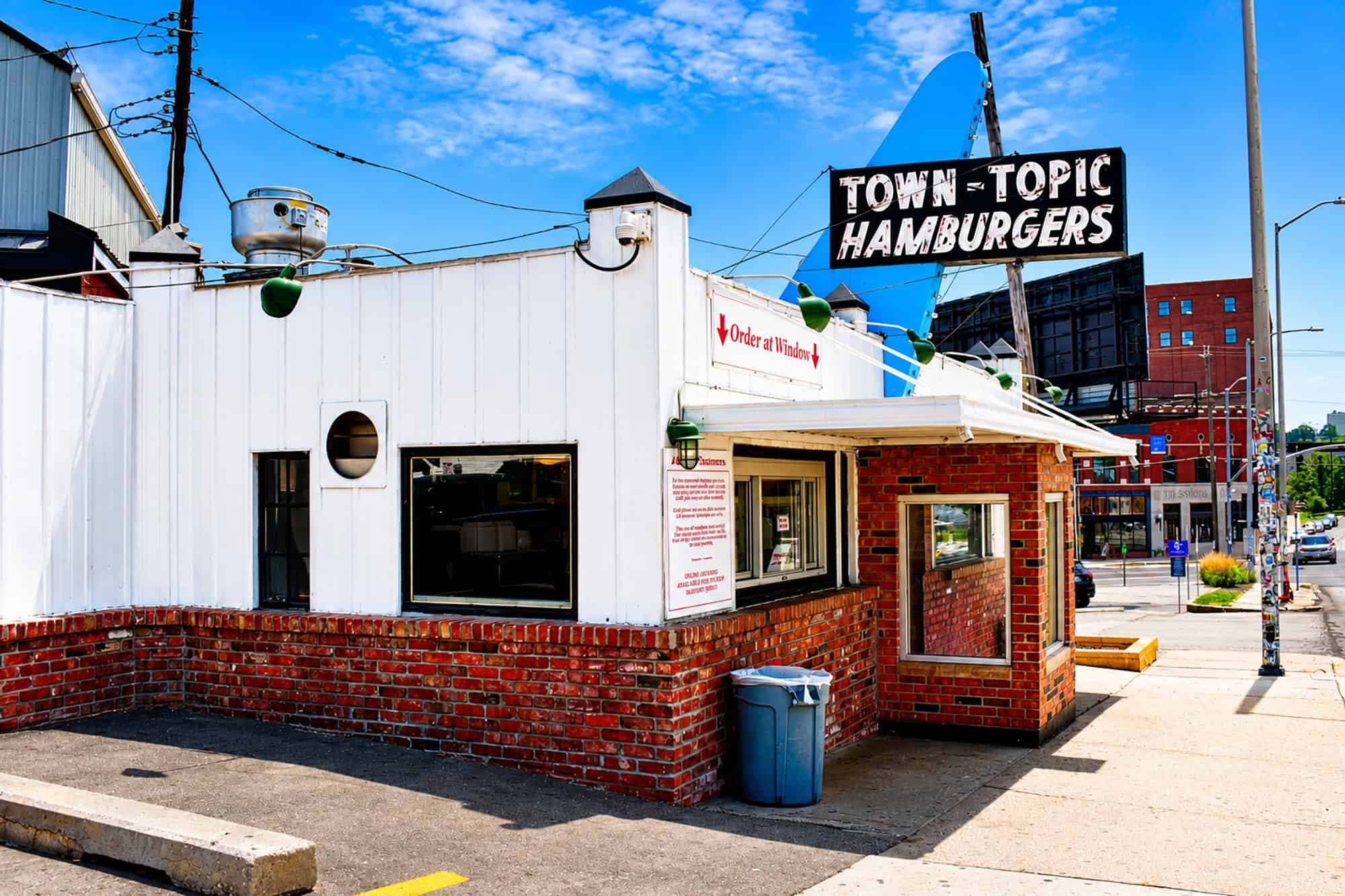
Town Topic Hamburgers at 2021 Broadway St.; photo by Taylor Wilmore, Startland News
Public safety concerns
News of the extended hours for Kansas City’s bars and restaurants comes just days after a Crossroads mainstay and late-night destination announced it was ending its popular 24/7 service because of violence in the area and a lack of response to the business’ pleas for help.
Town Topic Hamburgers this week told customers it would begin closing at 8 a.m. at its 2021 Broadway St. location out of concern for its employees safety in the wake of a fatal April shooting in the immediate neighborhood and ongoing unruly behavior in nearby vacant parking lots.
“We have reached a point where we don’t feel comfortable to serve our customers during overnight hours,” Town Topic said in a Facebook post.
RELATED: Mayor Lucas responds to Town Topic’s decision to close early
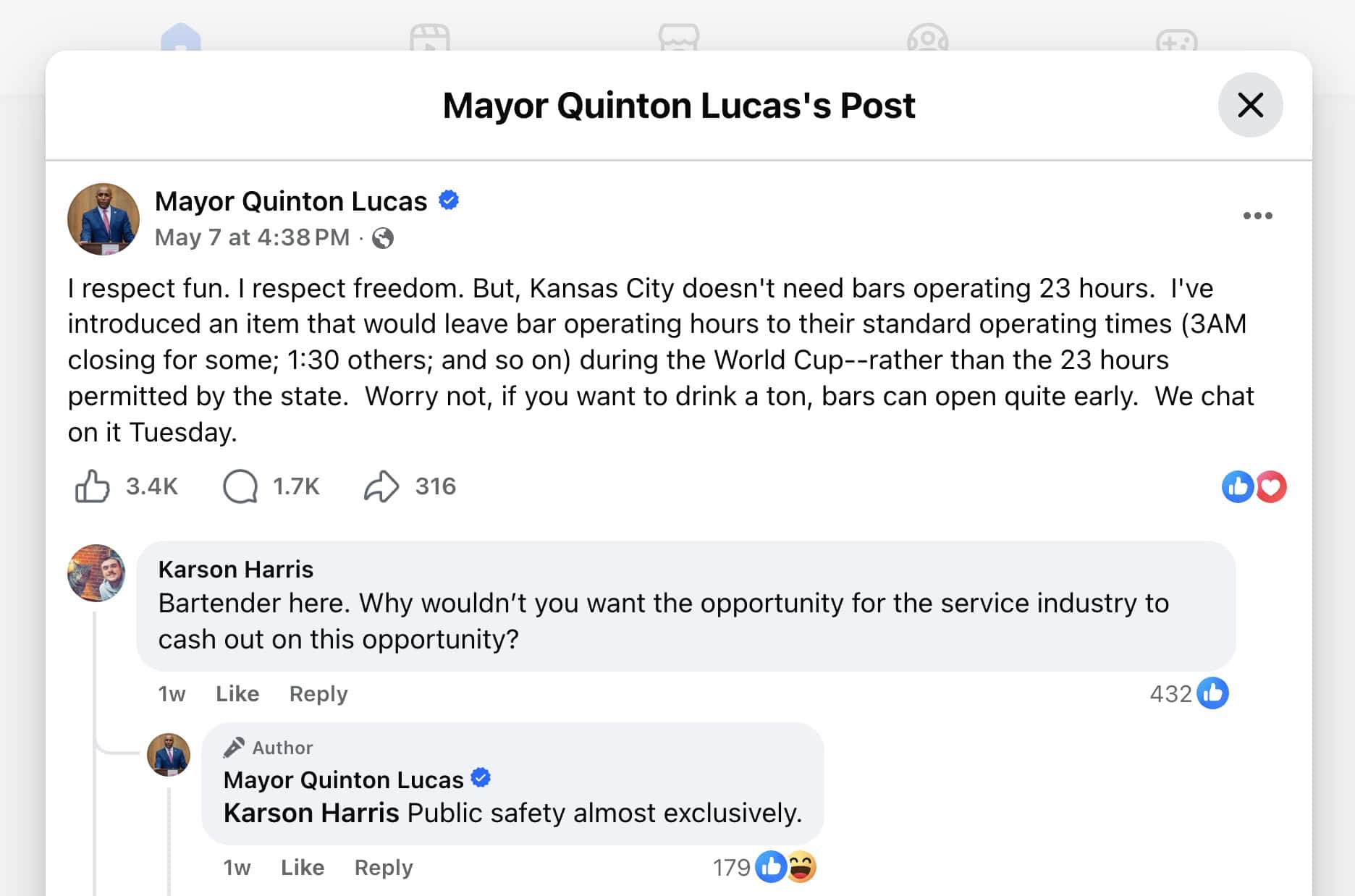 Worries about violence and criminal behavior were among the considerations that pushed Lucas to propose taking a harder-line stance on alcohol sales during the World Cup.
In a May 7 social media post, the mayor indicated he planned to limit hours beyond what was allowed by state law.
“I respect fun. I respect freedom. But, Kansas City doesn’t need bars operating 23 hours,” Lucas said. “Worry not, if you want to drink a ton, bars can open quite early.”
Concerns about the 23-hour exemption in Kansas City didn’t come out of the blue.
In early April, Nia Webster, assistant director of the neighborhood services department for the city of Kansas City, Missouri, said city leaders were making plans for both proactive support and response to the threat of violence and vandalism at small businesses during the World Cup.
“I’m just very, very concerned that with so many people descending upon us and what that looks like when you have 23-hour liquor sales going on,” Webster told a crowd gathered for World Cup readiness panel conversation convened by Startland News and Bank of America. “Are we ready and prepared for what might happen to our businesses if a team loses?”
ICYMI: KC’s readiness is a team sport: Why cashing in requires World Cup collaboration
The plan approved Thursday reflected a softer tone than some expected after Lucas’ more recent comments.
Business owners like Jill Cockson, the James Beard-nominated owner of Chartreuse Saloon who said she’d been in contact with the city council, would’ve preferred the city kept Kansas City bars and restaurants at standard operating hours.
“There’s not a single, responsible bar owner I have spoken with who thinks a 23-hour bar allowance is a good idea. Most don’t have the ability to simply double staff for five weeks,” she said. “So, there’s a good chance that participating bars would be operating on undertrained staff.”
Kansas City also has no late night food or public transportation to coincide with extended hours of drinking, Cockson added, noting KCPD already struggles with being understaffed.
“Public safety should come before a quick cash grab,” she said.
Nikki Overfelt Chifalu, Startland News reporter, and Haines Eason, Freelance Kansas, contributed to this report.
Fund More Stories
This story was made possible by readers like you. Join them — make a one-time contribution or become a monthly member to sustain our work.