Why KC’s international restaurants fear being overlooked by World Cup fans
May 12, 2026 | Jill Wendholt Silva
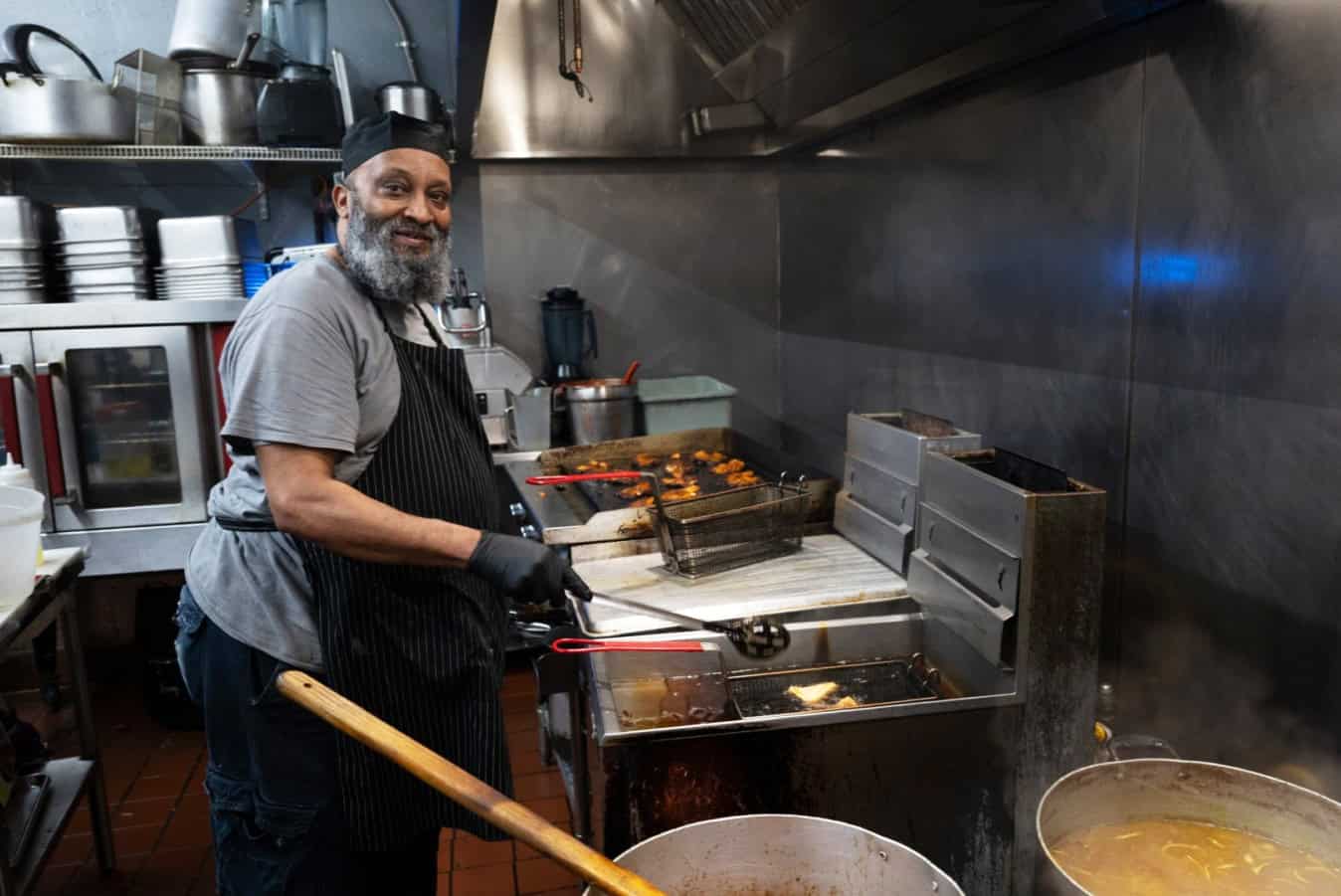
Chef-owner Abdul Hatimi of Yasmeen Cafe, located at 1447 Independence Ave., in Kansas City, Missouri, works in his kitchen recently for the lunch hour; photo by Todd Feeback, Flatland
Editor’s Note: The following story is part of a three part series on World Cup readiness in Kansas City historic Northeast. Click here to view the full series.
This story was originally published by Flatland. Click here to read the original piece.
Soccer players love suqaar.
Pronounced sooh-car, the chicken version of this traditional Somali dish is the No. 1 best seller at Yasmeen Cafe, located at 1447 Independence Ave.
Chef/owner Abdul Hatimi sautés chicken thighs rubbed with a rich mixture freshly ground from whole spices, including cumin, coriander, black pepper, cinnamon, cardamom, cloves, and turmeric. He serves it over fluffy, long-grain basmati rice.
“We know Algeria and Tunisia are playing here,” Hatimi said of the 2026 FIFA World Cup matches scheduled to be played June 16 through July 11 at GEHA Field at Arrowhead Stadium. “These are African nations, and this is the kind of food they eat. Most of (the players) like eating halal food, so if they Google up ‘halal’, we always appear on top.”
Hatimi fled his country for Kenya, then settled in Kansas City more than two decades ago to raise a family. The lifestyle here suits him better than Chicago and Atlanta, two larger cities he tried before returning to Kansas City.
A self-taught cook, he opened his restaurant eight years ago.
He is eager to welcome international tourists of every stripe and kit to his newly renovated restaurant, showcasing a bank of new windows that let more light in, gleaming white Subway tile, and handsome dark wood accents.
Independence Avenue — a stretch bisecting the Historic Northeast between The Paseo and Ewing Avenue — was once synonymous with blight and prostitution.
Hatimi wondered how out-of-towners would find their way to the much-improved corridor if many Kansas Citians themselves are unaware of its renaissance.
“The neighborhood used to be rough back in the day,” Hatimi said. “The thing that needs to be clear: They’ve cleaned it up a lot, and a good word from the city, and promotion from the city, would help a lot.”
Northeast Kansas City Chamber of Commerce (NEKC) President Bobbi Baker waited for direction from local organizers on how to prepare for the 650,000 international soccer fans projected to land in Kansas City for the international soccer tournament.
“It’s so close, and yet it feels like there’s just not a plan,” Baker said in mid-February. “We have such a diverse concentration of immigrants and refugees who don’t know how to promote themselves, so we’re starting to highlight some of the hole-in-the-wall gems that you might just walk by.”
Pounding the Pavement
Rol Diing counts himself a basketball fan because his home of South Sudan has produced some of the NBA’s top recent draft picks, but he can also discuss the rules and strategies of fútbol.
Diing escaped his war-torn country 26 years ago. He raised his three children in the Historic Northeast, a community that at the turn of the last century was home to Italian immigrants. New waves of migration from Vietnam, Mexico, Eastern Europe, Somalia, and other parts of Africa have created a melting pot.
Diing spends a portion of his workdays pounding the pavement as NEKC’s ambassador of business communications. He stops frequently to chat with business owners, the majority of whom own a restaurant, market, or food-related establishment.
Diing’s sales pitch is usually aimed at encouraging active chamber membership, but of late, his conversations have centered on ways to attract World Cup fans. Language barriers, an unfamiliarity with technology, and tight budgets can make it difficult to market beyond their own ethnic communities.
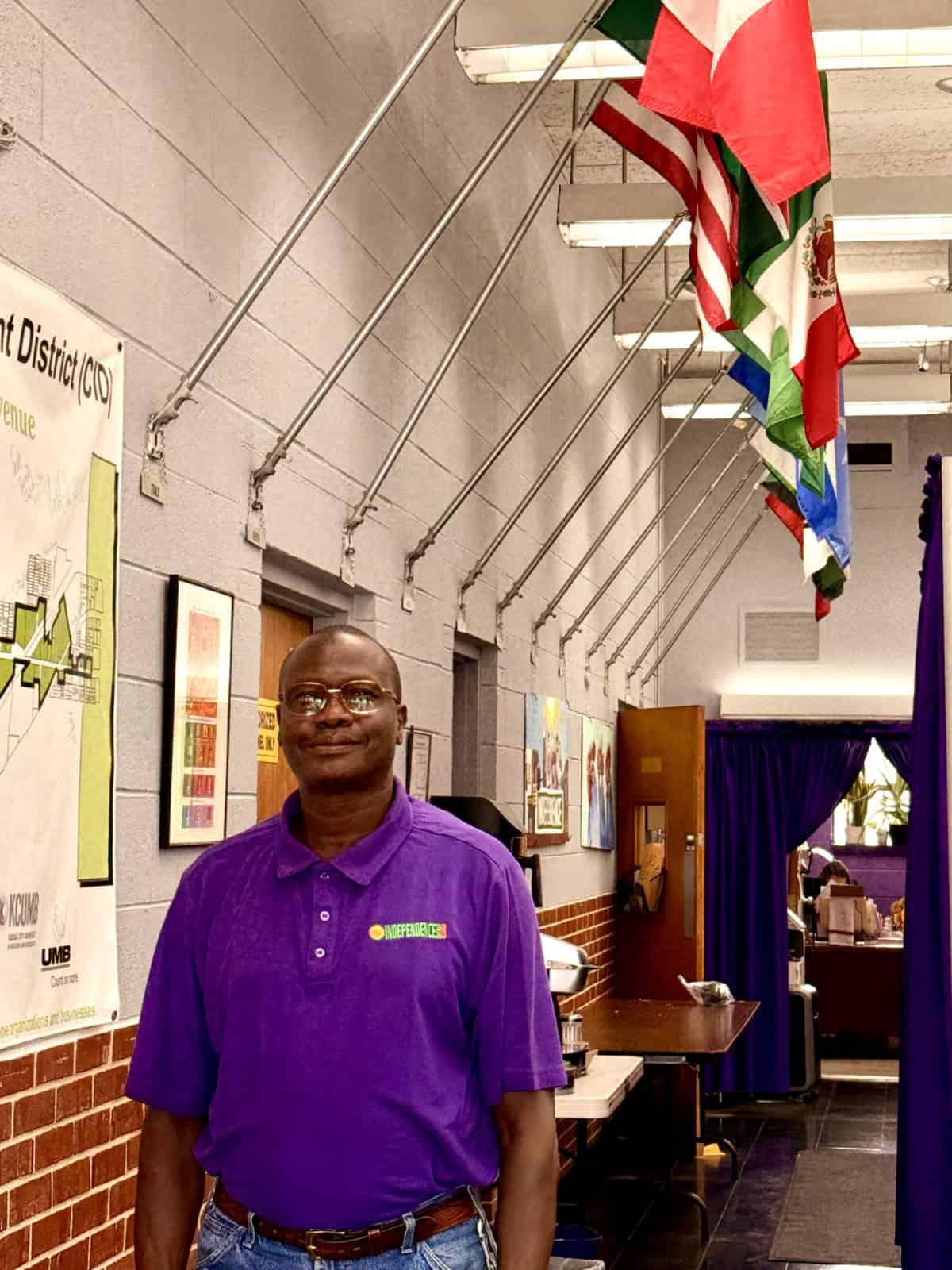
Rol Diing is working with food-establishment owners in the Historic Northeast to help them capture business during the upcoming World Cup in Kansas City; photo by Jill Wendholt Silva, Flatland
But given the right resources and support, the neighborhood’s proximity to downtown makes it an obvious and authentic choice for tourists to explore.
“My pitch (to soccer fans) is this is a diverse community, which is really unique,” Diing said. “You’ve got the whole world out there. The traditional food is here.”
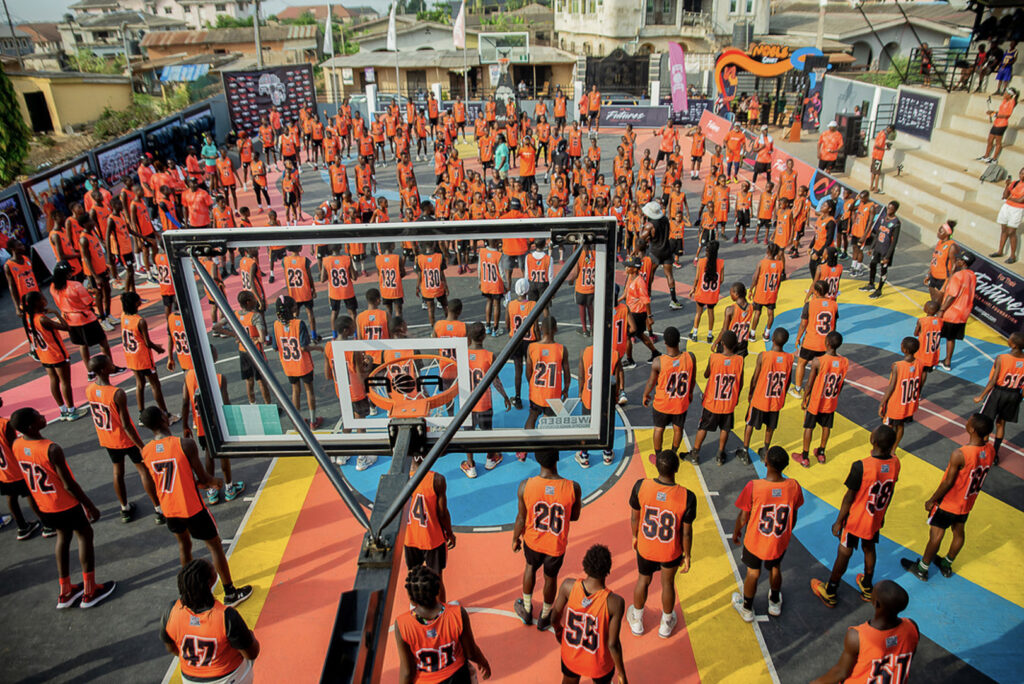
Children of the Historic Northeast grow up playing soccer, and the area recently celebrated the grand reopening of the 9th & Van Brunt athletic complex.
But that does not mean all business owners are brimming with youthful enthusiasm about the potential impacts of the World Cup, said Laura Birdsong, team resource manager for the Independence Avenue Community Improvement District.
Some are treating it more or less like any other month.
Nevertheless, Birdsong has been working to create the NEKC International Marketplace website and a downloadable phone app available on Google Play designed to help tourists navigate the neighborhood.
The app has three separate tours, including a 1.2-mile self-guided Taste of Independence route with 14 stops.
As soccer fans make their way down the avenue, they’ll spot NEKC’s Urban Street Ambassadors wearing neon yellow t-shirts. The ambassadors routinely pick up trash and tend neighborhood garden beds, flowerpots, and hanging planters, but they will receive extra training to help point fans in the right direction.
For increased safety, the CID has placed several billboards along the avenue to illustrate a hand signal that identifies whether someone is in distress and asking for help.
“We’re so culturally diverse, there is a danger of people taking advantage of (immigrants and those with limited language skills), so we’ve been focused on the possibility of increased human trafficking and being sure we’re educating people and linked up with different resources,” Birdsong said.
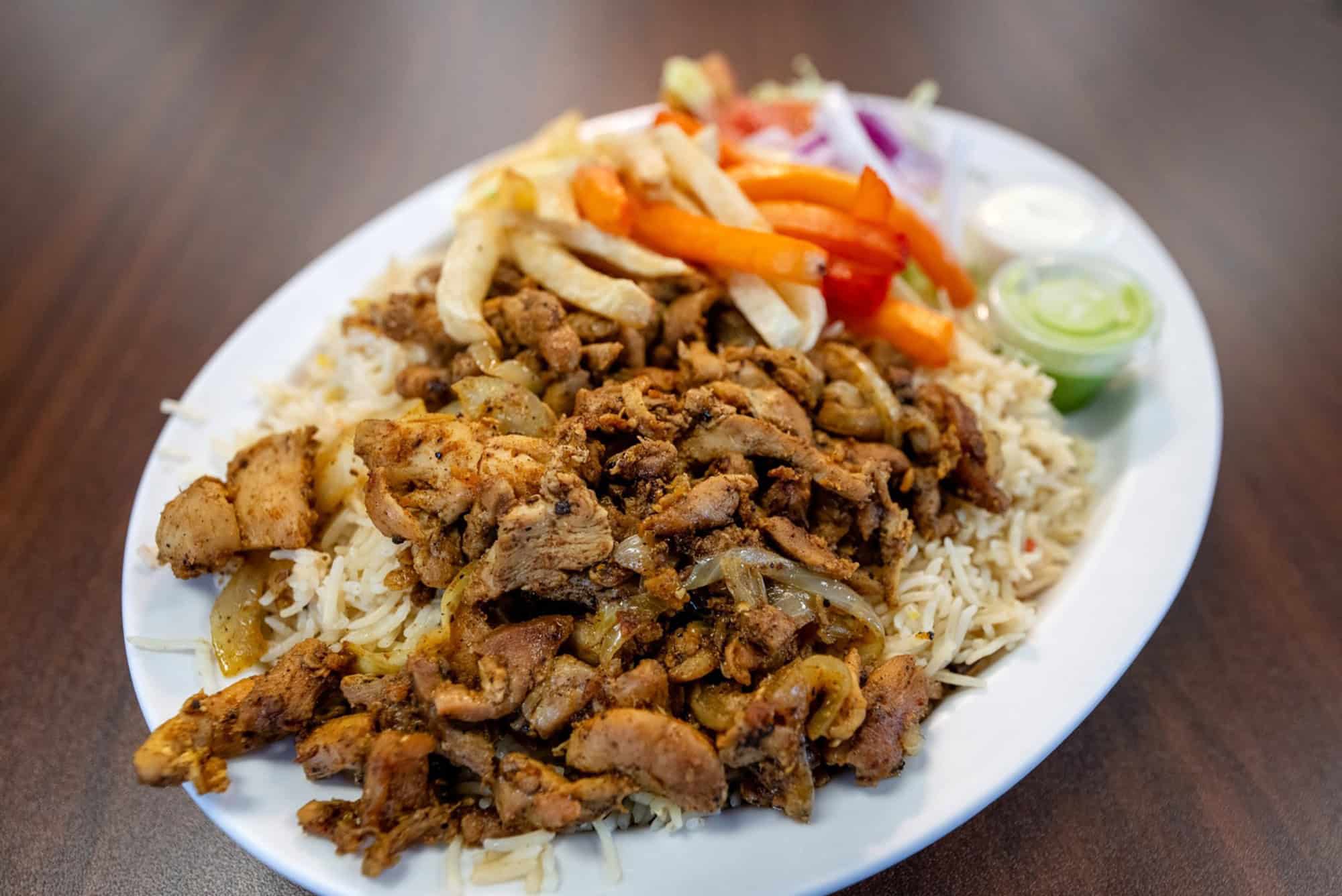
Chicken Suqaar, the chicken version of this traditional Somali dish, is the No. 1 best seller at Yasmeen Cafe; photo by Todd Feeback, Flatland
Historic Northeast Pride
After Ramadan, Yasmeen Café shut down for a few weeks. By mid-April, the sign over the front door blinked “open” again, and lunch customers steadily trickled to the counter.
Hatimi shuttled between the counter and the kitchen, taking half a dozen orders for suqaar, which is made with chicken, beef, or tender young goat imported from New Zealand.
Ifran Dillo, a cook from Senegal, makes rice and sambusas, triangle-shaped flaky turnovers stuffed with spiced ground beef and served as an appetizer or as a snack with a tiny cup of basbaas, a green hot sauce. Customers buy sambusas by the dozen, but Hatimi suggests ordering ahead for larger orders, such as soccer watch parties.