Missouri’s long-sought angel investor tax credit heads to governor’s desk after years of startup advocacy
May 14, 2026 | Haines Eason, Freelance Kansas

The Missouri State Capitol building in Jefferson City; photo by Wirestock
With one day left in Missouri’s legislative session, supporters of a hard-fought angel investor tax credit provision finally saw their measure clear its last major hurdle.
The Missouri House voted 119-24 Thursday to approve House Bill 3231, sending legislation that includes a statewide Angel Investor Tax Credit to Gov. Mike Kehoe’s desk after years of lobbying from startup advocates, investors and entrepreneurship groups across the state.
“We start with the result today,” Jason Wiens, coalition director for NEXT Missouri, told Startland News.
The legislation aims to encourage more private investment into early-stage Missouri startups by offering tax credits to qualifying angel investors — a model many neighboring states, including Kansas, already use to stimulate startup activity and reduce investor risk.
For supporters, the bill represents the culmination of more than a decade of work.
“This has been a long road,” said Gregory Kratofil, a technology-focused attorney and shareholder at Polsinelli PC.
“There are emails and draft legislation going back as far as 2011,” Kratofil said. “At that point, several of us in Kansas City’s early tech startup community were already working with economic development officials, the Chamber, EDCKC and others to make the case for a Missouri program.”
Wiens notes the effort nearly crossed the finish line during previous legislative sessions, only to restart from scratch when negotiations stalled.
“It’s a short session,” he said. “And if you don’t get a bill passed one year, you don’t pick up from that same point the next year. You go back and start all over again.”
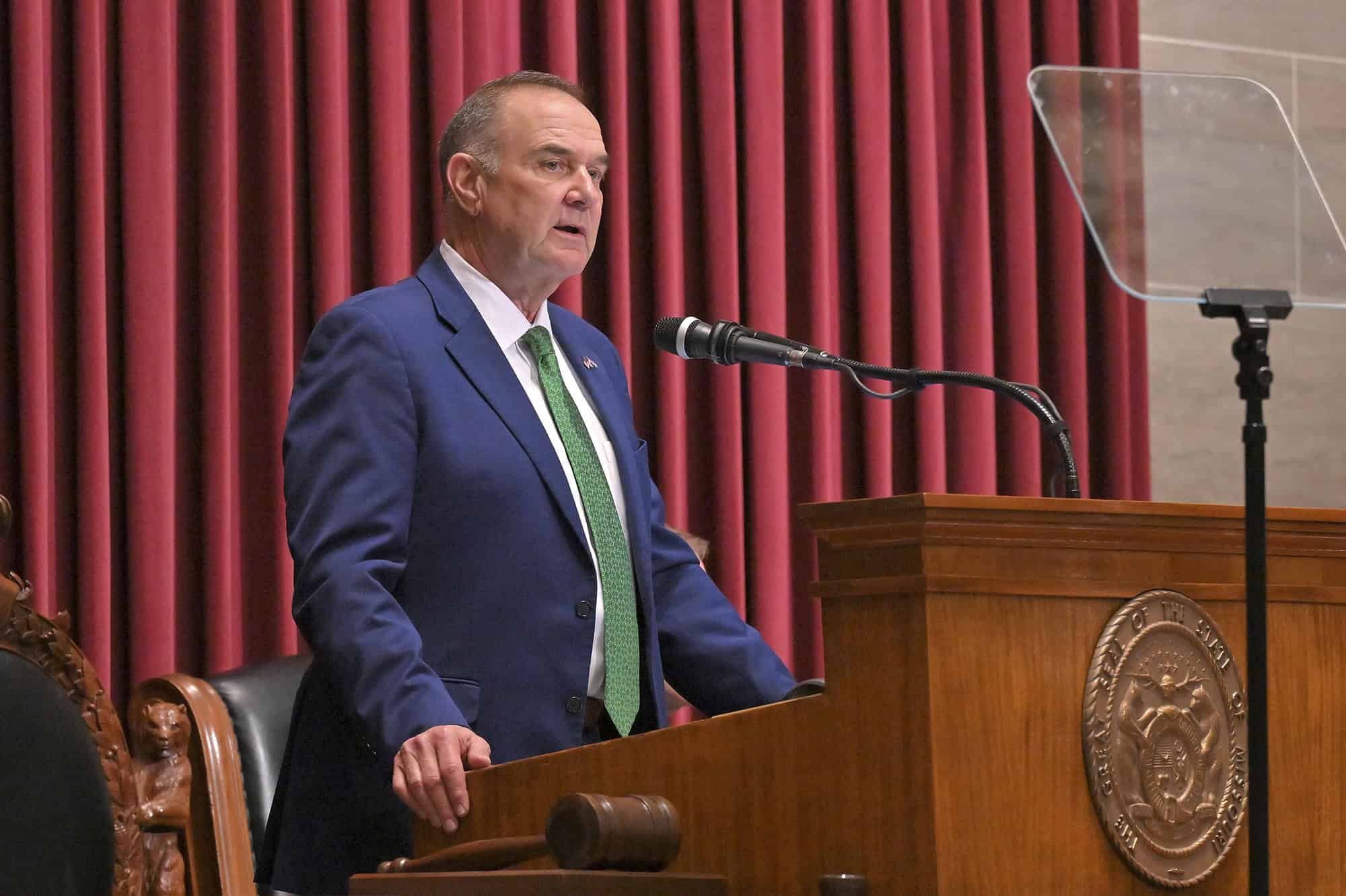
Missouri Gov. Mike Kehoe speaks to the state’s General Assembly in January during the Missouri State of the State address; photo courtesy of Gov. Mike Kehoe’s office
This year, supporters say a broader coalition and months of behind-the-scenes conversations with lawmakers helped push the legislation across the finish line.

Jason Wiens, Rise Policy, NEXT Missouri
“I think there were a few critical things that happened this session,” Wiens said, describing conversations with legislative leaders that focused on “the rationale behind the legislation, why it’s needed, what it does” and “dispelling some of the myths.”
Wiens also points to a broader legislative package that tied the angel investment incentive to larger community and economic development efforts around Missouri.
“We know entrepreneurs and their new businesses create nearly all net new jobs,” he said. “Job creation, putting money in people’s pockets — that’s what helps communities grow.”
For startup founders, supporters argue the issue often comes down to access to early capital — historically one of the hardest funding stages to navigate.
“In working with startups over the years, I’ve seen plenty of companies with strong founders, good technology and real market opportunities struggle to raise that first round of meaningful capital,” Kratofil said.
“That early money is the hardest to find, and it is often the difference between a company getting traction here or looking somewhere else,” he continued. “We want these companies built here.”
Advocates also stress that angel investors often bring more than money into a young company.
“They bring introductions, credibility and momentum,” Kratofil said. “For a startup, that kind of support materially improves their odds of success.”

Greg Kratofil, Polsinelli PC
The effort has drawn support from organizations across Missouri’s startup and venture ecosystem, including BioSTL, LaunchKC, St. Louis Arch Angels, Cultivation Capital and Centennial Investors.
For Kansas City leaders, the legislation also carries symbolic weight because of the metro’s uniquely regional startup economy.
“This is really about competitiveness,” Kratofil said.
“For the Kansas City region, most startup support here has always been regional,” he explained. “The programming, events, mentors, investors and founder networks benefit both sides of the state line. But when one side has an angel credit and the other does not, it creates imbalance.”
“This helps founders focus less on which side of State Line Road their office is on and more on building their business,” Kratofil added.
Missouri joins a long list of states that have implemented angel investor incentive programs over the past two decades in an effort to stimulate private investment into startups and emerging industries.
Research on such programs varies by state and structure, though many economic development groups argue the incentives help increase seed-stage investment activity, encourage investor participation and improve startup survival rates. Critics, meanwhile, sometimes question whether certain investments would occur even without tax incentives.
Supporters argue Missouri’s adoption of the program sends a broader message about the state’s willingness to compete for innovation-focused economic growth.
“Passage of HB 3231 sends an important message,” NEXT Missouri notes in a Thursday statement. “Missouri is serious about competing for the companies, technologies and industries that will shape the future economy.”
The bill’s passage does not immediately launch the program, however. According to Wiens, the state must still prepare administrative systems and educate founders, investors and ecosystem partners on how the incentive will work.
The legislation’s language currently allocates $6 million in tax credits beginning in 2027, with the possibility of expansion if demand fully utilizes the credits in future years.
“We need entrepreneurs, startup companies and investors and other stakeholders in the ecosystem to know what this tool is, how it works and how they can take advantage of it,” Wiens said.
After years of lobbying, coalition-building and failed legislative attempts, Missouri’s startup advocates say the debate has shifted.
“The work doesn’t end there,” Wiens said.
The question now is not whether Missouri should compete for startup growth and innovation investment — but how effectively it can, he added.
Fund More Stories
This story was made possible by readers like you. Join them — make a one-time contribution or become a monthly member to sustain our work.