Full Scale built growth, loyalty around cheaper overseas tech talent; Go inside its offshoring experiment
November 12, 2026 | Haines Eason, Freelance Kansas
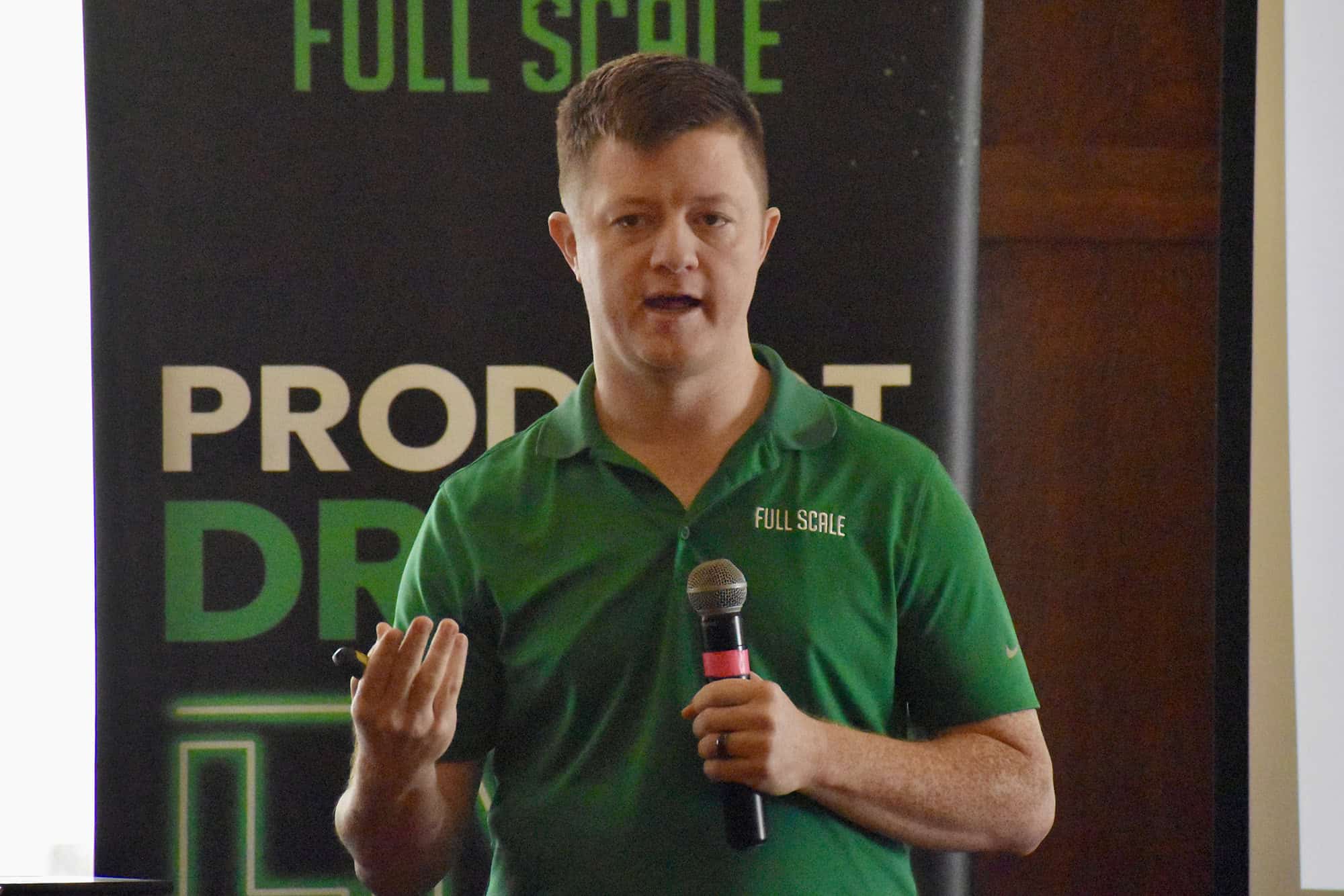
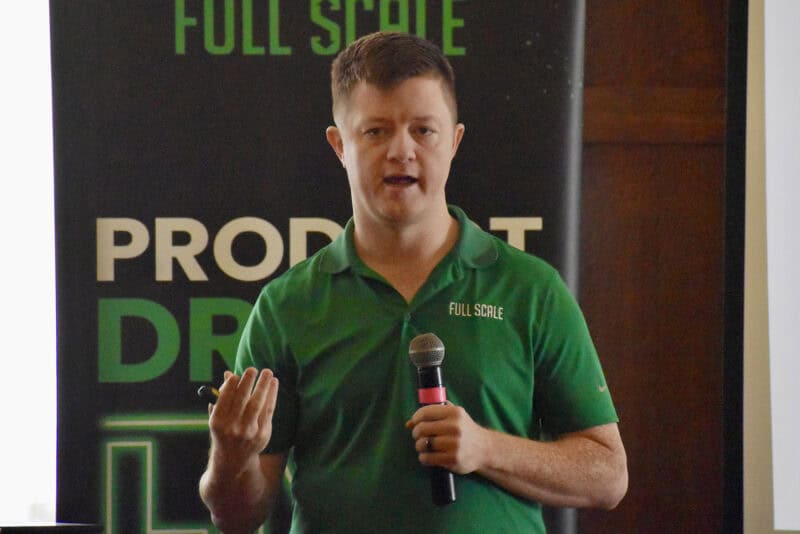
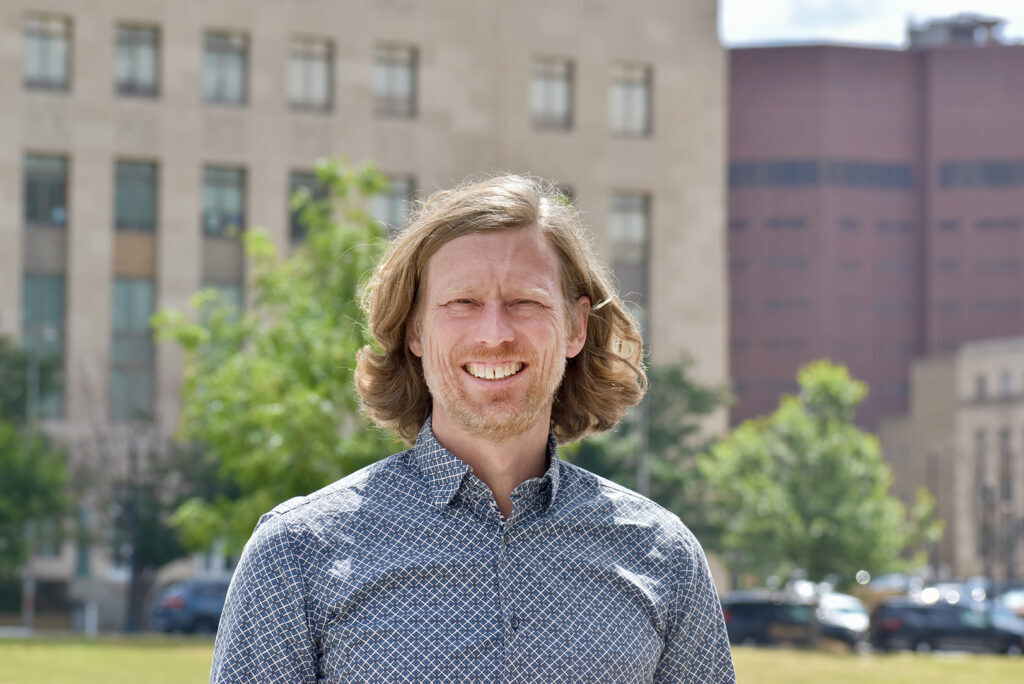
Matt Watson, founder of Full Scale, speaks during a breakout session at the MidxMidwest investor summit in Kansas City; photo by Nikki Overfelt Chifalu, Startland News
Chris Borchers had little reason to believe another experiment with offshore software development would end differently, he said.
The chief technology and product officer at Kansas City-based Basys Processing had already seen offshore code that needed to be rewritten. He’d witnessed the management burden that could accompany teams separated not only by thousands of miles, but time zones, organizational structures and layers of communication.
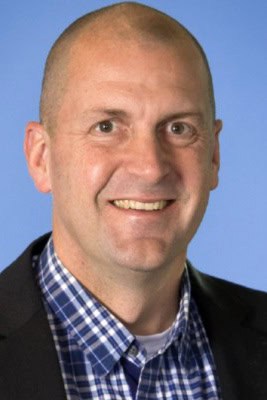
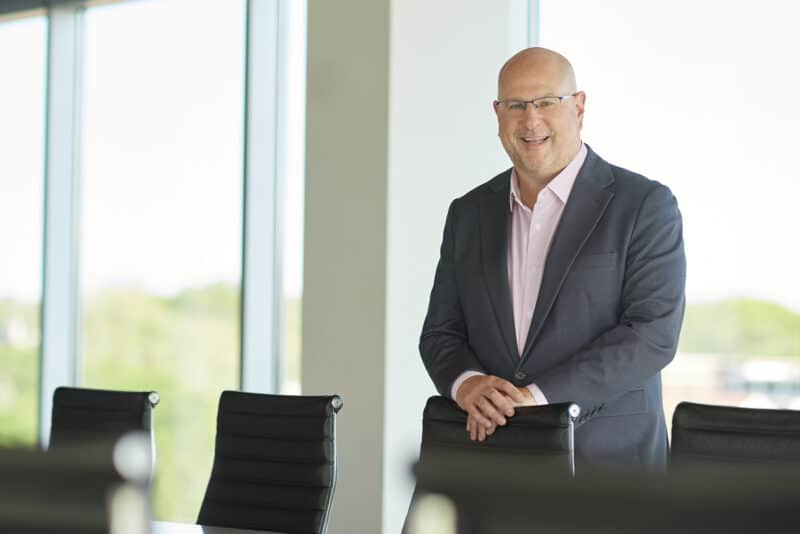
Chris Borchers, Basys Processing
In his experience, making the model work required a talented liaison whose full-time job was essentially making sure the overseas work actually met baseline standards.
“I had never really seen it work,” Borchers said.
Still, about three years ago, Basys tried one developer from Kansas City-based Full Scale. Borchers remained skeptical even after the manager overseeing the developer returned impressed.
“The feedback coming back from the manager was like, ‘Man, this guy’s great,’” Borchers recalled. “And I’m like, ‘That’s not really what I expected.’ I was like, ‘You’re having to really hold his hand, right?’”
He wasn’t.
“We talk, we give a story, and he asks clarifying questions, and it just comes back ready to ship,” Borchers said.
That developer is still working with Basys today. The Kansas City-area payment processor has since added roughly eight more Full Scale engineers, Borchers said, embedding them into development processes, morning standups and work that increasingly requires accumulated knowledge of how Basys’ technology functions.
The progression complicates one of the simplest assumptions about offshoring: A company sends work overseas because labor is cheaper, and the people performing it are valuable in large part because someone else can eventually perform the same work for roughly the same low price.
Full Scale’s own origin story makes clear that labor cost matters. The company exists because high-skilled technical labor in the Philippines costs less than comparable talent in the United States.
But interviews with Full Scale CEO Matt Watson, one of the company’s Filipino managers and Borchers suggest something else has happened along the way. Workers initially accessed through that global wage disparity can become deeply enough integrated into American companies that replacing them isn’t particularly simple at all.

Matt Watson, Full Scale; image courtesy of Full Scale’s Product Driven podcast
Full Scale begins with the math
Watson, a featured speaker at this week’s MidxMidwest summit in Kansas City, doesn’t obscure the economics that helped create Full Scale.
In 2018, he was running Stackify when three or four software developers left, including employees recruited by Microsoft and Amazon. He needed to rebuild the team, but he needed considerably more than three replacements.
“So I figured out how I could use hiring offshore to hire 10 people for basically the same cost of the three I lost,” Watson said.
A friend already employed workers in the Philippines, so they decided to build a business around the model — initially unsure whether anyone else would need what Watson needed.
Full Scale hired about 100 people in its first year and reached about $5 million in revenue, Watson said. The company still works with its first client and today employs roughly 350 people, serving more than 80 customers. Full Scale reported $14 million in 2025 revenue as part of its latest Inc. 5000 appearance and is now targeting annual growth of roughly 20% to 25%.
ICYMI: Steady growth keeps Full Scale on Inc 5000 list even as AI rewrites software development
There’s an uncomfortable simplicity underneath those numbers, Watson acknowledged. Full Scale can sell access to highly skilled workers in part because geography allows those workers to command less money than comparably skilled Americans. Its U.S. customers gain access to more technical labor for their dollars; Full Scale builds a profitable business between the two labor markets.
Watson doesn’t dispute that comparable U.S. software jobs can pay considerably more.
His argument instead is that a U.S. salary is the wrong comparison. Full Scale developers earn unusually high incomes relative to the Philippine economy, he said, creating opportunities that would otherwise be difficult for many workers there to access.
That’s a convenient trade for an American CEO whose business benefits from the gap.
It also isn’t the whole story, according to someone living on the other side of it.

Workers from Full Scale pose in Cebu City, Philippines, after the Kansas City company earned recognition as a Best Workplace in Technology in Southeast Asia; photo courtesy of Full Scale
‘It is only with Full Scale that I got a 50% bump’
Igor Villaluz has built a solid career through offshore employment.
Before Full Scale, he spent years working in his home country, the Philippines, for other companies. He describes workplaces where employees became numbers — their statistics determining advancement, rigid processes leaving little room for judgment and layers of management limiting opportunities for the people actually doing the work.
Villaluz recalls one previous employer launching what workers were told was a global IT initiative to inspect employee computers for unauthorized software. An application was discovered on his laptop, and Villaluz was suspended for three days. He later came to believe the initiative was actually intended to help the company reduce headcount.
He had worked there for a decade. His daughter had just been born.
“I was in that company for 10 years and all of a sudden you’re suspending me like I’m in high school,” Villaluz said.
What sticks with him isn’t merely the punishment, he said. It’s the anxiety: years of service suddenly feeling fragile at precisely the point in his life when stability mattered most.
Full Scale offered something materially different from the beginning, Villaluz said.
“It is only with Full Scale that I got a 50% bump when they hired me,” he explained. “It was a 50% bump from my previous salary.”
He remembers being startled by the offer.
“Seriously? That’s your offer? Okay, that’s fine.”
But when Villaluz talks about why he remains at Full Scale, compensation quickly gives way to something harder to quantify.
Today, as a client success manager, Villaluz oversees roughly 75 employees working across 16 or 17 clients. He said Full Scale gives him freedom to create strategies and initiatives rather than simply execute a prescribed process. He can disagree with senior leaders — sometimes forcefully — without assuming disagreement will become a threat to his job.
“It really opened my eyes to a lot of possibilities because it is only with this company that I was given a lot of freedom to come up with my own stuff, come up with my own strategies, initiatives,” Villaluz said. “It doesn’t limit me to a templated approach or it doesn’t limit me to a fixed process where you’re no longer allowed to think for yourself or you’re no longer allowed to say, ‘This doesn’t make sense.’”
Villaluz doesn’t describe a frictionless workplace. He talks about difficult conversations with executives and occasions when he feels strongly enough to become emotional or raise his voice. Watson, he said, can be similarly direct.
The difference is what happens after the disagreement.
“I would not fear retaliation or any politicking or anything like that,” Villaluz said. “And that’s not typical for a company in the Philippines.”
He now tries to extend the same permission to the employees he manages.
“Don’t worry about me. You don’t have to stay silent or you don’t have to keep saying ‘yes,’” Villaluz said he tells them. “Just let me know what you think. You’re the expert.”
That distinction matters in a story about offshoring higher-order technical work. The economic model begins with a disparity in labor costs, but Villaluz describes an organization asking overseas workers to exercise judgment rather than merely follow instructions.
The customer isn’t buying the cheapest option
Borchers’ experience at Basys offers another way to test Watson’s argument.
If Full Scale’s primary advantage were simply cheaper labor, then the relationship should be relatively straightforward: Basys buys development capacity abroad because that capacity costs less than hiring the equivalent workforce domestically.
Borchers said that isn’t quite what happened.
“I don’t think it’s the cheapest offshore rates that you’ll find,” he noted.
Instead, he points to the quality of the people Full Scale hires, the projects Basys gives them, and the longevity that allows those developers to become embedded in his teams.
Time zones remain a real constraint. Borchers said Basys has deliberately avoided expecting its Filipino developers to simply live on an American schedule. Instead, the teams have established overlapping hours that allow them to work together while preserving some boundary between work and life.
“It’s not really realistic for us to expect them to work a seven or an eight-to-five shift here in the States,” Borchers said. “That really impacts them.”
That accommodation doesn’t eliminate the underlying imbalance. Basys remains the American customer setting the need. Full Scale remains the intermediary connecting that demand to a labor market where technical expertise costs less. Filipino workers are adjusting part of their day around American colleagues thousands of miles away.
But Borchers describes a relationship that has moved well beyond throwing specifications over an ocean and waiting for code to come back.
Full Scale developers participate directly in Basys’ build processes and standups. Borchers said the amount of handholding is still considerably less than he expected. More importantly, the longer those developers work inside Basys, the more they learn things that aren’t easily captured in a Jira ticket or handed to the next contractor.
“They’re at the point now of being embedded in our teams and being a critical cog in our wheels,” he said.
That creates a paradox: Offshoring is attractive partly because it can turn expensive domestic work into less expensive global work. But at least some of those overseas workers have accumulated exactly the thing companies routinely lament losing when longtime domestic employees walk out the door: institutional knowledge.
‘You just don’t recover’
Basys keeps its core omnichannel payments platform with its full-time internal staff, Borchers said. Full Scale engineers work heavily within an integrations layer around that core, connecting Basys’ technology with other software and helping the company reach customers and markets its primary product otherwise couldn’t.
That arrangement gives Basys flexibility. But after years of working inside the systems, the Full Scale developers also know how those products connect, how the code has evolved and how Basys approaches recurring problems.
“They know how to do things quickly,” Borchers said. “They know how it’s wired up.”
Asked what would happen if Full Scale disappeared tomorrow, Borchers doesn’t begin by calculating what replacement developers would cost. He thinks about what new people wouldn’t know.
“Basically I lose that institutional knowledge, which, just like in the old days of being single-threaded or that sort of thing, you just don’t recover,” he said. “You have to have somebody come in and learn the product, learn how it’s coded, learn where the bodies are buried.”
Those words carry a different weight than a comparison of hourly rates.
The people Basys originally accessed through an offshore staffing company have become repositories of knowledge the customer itself values. The economic advantage that helped create the relationship remains, but the workers themselves have become less interchangeable.
“They’re that embedded into what we’re trying to do,” Borchers said.

Members of Full Scale’s employee running club pose together at the Cebu Marathon; photo courtesy of Full Scale
A house, a car, a family
Watson gives expansive descriptions of what Full Scale’s jobs mean to workers the Philippines. He said many employees earn incomes placing them among the country’s highest earners and argues their spending supports additional jobs in their local communities.
Villaluz talks about what he sees on the ground.
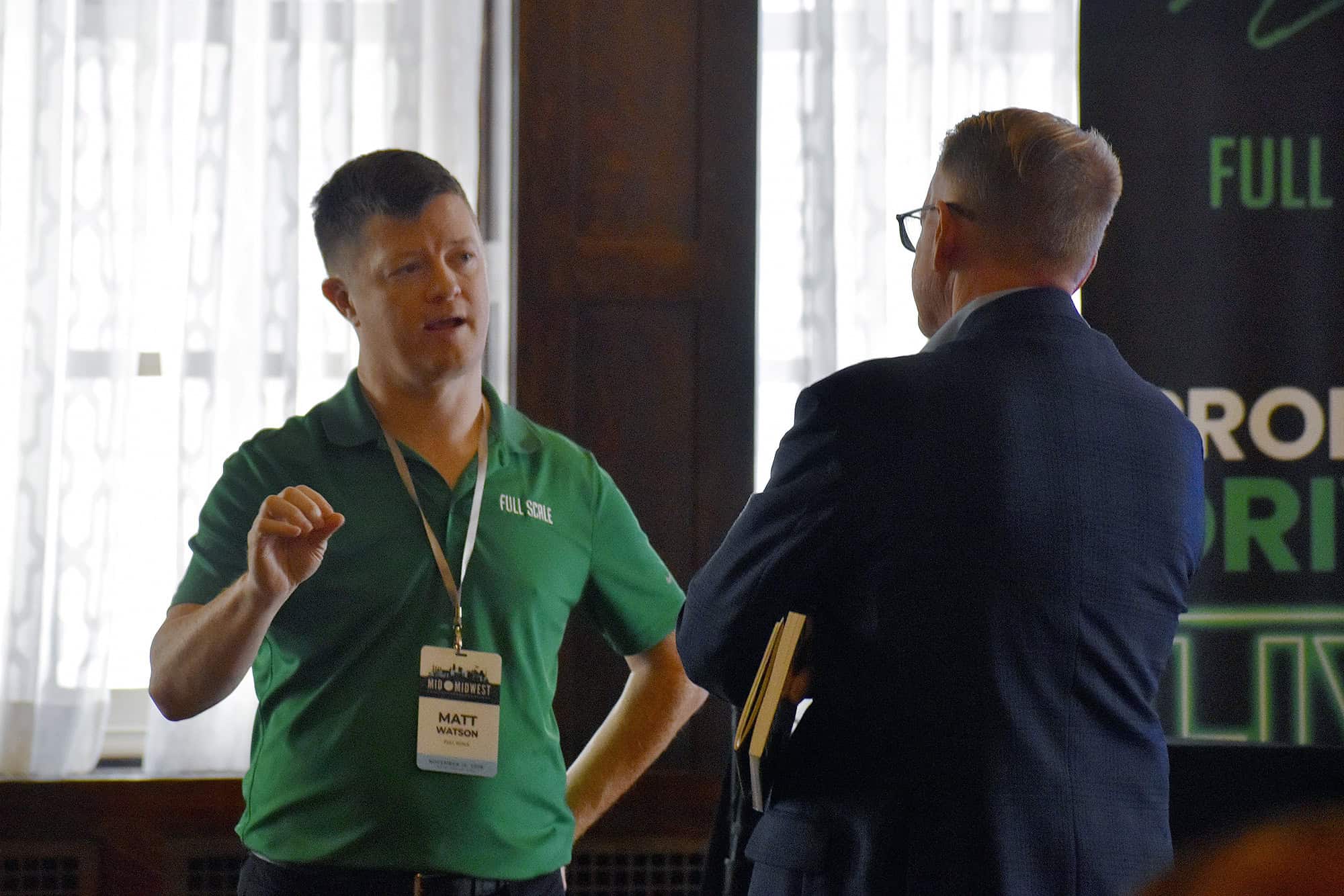
Matt Watson, founder of Full Scale, chats with an attendee of the MidxMidwest investor summit in Kansas City; photo by Nikki Overfelt Chifalu, Startland News
“I’ve seen a lot of my team members applying for a housing loan after they just joined Full Scale,” Villaluz said. “Applying for a car loan, getting pregnant, starting a family. It’s nice to see. It’s nice to see that they get to have that start.”
For Villaluz, the trajectory is personal. He remembers beginning his career earning only a few thousand Philippine pesos. Full Scale changed that. He now manages dozens of people while interacting directly with clients and company executives.
“I really feel blessed for having this opportunity at Full Scale,” he said. “There’s always that feeling of I’m now always going to have to give back to the company.”
Then Villaluz catches himself.
“I know it’s just a job. I know there’s always that saying that they’re not your family. I understand that.”
It’s an important qualification.
Companies frequently reach for the language of family because it can blur the line between employment and obligation. Villaluz doesn’t blur it. Full Scale pays him to work. Full Scale makes money from that work. Its customers gain technical talent at a price made possible by vast differences between two national economies.
Villaluz knows he’s an employee. What he describes is gratitude anyway.
“I think for me as a human being, it just gives me satisfaction to also just give back after being so blessed.”
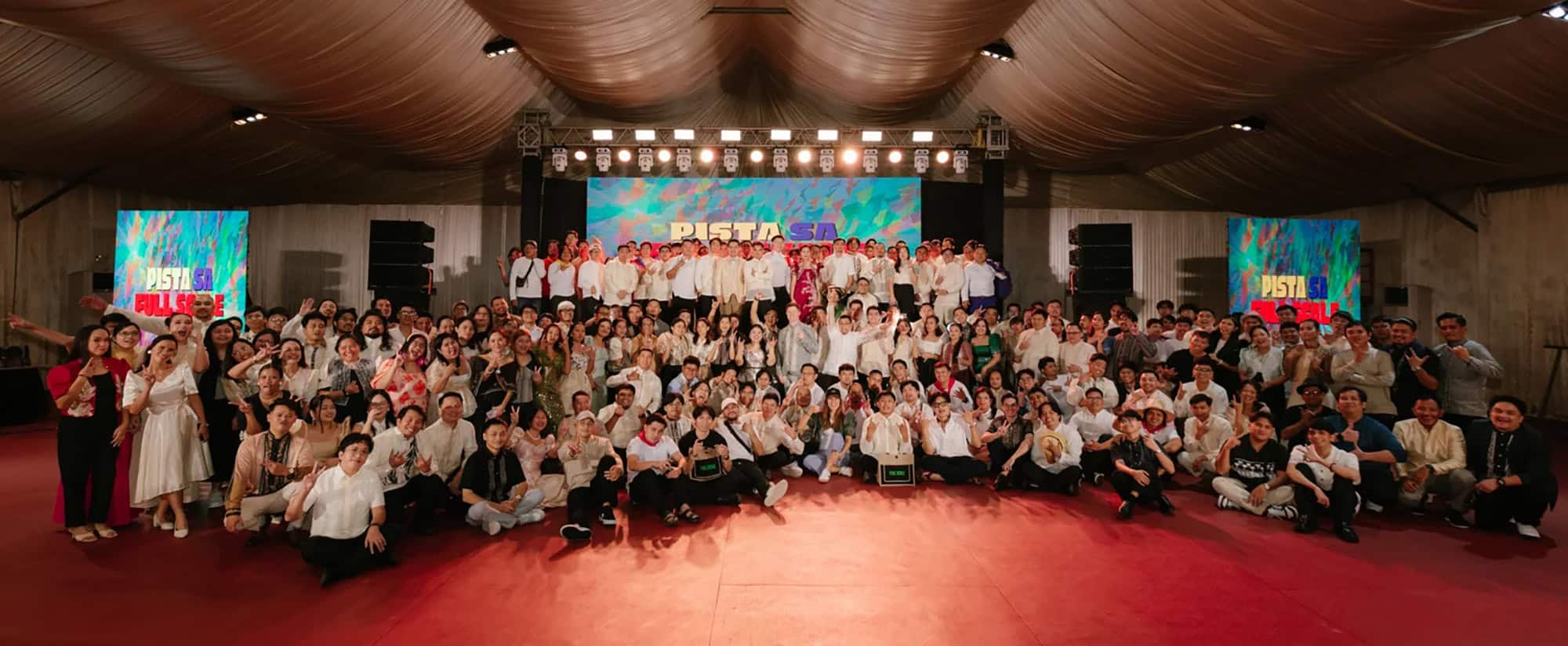
Dozens of Full Scale employees gather in Cebu City, Philippines, for the company’s year-end party; photo courtesy of Full Scale
Who gets to be more than a number?
There is another small detail Villaluz notices about Full Scale. Its photographs.
At previous offshore companies, he said, marketing materials tended to feature executives and managers while the people actually performing the outsourced work remained largely invisible.
“If you look at all our media, you would see our employees in those pictures, in those videos,” Villaluz said. “Typical offshoring companies, they would see the faces of the managers there or the officers are the ones in the media, not the actual workers.”
A photograph doesn’t prove a company treats its employees well. Neither does an Inc. 5000 ranking, a salary increase or a satisfied customer.
But Villaluz’s observation gets close to the question underneath Full Scale’s business model.
Who gets to be seen as a person rather than a unit of labor?
Full Scale began because Watson could hire roughly 10 developers in the Philippines for what three departing developers had cost him. That disparity hasn’t vanished. It remains fundamental to the business and to the value Full Scale sells its American customers.
Fund More Stories
This story was made possible by readers like you. Join them — make a one-time contribution or become a monthly member to sustain our work.