Steady growth keeps Full Scale on Inc 5000 list even as AI rewrites software development
August 11, 2026 | Haines Eason, Freelance Kansas
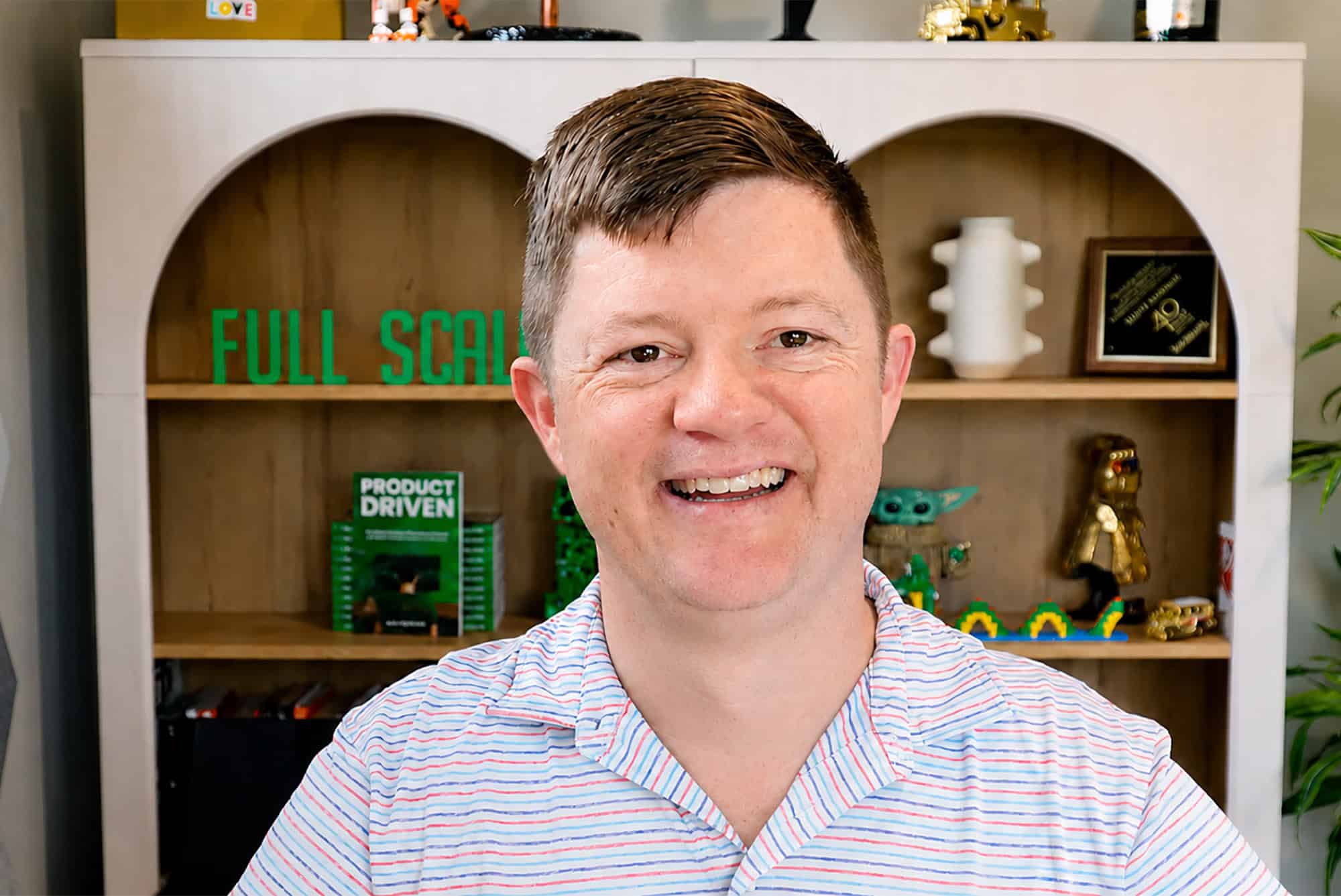
Matt Watson, Full Scale; image courtesy of Full Scale's Product Driven podcast
Back on the Inc. 5000 list for the fifth consecutive year, CEO Matt Watson said the company’s repeat appearance developed more out of consistency than explosive startup growth — predicting longevity in the face of industry-reshaping innovations.
Full Scale ranks No. 4,272 on Inc. 5000’s newly released list of the country’s fastest-growing private companies, climbing from No. 4,489 last year. The Leawood-based business now employs about 350 people and is growing about 25 percent year over year, Watson said.
 “We’re definitely not in startup phase,” he added. “Our goal right now is to grow 20 to 25 percent a year. And that’s kind of where we’re at this year.”
Do it long enough, he noted, “you make the list like this.”
Click here to explore the full 2026 Inc. 5000 list and features, which includes Kansas City-built Lula (No. 1,000), an AI-powered property tech company with headquarters in Overland Park.
For Watson, it’s familiar territory. Full Scale’s spot on the 2026 list marks his ninth Inc. 5000 appearance across Full Scale and exited ventures like Stackify and VinSolutions during the past 16 years. Full Scale itself launched in 2018 after Watson encountered a problem at Stackify: He needed about 10 software developers after several team members departed, including developers recruited by Microsoft and Amazon.
A fellow entrepreneur who would become the company’s co-founder already had employees in the Philippines, and the pair began building an offshore development team. What initially was designed to solve Watson’s own hiring problem quickly found demand among other companies, particularly friends and colleagues in Kansas City.
Full Scale hired about 100 people and reached roughly $5 million in revenue during its first year, Watson said. Today, the company has more than 80 clients, about 350 employees and a goal of reaching 500 employees — potentially by 2028. The Inc. 5000 lists Full Scale at about $14 million in annual revenue.
AI can write code; Full Scale is betting developers still matter
Full Scale’s continued growth comes as artificial intelligence is raising existential questions across the software development industry — including whether companies will need as many human developers at all.
Watson sees the technology changing the job rather than eliminating it.
“AI can write the code, but you got to have somebody that knows what code to write,” he said.
Developers still need to understand the problem, determine how to solve it and validate whether AI-generated work actually functions — and whether customers wanted what was built in the first place, Watson explained.
He compares the emerging dynamic to construction: A couple of amateurs might be able to turn scraps of raw materials into a house, but an experienced general contractor knows the building codes, recognizes mistakes and has encountered the edge cases before.
“You and I could cobble together a little shanty we could live in,” Watson said. “But if you really want to engineer a house the right way, you need a good general contractor that’s done this before.”
That expertise is becoming increasingly important as basic software development becomes easier, he said. Full Scale counts AMC Theatres and Kansas City-based payments company Basis Theory among its customers.
Growth is opening another door
Full Scale also is using its established business as a launchpad.
The company started a venture studio last year, which has produced ProductWave, an AI-powered platform designed to help software and product teams find patterns across customer conversations, support tickets and other feedback.
Watson said one beta customer fed ProductWave 6,000 meeting transcripts, which the platform distilled into 93 key themes. The company is now seeking additional beta customers.
The strategy creates another potential growth engine without requiring Full Scale to abandon the business that landed it on the Inc. 5000 five years running.
Watson isn’t promising hypergrowth.
He wants something more durable.
“There’s really nothing more to want for except just continuing to do what we’re doing and taking very good care of our employees and our clients and building a good, stable business,” he said.
Fund More Stories
This story was made possible by readers like you. Join them — make a one-time contribution or become a monthly member to sustain our work.