Survey asks where sales tax funds should be invested next; EDCKC targets corridors for investment
October 27, 2026 | Tommy Felts

Myron McCant and Penny Dale-McCant stand outside an in-construction KD Academy in 2021 at 2141 Prospect Ave, Kansas City. The project was made possible thanks to gap financing through the Central City Economic Development (CCED) Sales Tax; Photo by Tori Foushee
Editor’s Note: The Economic Development Corporation of Kansas City (EDCKC) is a financial supporter of Startland News.
A sales tax program meant to transform long-neglected corridors of Kansas City’s central city earned overwhelming voter support this summer, said Andrea Bough, noting renewed work to steward millions in public investment begins now — guided by the community most impacted.
“Voters chose to continue the program for another 10 years,” said Bough, president and CEO of the Economic Development Corporation of Kansas City (EDCKC). “That creates both an opportunity and a responsibility to show results.”
 The Central City Economic Development (CCED) Sales Tax is a one-eighth-cent sales tax for economic development in the Central City District, from 9th Street to Gregory Boulevard and Indiana Avenue to The Paseo.
Voters in August extended the program for another decade, with 69.2 percent support at the ballot box.
Rates for the renewed sales tax remain unchanged. More than $8 million is already approved by the city council for 10 projects representing more than $50 million in total investment. Those projects target 210 housing units, home repairs, historic restoration and commercial development.
EDCKC, which administers the program, has launched a 10-minute CCED Community Vision Survey — open through Dec. 18 — seeking public input on the 2027-2032 Strategic Plan for the sales tax. The five-year plan is expected to establish priorities to guide future investments, funding decisions, and economic development initiatives throughout the district.
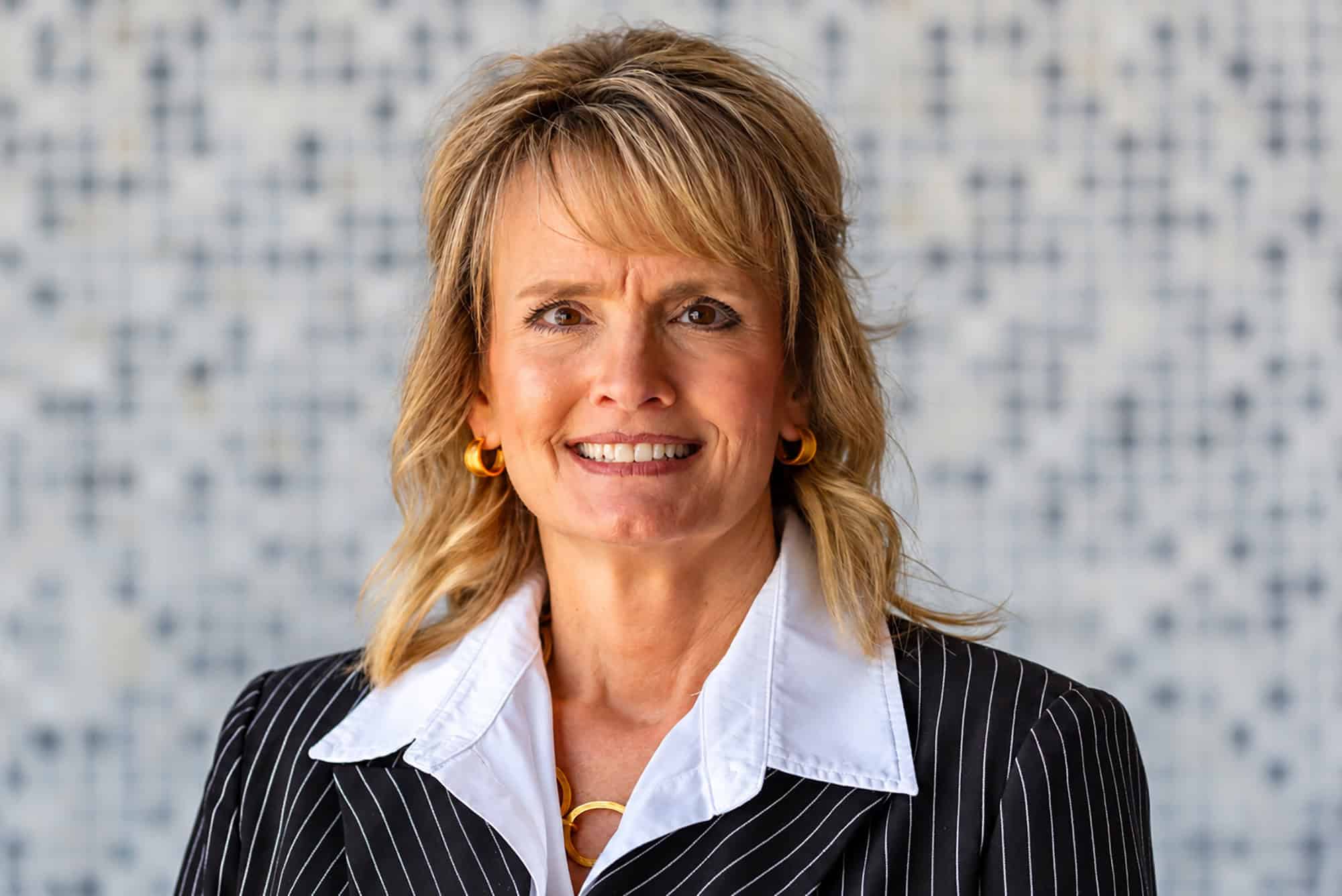
Andrea Bough, Economic Development Corporation of Kansas City; photo courtesy of EDCKC
“The next decade should build on what CCED has established while becoming more strategic about how the dollars work together,” Bough told Startland News. “I see an opportunity to look beyond individual projects to whole corridors and neighborhoods, where housing, commercial development and small-business investment reinforce one another.”
ICYMI: New EDCKC leader wants entrepreneurs, city ready when KC’s next big break comes knocking
“We also need to keep improving the experience for applicants, pair CCED dollars with other sources wherever we can and set clear measures so the community can see not just where the money went, but what it produced,” Bough continued. “That work starts with listening, which is why we’re asking residents and businesses to take the CCED Community Vision Survey before the new strategic plan is written.”
Click here to take the survey or check eligibility status.
Participation is encouraged from residents, business owners, property owners, neighborhood organizations, and individuals who work, attend school, or have other connections to the district. Kansas City residents outside the district are also welcome to participate. Survey responses will remain confidential and will be presented in aggregate form.

Zhou B Art Center in Kansas City, a historic renovation project in the former Crispus Attucks school that was supported by funding through the Central City Economic Development (CCED); photo courtesy of the Zhou B Art Center
Buoyed by results
CCED’s long-term goal is neighborhood stability and an environment that keeps attracting investment, not development activity for its own sake, Bough emphasized.
“There are projects that make sense for a neighborhood but still face a financing gap the conventional market doesn’t solve on its own,” she said. “A targeted public investment can move those projects from concept to reality and bring other capital to the table.”
“The measure I’d keep watching isn’t simply how many dollars CCED invests,” Bough continued. “It’s what those dollars help unlock: housing, businesses, jobs and the next round of investment in the surrounding neighborhood.”

Zhou B Art Center KC in February 2024; photo by Nikki Overfelt Chifalu, Startland News
Created through a community-led effort — and first approved by voters in 2017 — CCED has already seen more than $97 million approved across eight funding rounds for 68 projects, representing more than $1 billion in total development activity.
CCED works as gap financing. It helps close the gap rather than serving as a project’s only source of capital, Bough said, noting that opportunity lets limited public dollars work alongside private, philanthropic, federal, state and local money.
The result?
“You see historic preservation, housing, entrepreneurship, childcare and commercial development, and each project demonstrates a different way public dollars can put a neighborhood asset back to work,” Bough said.
“One of the most important things about the portfolio is its range,” she added.
| Project | What it shows |
|---|---|
| Zhou B. Art Center 1801 E. 18th St. |
The historic Crispus Attucks School, reopened in 2024 with gallery, performance and community space and 45 artist studios. Preservation that puts a landmark back into productive use. |
| 5008 Prospect | The first CCED-awarded project completed. Renovated into a business incubator housing KC G.I.F.T. and other enterprises. |
| One Nine Vine 1901 Vine St. |
Six stories with 80 mixed-income apartments and about 10,000 square feet of ground-floor commercial space. Housing and commerce together in a historic district. |
| Offices at Overlook 2801 Martin Luther King Jr. Blvd. |
About 60,000 square feet of Class A office space by Community Builders of Kansas City, anchored by Health Forward Foundation. CCED funded the site and infrastructure work that made it possible. |
| Emmanuel Family and Child Development Center and KD Academy | Childcare and family services that let residents go to work. Emmanuel’s new facility serves more than 400 children and families; KD Academy pairs childcare with adult day care. |
ICYMI: How KD Academy is redefining childcare as a pillar of KC’s economic growth
Community vision
The just-launched CCED community survey is the first step in updating that framework for the years ahead, said Jeremy Davis, director of Central City Economic Development, echoing Bough’s calls for intentional inclusion of stakeholder voices.
“This strategic planning process is about understanding where the district stands today, identifying emerging needs, and ensuring that our funding priorities continue to reflect the community’s vision for economic development and neighborhood growth,” Davis said, noting CCED’s previous strategic plan established five guiding priorities: supporting small and minority-owned businesses, strengthening sustainable neighborhoods, expanding employment opportunities, advancing shared prosperity, and building organizational capacity.
The new survey asks participants to share their perspectives on neighborhood conditions, economic development challenges, housing needs, commercial redevelopment, and the types of businesses and services they would like to see throughout the central city.
Participants will also have an opportunity to identify investment priorities and describe what a thriving central city should look like by 2032.
“The question becomes how we take what we’ve learned over the first decade and make the program easier to navigate, more strategic in how capital is deployed and clearer about the results,” said Bough.
Fund More Stories
This story was made possible by readers like you. Join them — make a one-time contribution or become a monthly member to sustain our work.