City greenlights ‘Block One’ of Luminary Park over I-670; It’ll be all gas, no brakes to hit 2028 finish
September 4, 2026 | Tommy Felts
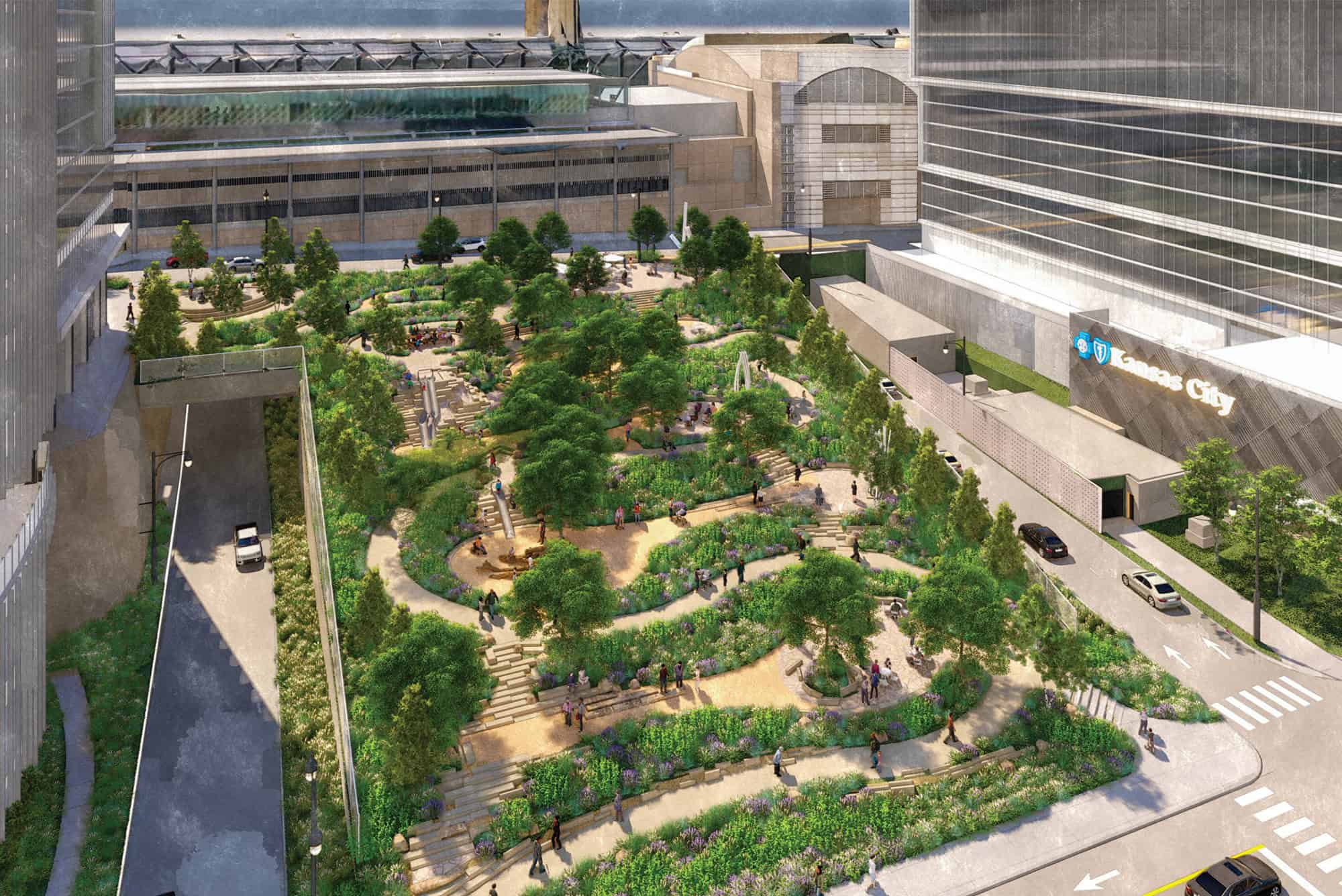
A rendering shows the 40-foot grade connecting Wyandotte Street to Baltimore Avenue as part of the initial "Block One" phase of Roy Blunt Luminary Park; image courtesy of OJB Landscape Architecture
A critical vote of support from Kansas City leaders this week helped lock in a mix of state and federal funding needed to make Roy Blunt Luminary Park a reality. But the move exchanges one ticking-clock deadline for another, officials said, as the first leg of the massive I-670 cap project starts its race to a mandatory August 2028 interstate reopening.
Kansas City council members passed Ordinance No. 260718 on a 9-3 vote Thursday, authorizing the start of construction for the $164.3 million first phase of Luminary Park, which is expected to eventually stretch over four city blocks of the south loop of I-670.
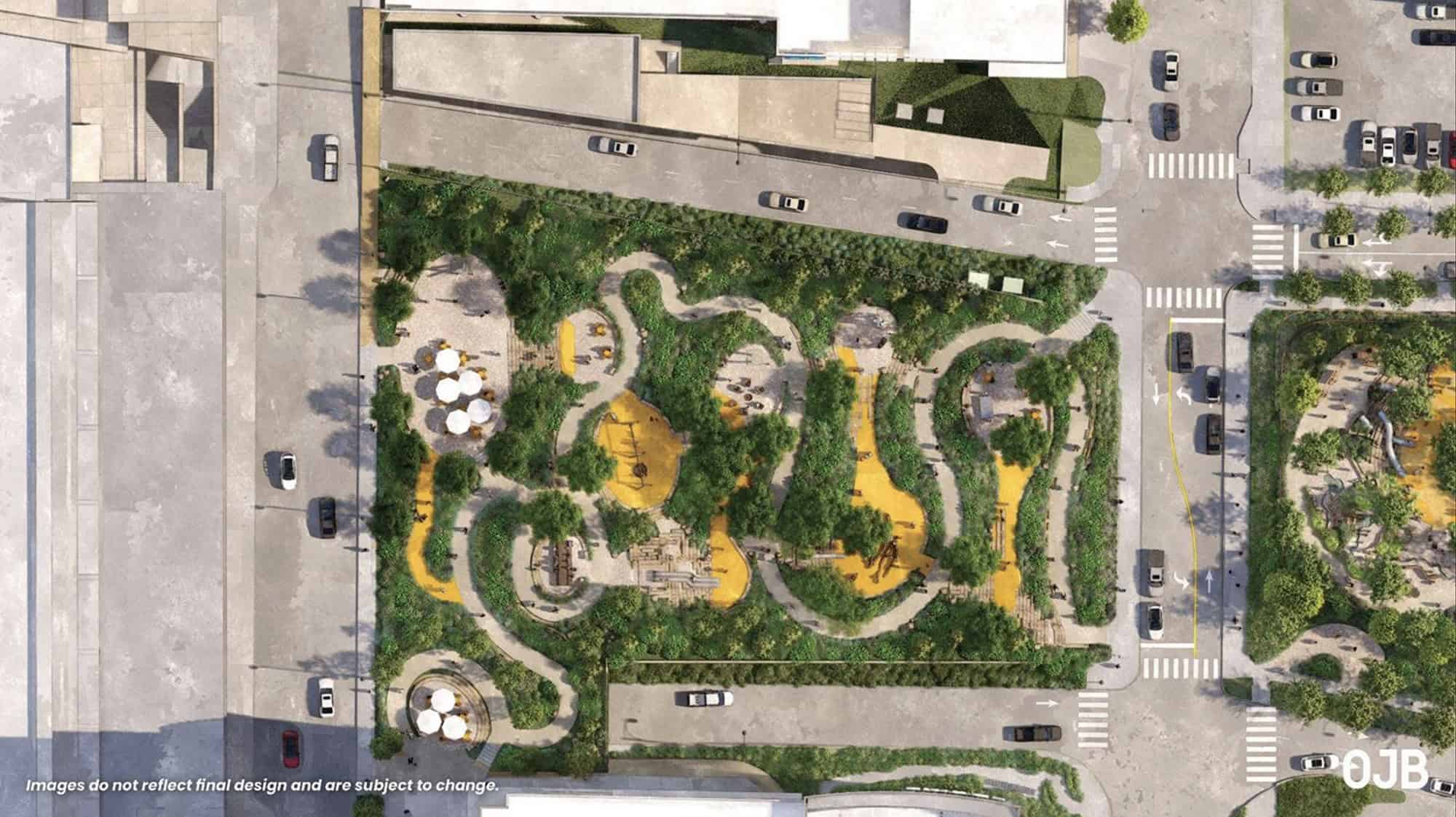
A rendering from OJB Landscape Architecture, a portfolio company of Kansas City-based Populous, shows a bird’s eye view of the initial “Block One” phase of Roy Blunt Luminary Park, stretching from Wyandotte Street to Baltimore Avenue; image courtesy of OJB
The long-anticipated launch of the project comes after 30 years of work to reconnect the downtown center to the Crossroads Arts District, said Mario Vasquez, city manager for Kansas City, Missouri.
“Reaching approval for this first phase has taken time, not because it is not important, but because it is a difficult project,” he said, emphasizing the breadth and complexity of the urban overhaul.
“Block One” of the project — focused on delivering “the community’s first fully realized taste of the finished vision” in the form of a reimagined, tree-lined 1.4-acre city block — includes an intensive tunnel infrastructure component. Work extends from Broadway west of Bartle Hall to Baltimore Avenue, and necessitates the closure of eight lanes of interstate highway underneath.
Because the Missouri Department of Transportation (MoDOT) set a limit of 22 months for the closure, that portion of the project must be completed in less than two years.
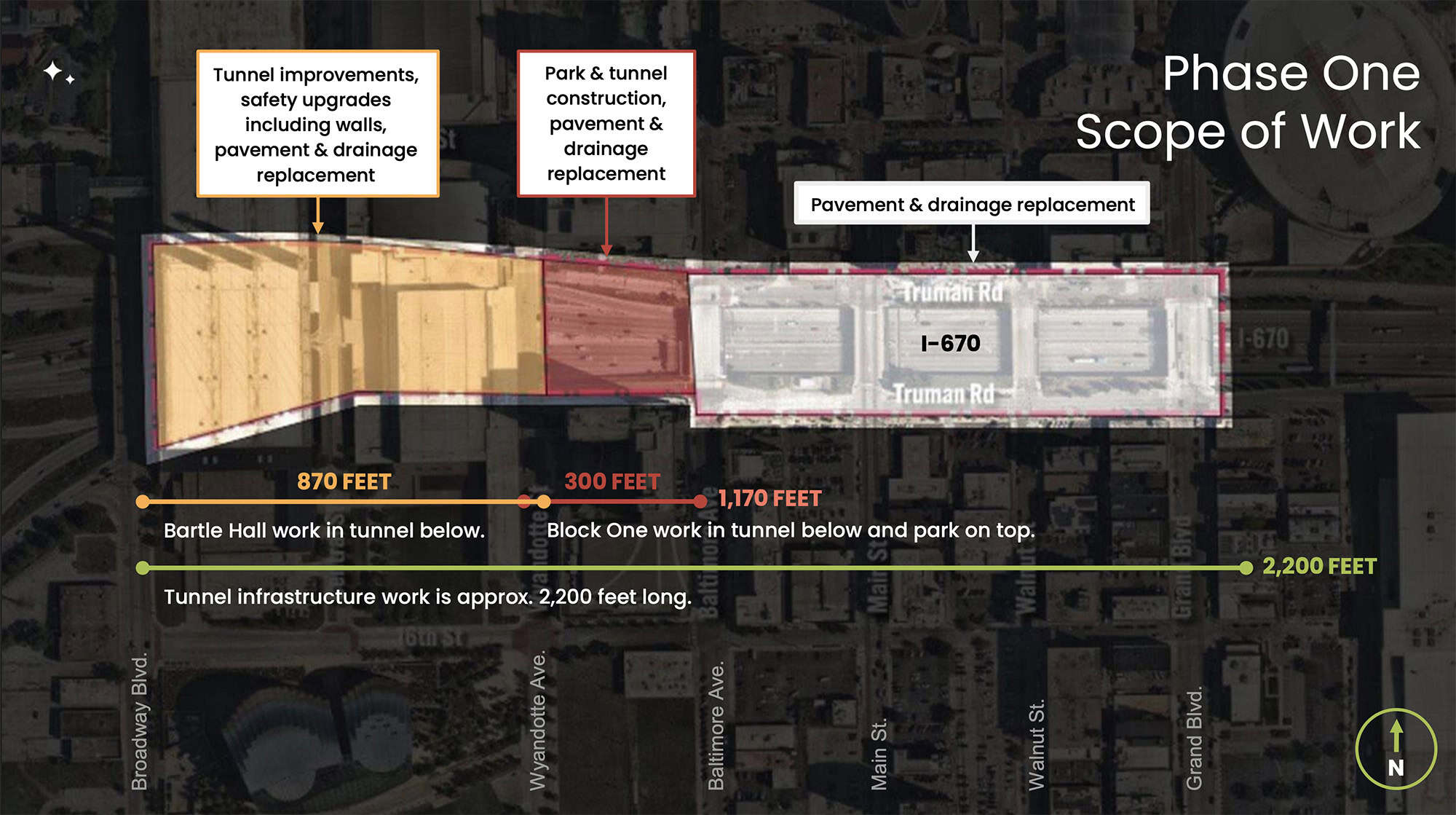
Image courtesy of the City of Kansas City, Missouri
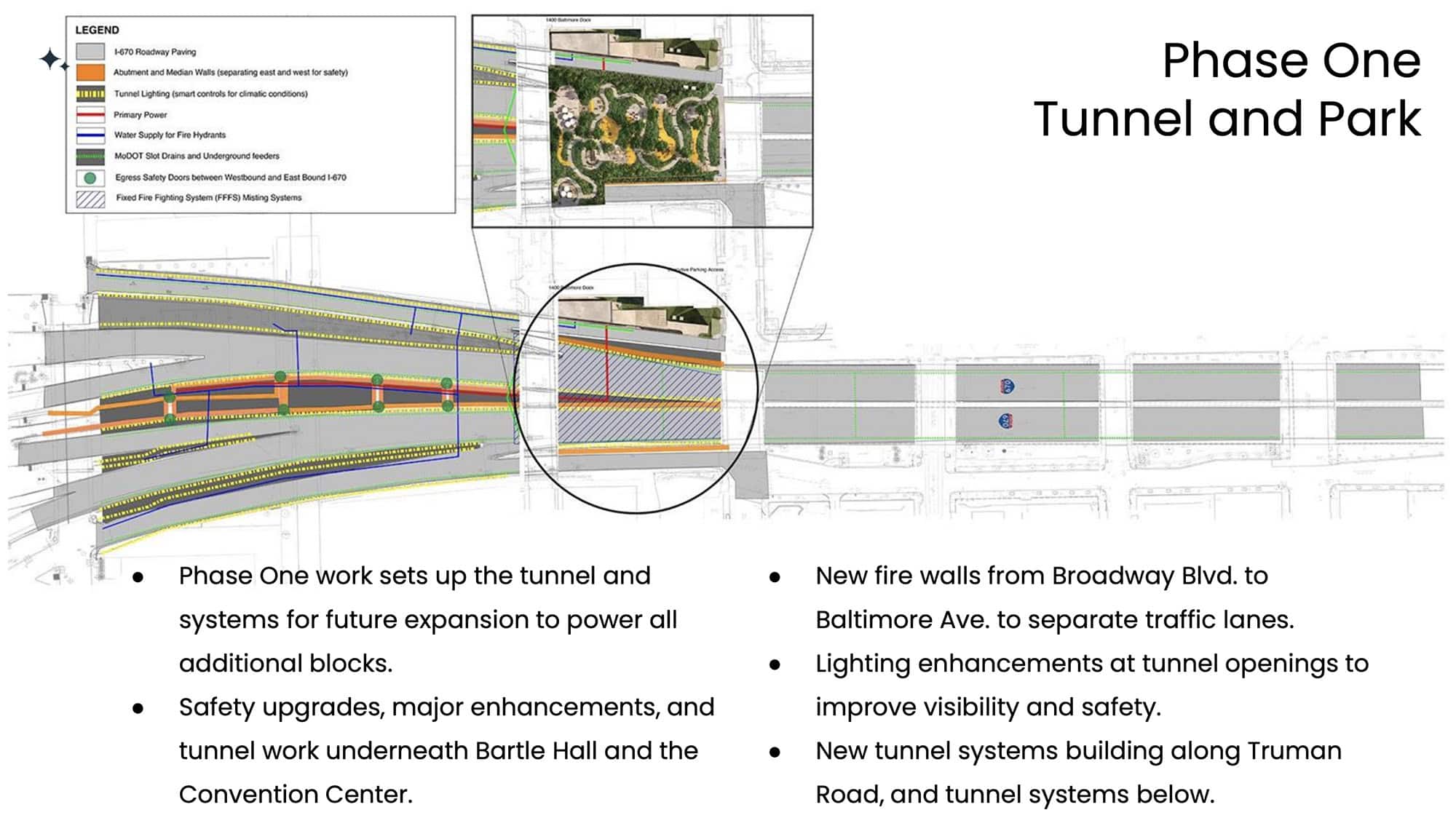
Image courtesy of the City of Kansas City, Missouri
The city must also relocate a traction power substation — underground vaults used to power the KC Streetcar — a process that likely requires a two-year lead time for equipment procurement.
Full completion of Luminary Park’s first phase is expected to take 2.5 years, city leaders said.
Phase Two — encompassing the final three blocks of the project, from Baltimore to Grand — would follow when scheduling and funding allow, with an optimistic opening date anticipated in 2032.
“This phased approach was chosen deliberately,” the city said Thursday in a press release. “It utilizes available funding to build visible momentum for the project now, while responsibly sequencing infrastructure work and fundraising for the blocks that follow.”
Council members faced a Sept. 30 deadline to obligate $28.6 million in federal funding already appropriated for the project or lose the money. The Missouri Department of Economic Development also authorized $43.6 million in state funding, subject to future extensions.
Thursday’s vote puts Kansas City on the hook for $51.6 million in special obligation bonds, though city leaders emphasized that amount could be less, depending on the moves of future city council members and the project’s ability to gain greater philanthropic support and private sector donations.
“Now that construction for the Roy Blunt Luminary Park has been approved, the focus is on making sure the project delivers real value for Kansas City taxpayers and moves forward responsibly alongside everything else the city is building,” a spokesperson for Mayor Quinton Lucas’ office told Startland News.
Accessibility and inclusion remain central to Block One’s design, the city said, with a continued focus on making the park a welcoming gathering space for residents and visitors from every neighborhood and community, according to city documents.
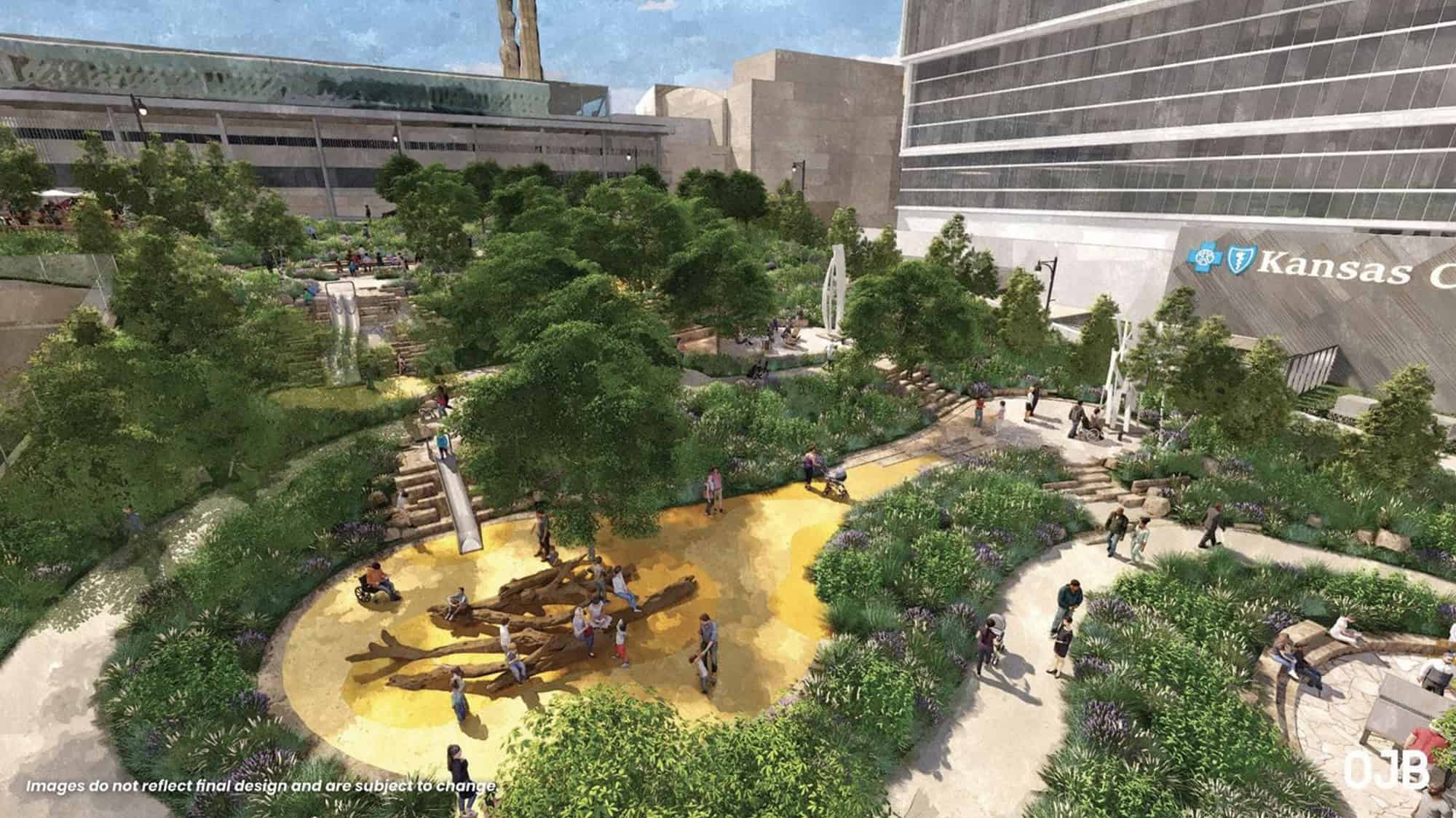
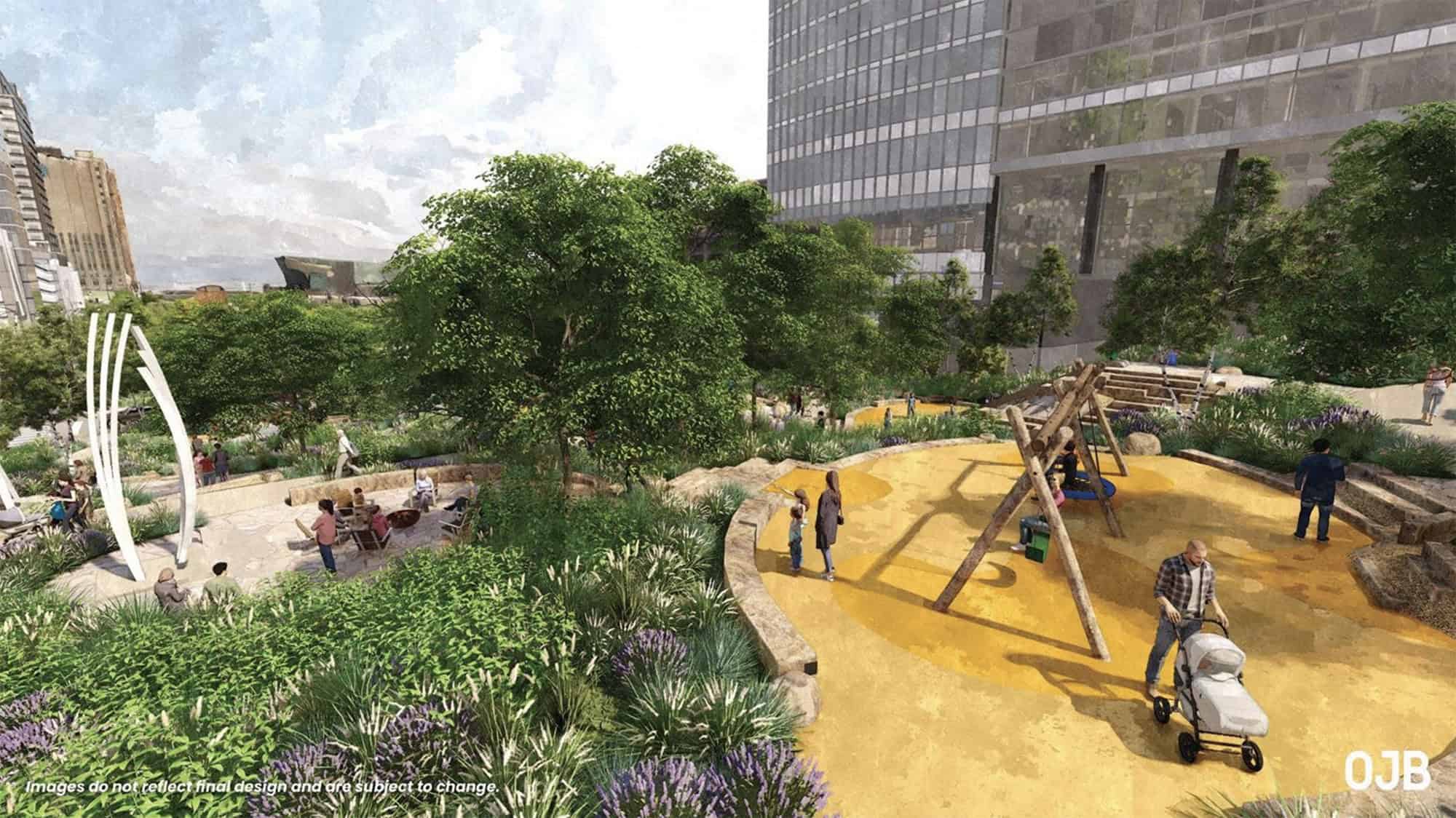
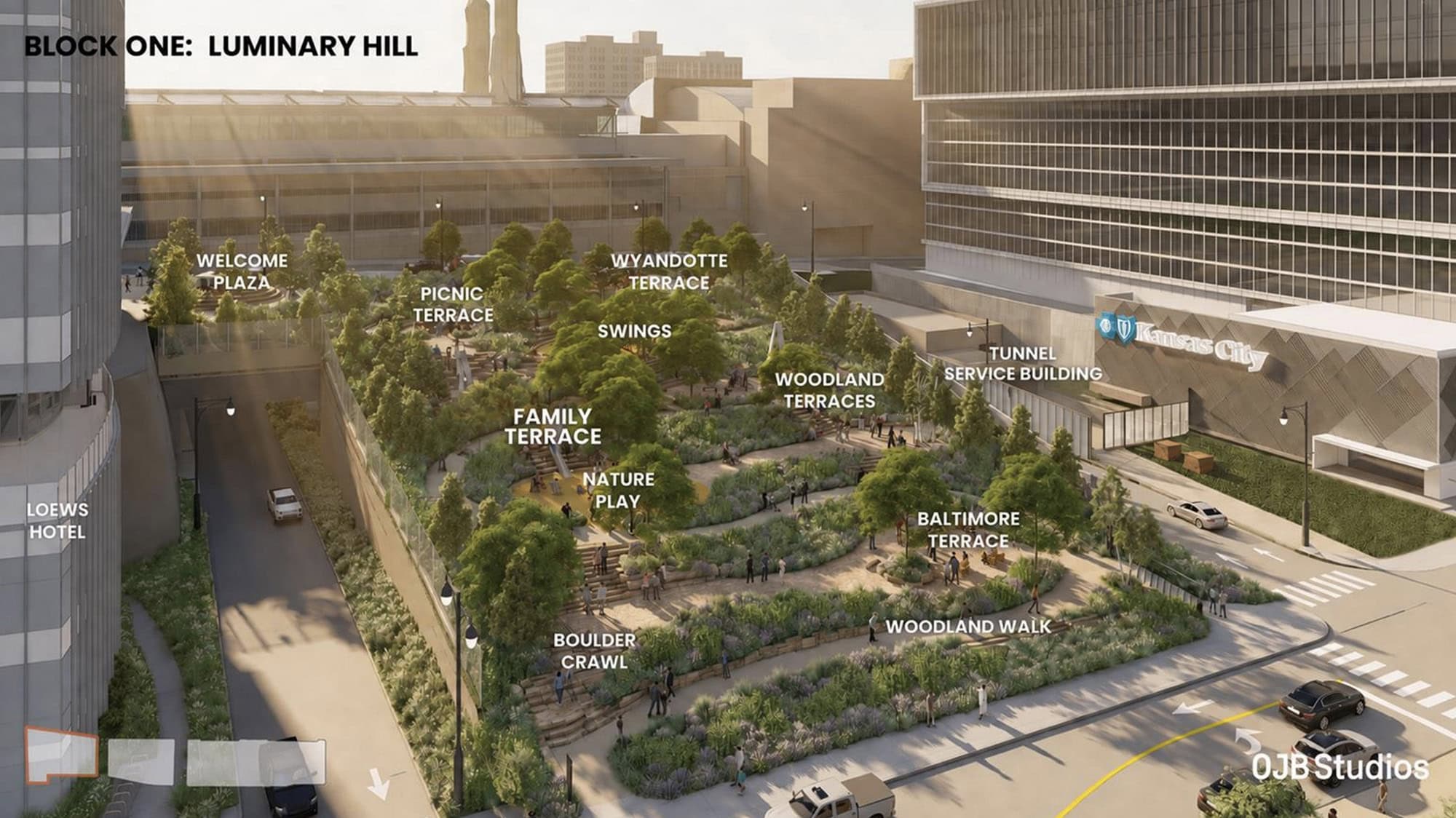
A rendering from OJB Landscape Architecture shows labeled areas within the 1.4-acre “Block One” portion of Roy Blunt Luminary Park; image courtesy of OJB
With a 40-foot grade connecting Wyandotte Street to Baltimore, the above-the-interstate park section of Block One is expected to feature walking paths, play areas, an art garden, space for performances, food trucks, and community gatherings, as well as other amenities.
The woodland walkway mixed with an urban overlook is intended to help heal physical and cultural divisions caused by the implementation of a U.S. highway system that sliced through neighborhoods decades ago.
“Downtown has changed for the better,” Mayor Lucas said Wednesday before the vote. “Scars that remain include the highways cutting through that divide it, including the noise and lack of green space in the core.”
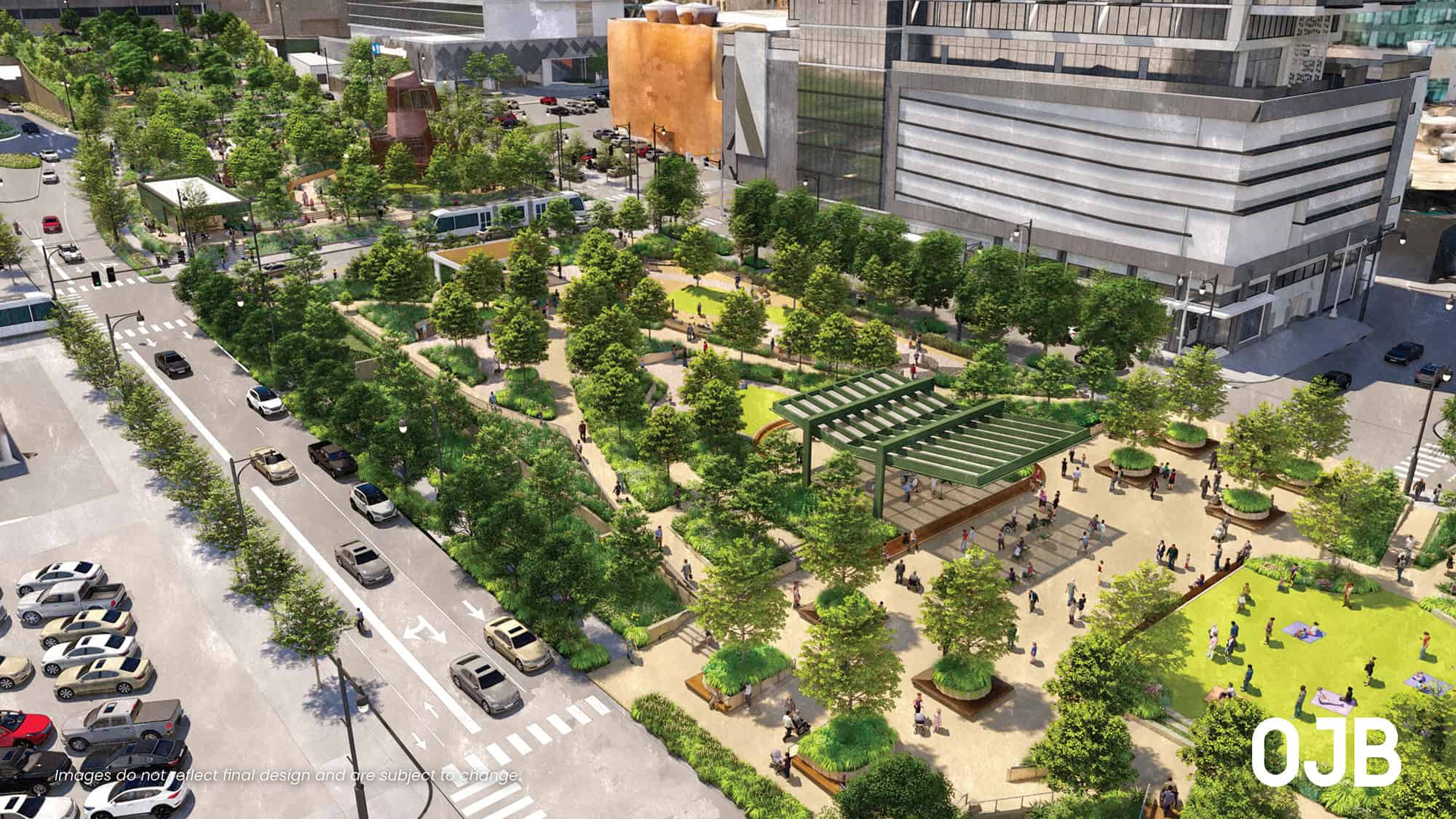
A rendering from OJB Landscape Architecture shows a vision of the full Roy Blunt Luminary Park, stretching from Wyandotte Street to Grand Avenue and connecting downtown Kansas City to the Crossroads Arts District; image courtesy of OJB
Fund More Stories
This story was made possible by readers like you. Join them — make a one-time contribution or become a monthly member to sustain our work.