This concept’s Aloha spirit needed a middle-America start; here’s how it expanded from a KC island to the mainland
September 1, 2026 | Taylor Wilmore
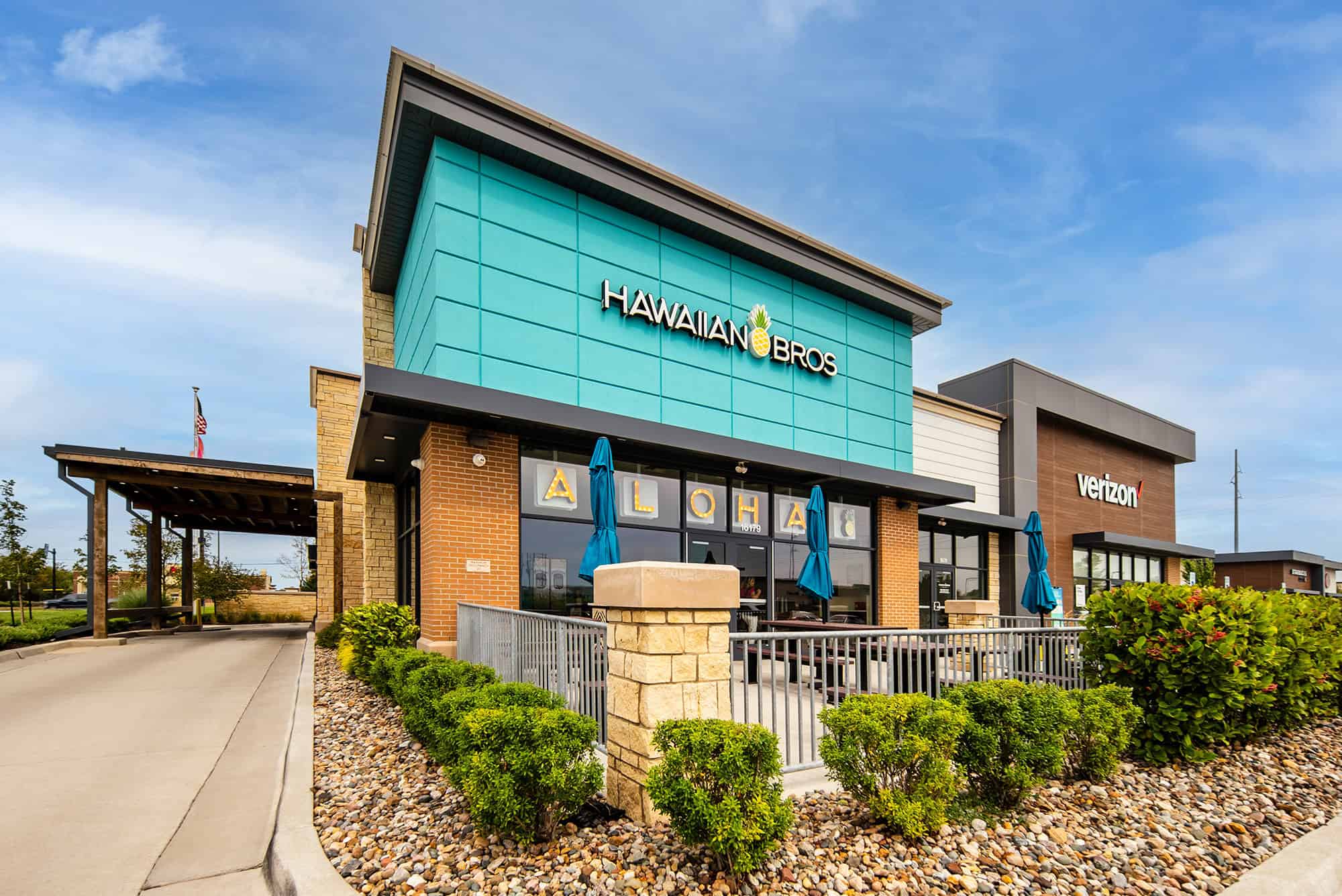
Hawaiian Bros Lenexa restaurant at 16179 W 87th St; courtesy photo
Plating Hawaiian Bros’ first restaurant in Belton, Missouri, served as a launchpad for the island-themed restaurant concept, said Grant Kreutzer, noting the brand’s novelty in the region helped it make a name for itself before venturing out with a sprawling franchise model.
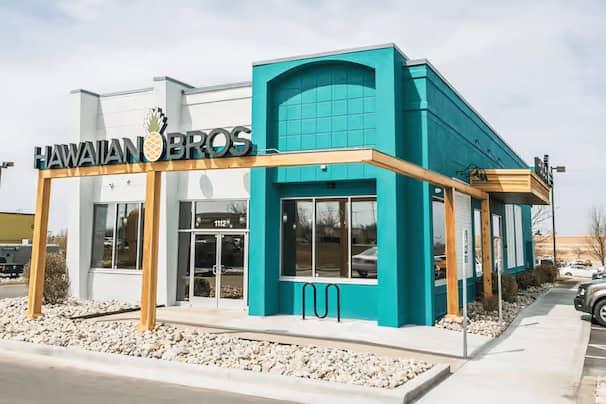
Hawaiian Bros first location at 1112 E. North Ave. in Belton, Missouri; courtesy photo
“The dynamics were right for a good place to start a brand in the middle of the country and then kind of expand outward,” said Kreutzer, senior vice president of franchise development at Hawaiian Bros, noting the fast casual Hawaiian plate lunch concept benefited from little competition when it first opened at 1112 E. North Ave.
Kreutzer joined Hawaiian Bros in 2022 to build its franchise program. Since then, the company has focused on experienced, multi-unit operators who already understand the restaurant business and have the teams and resources to take on multiple locations.
Its latest restaurant opened today in Indianapolis.
That makes 83 restaurants across 14 states, with nearly 300 additional restaurants under development agreements across 18 states. It opened 11 restaurants in seven states this year and is on pace to open more than one a month through the rest of 2026, said Kreutzer.
The goal: build a large franchise system “where they have infrastructure and an organization in place that they can leverage to grow Hawaiian Bros in the markets that they know so well,” said Kreutzer.
Many of those franchisees already operate dozens or even hundreds of restaurants across other brands. Hawaiian Bros currently has 11 multi-unit franchisees, and some are developing 10, 20 or 30 restaurants within their territories.
That approach has taken the brand into Chicago, Austin, Dallas, Houston, San Antonio, Phoenix, Tucson, Portland, Las Vegas, Atlanta and Indianapolis. Rather than jumping from market to market, Hawaiian Bros is building outward from the areas where it already has a presence.
Order up, scaling up
Hawaiian Bros’ expansion is continuing across the South and into new regions. Franchisees are developing restaurants in Louisiana, Alabama and Tennessee, with development agreements in North Carolina. The company is also seeing interest in Florida and looking toward Ohio, Michigan, Minnesota, Wisconsin and the Mid-Atlantic.
“We’re going to continue to grow throughout the Southeast, and then look at the Mid-Atlantic regions,” said Kreutzer. “We’re just starting to design plans to enter California, which is exciting.”
The company doesn’t choose its next markets simply by looking for the biggest populations on the map, he added.
Hawaiian Bros uses demographic and real estate data to find areas with the customers it believes are a good fit for the brand. From there, it ranks potential trade areas and works with franchisees already operating in those markets, said Kreutzer.
The company has also been able to carry its sales performance from Kansas City into such larger markets as Austin, Houston and San Antonio, and later into Phoenix, Tucson and Portland. That track record has given Hawaiian Bros confidence as it enters new markets, Kreutzer added.
Once a market is identified, the company looks closely at individual sites. Its real estate tools consider such factors as population density, income levels and customer buying patterns.
Hawaiian Bros also explores a specific physical site’s access, visibility, signage and nearby businesses before deciding whether it fits the model.
The company has several restaurant formats to work with, including freestanding drive-thrus, inline and end-cap locations, smaller delivery-focused sites and shared kitchen models. More than half of its restaurants are second-generation conversions, meaning Hawaiian Bros can move into an existing restaurant space instead of building from scratch.
That flexibility helps the company adapt to different markets while keeping the core business model the same.
“We have an operating system that franchisees follow, and the company as well,” said Kreutzer. “Both franchise-operated and company-operated restaurants follow the same operating system.”
The system is designed to keep operations simple. Restaurants typically run with four to six employees, and franchisees receive ongoing support after opening. Hawaiian Bros tracks speed of service, food safety, sales, labor, and food costs to help operators stay on pace.
The Aloha spirit is part of that system, too. The company was founded by two sets of brothers: Cameron and Tyler McNie, who learned the Hawaiian plate lunch tradition from Kekoa, a native Hawaiian who operated a restaurant in Oregon, and their childhood friends Paul and Joel Worcester, who had moved to the Kansas City area.
The McNie brothers’ experience with Hawaiian food in Oregon helped shape the concept they eventually brought to Missouri. The four launched Hawaiian Bros in 2017, with the first restaurant opening in Belton the following year.
That history still shows up in Hawaiian Bros’ emphasis on kindness, warmth and respect toward customers, employees and the communities where its restaurants operate, the company said.
Small menu, wide reach
The menu has remained much smaller than the company’s restaurant footprint.
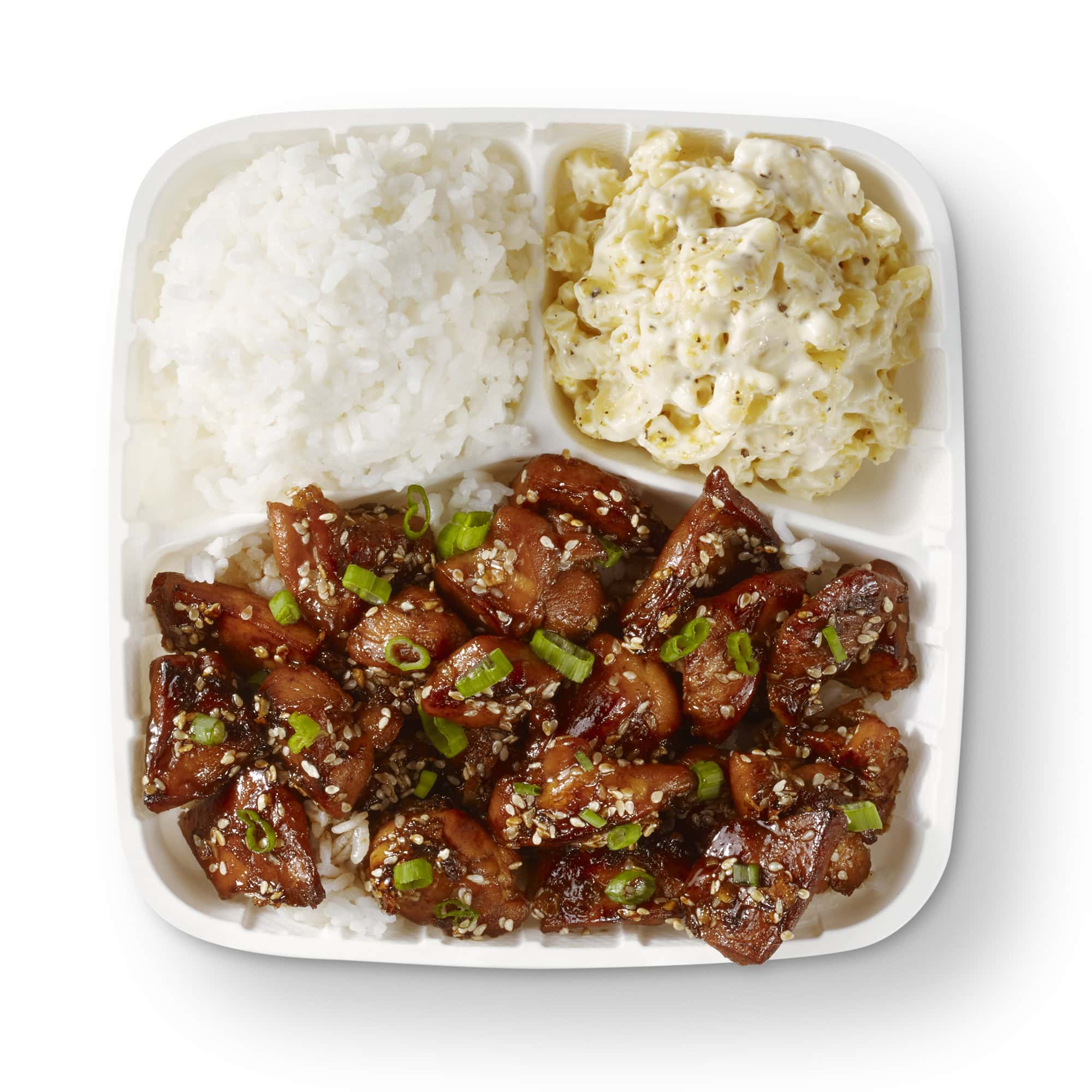
A classic Hawaiian Bros plate; courtesy photo
Hawaiian Bros is built around the Hawaiian plate lunch, with grilled proteins, rice and macaroni salad. The McNie brothers developed the basic dish in Oregon, where they and their family eventually opened and expanded their own Hawaiian plate lunch restaurants under different branding.
At Hawaiian Bros, the menu is intentionally focused. Food is prepared fresh each morning without freezers, fryers or microwaves.
“A smaller menu helps us focus on fewer things and then deliver the quality consistently,” said Kreutzer.
That simplicity also helps the restaurants move quickly. Two-window drive-through locations target an average pickup time of 30 seconds or less. A one-window location averages about a minute, said Kreutzer.
Drive-through service is only part of how customers are ordering. Online ordering and third-party delivery have become a larger share of the business, leading Hawaiian Bros to add a dedicated service lane for delivery drivers at its freestanding drive-through prototype.
The separate lane allows drivers picking up orders through services such as Uber Eats and DoorDash to get in and out without slowing the regular drive-through. The company has also expanded its online ordering and catering tools.
The model has helped attract franchise operators. Hawaiian Bros’ average unit volume is about $2.5 million, with the top 25% of franchised restaurants averaging about $3.5 million, said Kreutzer.
Those numbers are part of the appeal, but Kreutzer also points to the combination of speed, value and a menu that stands apart from more traditional fast-casual restaurants.
“It’s the Aloha spirit, the uniqueness of the menu, and because we have a good value proposition, it’s affordable, it’s fast, convenient, and healthy,” said Kreutzer. “It’s nothing fried in the restaurant. It’s a great work environment, so it works for the employees as well as the customer.”
The company has not seen major surprises as it has moved into new markets, said Kreutzer, noting sales and performance have generally matched what Hawaiian Bros expected based on its existing restaurants.
That consistency is important as the company continues to grow. Its goal is not simply to open more restaurants, but to repeat a model that works across different markets.
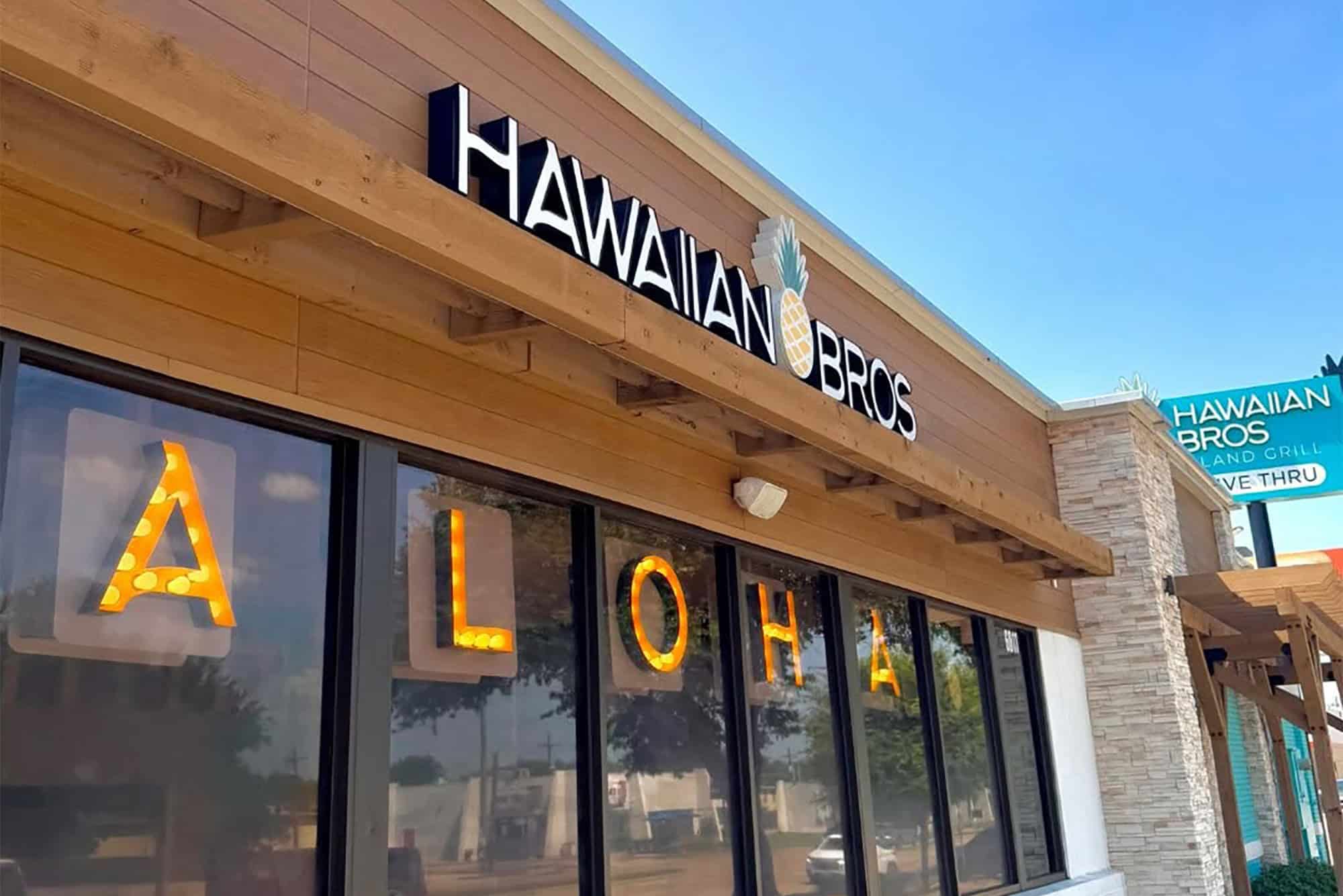
Hawaiian Bros restaurant exterior; courtesy image
Setting sail across the US
Hawaiian Bros just opened an Indianapolis restaurant along U.S. Route 31 today.
The company next plans to continue filling in the Midwest and Great Lakes regions while moving farther into the Northeast, Southeast and California.
Much of that growth is being driven by franchisees who already operate large restaurant portfolios. Their existing teams and knowledge of local markets give Hawaiian Bros a way to expand without building an entirely new operation in each market.
The company also has a clear process for measuring how those restaurants perform once they open. Franchise support teams work with operators on a regular basis, tracking everything from speed of service and food costs to labor, sales and food safety.
That combination of data, local operators and a simple restaurant model is giving Hawaiian Bros a path into new markets while keeping the business consistent.
Does that mean Hawaiian Bros could legitimately soon become a nationwide brand?
“We’d love to do that,” said Kreutzer. “We continue to see a lot of interest from multi-unit operators to take the brand to new markets.”
The company is still working from the same basic playbook that helped it get started in Missouri: find the right customers, partner with experienced restaurant operators and build a format that can work in the market.
For Kreutzer, though, the growth is also about adding something different for customers and employees in those new communities.
“I am so excited to bring Hawaiian Bros to new markets, so customers can experience the Hawaiian Bros diet and the Aloha spirit,” said Kreutzer. “I’m most excited about bringing that positivity and seeing our franchisees grow and be successful.”
Fund More Stories
This story was made possible by readers like you. Join them — make a one-time contribution or become a monthly member to sustain our work.