MRIGlobal plans North KC lab expansion through KC BioHub’s $38M+ biologics boost
August 7, 2026 | Startland News Staff
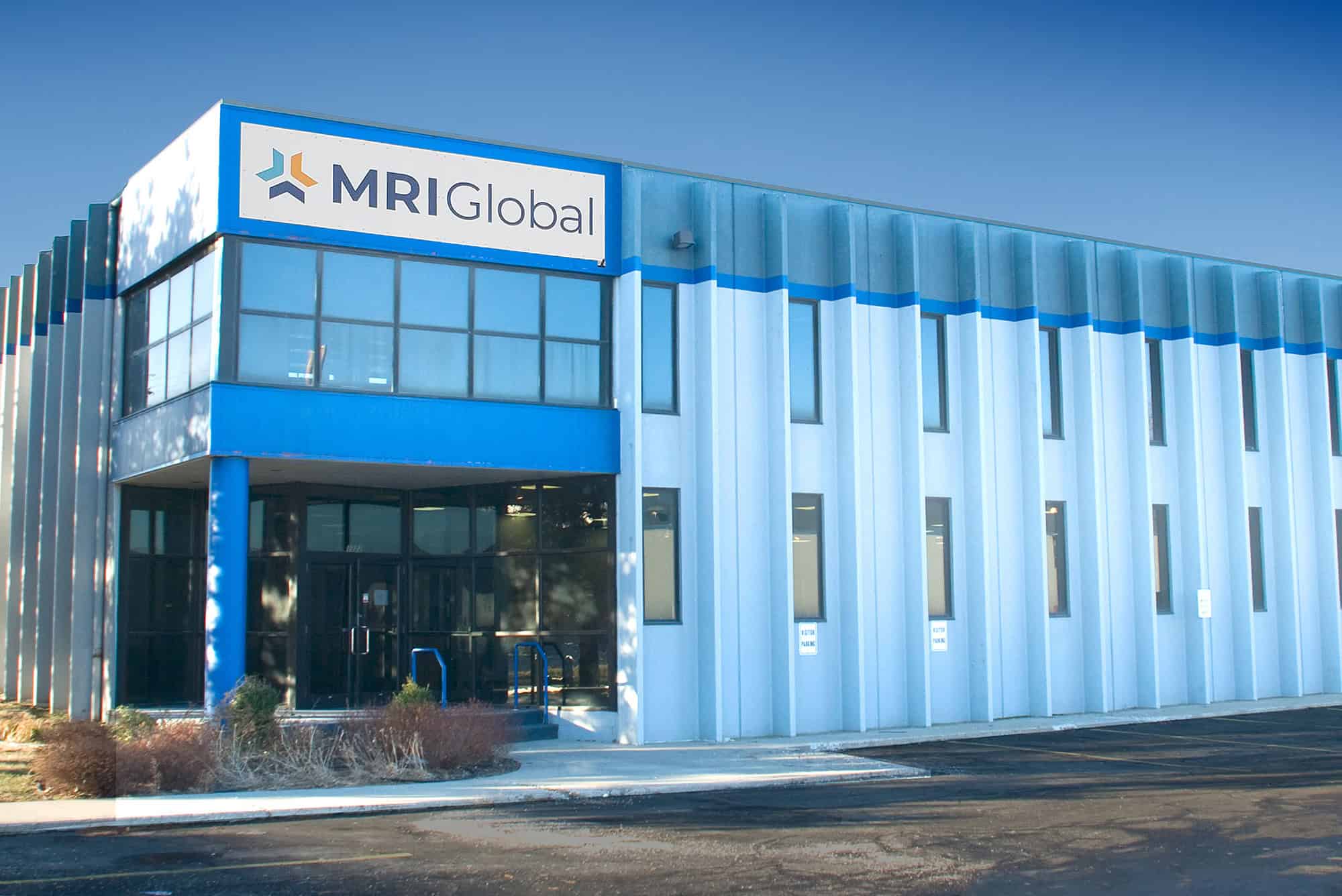
MRIGlobal's existing North Kansas City facility at 1222 Ozark St; photo courtesy of MRIGlobal
As an influx of $38.1 million in federal Tech Hub and local funds hits the region, a core collaborator within the initiative is expected to cultivate a first-of-its-kind facility in North Kansas City — an expanded physical site for developing critical biomanufacturing and commercialization capacity with the potential to reshape geopolitical threats to U.S. health.
MRIGlobal’s planned SCALE Center (Systems for Commercial Advancement of Large-molecule Engineering) — a project advanced within the KC BioHub consortium’s recently funded Tech Hubs endeavor — is charged with removing manufacturing bottlenecks, reducing supply chain vulnerabilities, and boosting domestic capacity to get life-changing therapies to patients faster.
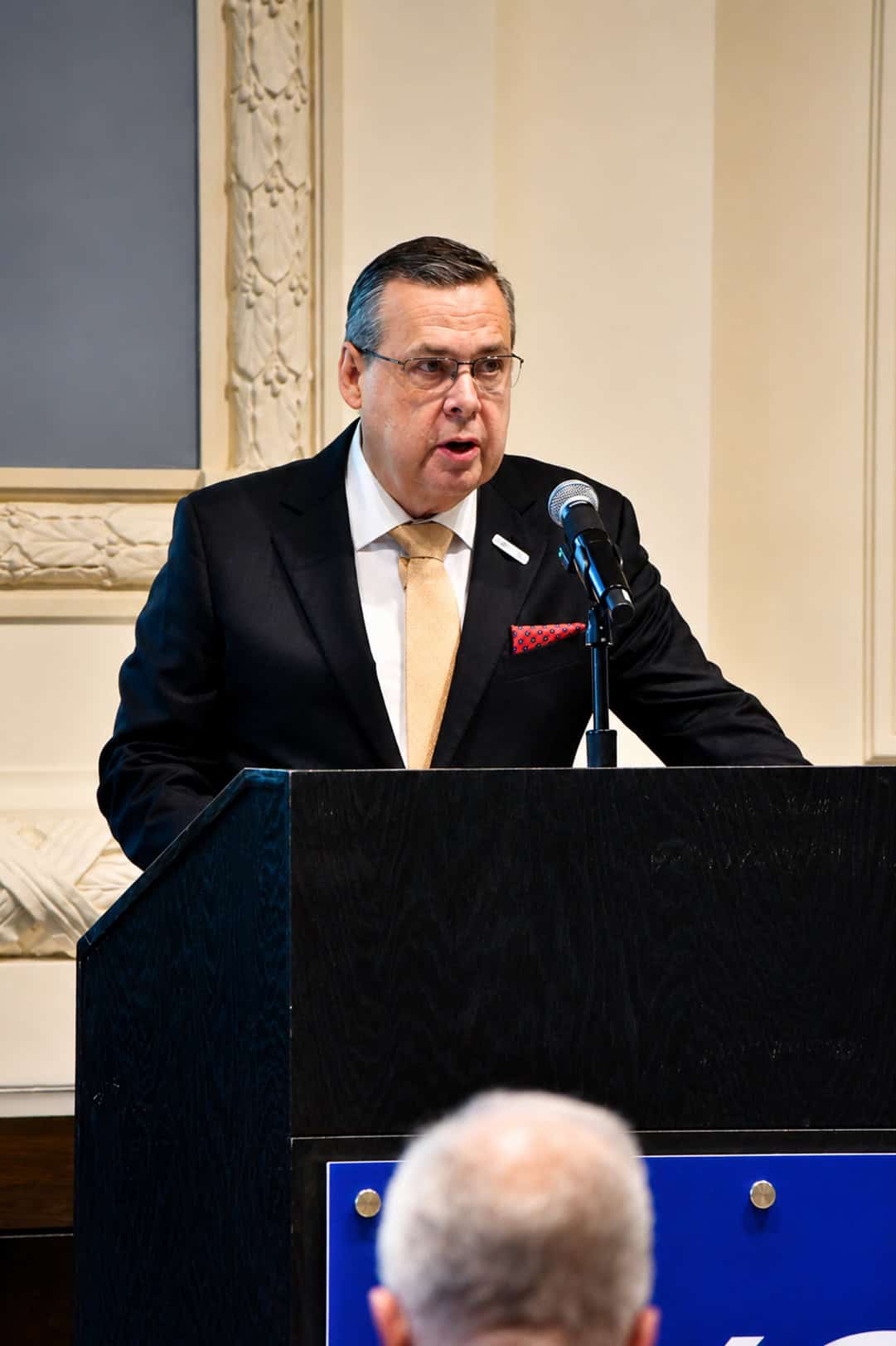
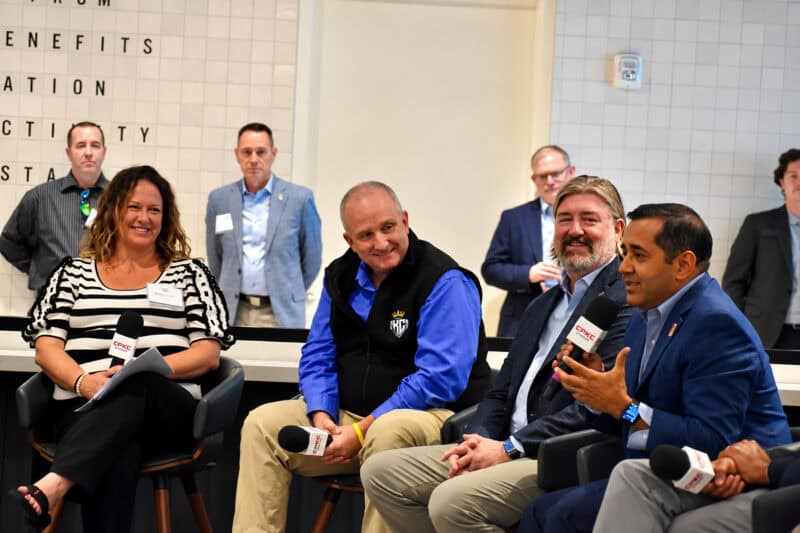
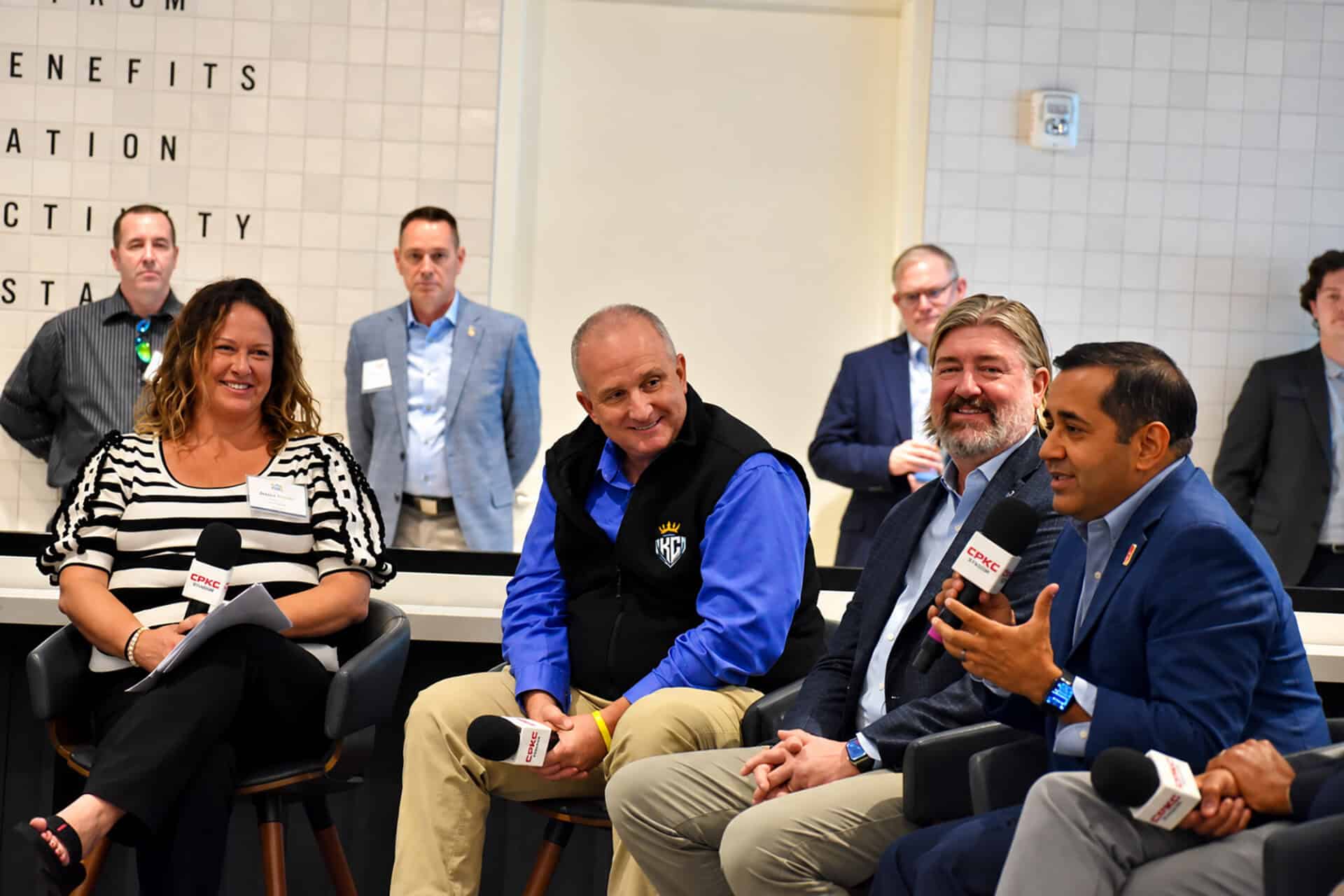
Ian M. Colrain, president and CEO of MRIGlobal, discusses his company’s involvement in the just-funded $38.1 million Tech Hubs initiative during a KC BioHub celebration at Union Station; photo by Tommy Felts, Startland News
“It will be an investment in America’s ability to develop and manufacture the next generation of biologic medicines,” said Ian M. Colrain, president and CEO of MRIGlobal, referencing KC BioHub’s overall $34.1 million award from the U.S. Economic Development Administration. The funding is paired with a $4 million local match from an array of agencies and organizations, like the Ewing Marion Kauffman Foundation, Block Family Foundation, Hall Family Foundation, and Health Forward Foundation.
“Together, we are building capabilities that will enhance national competitiveness, improve health outcomes, and support economic growth for decades to come,” Colrain continued.
KC BioHub — a program of BioNexus KC — could land a total of $150 million in federal investment, depending on the success of the rollout and the initiative’s progress.
The SCALE Center’s role within the effort is to address one of modern medicine’s most significant challenges, Colrain noted: developing critical medicines — including cancer treatments, gene therapies, and treatments for rare diseases — that represent some of the most promising advances in healthcare, but which are constrained by complex costly production and limited global capacity.
Click here to learn more about the five core projects planned by KC BioHub.
While KC BioHub has not detailed how funding is to be allocated to core partners like MRIGlobal and Kansas Manufacturing Solutions, the initiative is specifically expected to allow the North Kansas City site to establish modular current Good Manufacturing Practice (cGMP) biomanufacturing suites, analytical laboratories, and supporting infrastructure equipped with advanced technologies.
MRIGlobal has not yet released a timeline for project construction and implementation.
Once complete, however, the MRIGlobal facility is expected to help biotechnology companies, research institutions, and government partners accelerate commercialization by providing advanced manufacturing expertise, technology maturation services, and scalable production capabilities.
In doing so, Colrain said, the SCALE Center also supports a broader objective held by KC BioHub and U.S. policymakers: strengthening domestic biomanufacturing and reducing reliance on foreign capacity for critical medicines.
Originally founded in 1943 as Midwest Research Institute, MRIGlobal has for decades been a magnet to attract and retain top talent in the region, Colrain told consortium members and leaders gathered July 27 for a KC BioHub project celebration.
“Although our work has grown to include very important national priorities and clients around the world, Kansas City remains our home. And we’re not just in Kansas City, we’re very much of Kansas City,” he said. “In some ways, our work provides a bridge between Kansas City and Washington, DC. Every day, we see what our federal partners need, and what the scientific talent and organizations in this region can deliver. We also see how investment in the Heartland can strengthen our nation’s scientific capabilities and advance priorities that matter across the country.”
Fund More Stories
This story was made possible by readers like you. Join them — make a one-time contribution or become a monthly member to sustain our work.