US biotechs gave China control over your medicine; here’s how KC’s $38M+ BioHub initiative could win it back
July 28, 2026 | Tommy Felts

Heather Decker, co-founder of Overland Park-based Ronawk, works in Ronawk's Kansas lab in 2024; photo courtesy of Ronawk
Competition is the catalyst as Kansas City’s federally funded Tech Hub works to quench a simmering disconnect between biologics innovation and U.S. national security — aligning the region’s talent and infrastructure with American efforts to neutralize Chinese biomanufacturing dominance.
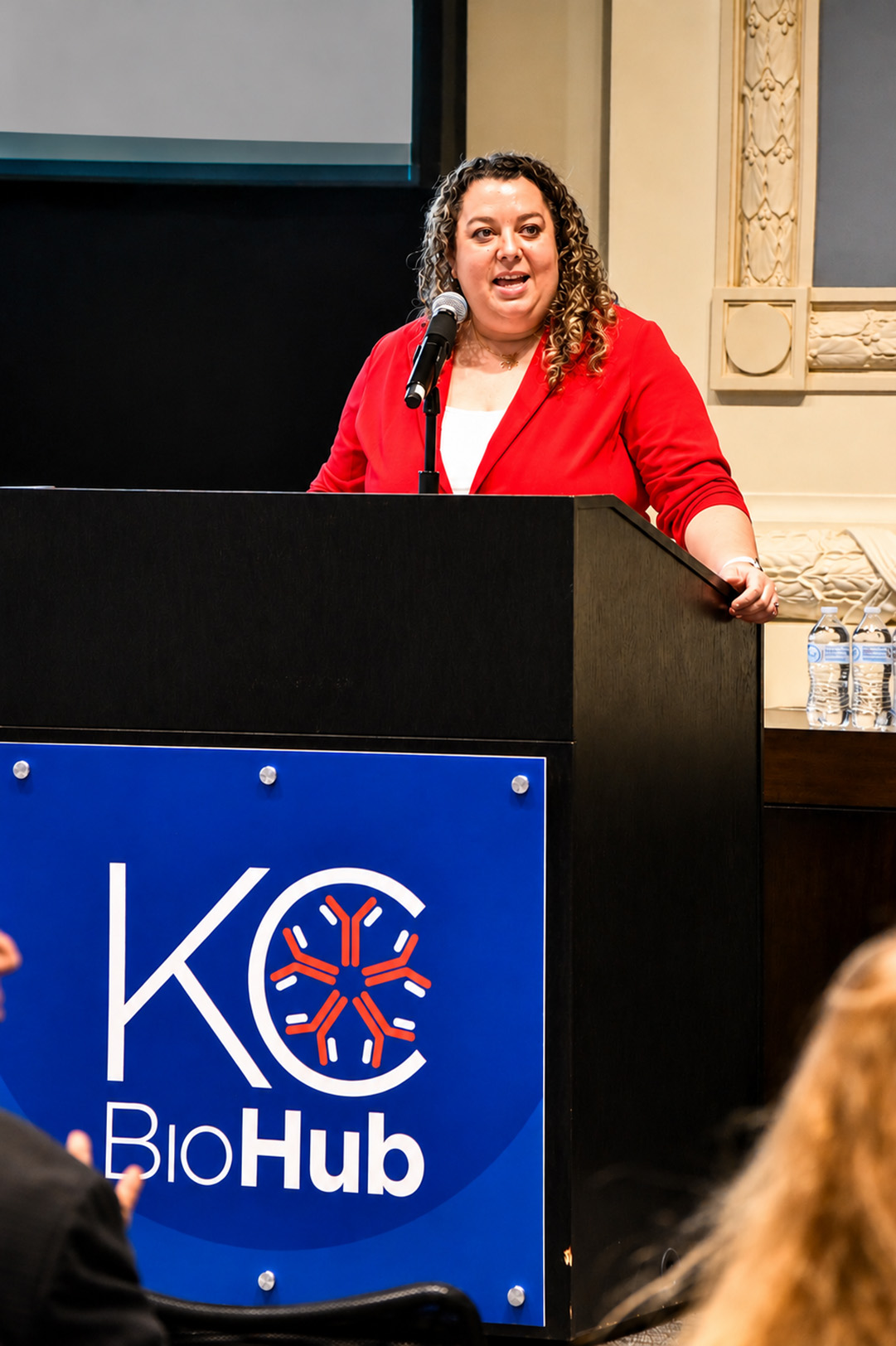
Melissa Roberts Chapman, president of KC BioHub, details the journey from aspiring Tech Hub to winner of a $34 million federal grant to boost the Kansas City region’s biomanufacturing sector, during an announcement event at Union Station; photo by Tommy Felts, Startland News
“When you control how medicine is made, you control who has access to it and when,” said Melissa Roberts Chapman, president of KC BioHub, detailing plans Monday for $38.1 million in federal and local funds that have been newly awarded to the regional biologics and biomanufacturing initiative.
Today, 79 percent of U.S. biotech companies work with Chinese firms to bring products to market, Roberts Chapman told a crowd gathered at Union Station to learn more about next steps in the massive regional project. In turn, the Chinese government has access to the intellectual property associated with those innovations, as well as their production.
“China is generally an adversary and we need to make sure that we have those critical components for our well-being,” U.S. Sen. Jerry Moran, R-Kansas, a core backer of Kansas City’s Tech Hubs bid, told Startland News. “We cannot rely upon somebody who has the opportunity to twist the knob and turn that flow off.”
It’s far from an unlikely scenario, Roberts Chapman noted.
“China has already used this leverage over semiconductors, rare earths, and even solar panels,” she said. “Anyone who believes it won’t be used again when it comes to the medicines keeping American patients alive and our warfighters lethal has not been paying attention.”
“The question before us isn’t whether we need domestic capacity,” Roberts Chapman continued. “It’s whether we build it before we need it or after we learn what it costs not to.”
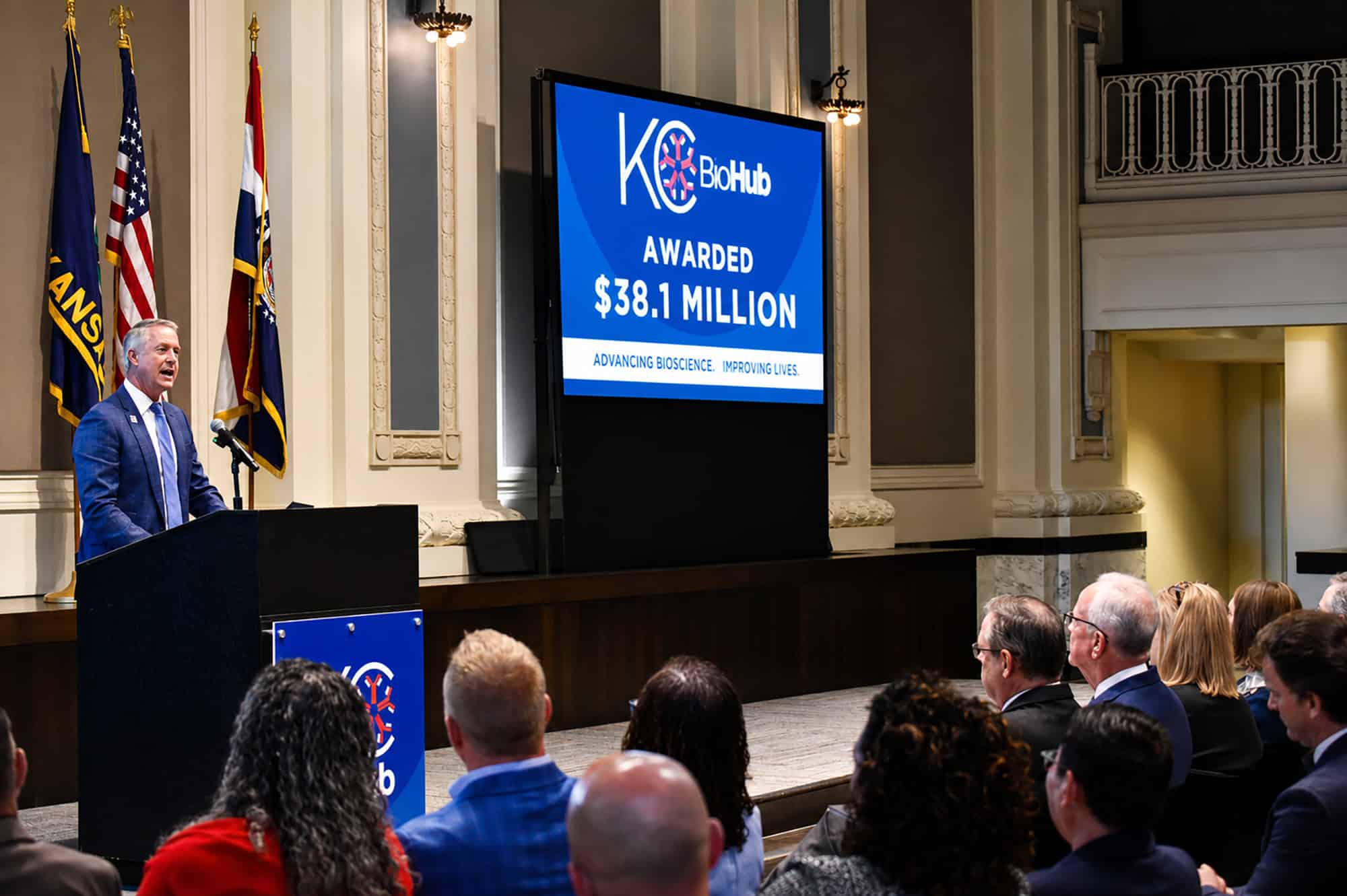
U.S. Sen. Roger Marshall, R-Kansas, delivers remarks in the Chamber Board Room at Union Station during a celebration event for KC BioHub’s successful Tech Hubs grant; photo by Tommy Felts, Startland News
Cultivating the future in KC
Officials in Washington, D.C. have decided the future of biologic medicine belongs in Kansas City, Roberts Chapman said Monday, and the region’s job now is to make sure that the world knows it.
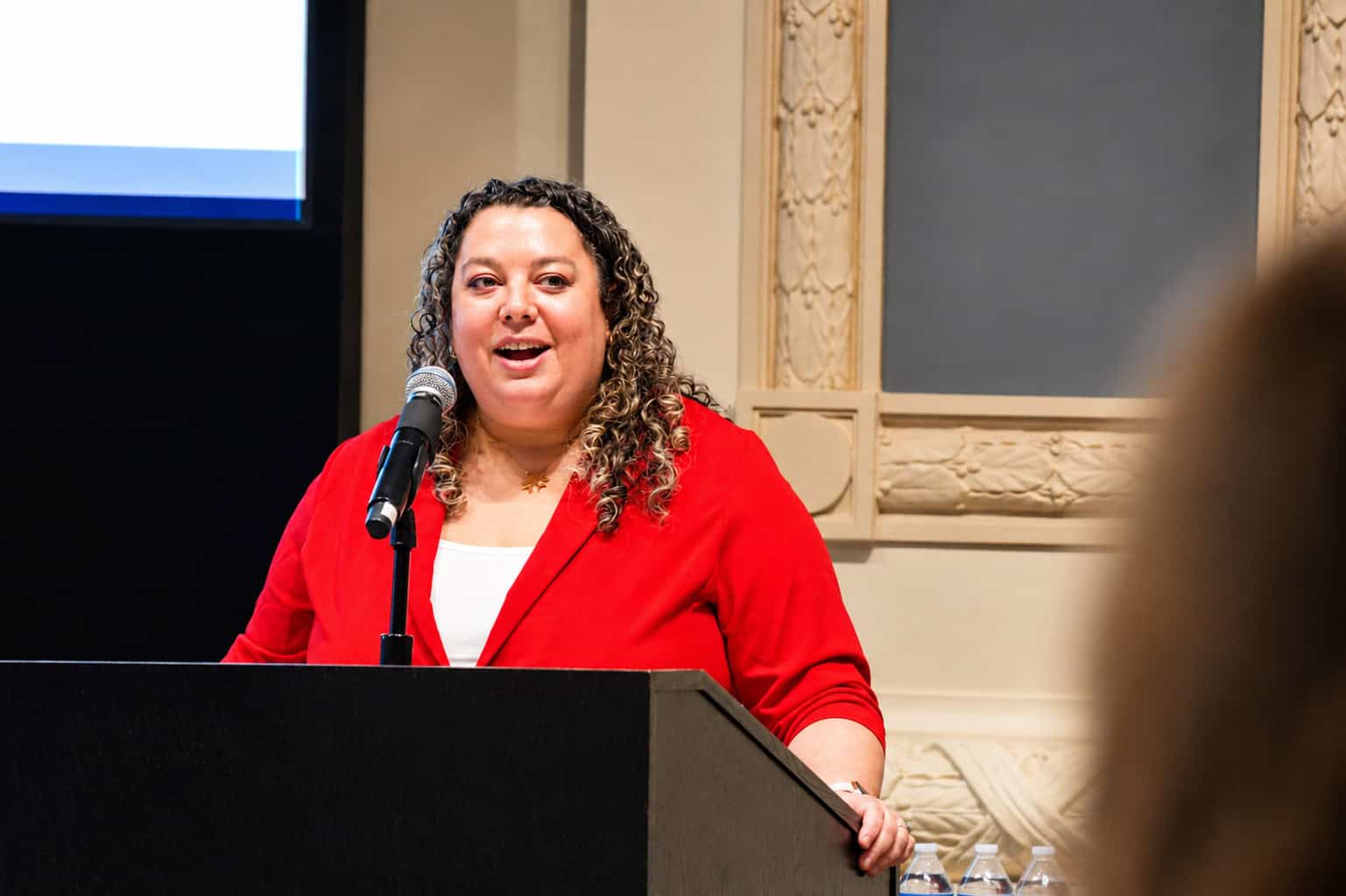
Melissa Roberts Chapman, president of KC BioHub, shares Kansas City’s advantage in a global biologics race; photo by Tommy Felts, Startland News
“For 75 years, federal investment in innovation has flowed to the coasts and the research corridors that already had it all,” she said. “The Tech Hubs program is designed to change that, to recognize that America’s competitive strength is distributed across the entire country.”
Kansas City emerged in 2023 from a field of 379 regions vying to be named as federally recognized Tech Hubs. Of those, only 31 were chosen. To date, just 18 Tech Hubs have won funding.
The region’s $38.1 million in initial funding comes via the U.S. Economic Development Administration and includes a local $4 million match from an array of agencies and organizations, like the Ewing Marion Kauffman Foundation, Block Family Foundation, Hall Family Foundation, and Health Forward Foundation.
 KC BioHub — a program of BioNexus KC — could land a total of $150 million in federal investment, depending on the success of the rollout and the initiative’s progress, Roberts Chapman said.
“Over the next 10 years, we’ll be working to build the most complete and integrated set of biological production capabilities,” she noted, sharing credit and a commitment with a consortium of more than 115 regional partners and stakeholders.
Early projects range from KC BioHub-led programs to collaborations with key partners at MRIGlobal and Kansas Manufacturing Solutions. Each serves as a declaration of Kansas City’s promise to funders and the community, Roberts Chapman said: “Growing our economy and protecting our country by bringing the development and manufacturing of biologics back home.”
Click here to learn more about the five core projects planned by KC BioHub.
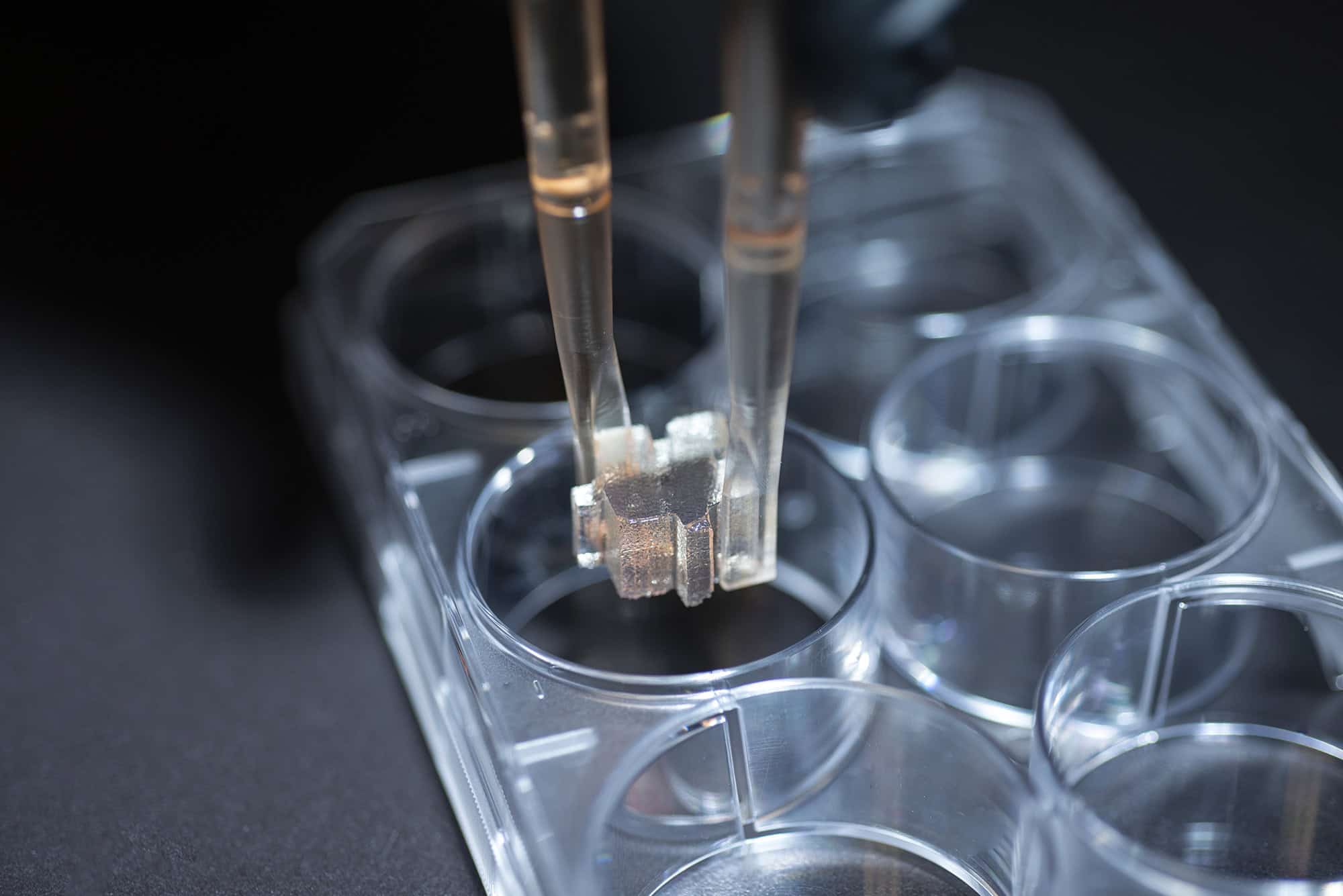
A promotional image from Overland Park-based Ronawk illustrates the biotech company’s Bio-Blocks — showing the structure and level of detail in the Kansas-built technology. Bio-Blocks allow Ronawk to cultivate multiple types of human cells together in an environment that more closely resembles the body. Those cellular systems can then be used to produce biologics that may serve as raw materials for advanced therapies, diagnostics, and medical devices; image courtesy of Ronawk
“Biologic medicines are the drugs of the future: the insulin that manages a child’s diabetes, the immunotherapy that shrinks a tumor, the vaccine that stops a pandemic in its tracks,” she noted. “These are the medicines that Americans depend on today, and will define the future of human health.”
Kansas City’s winning Tech Hubs designation and funding comes after years of work establishing the region as a hub for innovation, first as an animal health corridor, then as a center for biodefense through the National Bio and Agro-Defense Facility and Biosecurity Research Institute.
“It’s no coincidence that we won this grant. We just had to brag a little bit about ourselves to get it done,” said U.S. Sen. Roger Marshall, R-Kansas, during remarks Monday.
“It’s important to emphasize that biotechnology uses the tools to protect our food supply from disease outbreaks — naturally occurring or intentional — gives us the ability to build new vaccines and treatments faster,” he continued. “So if our food supply, our troops, or our citizens are ever threatened by biological attacks, we’re not caught flat-footed. We’re ready.”
Roberts Chapman lamented that for 30 years, U.S. biotech companies have systemically offshored their production, in large part to China.
“Not because China does the work better or even more cheaply, but because American companies, under pressure to cut costs, have made short-term decisions that have had a long-term national security impact,” she said.
Boosting companies like Overland Park-based biotech firm Ronawk can serve as an antidote.
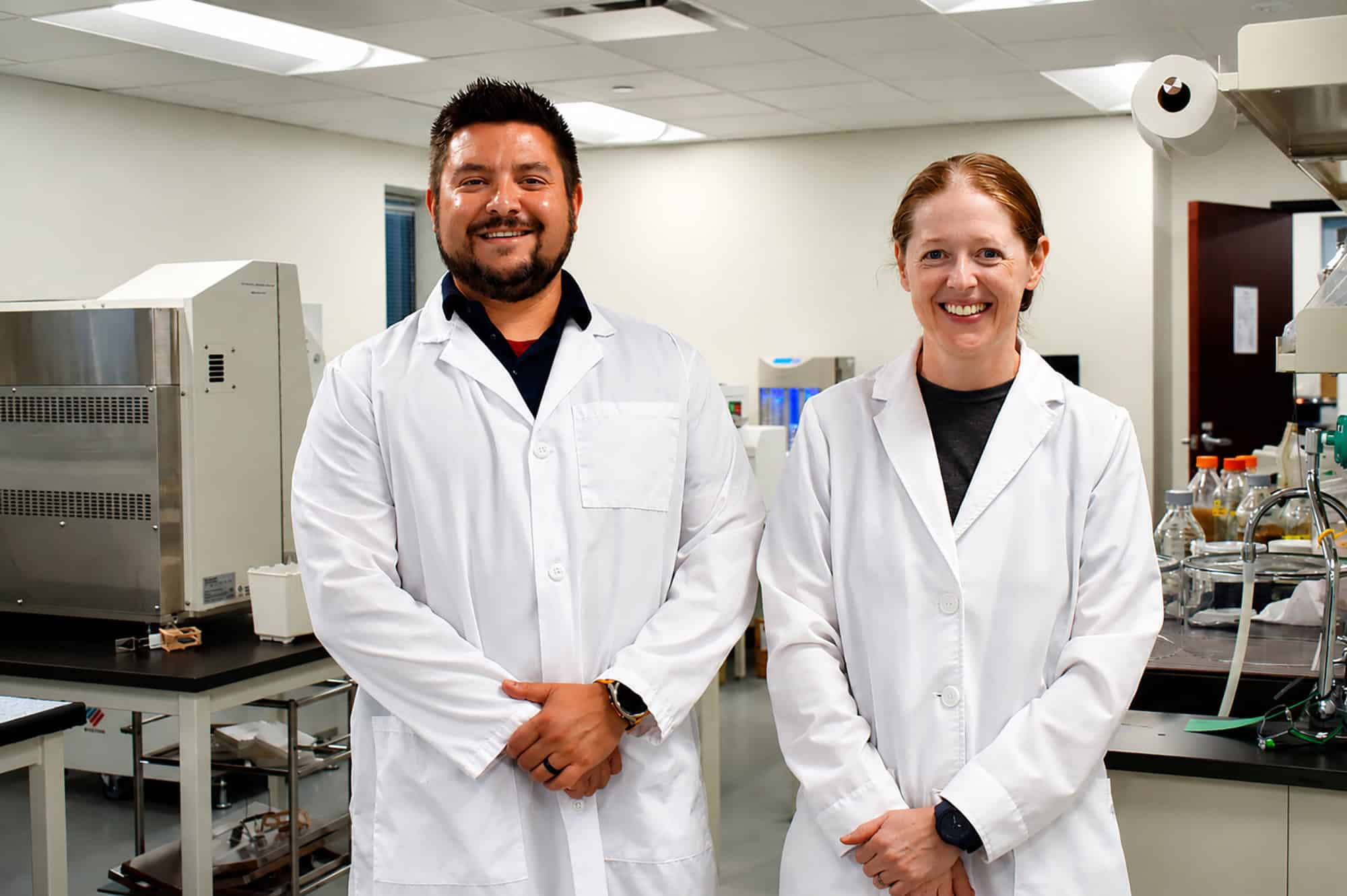
A.J. Mellott and Heather Decker, co-founders of Ronawk, stand in their Overland Park lab; photo by Taylor Wilmore, Startland News
The company’s work already intersects with national security priorities through efforts focused on how human biologics and advanced biomanufacturing technologies can support warfighter health before, during and after deployment, said co-founder and CEO A.J. Mellott.
Specifically, Ronawk’s Bio-OS platform helps living cells thrive like they are in their native environment even though they are outside the body, he explained, creating new opportunities to produce biologic materials for advanced therapies, diagnostics, and medical technologies.
“In the short term, the Tech Hubs award validates the strength of Kansas City’s biomanufacturing ecosystem and the companies contributing to it, including Ronawk,” Mellott told Startland. “Over the long term, it will bring greater attention from investors, regulators, and pharmaceutical partners while creating opportunities for Ronawk to contribute its Bio-OS platform to the region’s growing capacity for human biologics manufacturing.”
The grant also puts a national spotlight on what those growing their businesses and innovations in Kansas City already recognize, he said: the region boasts talent, facilities, technologies, and a collaborative culture that welcomes original ideas.
“That’s why we chose to build Ronawk here,” Mellott said.
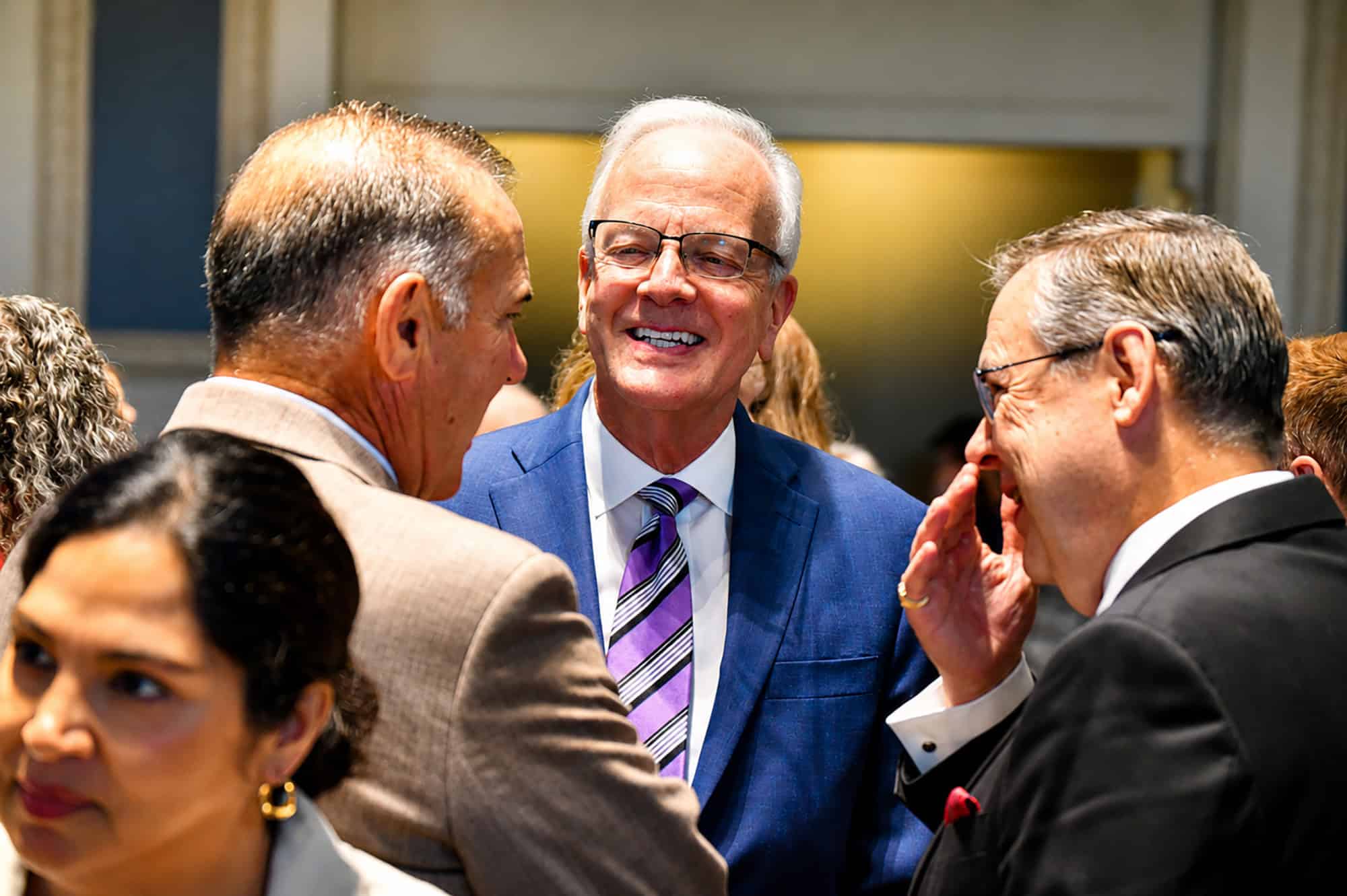
U.S. Sen. Jerry Moran, R-Kansas, center, shares a laugh with Missouri Gov. Mike Kehoe and Ian M. Colrain, president and CEO of MRIGlobal, during a KC BioHub celebration at Union Station; photo by Tommy Felts, Startland News
Test lab for tomorrow’s talent
Championing the Kansas City region is about making sure young people in Moran’s home state have a bright future, the three-term U.S. Senator said. He was lauded Monday for 15 years of advocating in Washington on behalf of entrepreneurs and the region — from leading federal Startup Act legislation to supporting KC BioHub.
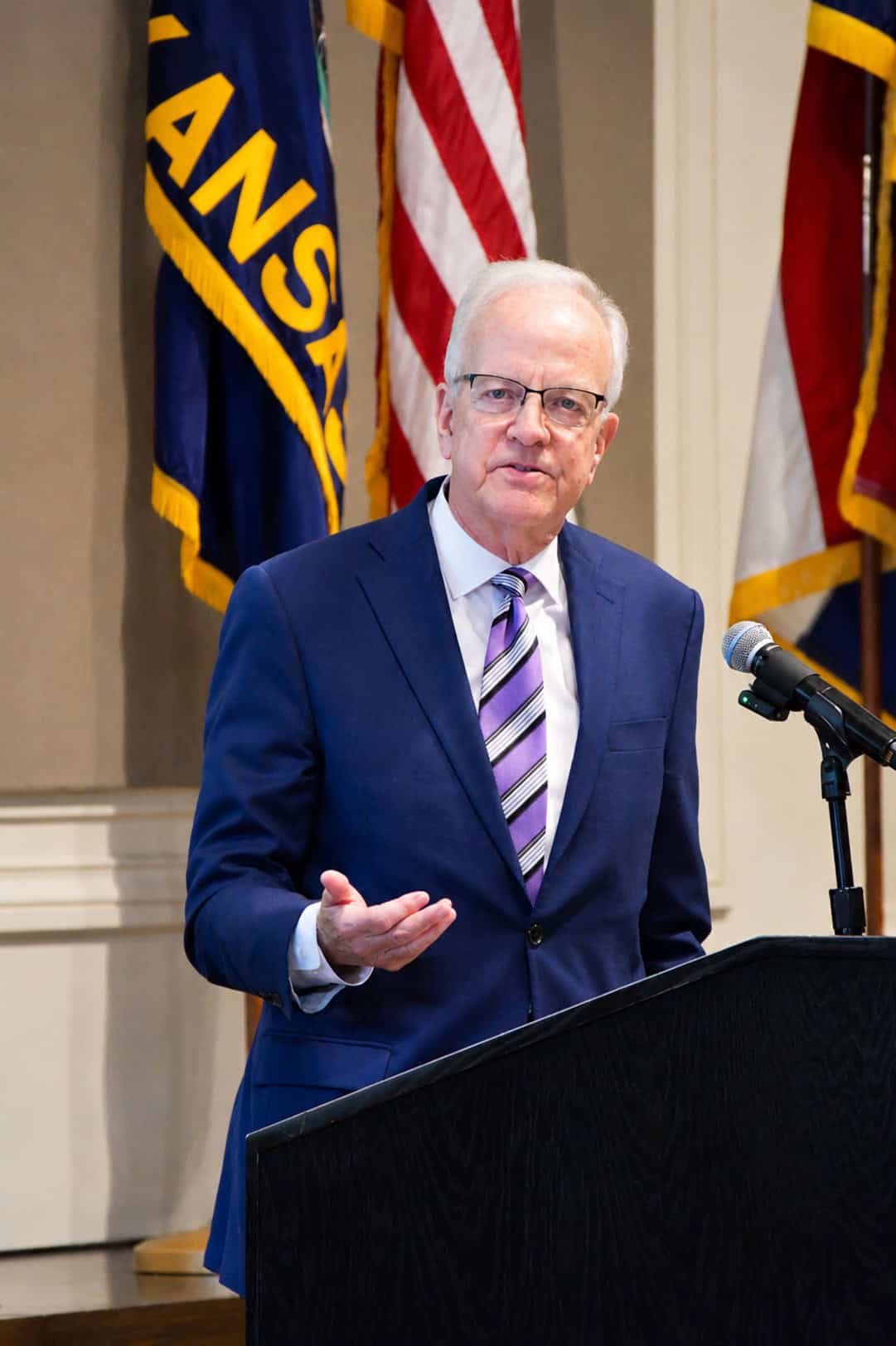
U.S. Sen. Jerry Moran, R-Kansas, touts the impact of cross-border collaboration during a KC BioHub celebration at Union Station; photo by Tommy Felts, Startland News
“We need another opportunity for the next generation of Kansans to be engaged in the next generation of employment, and providing services and products,” he told Startland.
While Kansas historically has been boosted by agriculture, aviation and professional services industries, the state must also plan for decades where science, mathematics, engineering, and research dominate at home.
“Kansas City would be the hub of that activity. We’ve always treated the Kansas-Missouri line as a dashed line,” Moran said, referencing a belief in cross-border collaboration. “We’re trying to make certain that we create the building blocks — and we keep our talent here long enough — for us to get to the point where even more things are happening.”
That line of thinking dovetails with the Tech Hubs initiative itself, he added, describing a federal initiative that seeks to decentralize innovation in an effort to capture the best ideas and strategies. To date, $623 million has been appropriated for Tech Hubs like the one found in Kansas City, he said.
“We recognize that not all of the talent and intellect — even though it might be stereotyped differently — is on the coasts of the United States,” Moran said. “The Midwest has a lot to offer and Kansas City can be a significant component of demonstrating that good things can happen outside those places that are thought of as the primary places for innovation, science and research.”
“Kansas City and the region have done a really good job of enhancing the quality of life in the neighborhood, so that this is a desirable place for Kansans and Missourians to stay — and a desirable place when we’re recruiting people to come to our states,” he continued. “Kansas City shows well because Kansas City is doing things right.”
Fund More Stories
This story was made possible by readers like you. Join them — make a one-time contribution or become a monthly member to sustain our work.