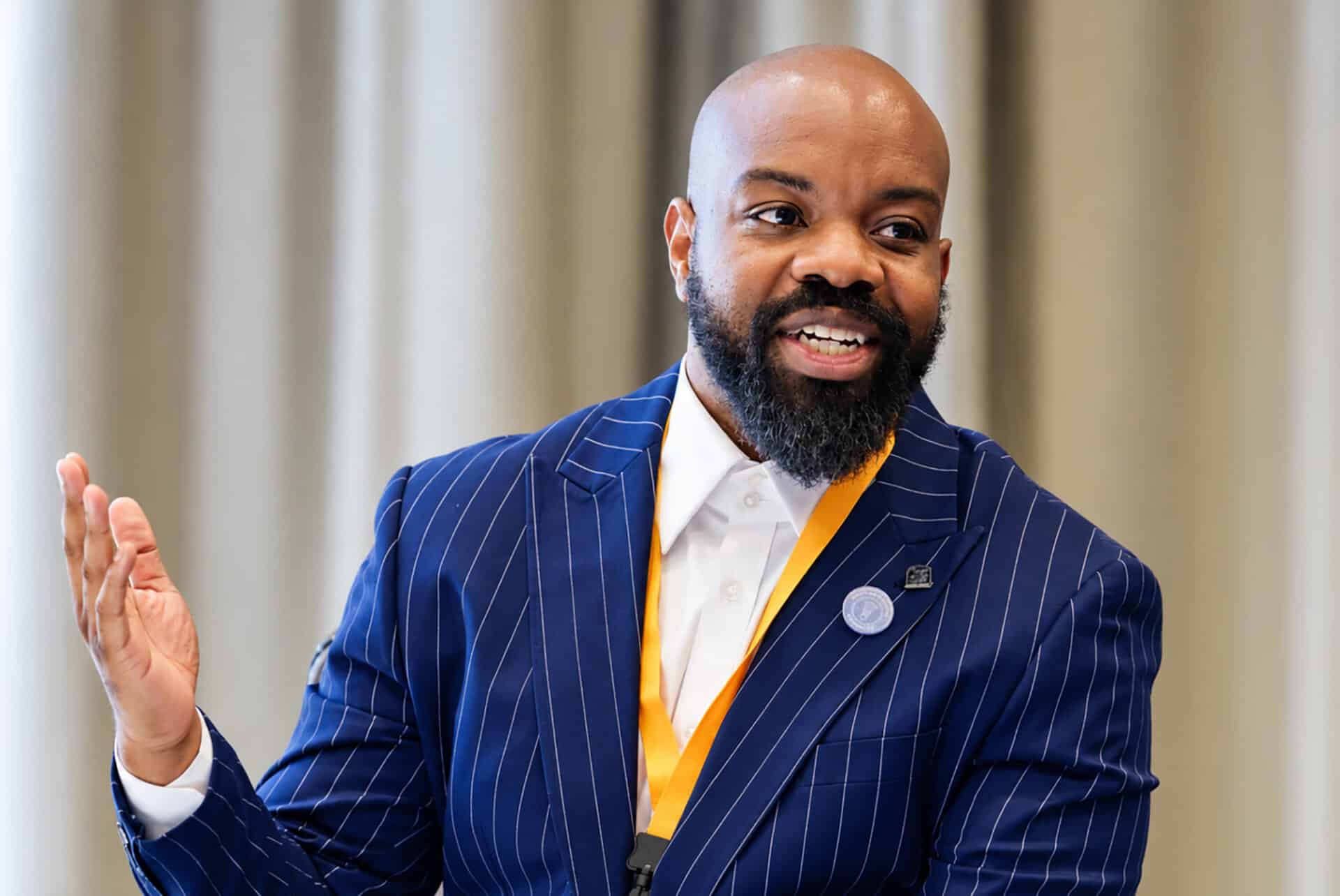
‘Shark Tank’ is TV (not reality), founders say; Students urged to prepare for the grind, think like entrepreneurs
November 5, 2026 | Nikki Overfelt Chifalu
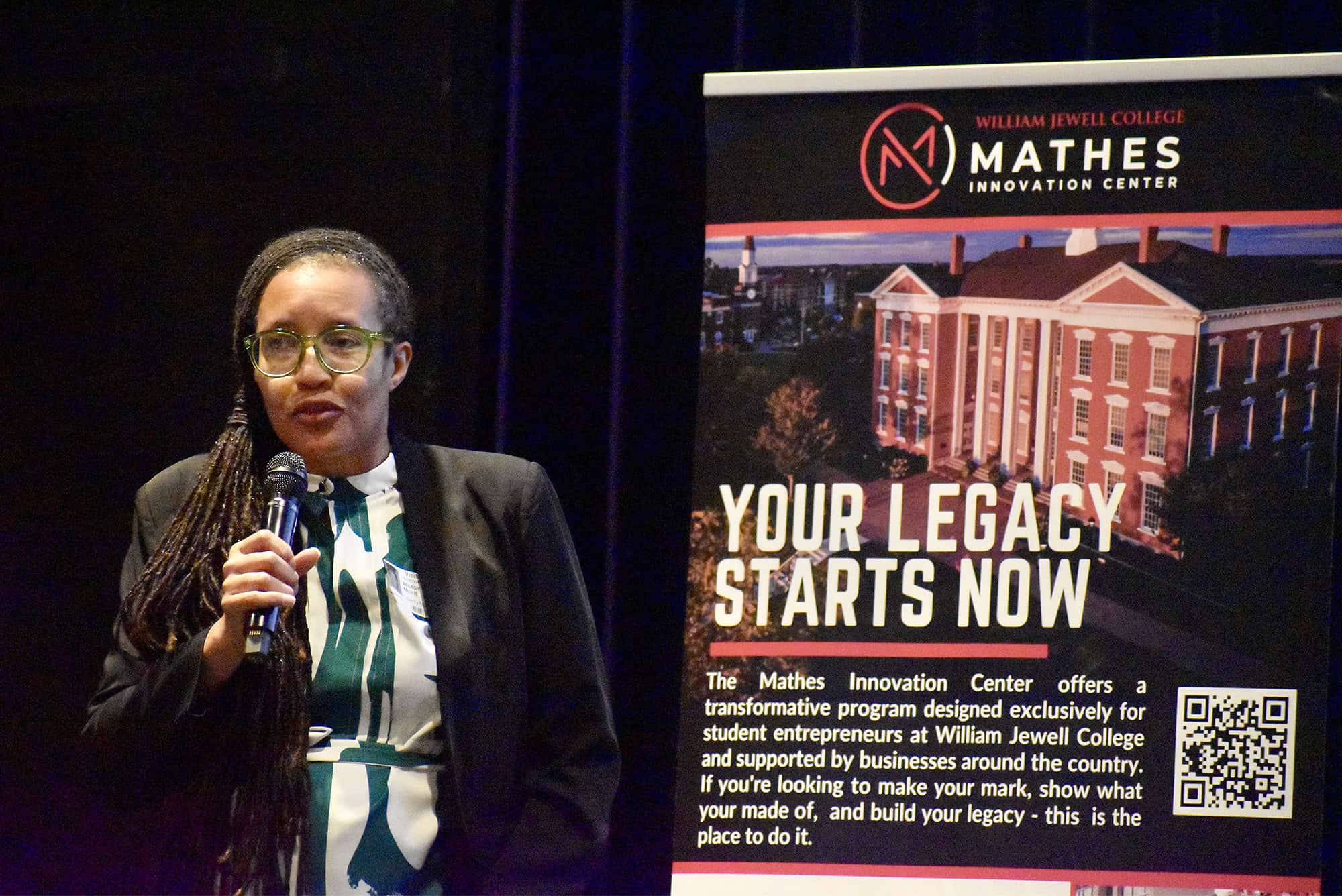
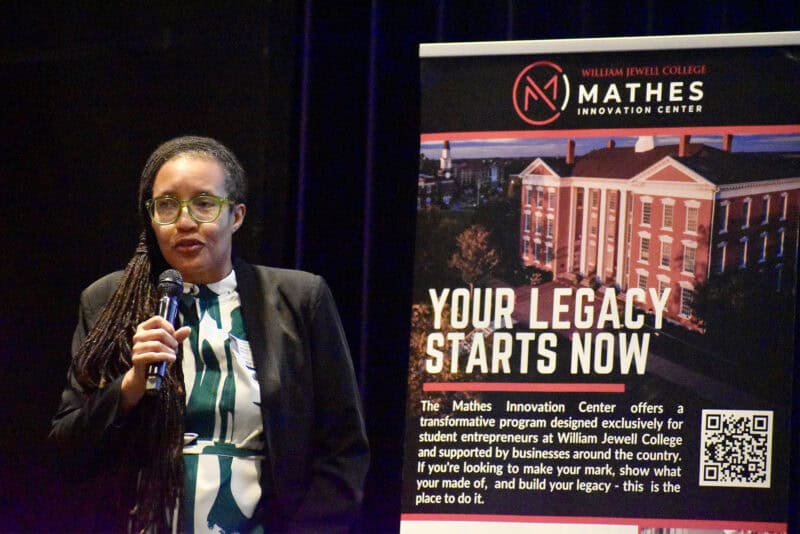
Dr. Brandy Archie, founder of Kansas City-based AskSAMIE, speaks to an array of high school and college students as part of a founder-focused pitch event organized by William Jewell’s Mathes Innovation Center; photo by Nikki Overfelt Chifalu, Startland News
Dr. Brandy Archie believes it’s important for students to learn about a wide variety of career options — including entrepreneurship — in a less-traditional way, she shared, after pitching AskSAMIE to angel investors before a crowd of Liberty high school and college students.
“If you don’t get exposed to it, then it’s really easy to not have that be a path that you go down,” explained the founder of a Kansas City-based healthtech platform that connects people with occupational therapists and safe home-living solutions. “You never know what it sparks in somebody.”
“I found out about occupational therapy through a high school program,” she added. “So what would my life be like if I didn’t ever even know about OT? I’d be doing something completely different.”
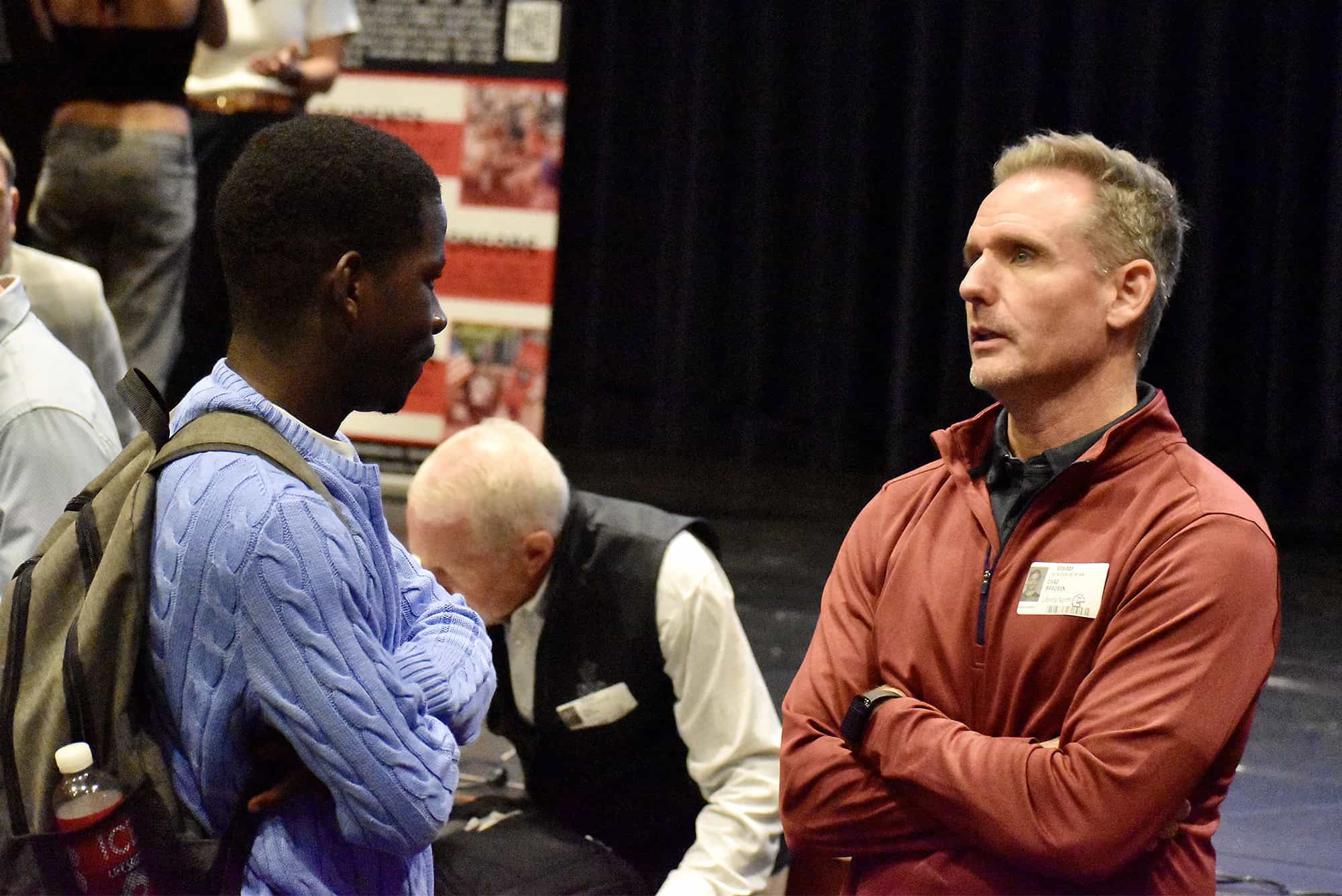
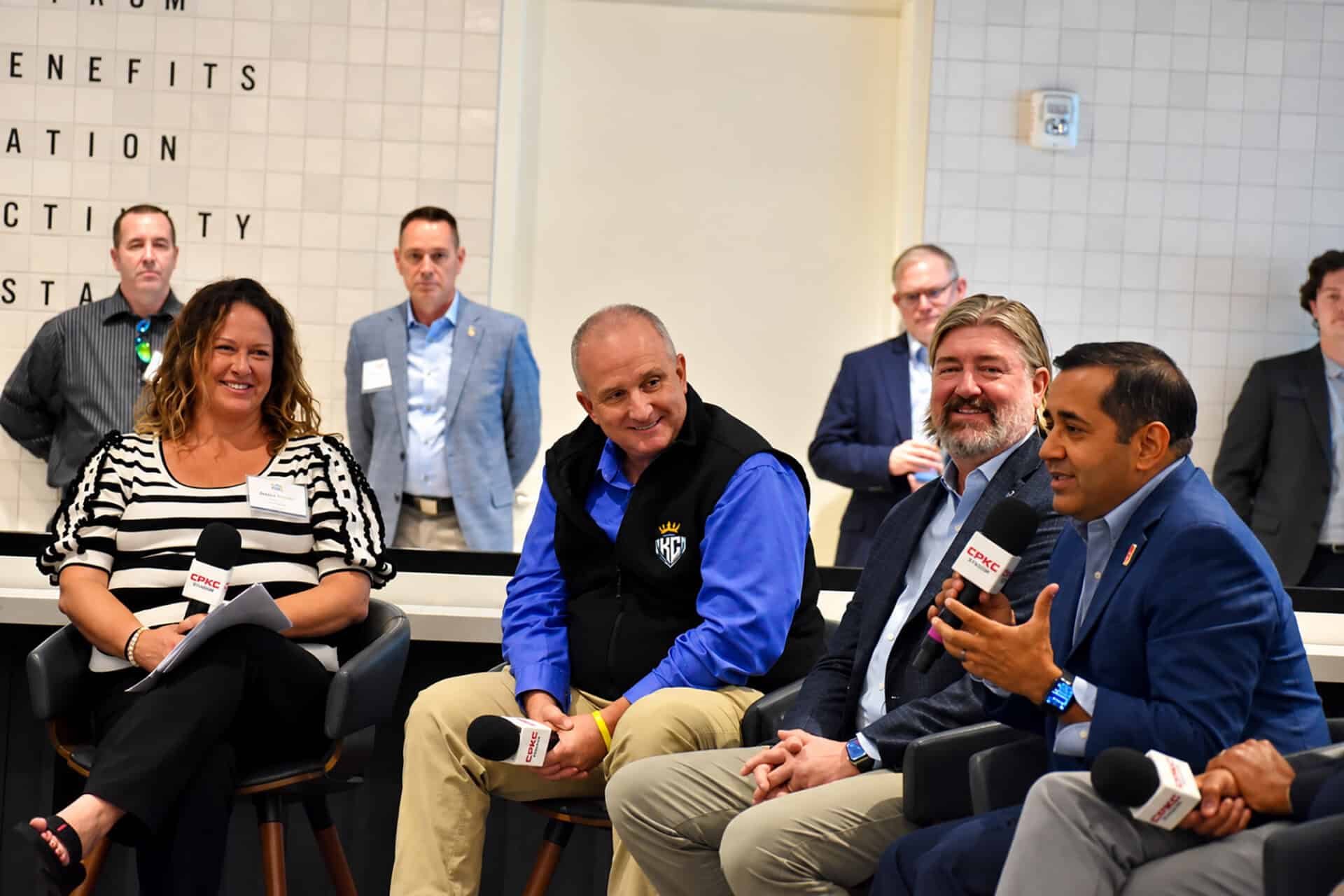
Chad Braunsen, founder of Kansas City-based Tolair, right, speaks to a Liberty student during a program with William Jewell’s Mathes Innovation Center; photo by Nikki Overfelt Chifalu, Startland News
Archie — along with Tolair founder Chad Braunsen — took the stage in October at Liberty North High School for an angel investor pitch event hosted by William Jewell College’s Mathes Innovation Center, part of the center’s effort to expand access to entrepreneurship education beyond the college campus.
RELATED: How this KC-area university turned entrepreneurs’ ventures into a fast-growing MBA program
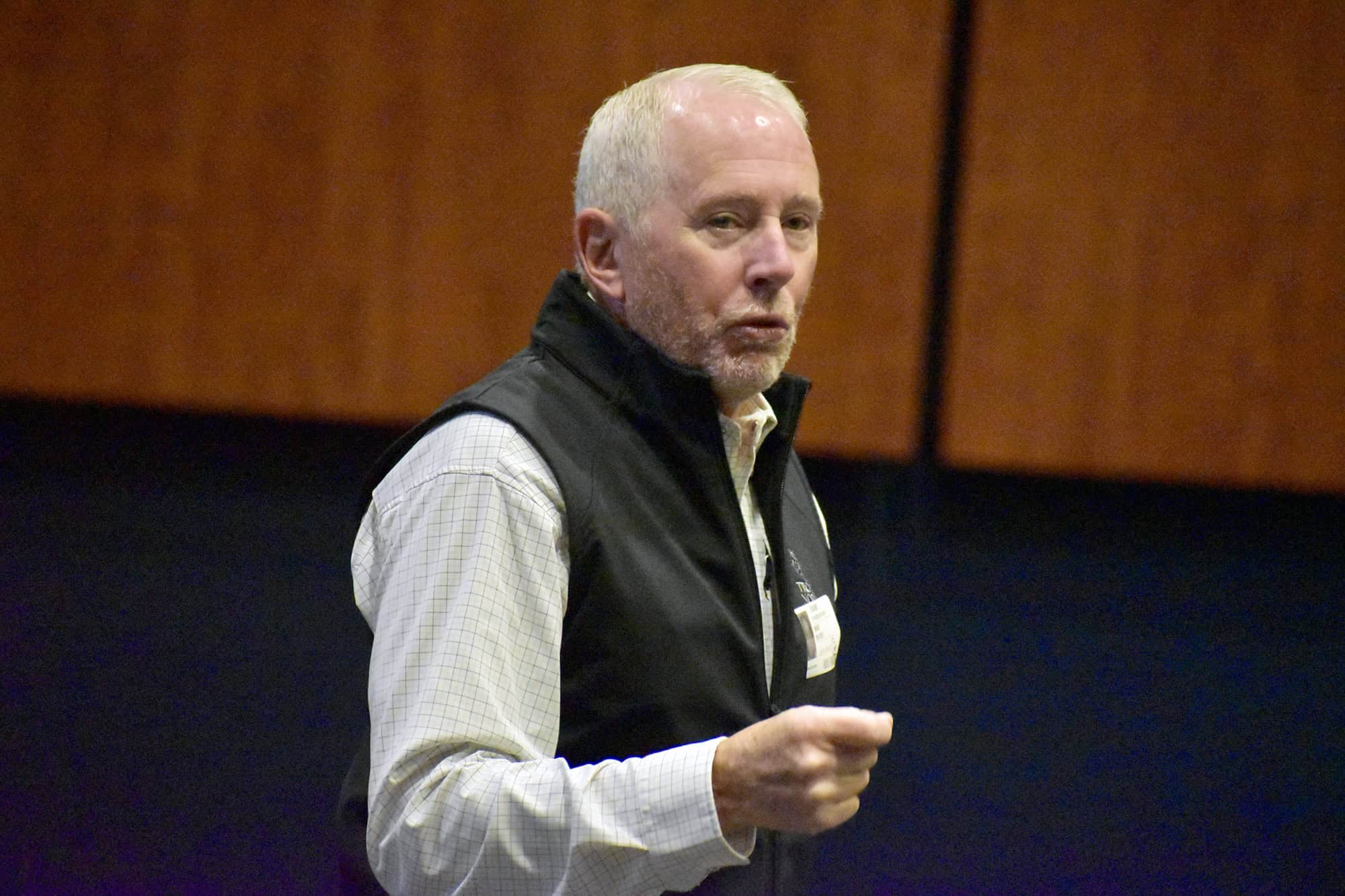
Mark Mathes, CEO of Vanguard Companies, speaks to students at Liberty North High School; photo by Nikki Overfelt Chifalu, Startland News
“Human beings are drawn toward being entrepreneurs,” said Mark Mathes, a William Jewell alum, CEO of Vanguard Companies, and an investor at the event. “It’s just a natural thing. The key I want you to come away with, though, is you don’t have to do what these guys are doing. You don’t have to start a company. You don’t have to do that.”
“You can work for the biggest company in the United States and can still be an entrepreneur within those walls of that company,” continued Mathes, for whom the university’s innovation center is named (along with his family). “So, if you want to be successful in whatever career you’re in, you need to at least think like an entrepreneur.”
Colleen Jones — director of college/career readiness and community partnerships for the Liberty Public School District — noted that entrepreneurship is one of the five areas of focus (including academic, professionalism, personal, and cultural) that are part of the district’s strategic plan.
“Those are the components that we work on to infuse in different classes or experiences,” she explained. “This is truly an experience. These aren’t kids who are in an entrepreneurship class. Some are, but others signed up because they were interested.”
The event brought together early-stage founders, experienced investors, William Jewell students, and Liberty high school students for a live look at how startup companies are evaluated, questioned, and discussed from an investor perspective.
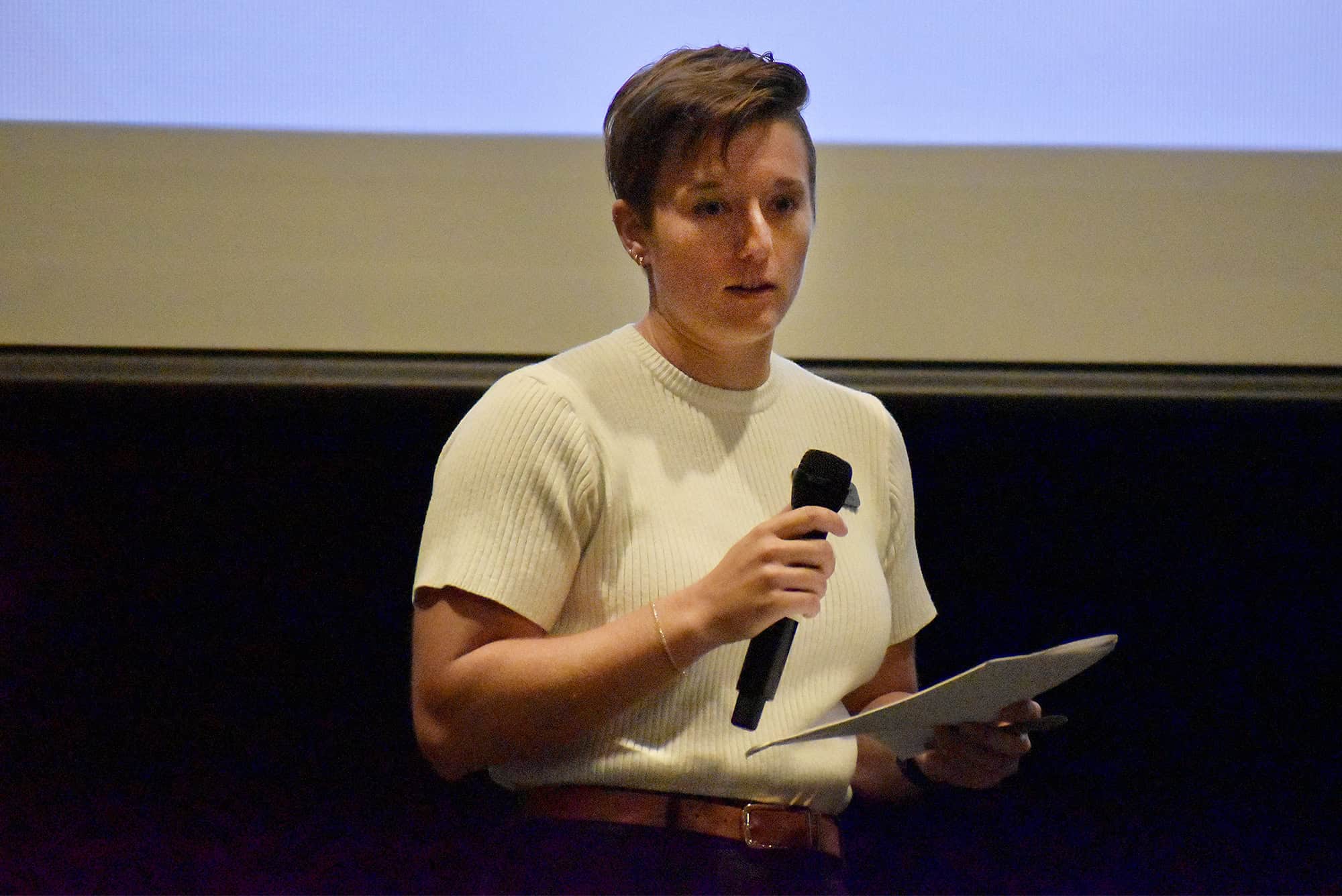
Connor Hazelrigg, managing director of the Mathes Innovation Center, shares founder insights with students at Liberty North High School; photo by Nikki Overfelt Chifalu, Startland News
It’s nothing like the ABC TV show “Shark Tank,” Connor Hazelrigg — managing director of the innovation center and herself a veteran entrepreneur — told the students.
“That is so highly produced from a movie set perspective,” she explained. “They increase drama. They’re adding things that don’t necessarily happen. So I want you all to know that what you’re seeing today is the real aspect of it. You won’t see a negotiation on equity or how much money these people are willing or even considering to give today.”
“That happens behind closed doors after a process called due diligence, where these people request more information from our founders,” she added. “And then they actually go through the process of looking at the books, the accounting, different types of sales records, that type of stuff.”
To date, the Mathes Innovation Center’s investor network has helped connect approximately $3.5 million in capital to technology startups while also creating internship, employment, mentorship, and experiential learning opportunities for students, according to the center.
“Founders don’t have enough opportunities to connect with real capital,” Hazelrigg acknowledged to the students. “So being able to put founders in front of investors creates an opportunity to connect money to these companies.”
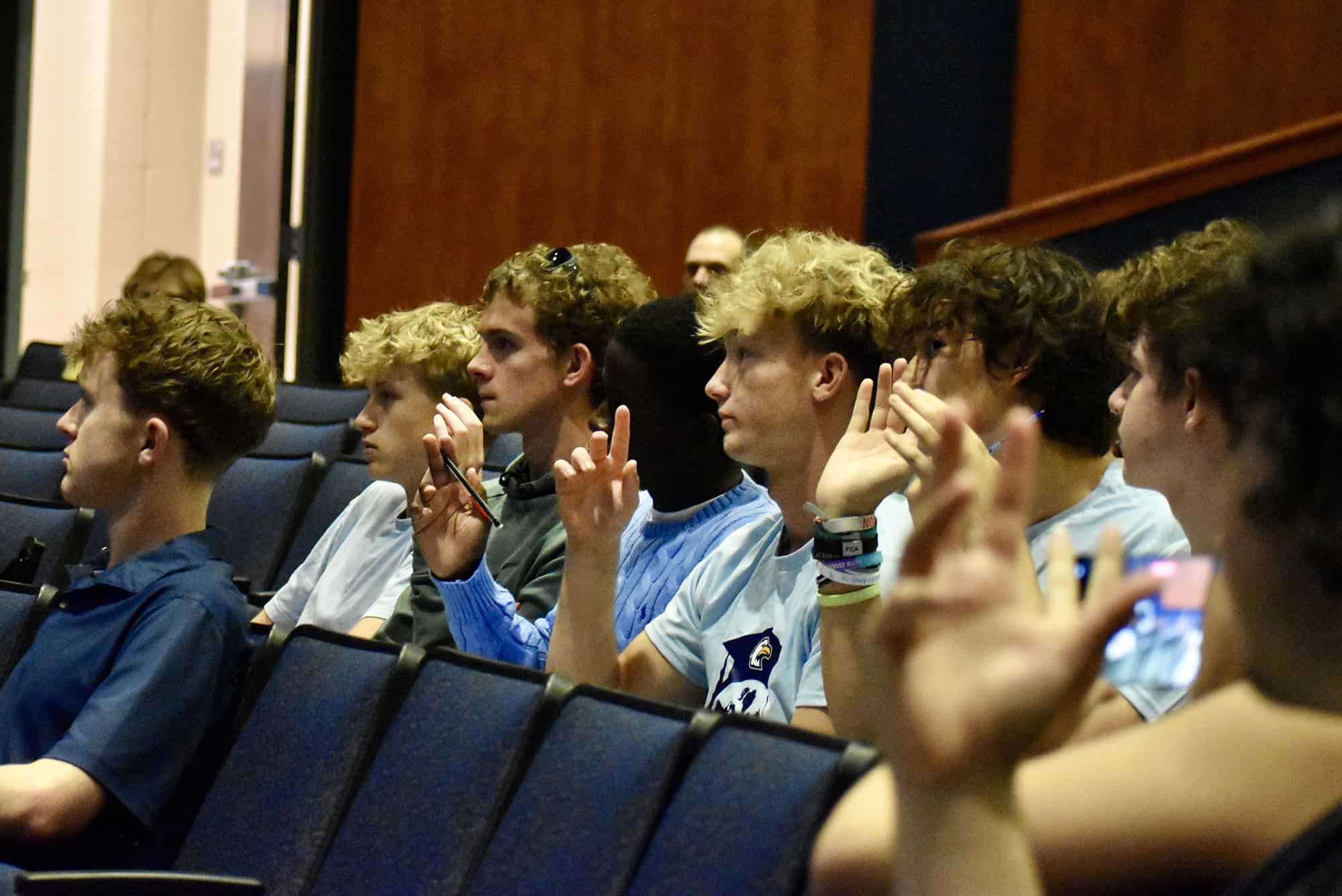
Students listen to founders and William Jewell College leaders during an entrepreneurship pitch event at Liberty North High School; photo by Nikki Overfelt Chifalu, Startland News
Jude Pierre — a William Jewell student who also founded a company that helps businesses integrate AI into their workforce — said it was enlightening to see how founders like Archie and Braunsen balance solving big problems with the business and financial side of their business.
“I think for a lot of entrepreneurs, what we do is passion, but there’s also the work side of it, too,” he explained. “And seeing those individuals doing it with a lot of joy, that was very inspiring for me.”
Seeing the levels and stages that other founders are going through helped Hudson Parnell to see that scaling a business is a process and he’s not necessarily behind as he’s building his lacrosse training business, he noted.
“I’ve been to a couple of these now,” the William Jewell student added. “And every time it’s brought so much insight on what the private equity side is looking for, what I should be prepared for as an entrepreneur, and how to move forward with the next steps.”
Emma Bright and Wake Bartlow — juniors at Liberty High School — are both entrepreneurially-minded, they said, noting the event gave them ideas they could apply to their own business ventures.
“I think that just being able to see how an actual pitch would work in the real world was very insightful,” Bright explained. “I’ve never had another experience outside of this Mathes program that has been able to show that, ‘Oh, it’s not exactly like ‘Shark Tank’ and these are the steps that you can go through.’”
“It’s a great experience,” Bartlow added. “I just think that it’s definitely helped me to look into more of my businesses and see what I was or wasn’t covering and how I can adapt to that.”
In addition to supporting founders through its Angel Investor Network, the Mathes Innovation Center is launching a new Venture Capital Lab, where William Jewell students will gain hands-on experience with company sourcing, application review, market research, due diligence, investor materials, and founder evaluation, the center noted.
Fund More Stories
This story was made possible by readers like you. Join them — make a one-time contribution or become a monthly member to sustain our work.