From landscaper’s nightmare to winning prototype: Jayhawks tackle Techstars Startup Weekend
November 17, 2026 | Haines Eason, Freelance Kansas
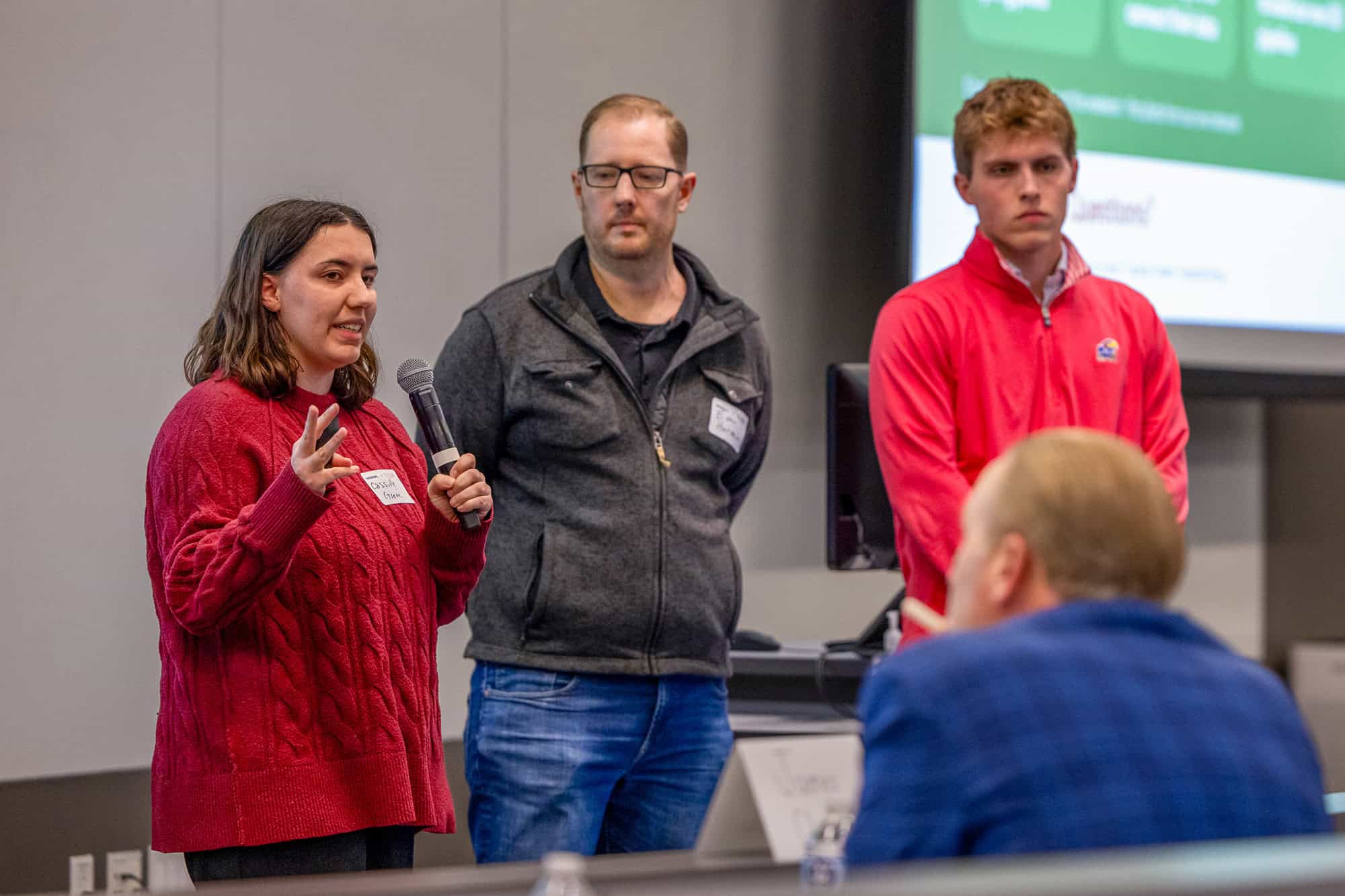
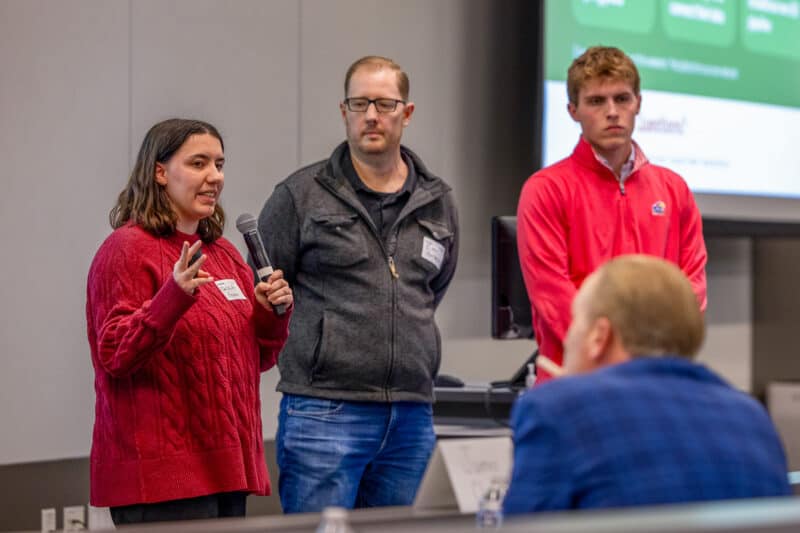
Yard Capture teammates Cassidy Green, Evan Harmon, and Mason Karel pitch their business venture during KU’s Techstars Startup Weekend at the University of Kansas. Not pictured: Xiaomin Rong; photo by Haines Eason
LAWRENCE, Kansas — Evan Harmon arrived at KU’s Techstars Startup Weekend with a specific business in mind. It wasn’t the one that would win the competition.
The former KU student’s original venture was already incorporated, making it ineligible for the weekend’s competition, he said.
“So on the spot I had to be like, OK, well, do I have another idea?” Harmon recalled.
Turns out, he did.
His son’s lawn-care business had sparked Harmon’s interest in entrepreneurship, drawing him into the worlds of business and technology to support it. For Startup Weekend, he reached for a concept he’d been kicking around but never developed: using three-dimensional imaging technology to make landscaping estimates faster, easier and more visually compelling.
Four fellow participants joined him, bringing experience in landscaping, computer science, engineering and market analysis. By Sunday evening, the newly assembled team had developed a prototype, presented its business case to a panel of judges and claimed first place among 11 teams competing at KU’s first Techstars Startup Weekend.
RELATED: Jayhawk venture ties run deep as Techstars returns — this time atop the Hill at KU
Their venture, “Yard Capture,” proposes turning video captured on a smartphone into a three-dimensional model of a customer’s property, allowing landscapers to visualize proposed improvements, calculate measurements and prepare estimates with fewer return trips to the job site.
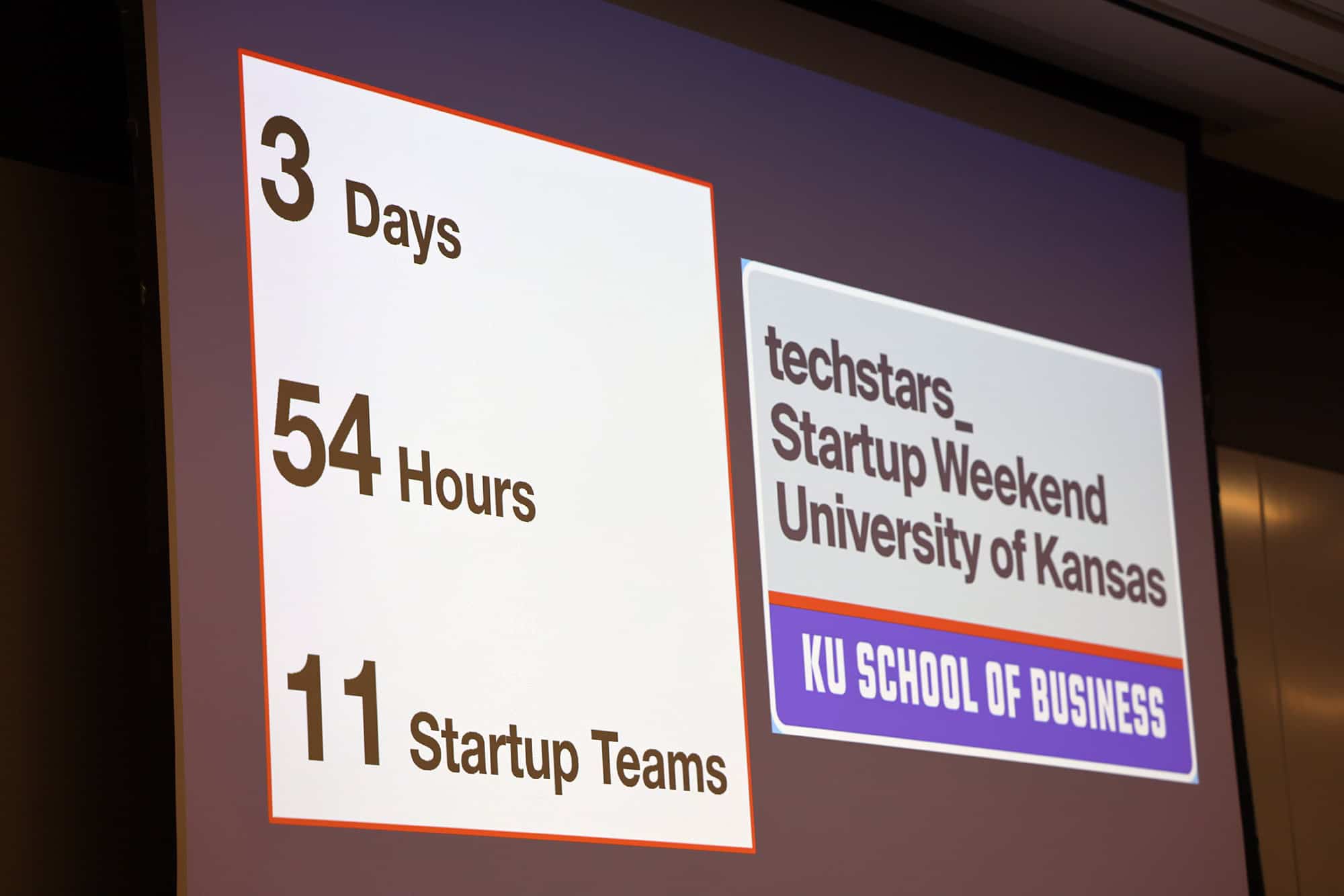
For Harmon and his teammates, the Friday-to-Sunday event — organized Nov. 13-15 at KU’s Capitol Federal Hall — offered an opportunity to see just how far an untested idea could travel in 54 hours.
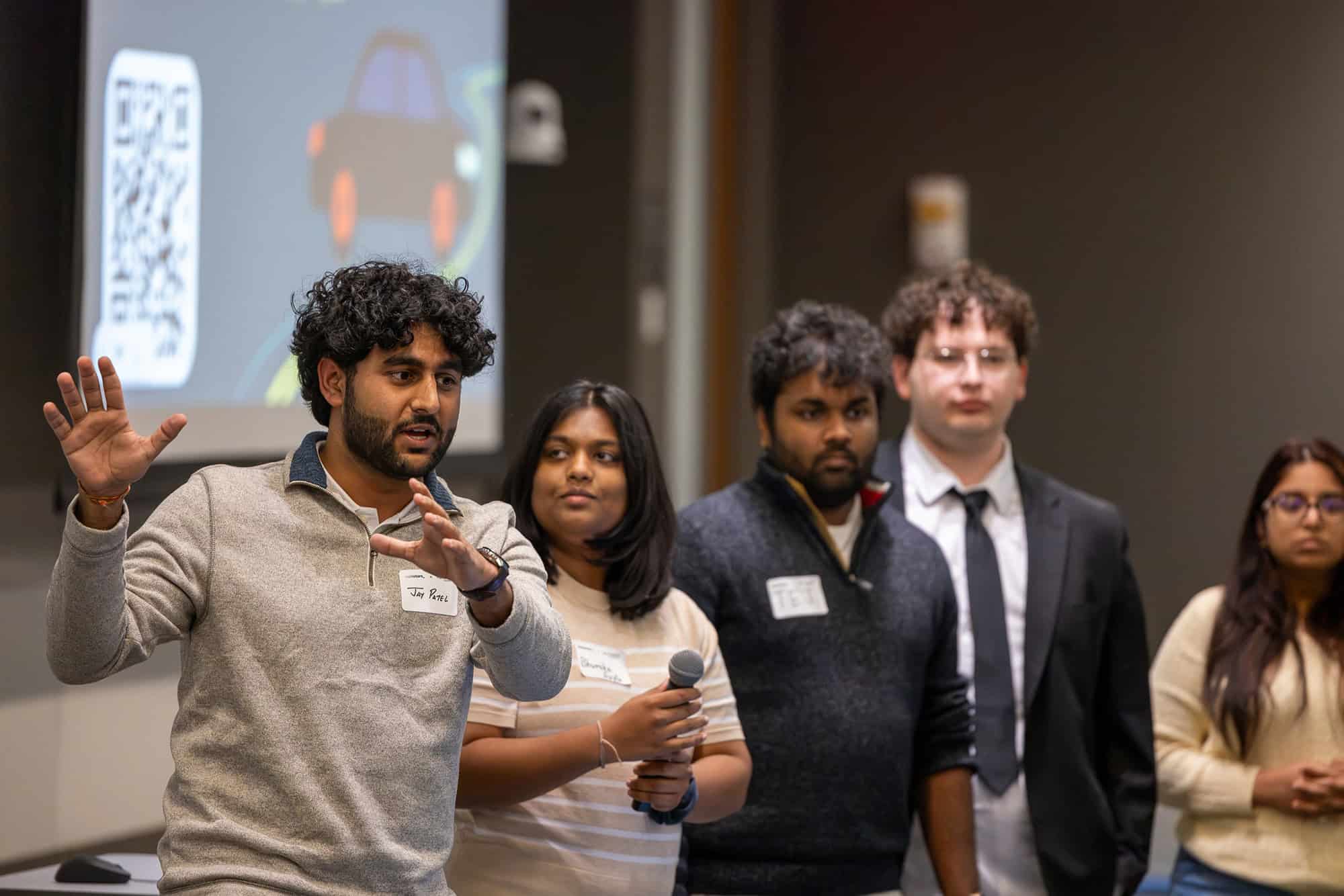
Where promising ideas meet tough questions
Ideas from the weekend — a new iteration of Techstars-branded programming that marked the global accelerator’s return to the region after discontinuing its Kansas City effort in 2021 — stretched from car maintenance and workplace knowledge to music production, pet-owner communities and wheelchair mobility.
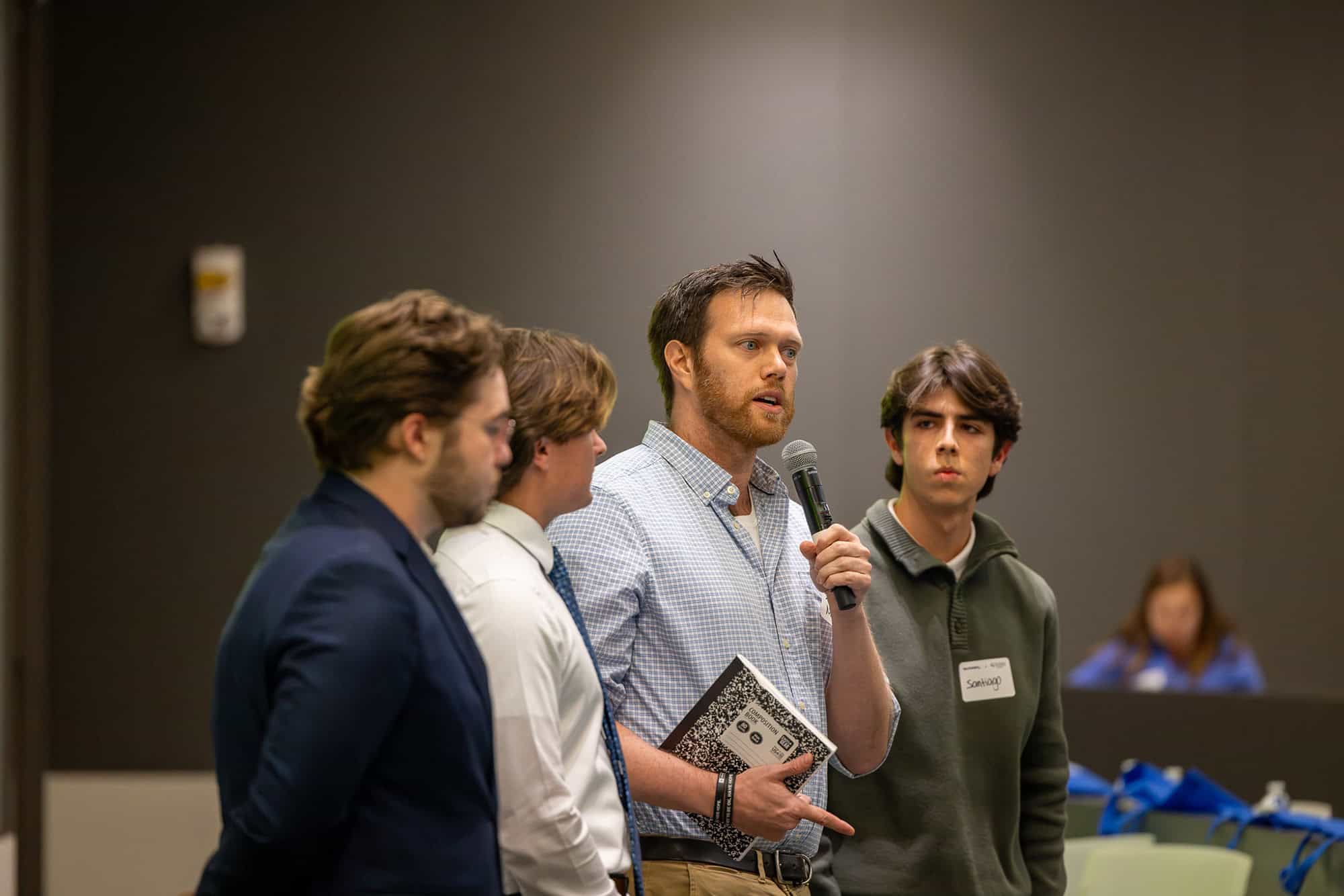
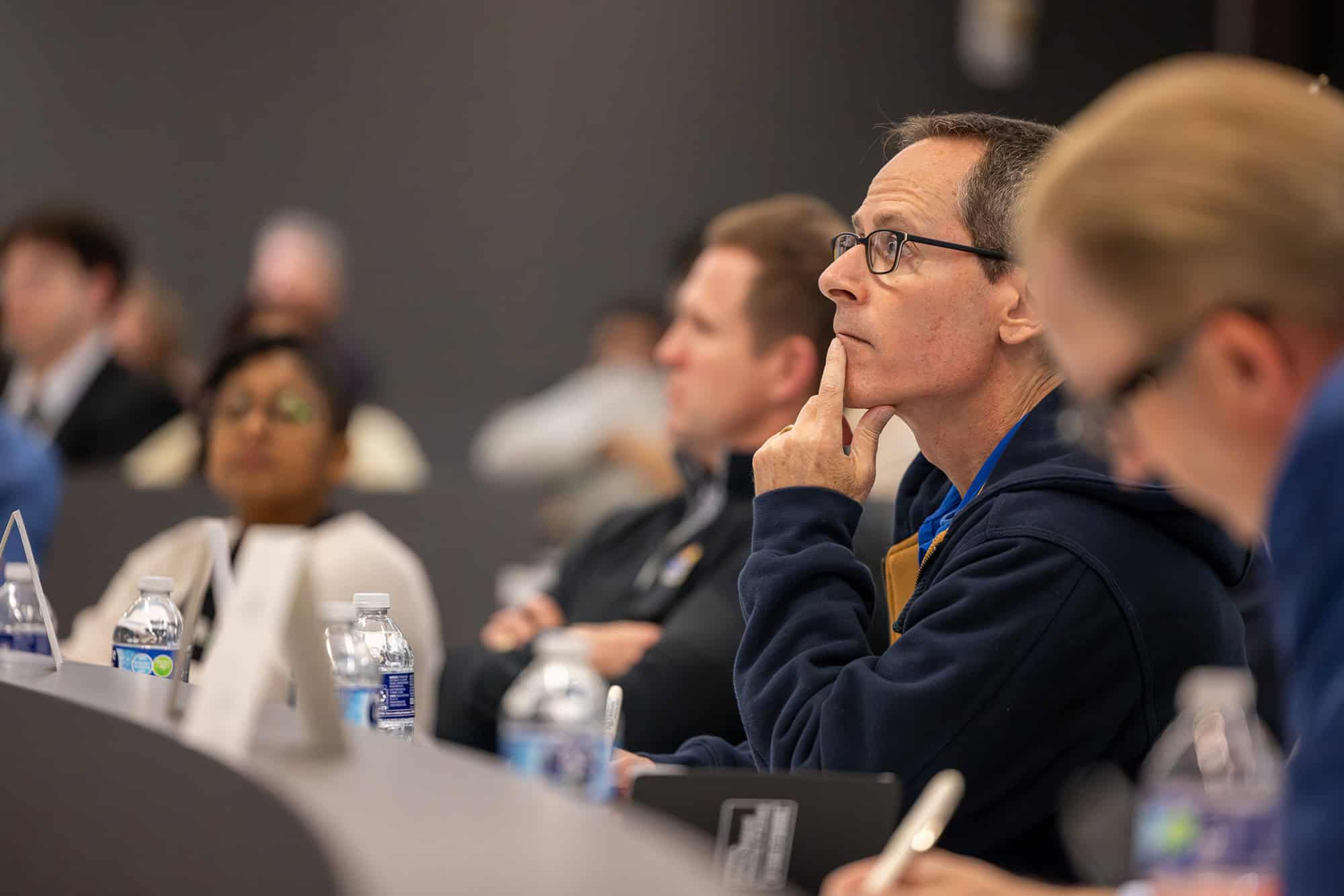
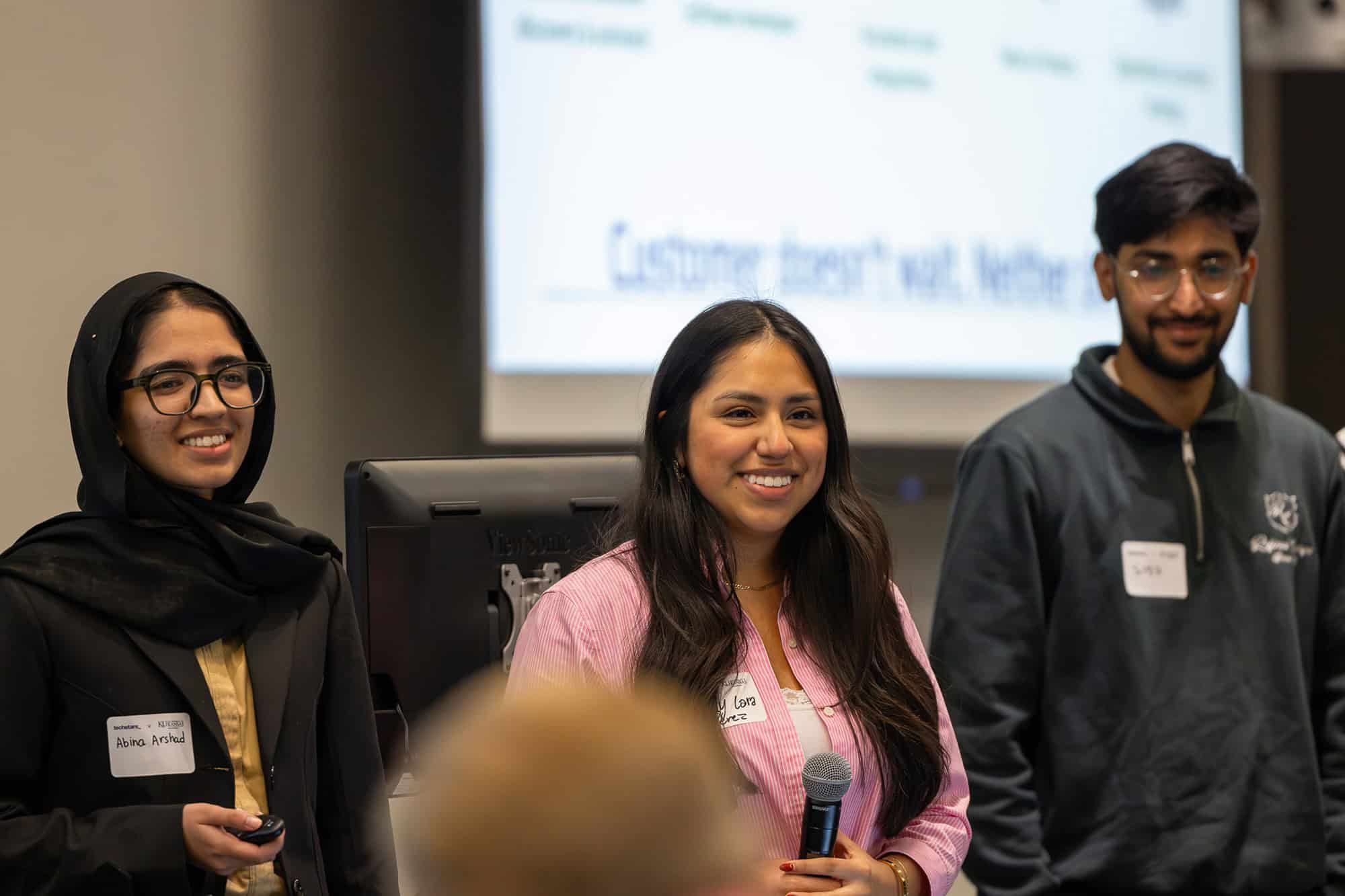
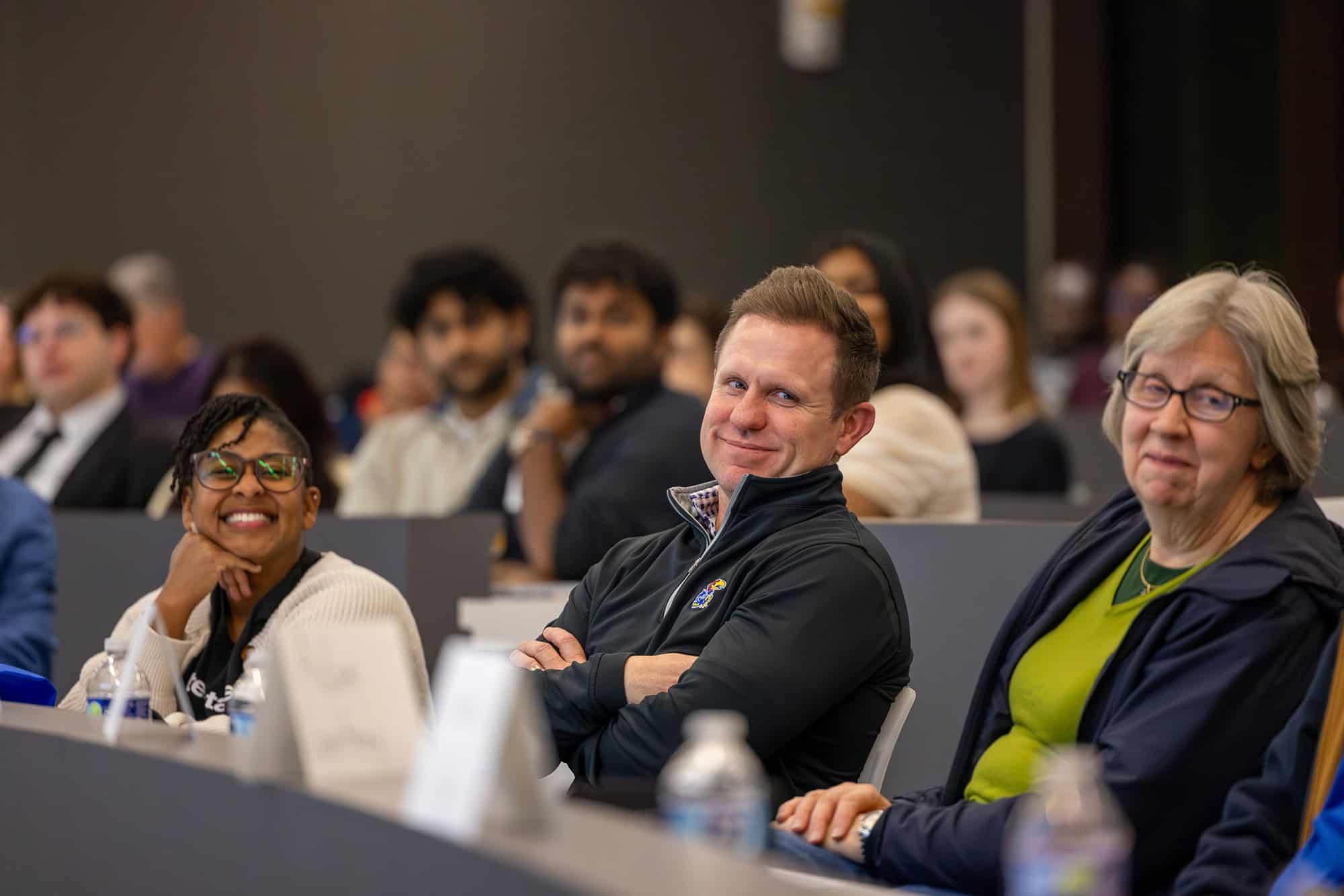
Teams presented their concepts — and in some cases demonstrated apps — before fielding questions about customers, competitors, costs and execution.
A group called “Perch AI” proposed helping exterior home contractors identify potential customers using drone imagery, AI analysis and direct outreach. Its prototype used Google Maps and Street View imagery, which the team describes as insufficiently current and detailed for all its proposed services.
“Know Your Car” demonstrated a tool intended to help drivers understand repair quotes and identify work they could do themselves.
For Yard Capture, judges’ questions covered phone compatibility, processing requirements and how the product would differ from existing services.
The team describes its work as a rapid prototype. Karel acknowledged that processing took longer than the team wanted and said additional computing power could help speed it up. Members also showed a preliminary three-dimensional model of a fountain on Jayhawk Boulevard, created from phone imagery during the weekend.
Yard Capture’s team is seeking help taking its concept beyond the weekend demonstration. Members report speaking with five landscapers who consider the idea useful and ask for introductions to five to 10 landscapers for spring pilots, along with industry software connections and computing resources.
Those proposed pilots would offer an opportunity to explore how the technology fits into landscapers’ work — a customer-understanding challenge that also surfaces during the event’s investor panel.
Chris Rehkamp, vice president of business services at KU Innovation Park, cautioned that the ability to build faster doesn’t necessarily bring founders closer to the people they hope to serve.
“We always have this challenge of how well can you really understand the depth of the problem?” Rehkamp said. “How well can you understand the end user? How well can you understand the purchasing decision, the actual behaviors that go into that being adopted?”
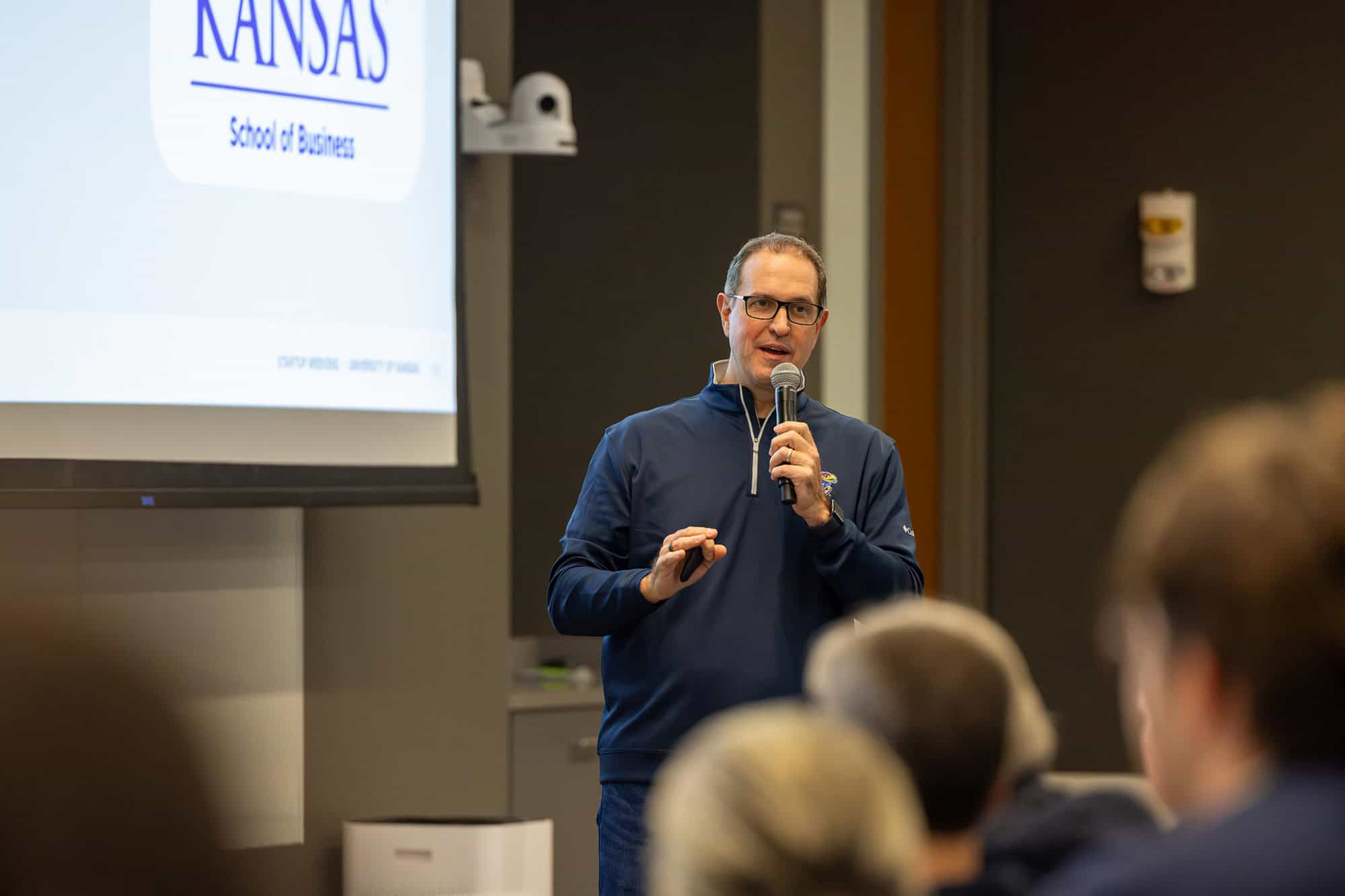
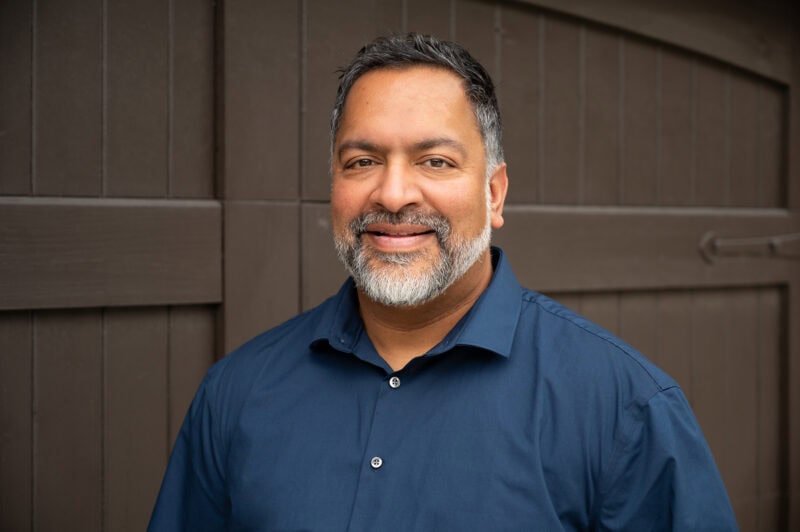
Brian Anderson, executive director of KU’s entrepreneurship initiatives, speaks to participants in the inaugural Techstars Startup Weekend at the University of Kansas; photo by Haines Eason
Room to grow beyond the weekend
Although Yard Capture took home first-place honors, the competition’s prizes were for more than just bragging rights, said Brian Anderson, KU’s executive director of entrepreneurship initiatives, who helped lead the weekend alongside the Techstars team.
And the work doesn’t have to end with Startup Weekend, he said.
All 11 teams have an opportunity to enter KU’s Entrepreneur In Residence program for additional mentoring, and the university plans to select five KU founders or founding teams for Techstars Founder Catalyst in spring 2027.
They’ll also continue benefiting from lessons learned from the Techstars team, as well as the weekend’s mentors, which included Lesa Mitchell, partnerships and growth for & and former general manager of Techstars Kansas City; Doug Burris, founder and principal at DBI2 Consulting; Jeremy Tasset, CEO of Nueterra Capital and venture partner at The Hill Fund; David Morris, Entrepreneur in Residence at the KU School of Business; Michael Torno, retired co-founder and chief revenue officer at PathologyWatch; Scott Wagner, mentor and advisor for KU Innovation Park; and Megan Bowles, corporate associate for Cooley LLP.
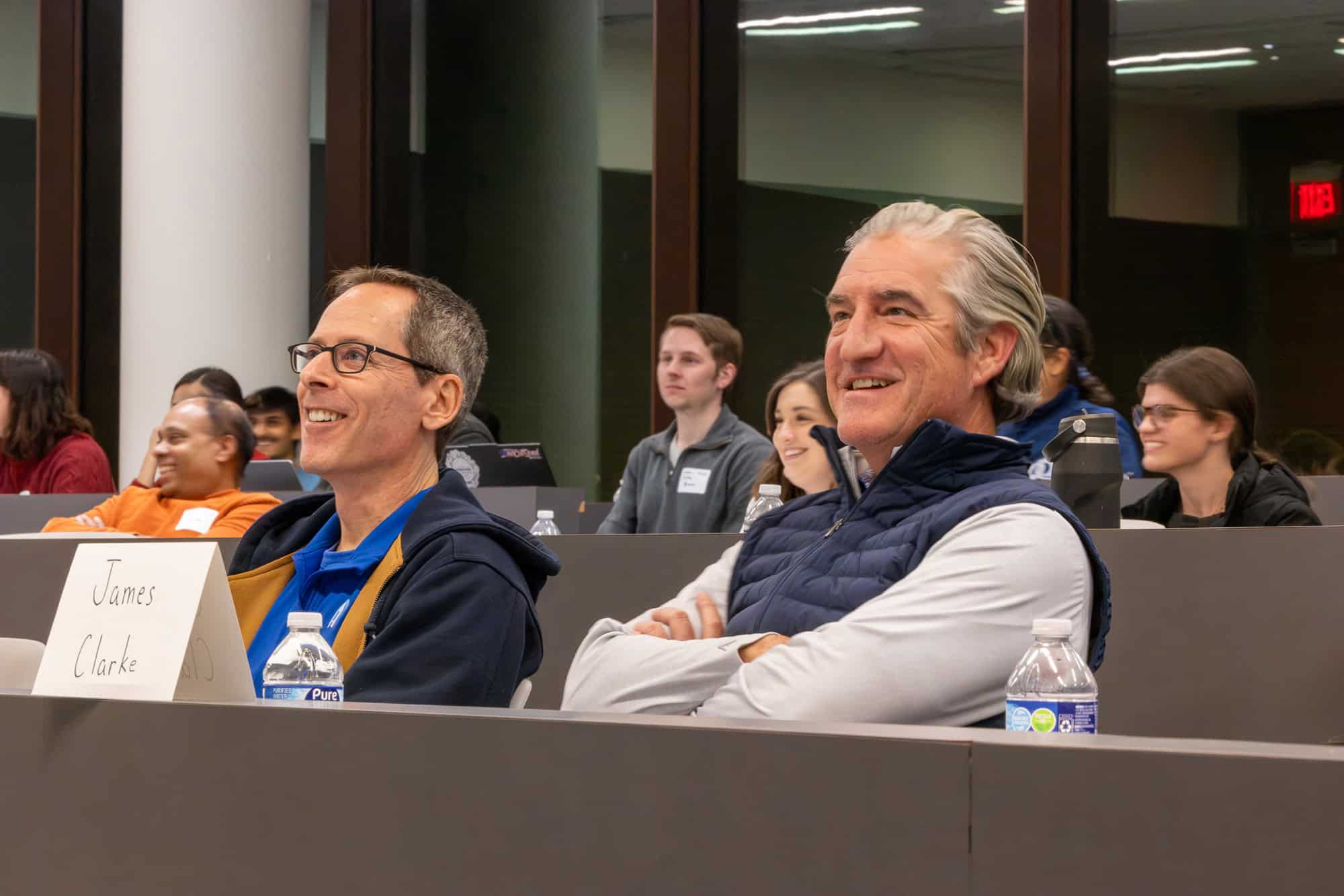
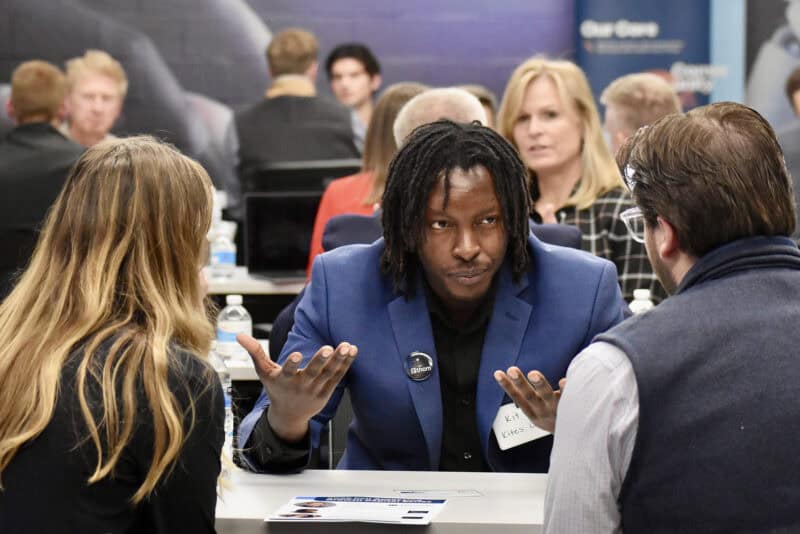
Judges John Fein, managing partner at Firebrand Ventures and The Hill Fund, and Adam Courtney, CEO at KU Innovation Park, listen to Jayhawk business pitches KU’s Techstars Startup Weekend at the University of Kansas. Other judges included Tricia Bergman, managing director for collaborative energy initiatives at the University of Kansas; Heath Peterson, president of the KU Alumni Association; and James G. Clarke, chief investment officer at the KU Endowment; photo by Haines Eason
A market problem worth digging into
Mason Karel knew exactly what Harmon was envisioning with the Yard Capture project.
A KU sophomore studying finance and accounting, Karel had operated a landscaping company for three years in high school. Like Harmon, he’d arrived at Startup Weekend with another idea, only to discover it was too far along for the competition.
When Harmon delivered his 60-second pitch, Karel recognized a frustration he too had experienced firsthand.
“So I was like, ‘I want to work on that because that could be really cool,’” Karel said.
The headache comes after a contractor leaves a property, he explained.
“It’s when you get back to the office and you have a camera roll full of photos, videos and measurements that you took at that site,” Karel said during the pitch. “You don’t know how it all fits together because that’s the 10th estimate that you’ve done that day.”
The proposed workflow would carry information from a site visit into a visual proposal and estimate. A landscaper would record the property, use a three-dimensional model and measurements to develop the job and prepare a quote that could be revised and sent to the customer for feedback or approval.
For the contractor, the goal is to spend less time piecing together site information and preparing estimates. The team also aims to give customers a more visually compelling proposal.
But turning the concept into something tangible would require more than firsthand knowledge of landscaping.
Luke Brown, a junior in electrical engineering, brought experience with photogrammetry — using images to reconstruct objects and spaces. His earlier work involved smaller objects and checking how parts would fit together; this project gave him a larger setting in which to apply it.
Xiaomin Rong and Cassidy Green rounded out the team, with Green serving as market analyst and drawing on her family’s experience in landscaping and construction.
For Karel, the weekend connected an existing problem with people who could help him tackle it.
“I just really feel lucky that we got together with actual computer engineers,” he said.
Fund More Stories
This story was made possible by readers like you. Join them — make a one-time contribution or become a monthly member to sustain our work.