Iconic Heart Gateway could be trademarked as local World Cup organizers preserve KC’s big moment
November 17, 2026 | Nikki Overfelt Chifalu

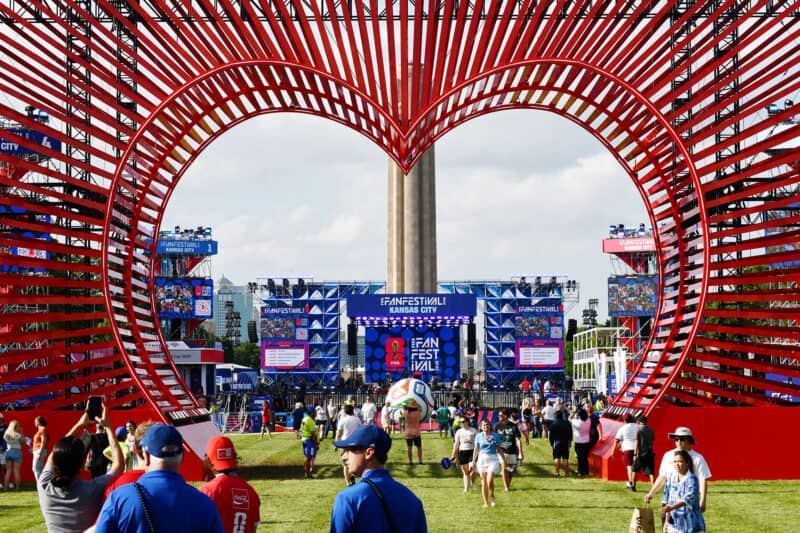
Kansas City soccer fans preview the grounds of the FIFA Fan Festival at Liberty Memorial; photo by Tommy Felts, Startland News
The Kansas City Heart Gateway — an iconic entryway and photo backdrop to this summer’s FIFA Fan Fest at the World War I Museum — could be multiplying across the metro in the future, KC2026 CEO Pam Kramer shared with the media on Tuesday.

A fan is tossed in the air from the crowd at FIFA Fan Festival — framed by the Heart Gateway, designed by Populous — during a performance by Vanessa “DJ Ness” Ramirez; photo by Frank Q. Pham
“That symbol that defined our FIFA Fan Festival and became the backdrop for countless once-in-a-lifetime moments — including four engagements, one wedding, and a Marines promotion ceremony — we’ve filed for a trademark for the heart,” she explained at KC2026’s release of its Community Impact Report at Compass Minerals National Performance Center. “And we are exploring the possibility of more than one KC Heart Gateway that could live on as a permanent part of our community.”
The trademark, Kramer continued, is to make sure that the intention behind the heart gateway is preserved.
“We wanted that heart to be a sign of who we are and a point of welcome and entry,” she said. “So putting some standards around a minimum height and where it can be, and making sure that it’s maintained and that it preserves the memory — if it’s recreated — of what people experienced in Kansas City. That’s the real notion behind it.”
“We foresee license-free royalties for partners who want to recreate that heart in the right context,” Kramer added.
The future of the KC Heart Gateway was just one topic that Kramer and other KC2026 officials touched on during the release of the impact report. Kramer lauded that the city achieved national and international publicity valued at well over $2 billion; there were zero critical safety incidents during the tournament; ConnectKC26 doubled regional public transit capacity during the tournament with very high satisfaction rates; 370,000 people attended watch parties and celebrations (outside of Fan Fest) in the 53 area communities that rallied to reflect the region’s hospitality and pride; and 87 percent of those who had previously attended a World Cup rated their Kansas City experience as better, or significantly better, than other host cities.
“We showed the world what Kansas City can do as a region, what we can achieve together,” Kramer said. “The important thing is the World Cup was more than just a moment. It really accelerated our momentum, and is fueling that momentum as we move forward.”
“In the 18 weeks since our final match,” she continued, “our organization and others have taken inventory to better understand the impact of the World Cup, what we did well, what the results were, most importantly, how we can leverage those results to create sustained and long-term impact for our region and build on that experience?”
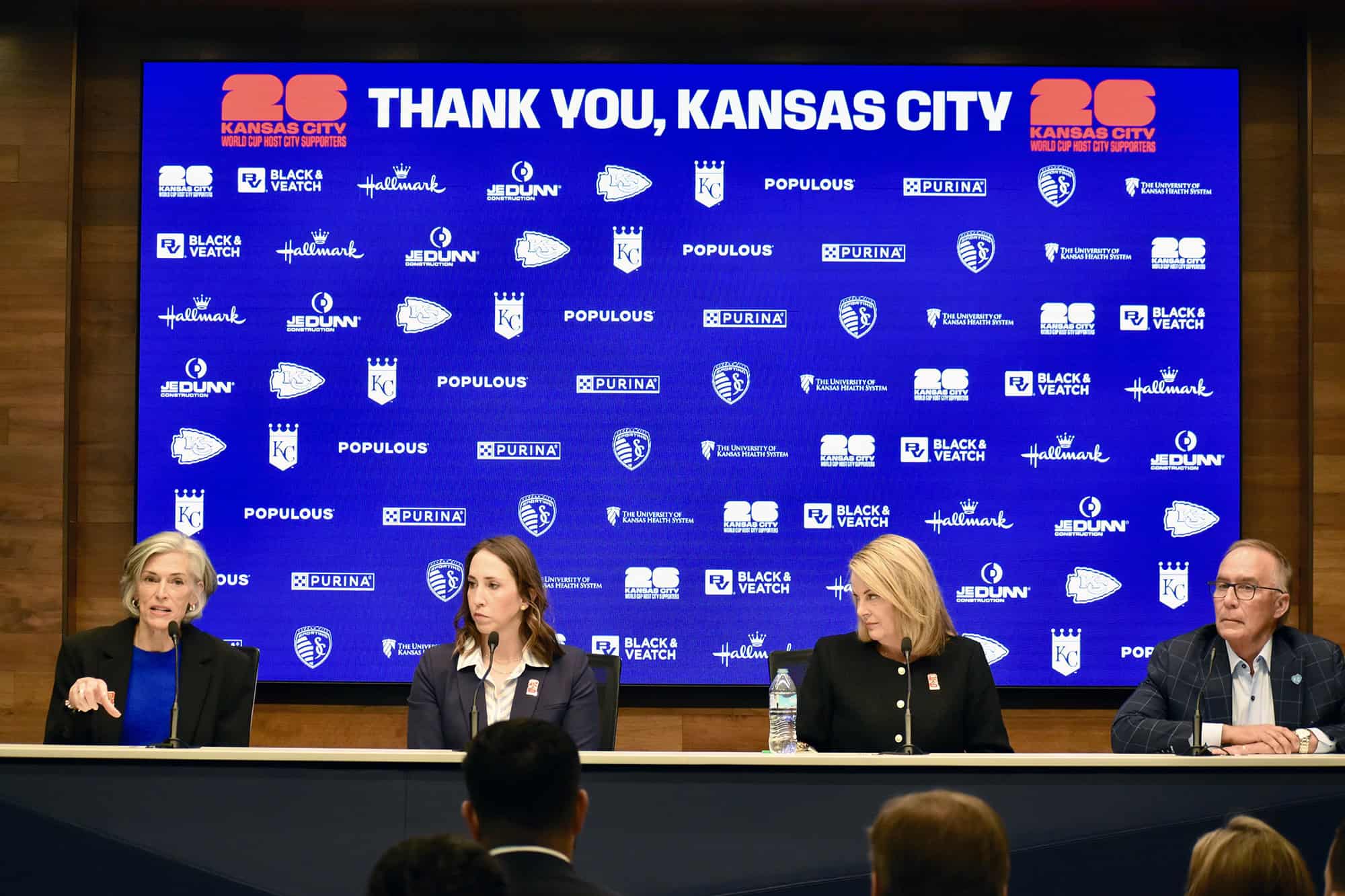
A panel of regional KC2026 organizers speaks during the release of a Community Impact Report at Compass Minerals National Performance Center; photo by Nikki Overfelt Chifalu, Startland News
Make it a movement for Kansas City
Kramer also detailed the lessons that the organization learned during Kansas City’s time on the world stage, including: regional collaboration is essential; the region has the capacity to do more; the region now has experience that creates precedents for better planning; early public-private partnerships were critical; economic opportunity is not evenly distributed; local condition should shape local strategies; and lasting impact requires long-term commitment.
“We now have firsthand experience, stronger regional relationships, and a clearer understanding of how to turn the visibility of major events into lasting value,” Kramer explained. “We delivered. We delivered as one region united in action.”
“The World Cup gave Kansas City and all of us an incredible moment on the world stage,” she added. “What we choose to do next will determine whether that moment becomes a movement and a lasting advantage.”
Communicating realistic expectations
Many of the region’s small businesses experienced firsthand Kramer’s lesson that economic opportunity is not evenly distributed during major events like the World Cup. But she said that organizers knew that reality going in, and tried to communicate it — but they still hope to better help small businesses in the future.
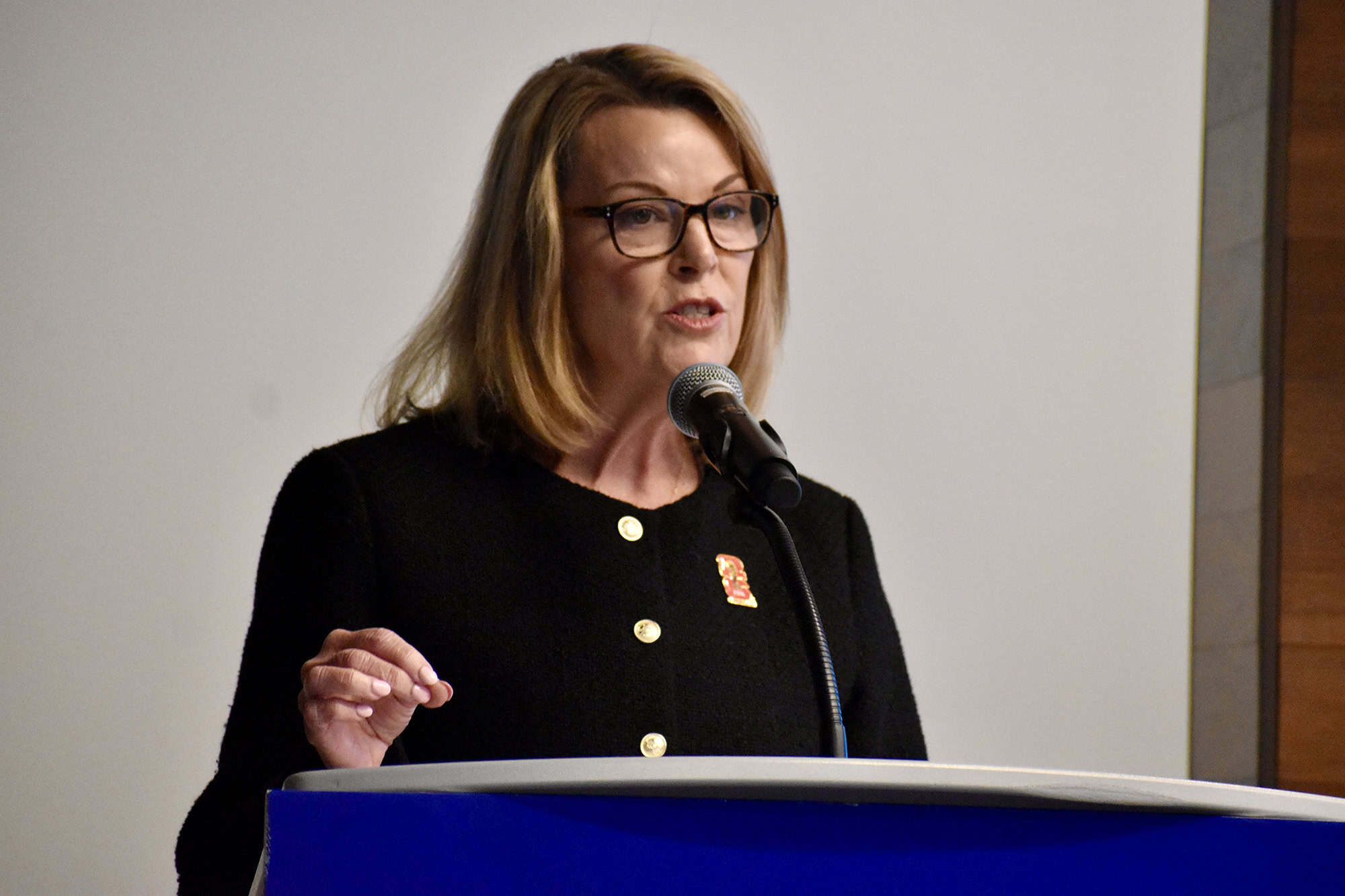
KC2026 CEO Pam Kramer speaks during a reveal event for Kansas City’s FIFA World Cup Community Impact Report at Compass Minerals National Performance Center; photo by Nikki Overfelt Chifalu, Startland News
“This one did generate substantial economic activity across the region, but not every business or community benefited equally,” she explained. “So I think helping in an even more direct way so businesses capitalize on future events, helping them have realistic expectations, timely market intelligence, proactive planning, knowing that a major event can bring the world to your doorstep, but it does not necessarily mean the world will automatically walk through your door.”
Kramer said she’s also hoping the local residents who were afraid to get out and do their normal activities now see that they have nothing to worry about during a major sports event.
“One of the messages is: let’s all participate in the way that we normally participate,” Kramer continued, “going to dinner, going to a movie, so that the businesses who are not directly impacted by visitor traffic still have their normal traffic.”
Tracy Whelpley — who served as director of regional impact for KC2026 and helped develop the KC Game Plan for small businesses — said now that the city has this experience under its belt, it can analyze the data to better predict where people tend to cluster.
“I think that’s the No. 1 piece of information the businesses were looking for, and we just didn’t have the underlying confidence,” she noted. “We didn’t know what to expect, so I think it was a host city challenge (across the country.”
“We can bring people — and small business owners — back to this notion that it’s like any business venture,” Whelpley added. “It’s a strategy: knowing your customer, being able to plan through uncertainty, and then being able to adapt when things change are really the skill sets and strategies that you have to develop.”
From post-tournament feedback, Whelpley said, they’ve heard that many businesses that didn’t see the traffic they expected were still happy that the region did well during the event.
“They said, ‘I’d do it again and probably go in with different expectations,’” she noted.
Sports legacy bounces on
As part of the lasting impact of hosting the World Cup, Kramer hopes Kansas City can use that momentum to create a strong sports economic ecosystem, she told the media.
“Many of you have heard me liken it to the way that Nashville uses music,” she explained. “We have the chance to use sports in a way that not only attracts new events but creates a sports economy that draws in visitors in an even bigger way that attracts young professional workforce to want to live in Kansas City.”
“I think people recognize us as a sports leader,” she added. “How do we parlay that into other economic drivers, whether it’s manufacturers of things that build stadiums or sports tech.”
The city is working on it, Whelpley noted, as it hosted the Netherlands Sports Tech Innovation Bridge founders, who met with a lot of the sports leaders, teams, and found opportunities in Kansas City. Additionally, Endeavor Heartland and Keystone Innovation District have launched a sports wellness cohort to start to identify sports tech founders at home, as well as welcome others to the area.
RELATED: Sports-wellness tech cohort adds two more Kansas City companies in time for tip off
“People have the opportunity to participate in the economy — and maybe it’s not just in events, in event production or event tourism,” Whelpley continued. “But there are other aspects of the sports economy that we can develop and attract more innovators and companies and talent to participate in that.”
Catalytic connections across industries
The Kansas City region is already seeing the impact of being able to showcase its business, cultural, and innovation assets to international audiences, said Tim Cowden, president and CEO of the Kansas City Area Development Council.
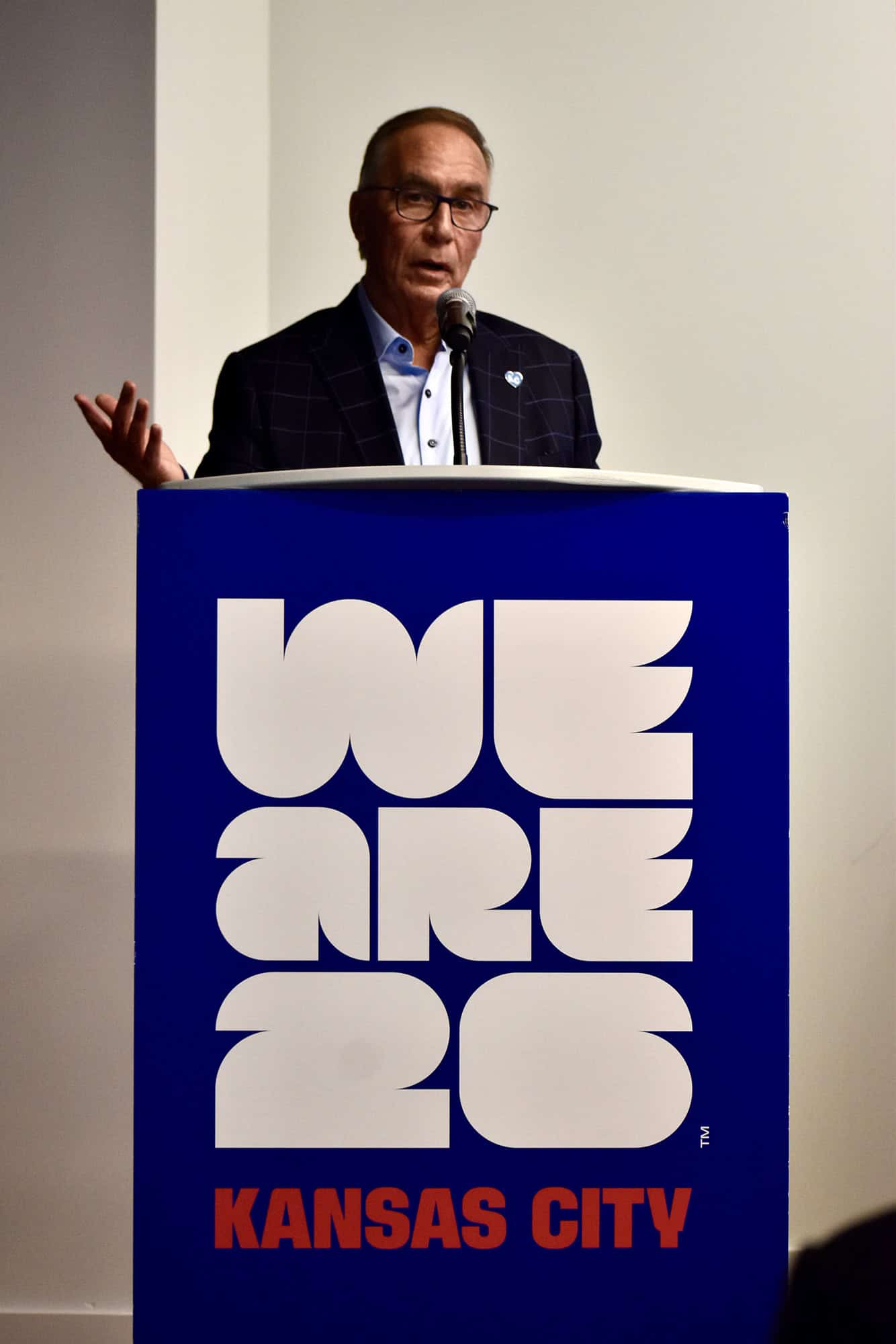
Tim Cowden, president and CEO of the Kansas City Area Development Council, speaks during a reveal event for Kansas City’s FIFA World Cup Community Impact Report at Compass Minerals National Performance Center; photo by Nikki Overfelt Chifalu, Startland News
Interactions at the KC House have driven 24 international trade missions already with engagements in countries like Germany, the Netherlands, Algeria, Austria, Switzerland, Canada, Curacao, Argentina, Mexico, and the United Kingdom.
“The relationships that we started building matter,” he noted.
Among the initiatives launched during the World Cup was the Global Cattle Innovation Platform, Cowden explained, which recently received catalytic funding from the Bezos Earth Fund. The Kansas City-based initiative aims to accelerate a global, producer-driven approach to innovation across beef and dairy systems.
“That’s the kind of outcome that the World Cup has helped us create, bringing these global leaders to Kansas City,” he said.
Fund More Stories
This story was made possible by readers like you. Join them — make a one-time contribution or become a monthly member to sustain our work.