Crown Center stadium financing advances to city as Royals name builders for $3B ballpark district
September 15, 2026 | Startland News Staff
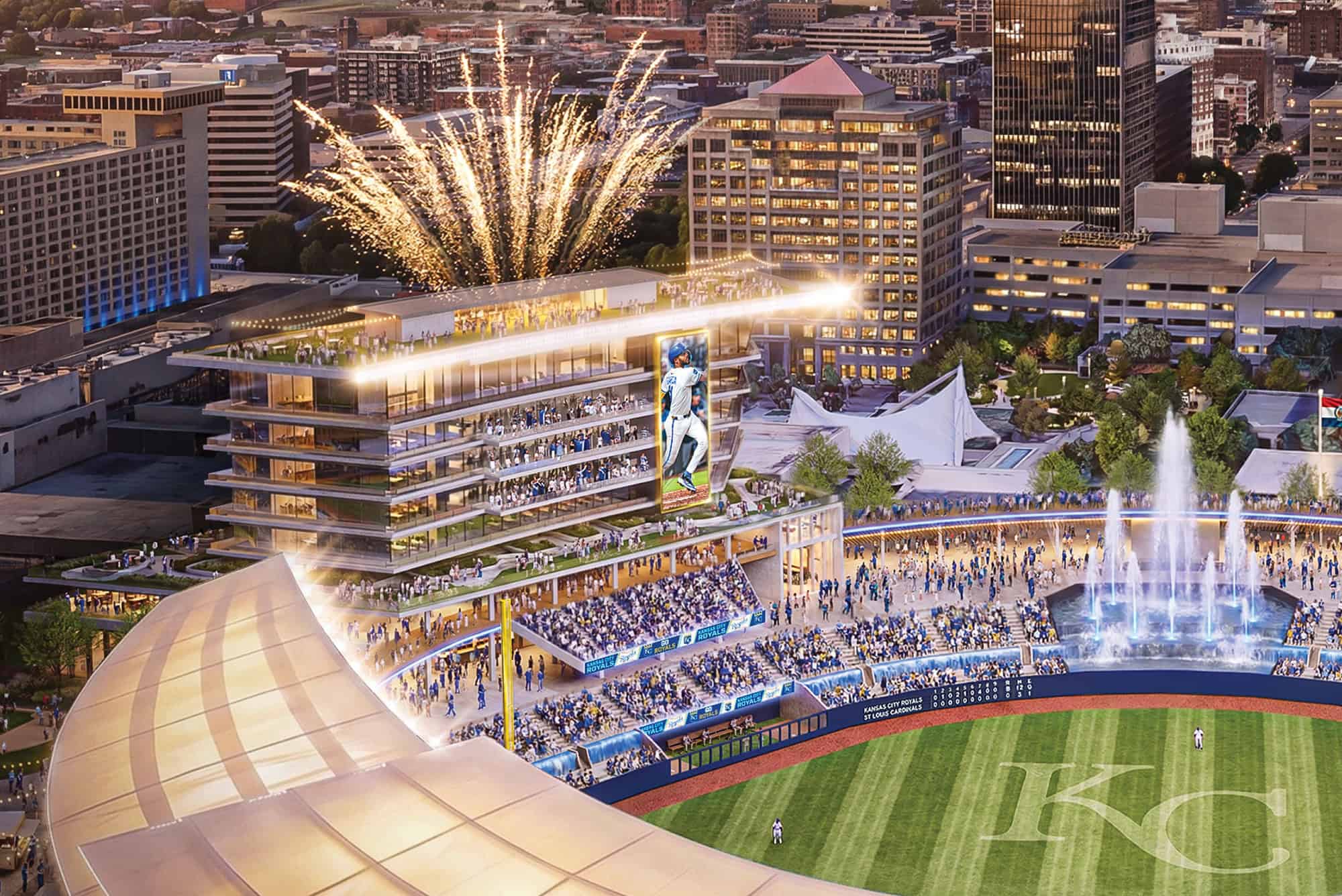
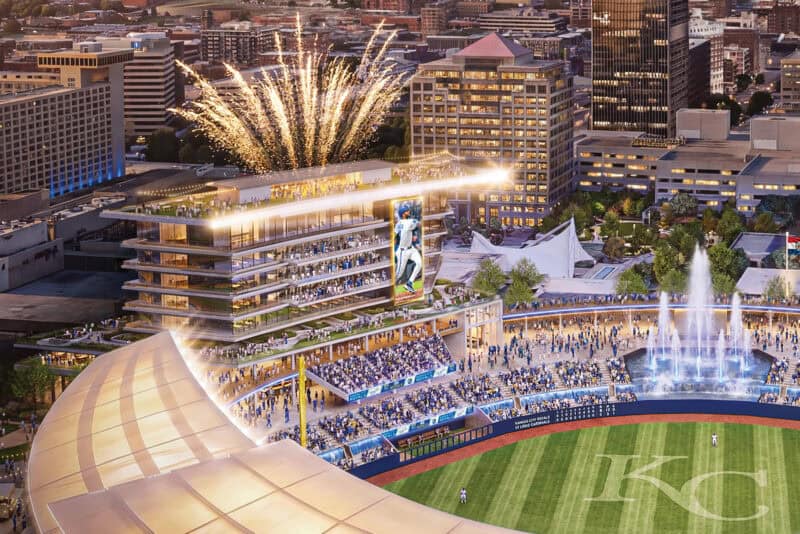
An enhanced ballpark rendering shows the new Royals stadium as it connects into the existing Crown Center neighborhood, revealing the team's vision for a year-round downtown ballpark district; rendering courtesy of Populous
Editor’s Note: The Economic Development Corporation of Kansas City (EDCKC) is a financial supporter of Startland News.
A plan to fund infrastructure and other improvements tied to the proposed Kansas City Royals stadium at Crown Center is moving forward with financing that allows for up to $381.9 million in reimbursable project costs, plus financing costs.
City council members will now review the Downtown Stadium Tax Increment Financing Plan for final approval. Leaders have already greenlit Kansas City’s commitment to contribute $600 million, with $510 million for the stadium and related facilities and $90 million for infrastructure.
Why TIF Financing?
Tax increment financing uses some of the new tax revenue created in a redevelopment area to pay back eligible project costs. Missouri law requires proof that the project would not likely happen without this type of financing. A TIF Plan comprises several supporting documents that establish a development plan, budget, timeline, and administrative requirements.
Utilizing the TIF plan will allow existing investments for the stadium to better establish a foundation for continued development throughout the broader 85-acre, year-round ballpark district, said Dan Moye, vice president of land development of the Economic Development Corporation of Kansas City, which administers the city’s TIF Commission.
“By improving access, connectivity, public infrastructure, and the surrounding environment, we can help create the conditions for additional development, private investment, and long-term economic activity around Crown Center,” he said.
RELATED: Why precision development key to avoiding gentrification’s negative impacts
The specific redevelopment area identified by the TIF plan includes the roughly 1.2 million-square-foot stadium with at least 30,000 seats, public spaces, hospitality and entertainment areas, and the Royals’ offices. (The overall redevelopment area is generally bounded by Pershing Road and East 22nd Street to the north, Main Street to the west, Gillham Road to the east, and East 27th Street to the south.)
About $422.7 million in infrastructure improvements would include streets, utilities, pedestrian paths, public plazas, traffic management, highway access, streetcar stop upgrades, and green infrastructure.
If the city approves the TIF plan, pre-construction would start immediately afterward, with groundbreaking expected in May 2027. The project would be mostly finished by December 2029, and the Royals could play their first home game at the new ballpark in March 2030.
The Royals on Monday announced the team had selected a Mortenson-McCownGordon joint venture to serve as construction manager at risk for the stadium and its seats. JE Dunn is expected to partner in shaping the surrounding live-work-play ballpark neighborhood, which the Royals called the largest sports-anchored downtown development in baseball.
RELATED: Royals tap ballpark builders for Kansas City’s new $3B baseball district
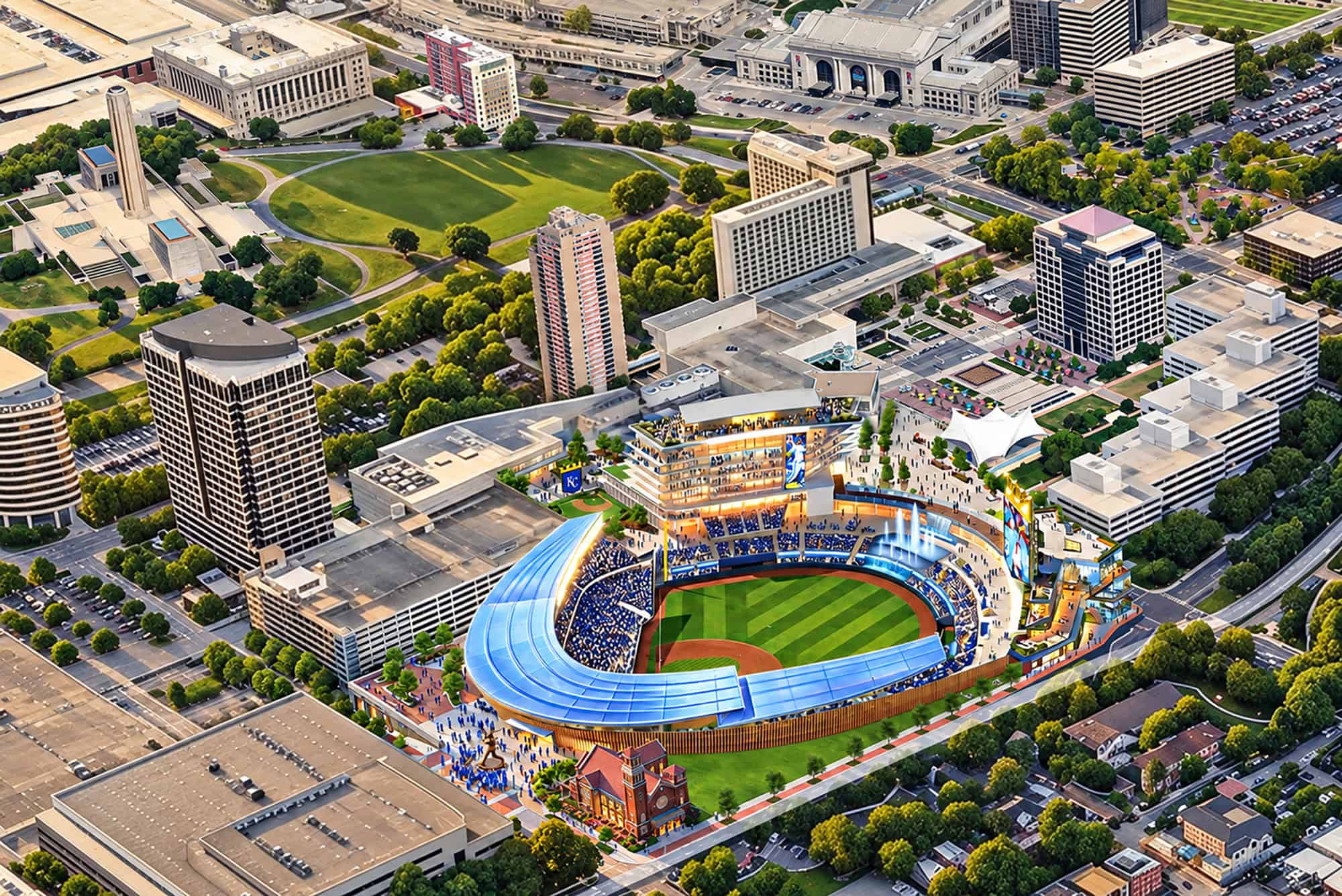
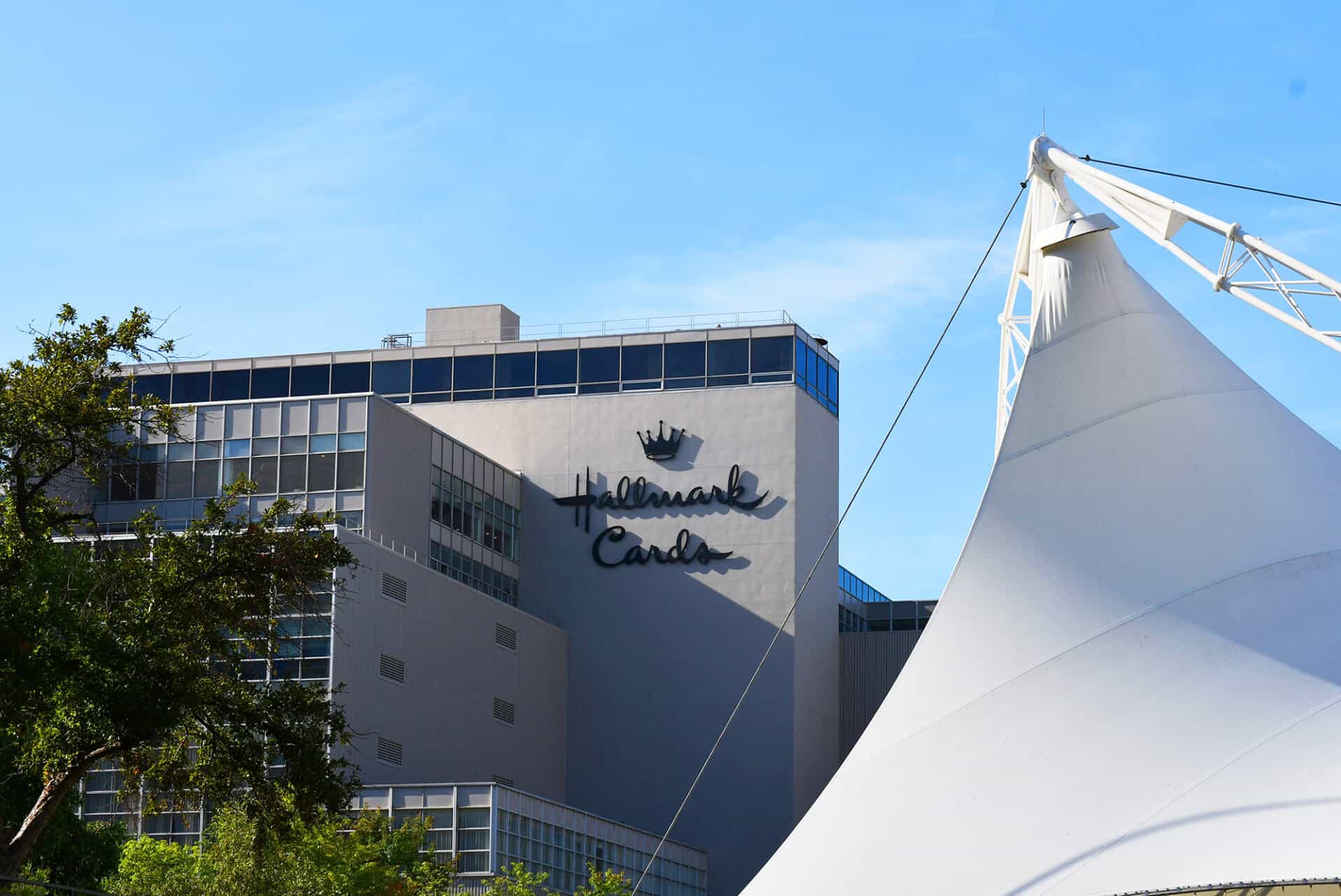
An enhanced rendering shows the layout and orientation of a Royals ballpark district at Crown Center, with the stadium overlaid on the current headquarters location of Hallmark Cards; image courtesy of Populous
Total investment for the stadium portion is set at about $2.05 billion, including construction financing — about $911.2 million from the team and $1.14 billion from public sources like the State of Missouri and the City of Kansas City, according to EDCKC.

Andrea Bough, Economic Development Corporation of Kansas City; photo courtesy of EDCKC
“This project represents a significant opportunity to generate new economic activity, attract additional investment, and strengthen the broader downtown area from the riverfront to Crown Center,” said Andrea Bough, interim president and CEO of EDCKC. “The scale of the proposed investment, combined with major infrastructure improvements and long-term job creation, has the potential to support continued growth well beyond the ballpark itself.”
ICYMI: New EDCKC leader wants entrepreneurs, city ready when KC’s next big break comes knocking
Stadium construction is expected to create about 16,000 jobs and $1.1 billion in labor income during construction, according to EDCKC.
The TIF plan also estimates 2,275 permanent jobs, including full-time, part-time, and seasonal positions. Of those, 200 would be new jobs in Kansas City, while 2,075 current team and stadium-support jobs would be retained, the agency said.
Fund More Stories
This story was made possible by readers like you. Join them — make a one-time contribution or become a monthly member to sustain our work.