Royals sketch Crown Center concept for neighbors ahead of city planners’ vote; critics want it on the ballot
July 28, 2026 | Nikki Overfelt Chifalu
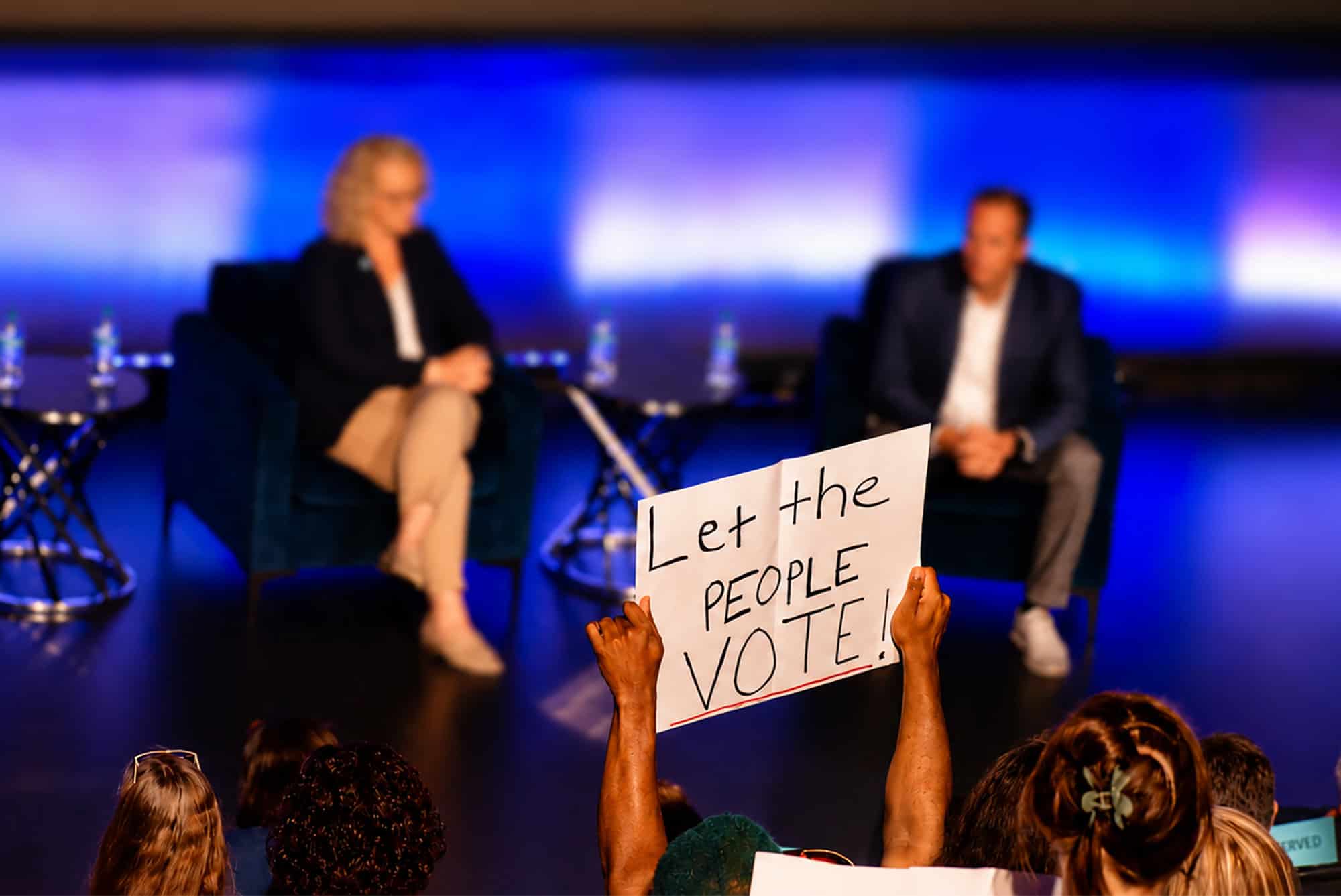
A critic of the Royals' plan to build a stadium at Crown Center holds a "Let the People Vote" sign during a public meeting in the Regnier Theatre at Union Station; photo by Nikki Overfelt Chifalu, Startland news
Questions remain about the Kansas City Royals’ plan to build a $3 billion baseball district at Crown Center after a community engagement meeting on rezoning parts of the neighborhood descended into shouting over project financing details and who ultimately would foot the bill.
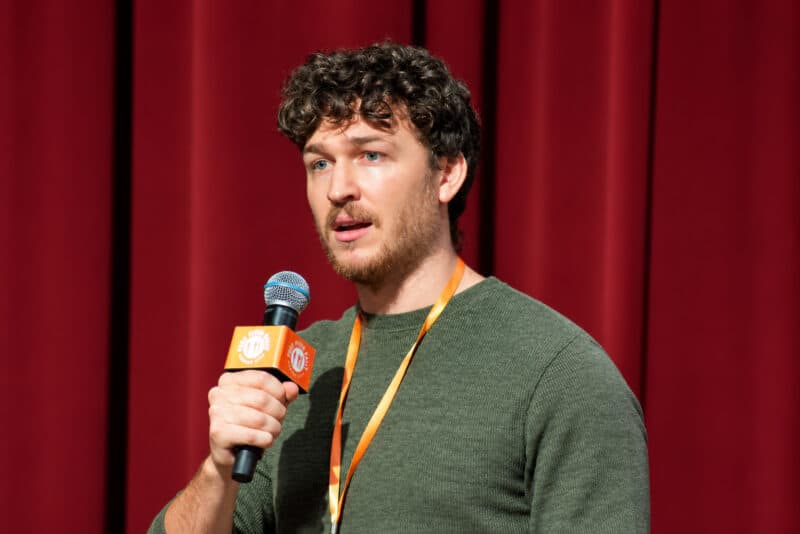
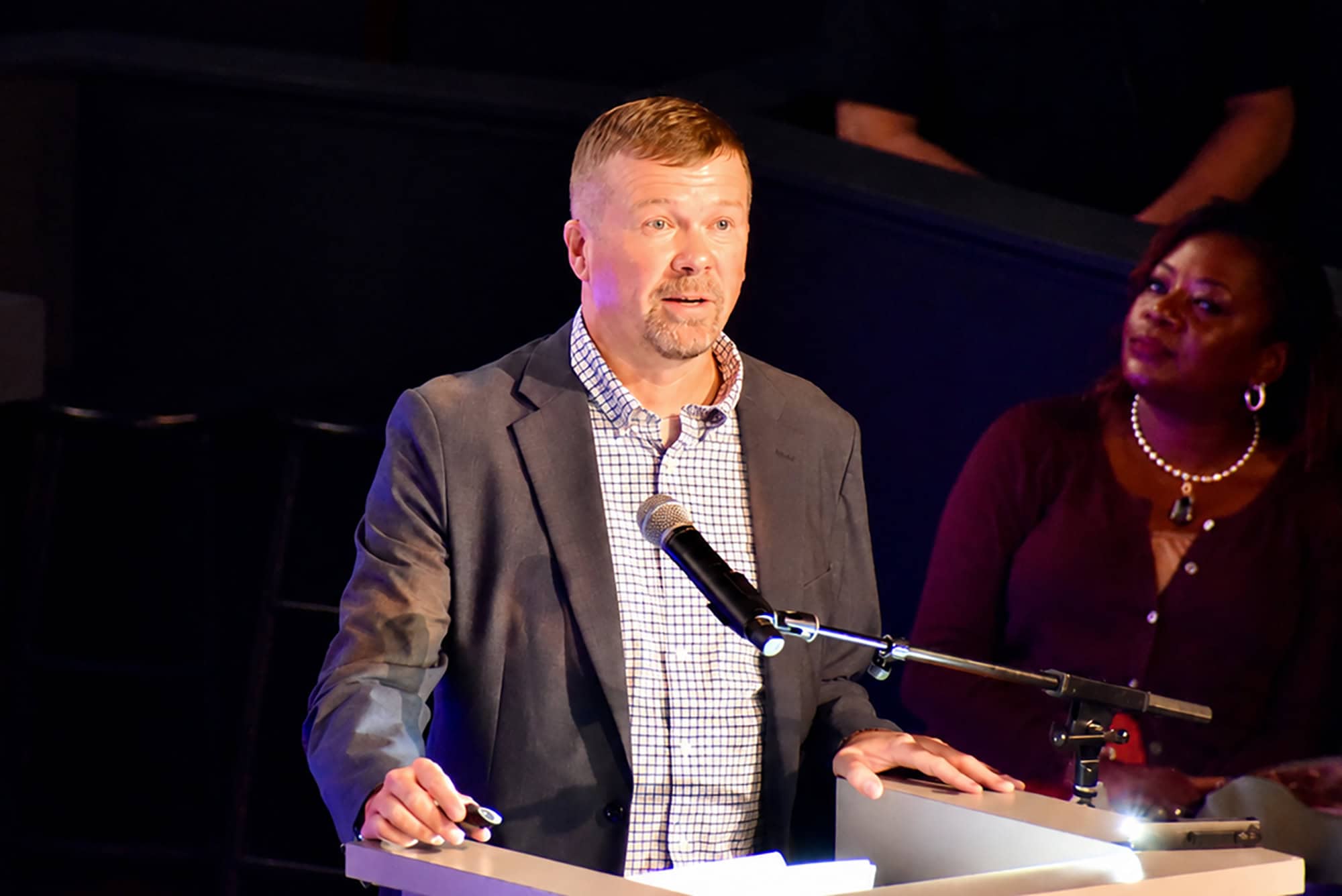
“We want to be and expect to be positive contributors to the neighborhood and the urban core of Kansas City,” Brooks Sherman, president of real estate and development for the Royals, told attendees before the meeting Monday at Union Station was cut short.
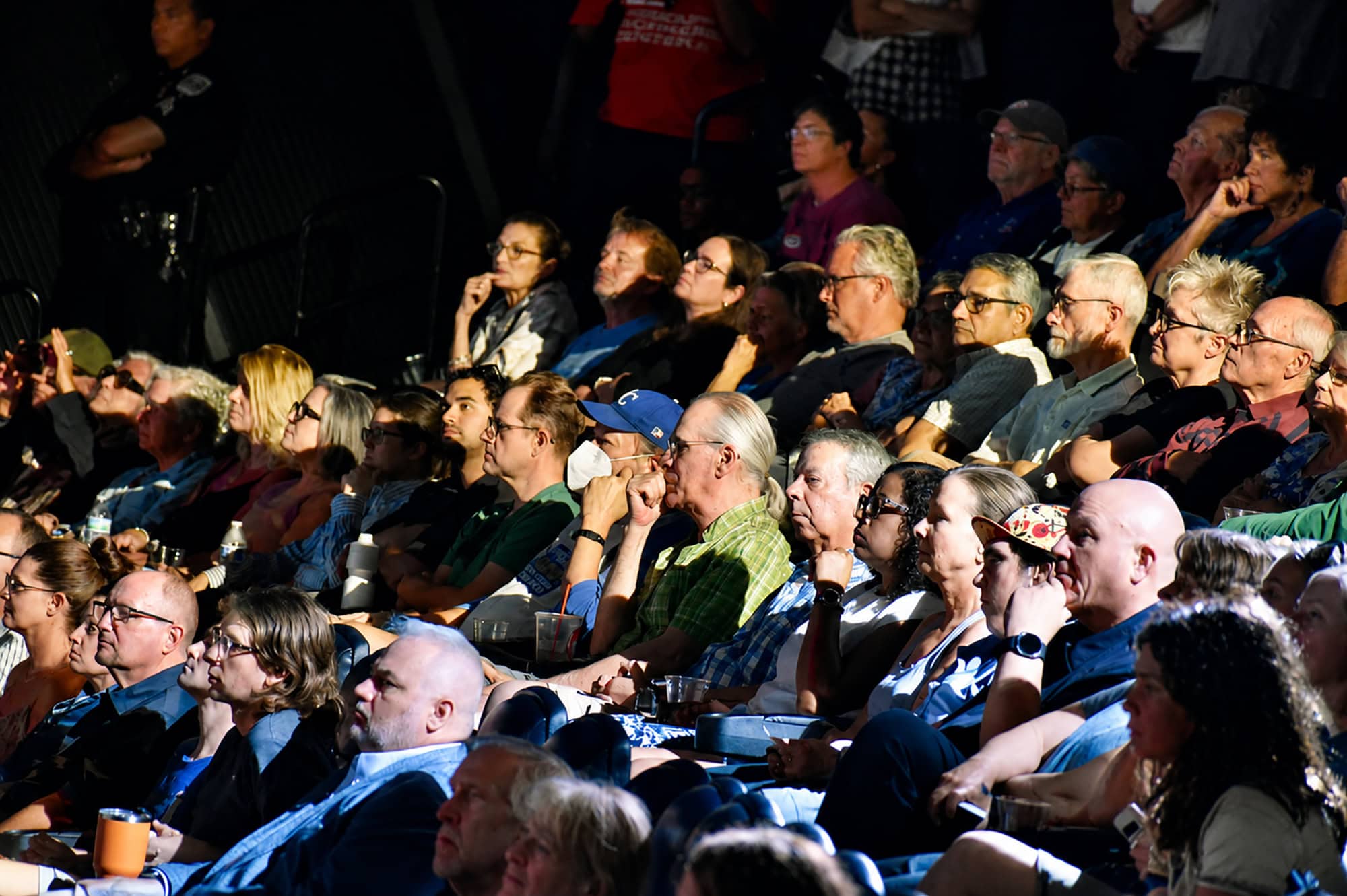
A crowd listens during a community engagement meeting for the Royals’ rezoning request for a stadium and ballpark district at Crown Center at the Regnier Theatre at Union Station; photo by Nikki Overfelt Chifalu, Startland news
After announcing the club’s plans to relocate from the Truman Sports Complex to Crown Center in April, the Royals filed rezoning plans with the city June 29. Monday’s community engagement meeting was part of the rezoning process, which the city planning and zoning committee plan to vote on Wednesday, Aug. 5.
Crown Center is the perfect place for the new 34,000-seat stadium, Sherman said, noting its central location near local landmarks and its views of downtown, the multiple points of access from highways and interstates, its parking garages, and its proximity to the streetcar line.
“It’s not just baseball,” he continued. “We want to surround downtown baseball with a vibrant year-round mixed-use development, capitalizing on Crown Center’s already wonderful presence, as well as reimagining and expanding upon what exists today.”
RELATED: Here’s how Royals’ new ballpark pitch could changeup Crown Center (and KC spirit)
Vocal community members at the meeting interrupted proceedings during a final Q&A portion of the event, demanding a public vote on the Royals’ plan to relocate. (A previous sales tax ballot question on whether to support the club’s planned move from Kauffman Stadium to a site in the Crossroads Arts District failed in 2024. Critics at the time questioned the Royals’ transparency throughout the process, with community and activists groups successfully turning the vote into a referendum on public funding for corporate projects.)
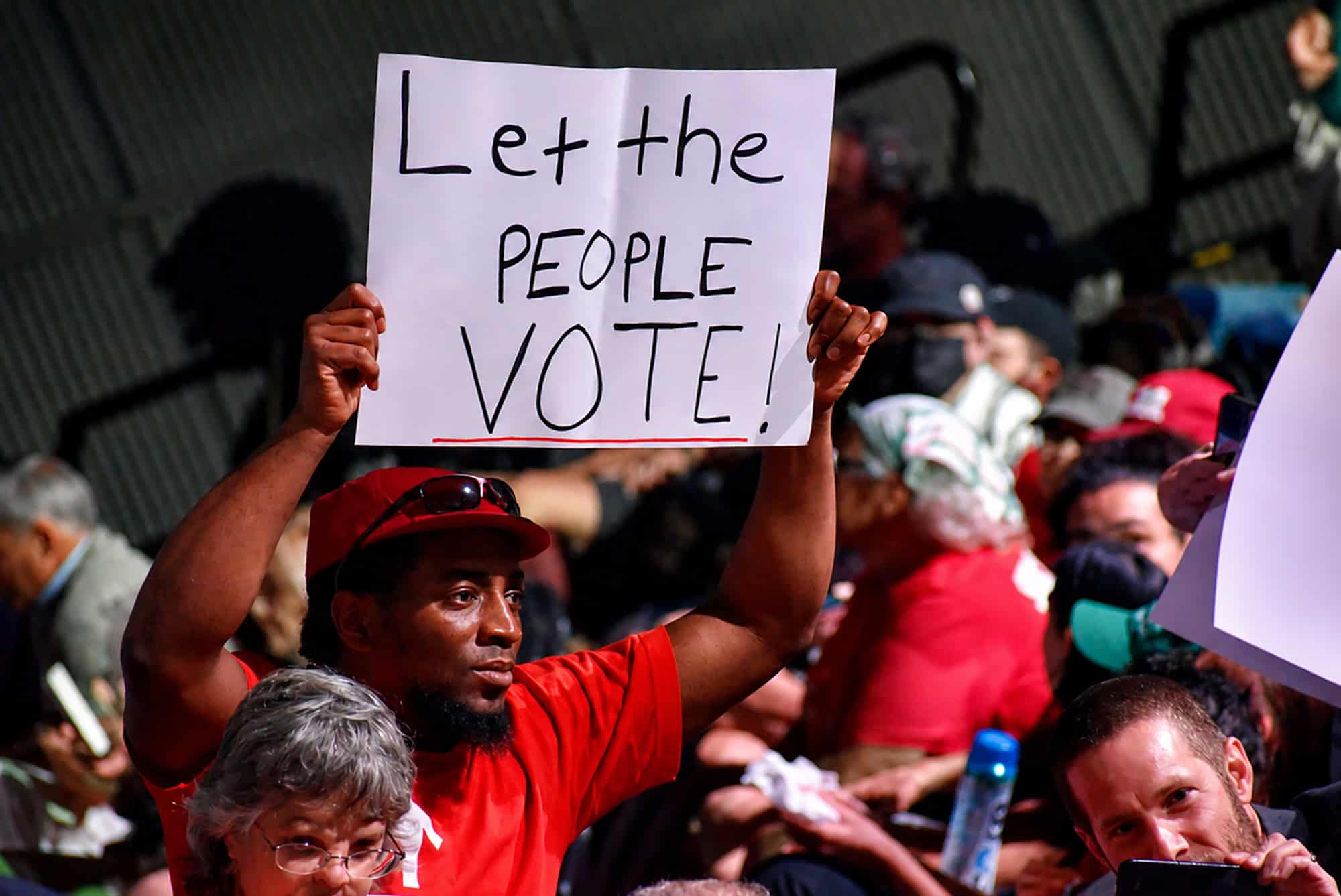
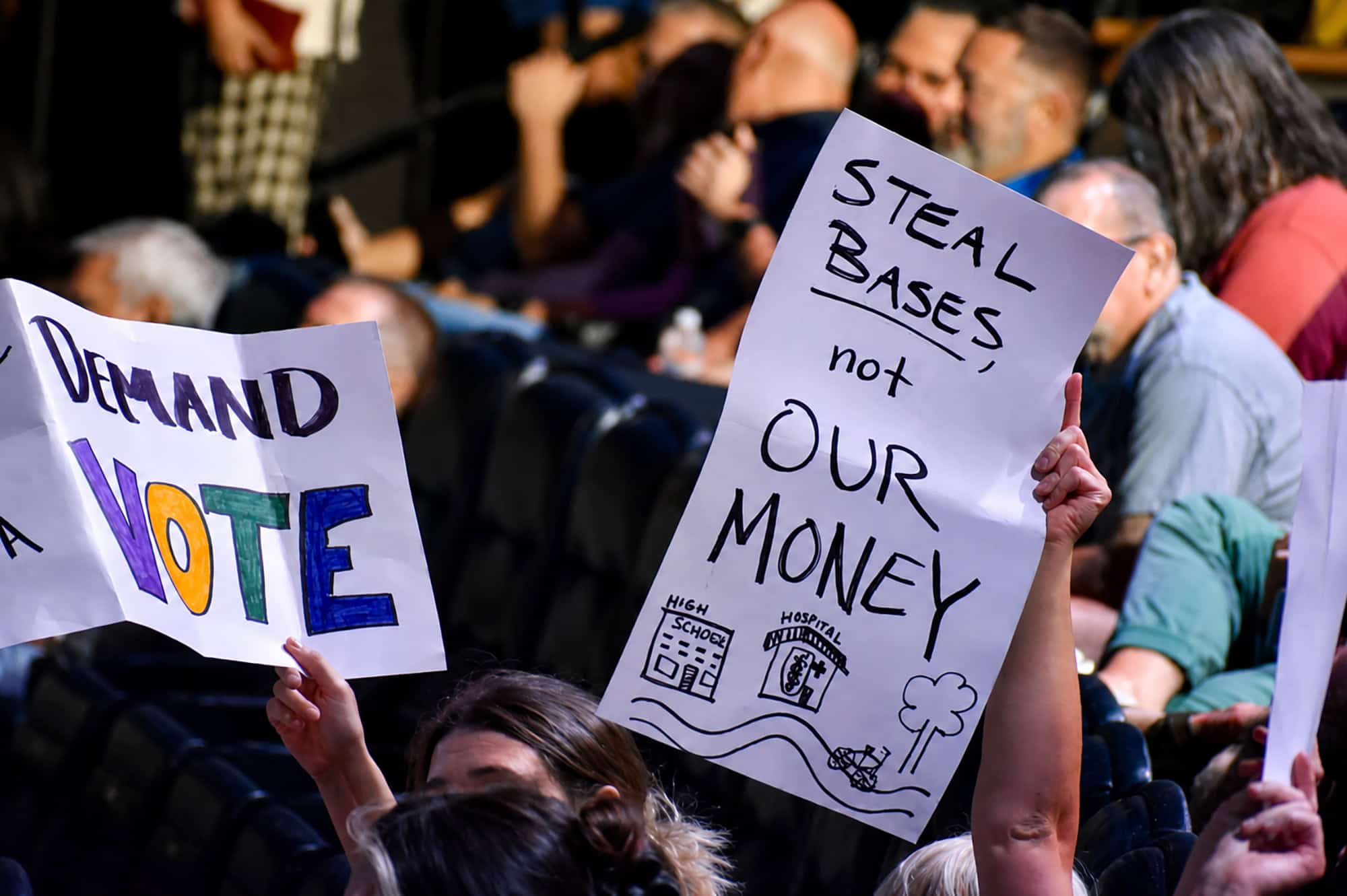
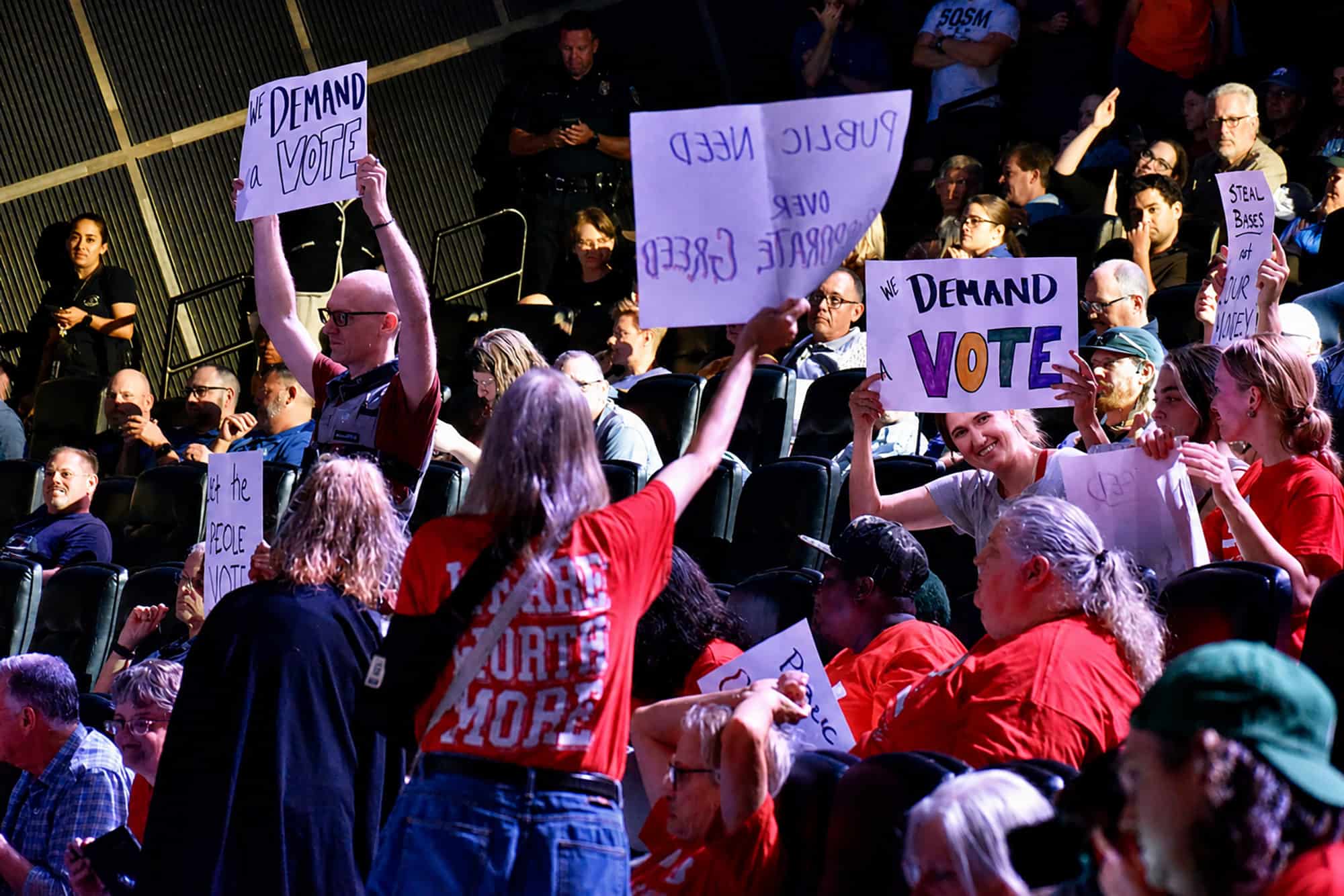
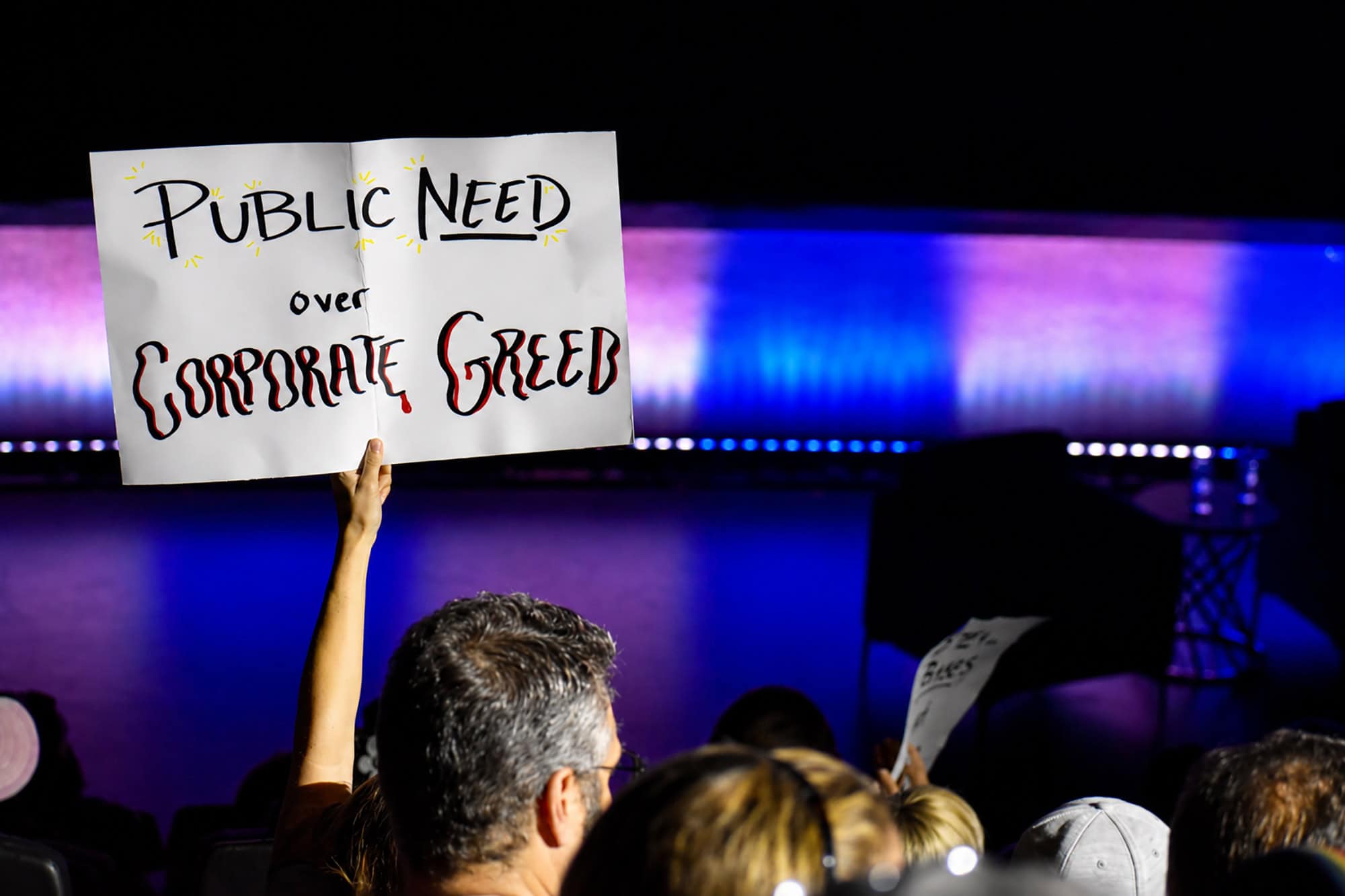
“There’s a lot of different opinions and we respect that,” said Bridgette Williams, emcee of the event and executive director of the Heavy Constructors Association, before choosing to end the session. “Change is hard. Change is hard. Everyone was offered a card to ask questions. This is about rezoning. This is not about the financial system.”
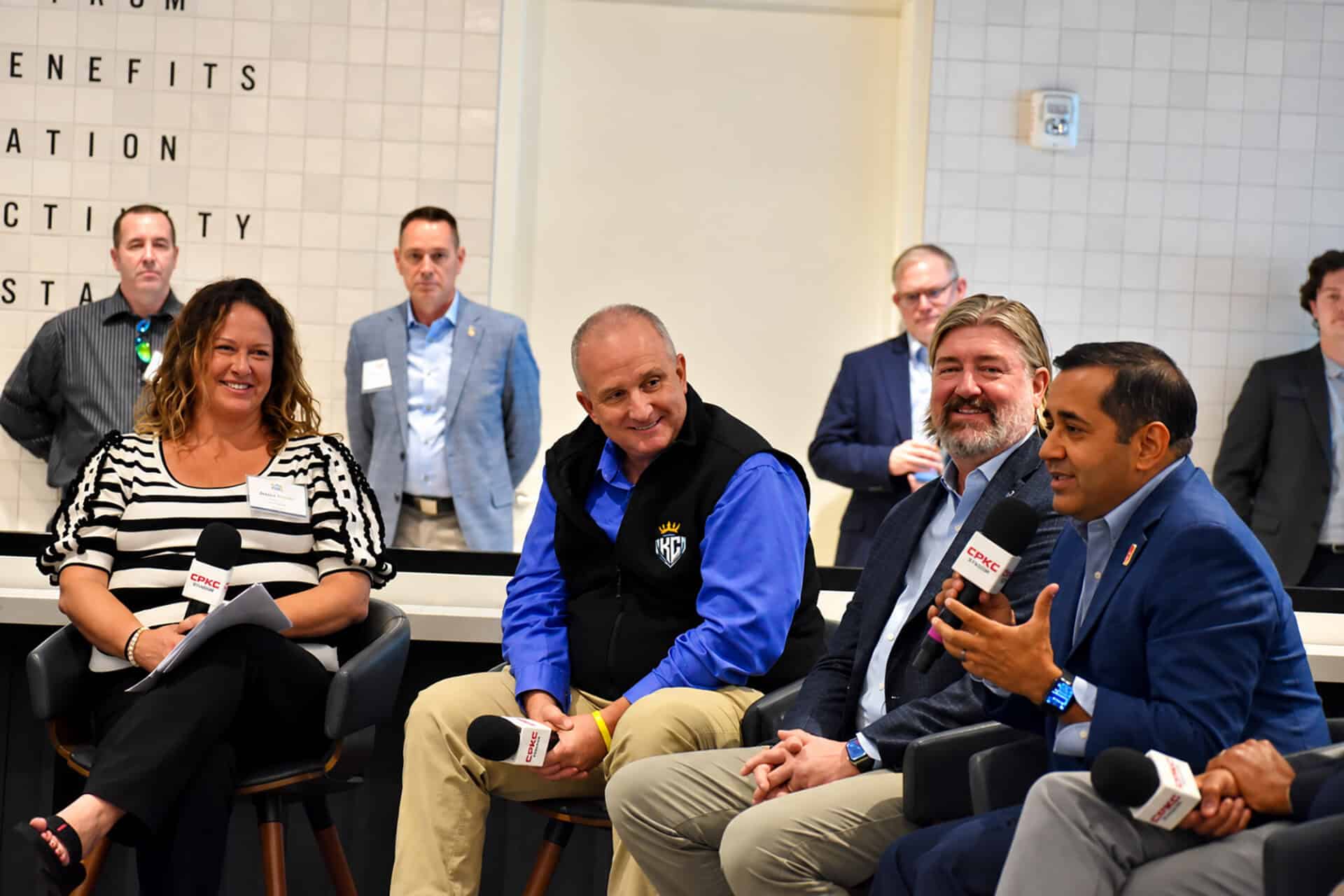
Such organizations as Children’s Mercy Hospital, University Health, the Ronald McDonald House, the AFL-CIO, the Greater Kansas City Building and Trades Council, and the Crossroads Community Association voiced support for the Royals’ Crown Center project during Monday’s meeting.
“There are a lot of questions still outstanding and there were a lot of questions from the previous proposal,” noted Nicholas Grunauer, president of the Crossroads Community Association. “But the Royals have indicated through this entire second round of the process that they want to be collaborative partners and they want to be great neighbors. So what that means, let’s see.”
“There’s going to be a lot of decisions that we have to talk through here, but they’ve been with us all along, and we’re excited to continue that conversation on behalf of the neighborhood, on behalf of residents,” he continued.
RELATED: Royals are coming to Crown Center; Here’s how taxpayers are supporting the project
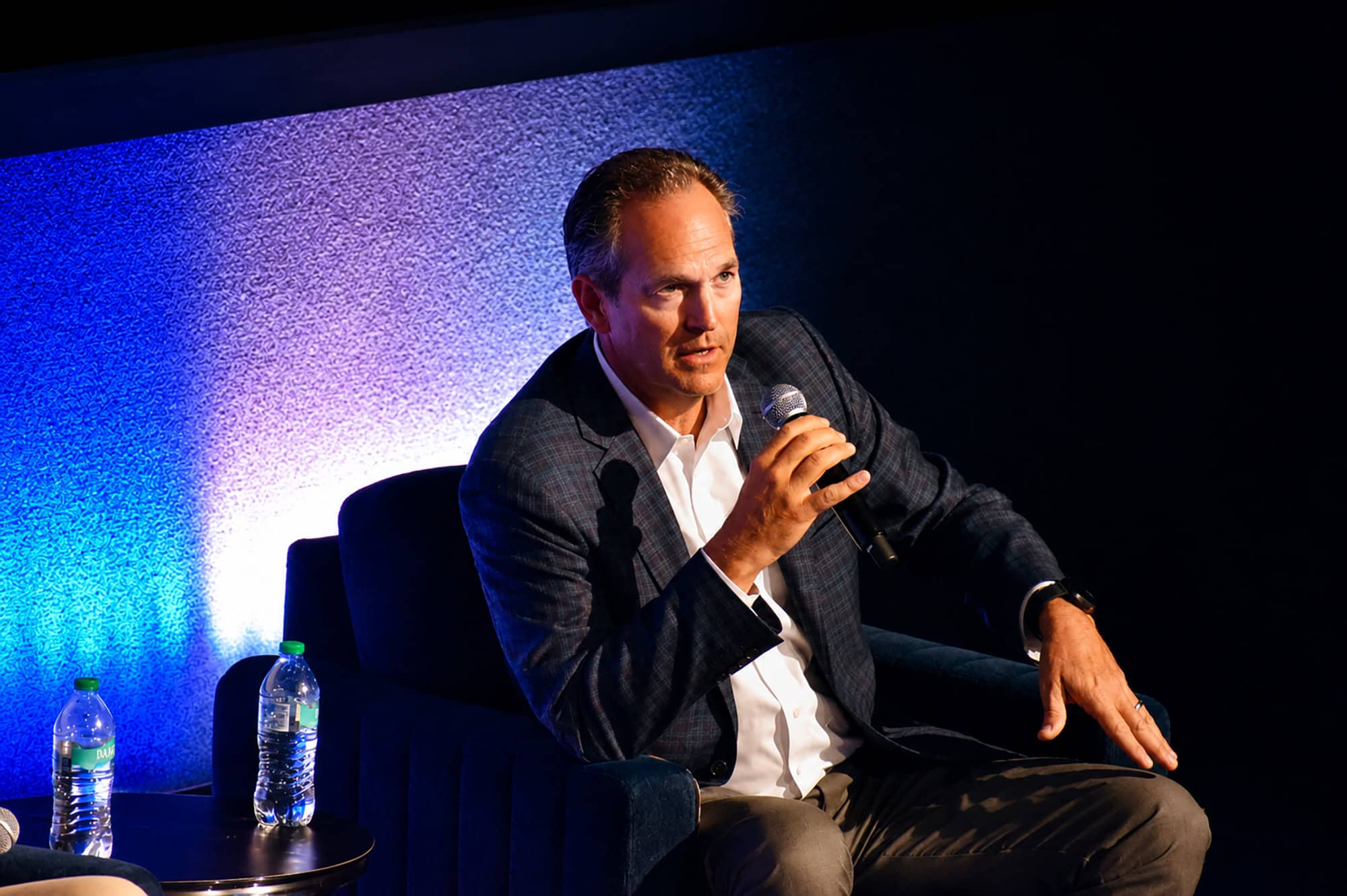
Brooks Sherman, president of real estate and development for the Royals, speaks at the Union Station community meeting; photo by Nikki Overfelt Chifalu, Startland news
Fitting the Crown Center mold
Sherman was joined Monday by range of project leaders, including Stacey Paine, president of Crown Center, and representatives from Populous, the KC-based architecture firm behind the proposed ballpark district, and Kimley-Horn, traffic engineers for the project.
“We will ensure safe, walkable neighborhoods are present for fans, residents, office workers, local and out-of-town visitors,” Sherman pledged. “Live, work, and play. We want returning fans and we want local residents, district residents, to feel at home within the district.”
Following Crown Center’s lead, Sherman said, the Royals plan to continue to be good neighbors to Our Lady of Sorrows Catholic Church, University Health, nearby condo residents and businesses, plus Children’s Mercy and Ronald McDonald House, which are undergoing their own renovation processes.
The Royals and Hallmark are different organizations, Paine acknowledged, but they share a belief and a priority in Kansas City and want to make the city the best place to be, she said.
“At Hallmark and Crown Center, we’ve invested in downtown Kansas City for decades,” Paine continued. “We believe the continued success of downtown matters, not only for the city of Kansas City but for the entire region. We believe the successful downtown benefits residents, employers, cultural institutions, and small businesses throughout the region.”
“As we look at a potential ballpark district, we don’t see it as a departure from Crown Center’s history, but rather a continued further evolution,” she added.
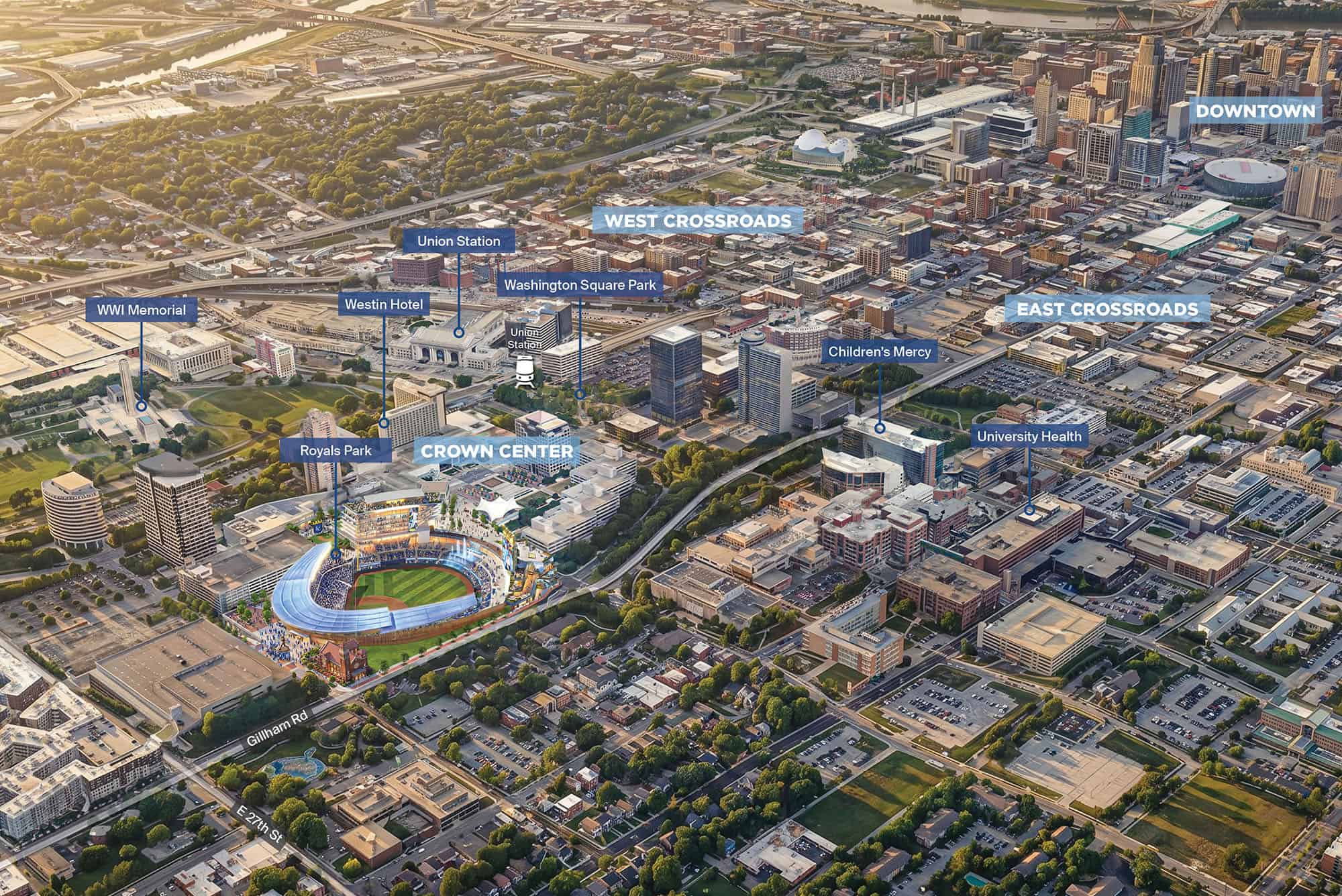
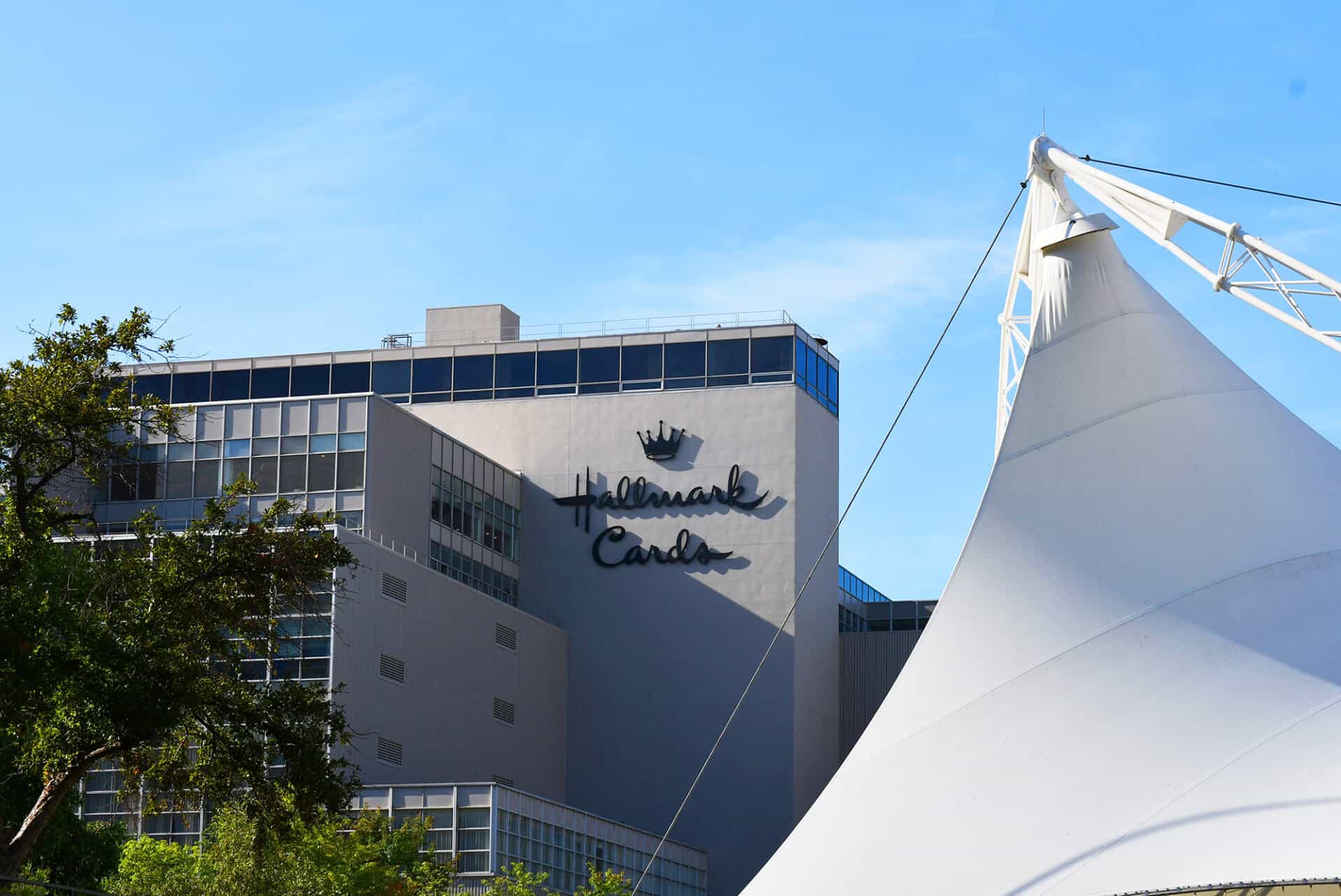
An early rendering shows the basic layout and orientation of the Royals new ballpark at Crown Center, with the stadium overlaid on the current headquarters location of Hallmark Cards; rendering courtesy of Populous
When people hear of mixed-use developments, Paine noted, they think of it as a modern planning concept.
“The reality is, we’ve been operating as a mixed-use district for decades,” she explained. “On any given day, we have office workers, neighborhood residents, hotel guests, visitors, shoppers, theater patrons, convention visitors, and all kinds of families using the district in different ways.”
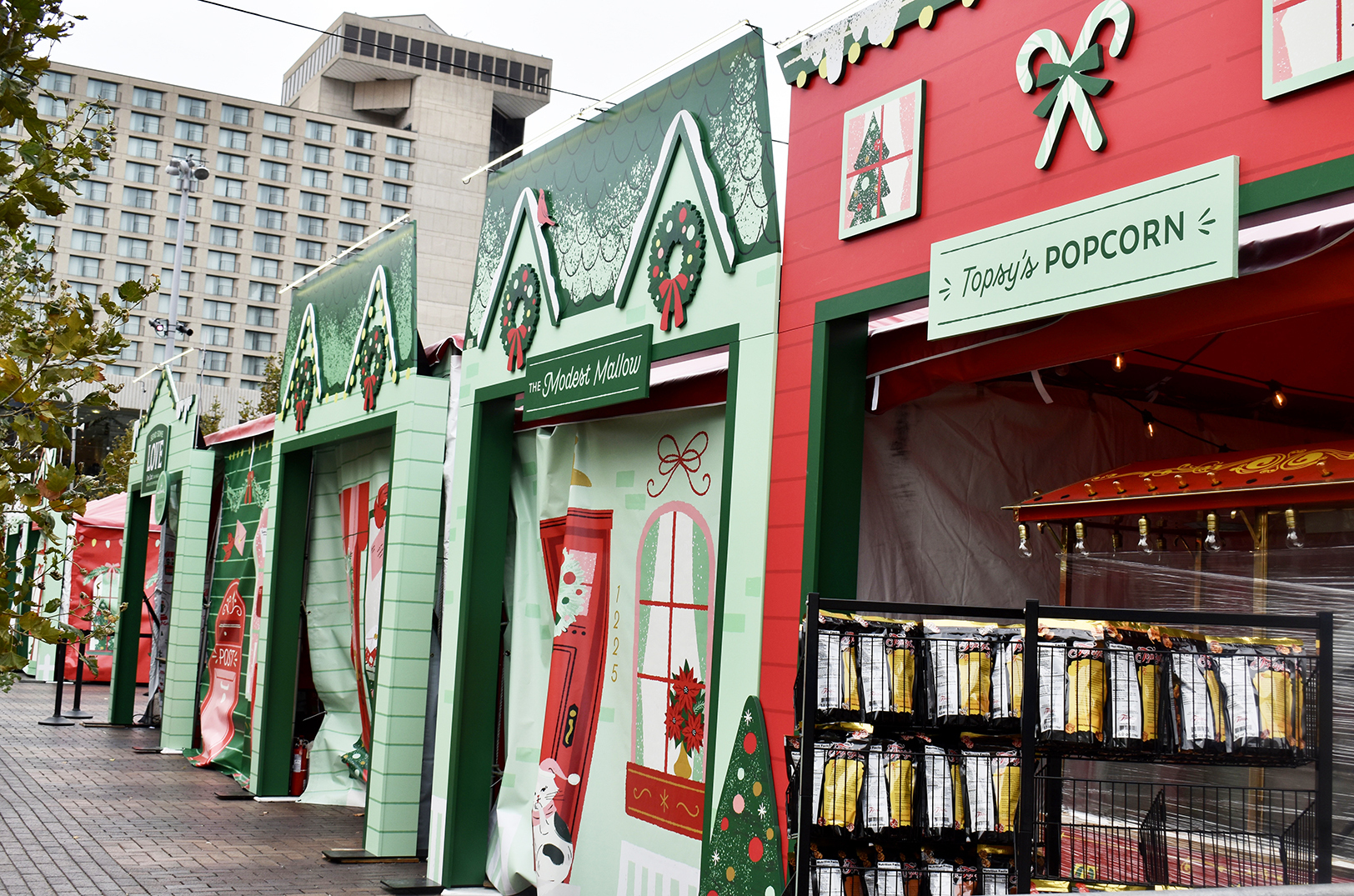
Custom fabrication by Dimensional Innovations helps create a “town square” filled with local makers at the Hallmark Christmas Experience in 2024; photo by Nikki Overfelt Chifalu, Startland News
Paine used the Hallmark Christmas Experience — which debuted in 2024 — as an example of how Crown Center handles large volumes of visitors. Last year, during the four weekends of the event, more than 200,000 people visited the campus, with the busiest day — the Saturday before Christmas — drawing more than 40,000.
“I mention that not because a Christmas Experience is the same as a baseball game; they’re different events,” she continued. “But it does demonstrate how Crown Center can accommodate large numbers of people in a concentrated area. Many people are surprised to learn just how much parking exists within Crown Center because so much of it is integrated into the development and it’s intentionally screened from view. Nearly half of our parking is either underground or largely invisible to visitors.”
“The district was designed first and foremost around the pedestrian experience, while still providing the infrastructure necessary to host those large events,” she added.

A ballpark rendering placing the Royals’ stadium at Crown Center shows a new vision for a downtown ballpark district and Kansas City’s skyline; rendering courtesy of Populous
Teasing an identity with details to come
Sarah Dempster, principal at Populous, told attendees that it’s meaningful for her Kansas City firm to help shape a project like the ballpark district at home.
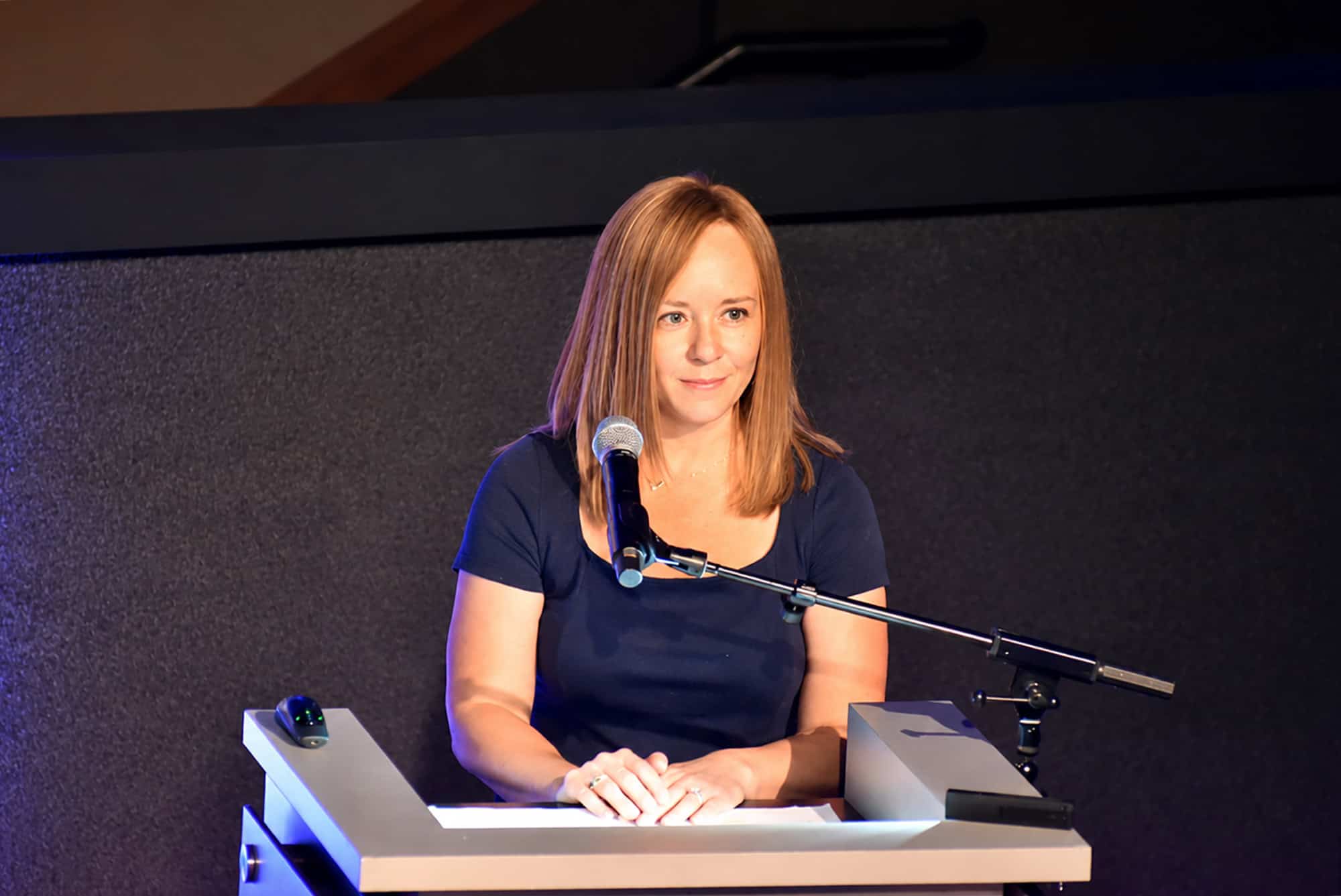
Sarah Dempster, principal at Populous, discusses her firm’s role in designing the Royals new ballpark district during a community engagement session at Union Station; photo by Nikki Overfelt Chifalu, Startland News
“At Populous, we’ve had the privilege of planning and designing sports venues and districts across the world,” she explained. “We’ve seen firsthand how sports venues are catalysts for vibrant mixed-use districts. They are really tapping into how you can make the experience come alive on non-game days.”
“We’ve seen this be successful in areas like The Battery in Atlanta, Ballpark Village in St. Louis, and Gallagher Way in Wrigley Field in Chicago,” she continued. “Each has their own identity, but they all demonstrate the value of investing in quality, public spaces and year-round activity and uses around these venues.”
During this initial rezoning process, she noted, Populous is not providing detailed architectural drawings or final development plans. The firm is establishing principles that every future project will be expected to follow, whether that’s the ballpark, future mixed-use development, public spaces, or other improvements throughout the district, she said.
“The vision is straightforward: to create a connected, year-round urban destination that builds on Crown Center’s legacy while strengthening its role as one of Kansas City’s premier destinations,” she said. “Baseball is certainly an anchor, but the goal is much bigger than baseball. We want this to be a place where people want to come to work, live, and celebrate. The district should complement everything Crown Center currently offers, while creating new opportunities for residents, visitors, and businesses.”
“The guidelines prioritize walkability, accessibility, and multi-modal connections, while encouraging flexible public spaces that can adapt over time,” she added.
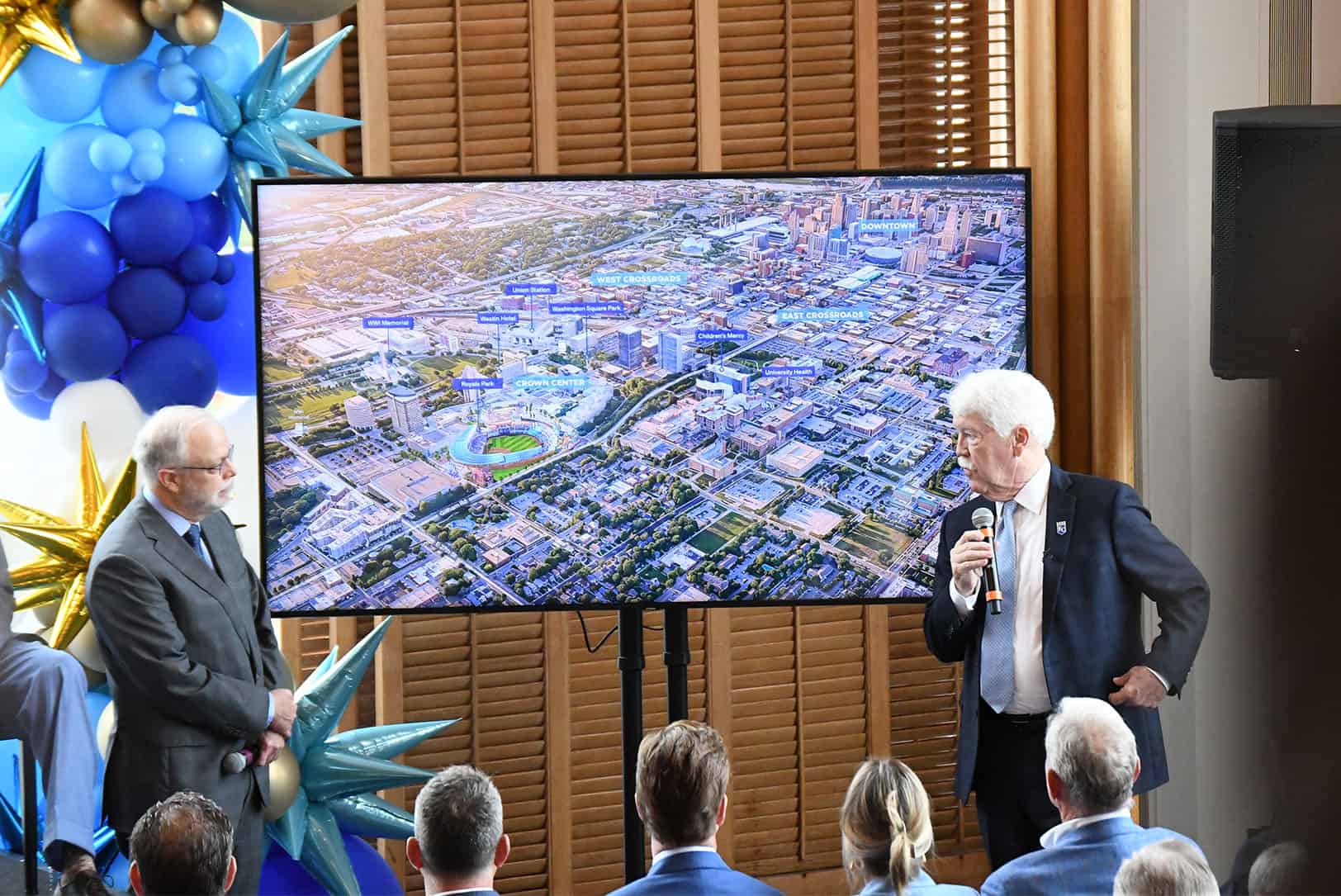
Don Hall Jr., executive chairman of the board of directors for Hallmark Cards, and John Sherman, CEO and chairman of the Royals, provide greater context to new renderings by Populous of a new ballpark at Crown Center; photo by Austin Barnes, Startland News
Routing parking concerns
Kimley-Horn has already submitted a Phase 1 traffic study that looked at some typical game-based scenarios, capacity, and parking needs, said Jeff McKerrow, senior transportation engineer.
“We’re also developing a much more detailed study that goes into multi-modal, looking at pedestrians, looking at the transit opportunities, streetcar, and listening to the community,” he added.
Jay Graber, principal at Populous, speaks during a community engagement session at Union Station; photo by Nikki Overfelt Chifalu, Startland News
As for parking, project planners anticipate only needing about 9,000 spaces for games, noted Jay Graber, principal at Populous.
“That means we have almost double the capacity out there for us to utilize,” he continued.
When fans order tickets to games, McKerrow said, the club will be able to direct them to the most convenient place to park depending on their billing address. Kimley-Horn will also be working on a traffic management plan, looking at upgrading highway interchanges in the area and technology at intersections, and will be recommending an operations center to manage all Kansas City events.
“To make sure that we can understand how we need to move traffic, how we can work with the parking demands, and how we can respond with the emergency personnel should there be a need to move emergency vehicles in and out — either the Royals or for the hospitals in the area — and keep those events moving,” he explained.
Despite confusion online, Graber said, the project would only make one slight change to the area’s bike lanes. On 27th Street, between Grand and Gilliam, the lane will be moved off the street to a multi-use path.
“We know that walking and biking are key to the community,” he added. “And I think the plan is to keep growing that for the ballpark.”
Before the meeting’s abrupt end, Sherman and the firms’ representatives addressed questions about handicapped parking, noise from fireworks and construction, parking for businesses, security concerns, and traffic during emergency responses.
Fund More Stories
This story was made possible by readers like you. Join them — make a one-time contribution or become a monthly member to sustain our work.