AI uniform designer generates custom jerseys in minutes; its real mission: create clothing that doesn’t destroy people
July 7, 2026 | Taylor Wilmore
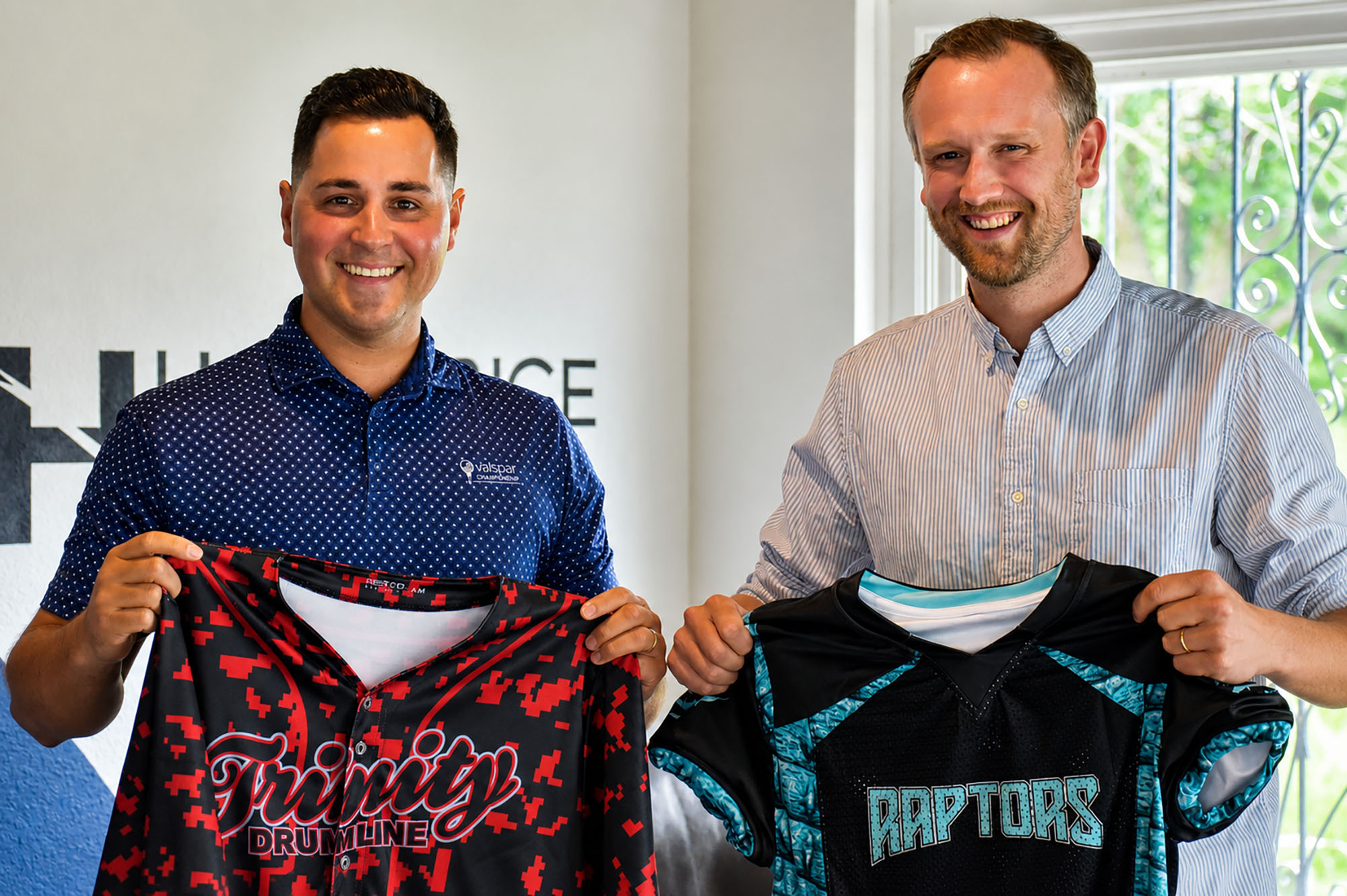
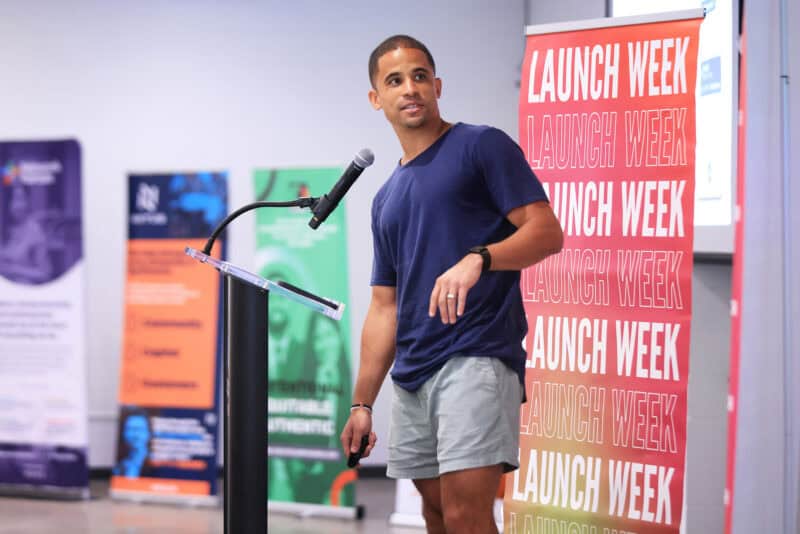
MJ Mitchell and Jonas Bedford-Strohm, Resto Athletic; photo by Taylor Wilmore, Startland News
Some companies use artificial intelligence to move faster, said MJ Mitchell. His Kansas City-based apparel business sees another opportunity: helping teams sport better work — while paying life-lifting wages that fight exploitative sweatshop conditions and restore dignity in textile manufacturing.
Resto Athletic is bringing AI into the custom uniform business, using the technology to allow customers to create personalized designs while giving artists more time to focus on production, he explained.
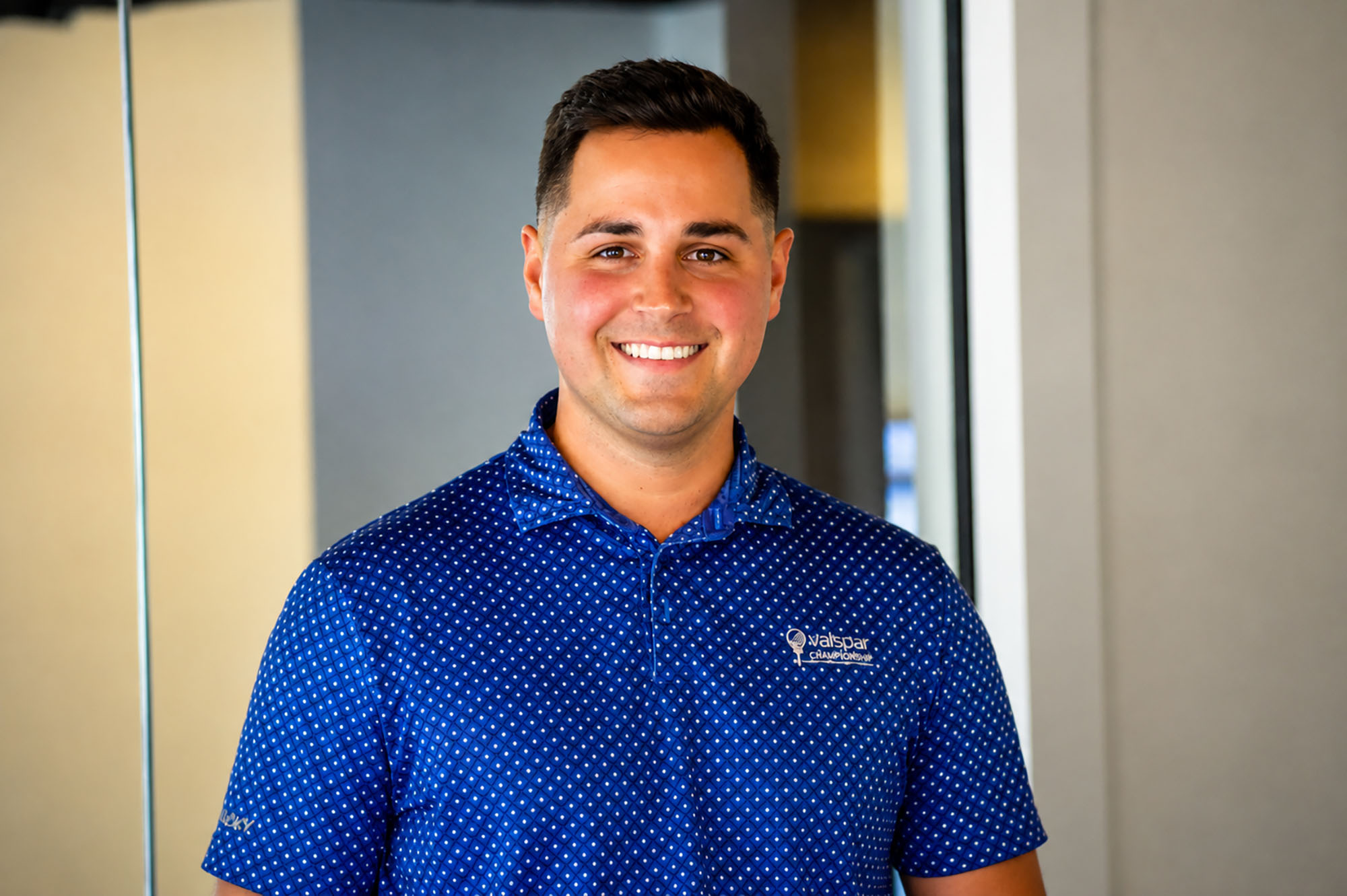
MJ Mitchell, Resto Athletic; photo by Taylor Wilmore, Startland News
Mitchell and his father didn’t launch Resto Athletic simply to make custom jerseys, he said. They wanted to prove custom manufacturing could create stable, well-paying jobs in an industry where workers are too often underpaid.
“We actually started for job creation, creating dignified work internationally primarily,” said Mitchell, who serves as CEO and CTO. “Digital customization allows us to have enough room to pay workers what they deserve.”
That mission has shaped the company from the beginning. Rather than outsourcing production, Resto owns and operates its own manufacturing facilities, employing more than 600 people across operations in the Dominican Republic and Egypt, along with a growing creative team in the Philippines.
Today, Resto manufactures roughly 350,000 custom garments each month, supplying youth sports organizations and leagues across the country, Mitchell said, noting the company also has become an official supplier for youth programs connected to the NFL, MLS and NHL.
AI takes on the first draft
As demand grew, so did the number of design requests. Every order starts differently. Some customers arrive with polished artwork, while others have little more than an idea that needs to become a finished uniform in a matter of days.
“You have to be able to take someone’s scratch on a napkin, and convert that into custom jerseys on their doorstep in less than two weeks,” said Mitchell.
That creative workload quickly became one of the company’s biggest holdups, he said. Every new customer meant more artwork, more revisions and more time from designers.

Jonas Bedford-Strohm, Resto Athletic; photo by Taylor Wilmore, Startland News
“We’ve always wondered, ‘What is the way that we could actually break through to the next level without having to build a skyscraper full of artists?’” said Jonas Bedford-Strohm, chief marketing officer for Resto.
Instead of limiting customers to a small library of templates, the company built its own AI designer that generates custom concepts from a written prompt.
Mitchell said the technology wasn’t designed to replace artists. It was built to move repetitive concept work out of their way so they could focus on preparing designs for production.
“The AI has allowed us not to get rid of our artists, but to free them to do the things that they should be doing,” he explained.
Even the most impressive AI-generated concepts still have to become garments that can actually be manufactured. Bedford-Strohm said that’s where experienced production artists continue to play an essential role.
“We’re excited about the concept art for AI, but the minute you need perfect precision and reliability on the panel layouts, those are all things that are beyond AI,” he said.
The company recently rolled out an updated online experience that lets customers either work directly with an artist or start designing with AI before placing an order.
Family ties, global reach
Even with manufacturing spread across multiple countries, Resto continues to build its technology and leadership team in Kansas City.

Resto Athletic’s storefront and headquarters on East 31st Street in Kansas City; photo by Taylor Wilmore, Startland News
Mitchell co-founded the company with his father, while Bedford-Strohm, Mitchell’s brother-in-law, joined after leaving a career helping modernize Germany’s public broadcasting system. After years inside one of Germany’s largest media organizations, Bedford-Strohm said joining a fast-growing startup was a dramatic change of pace.
“Between ideation and implementation can be as short as 10 minutes, I loved the adventure of small business, I caught the bug,” he said.
That entrepreneurial pace also shapes how Resto builds its team. The company looks for people who are eager to learn, believing technical skills can be taught.
“You couldn’t go and buy an artist off the shelf,” said Mitchell. “You’re advertising for someone who’s willing to learn it, beat their head against the wall and figure it out.”
As AI becomes a bigger part of the business, Bedford-Strohm said the technology only matters if it helps Resto stay true to the mission it was founded on.
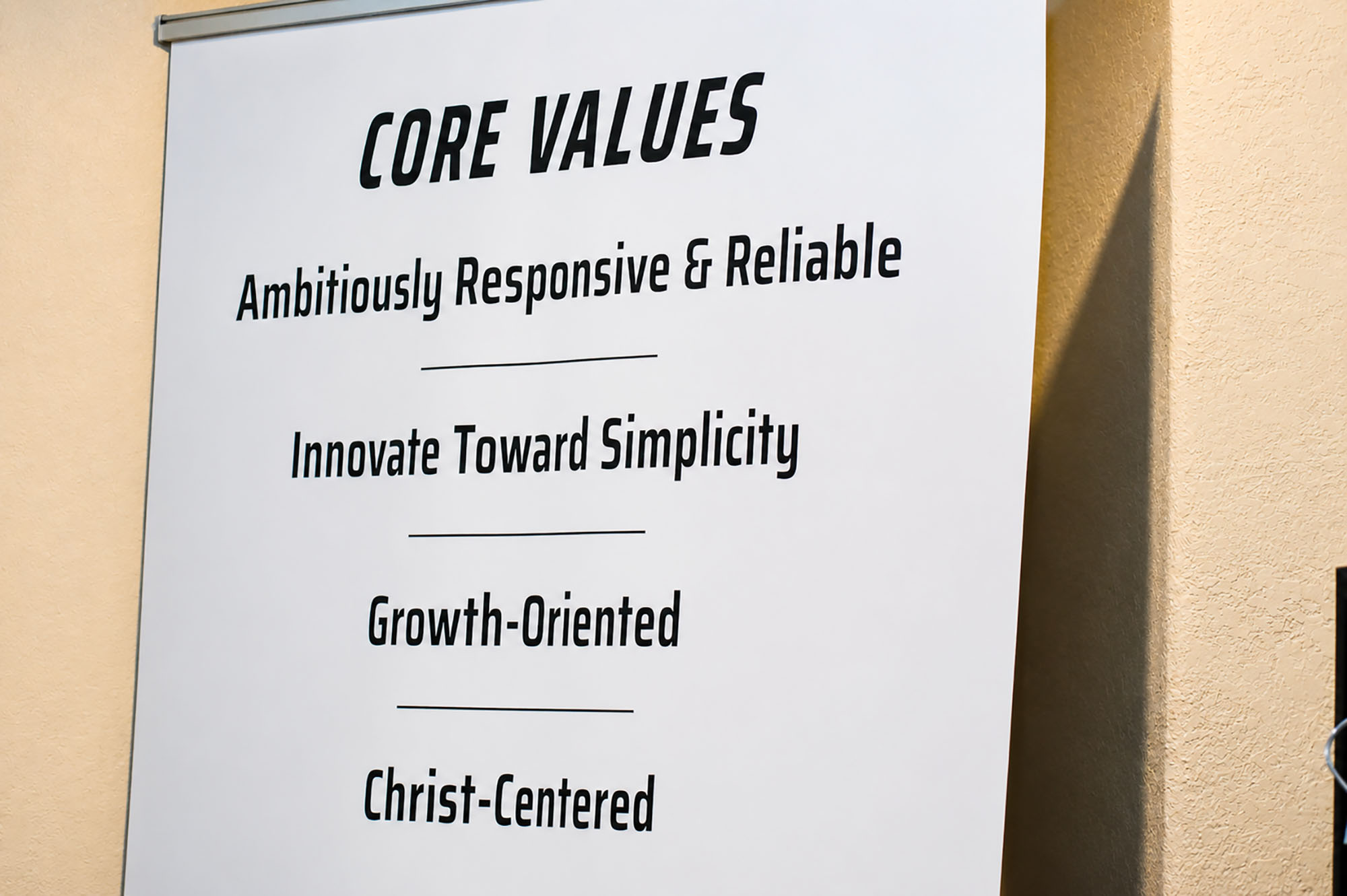
Company values on display at Resto Athletic; photo by Taylor Wilmore, Startland News
“AI is not meant to just grow the bottom line,” he said. “The purpose of the financial viability is a deeper purpose, which is to make a difference and show that you can do something incredible in the sewing industry that does not destroy people.”
That same philosophy extends to customers. Rather than pushing people through an online checkout, Resto pairs every order with a dedicated sales representative who stays with customers throughout the process, an approach the company believes matters when schools, youth leagues and families are counting on uniforms to arrive on time.
“The customers who reach out to us, they’re ordering from their person,” said Mitchell. “The correspondence is mostly done over text messaging with people from our team, so that creates a ton of success stories.”
Growth isn’t the finish line for Mitchell and Bedford-Strohm. As the company expands, they said preserving Resto’s culture matters just as much as increasing its footprint.
“Right now, it feels like the sky’s the limit,” said Mitchell. “If we can keep our humility, keep our focus, and keep our people working together really well, then we feel poised for a great decade.”
Fund More Stories
This story was made possible by readers like you. Join them — make a one-time contribution or become a monthly member to sustain our work.