American dream at 250: Why these immigrant entrepreneurs say the payoff is a country where everyone fits on the front porch
July 7, 2026 | Nikki Overfelt Chifalu
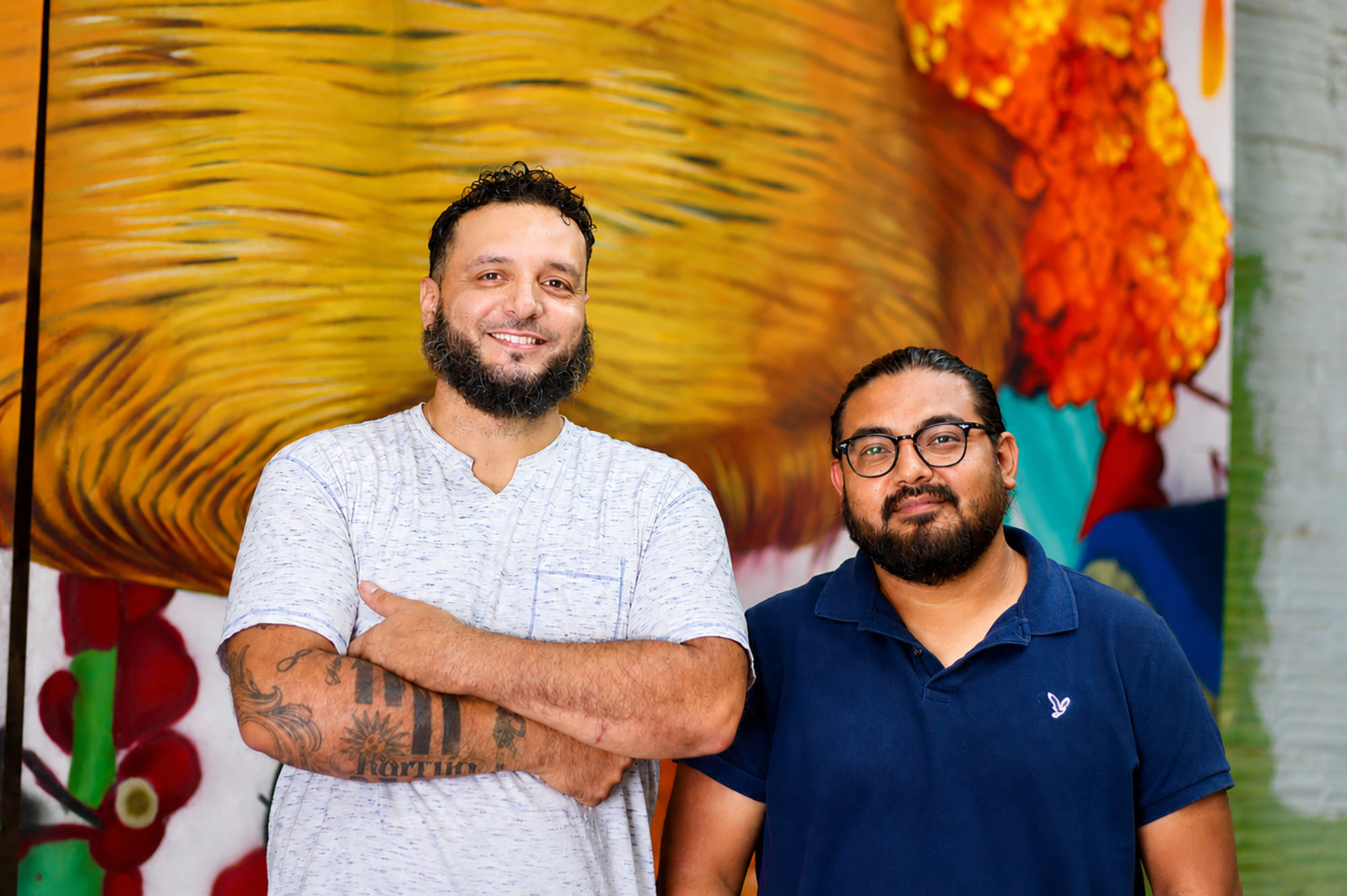
Rico Alvarez and Isaac Tapia at IT-RA ICONS studio in Kansas City; photo by Nikki Overfelt Chifalu, Startland News
Any journey into the world of business can be as lonely as it is grueling, said Isaac Tapia and Rico Alvarez, and that’s before building in the complexities of navigating those challenges as an immigrant entrepreneur. The muralist duo feels blessed for the camaraderie they share.
“With everything that’s happening right now at this very moment in the United States, the feeling that I get of worry, of like, ‘What’s gonna happen? Are we gonna be OK?’ I don’t have to carry that by myself,” explained Tapia, who moved to the U.S. from Mexico with his mom and sister when he was 9, and now is half of the creative force behind IT-RA ICONS. “I get to talk to somebody about it that understands it, and so that feels really good to me.”
“We do have a very clear understanding of the struggle of the immigrant experience as a whole,” continued Alvarez, whose family emigrated from Uruguay in 2002 to be with his grandmother after his grandfather died. “It’s such a defining thing about us and how it shaped our lives from the experience, that it just makes us a cohesive duo.”
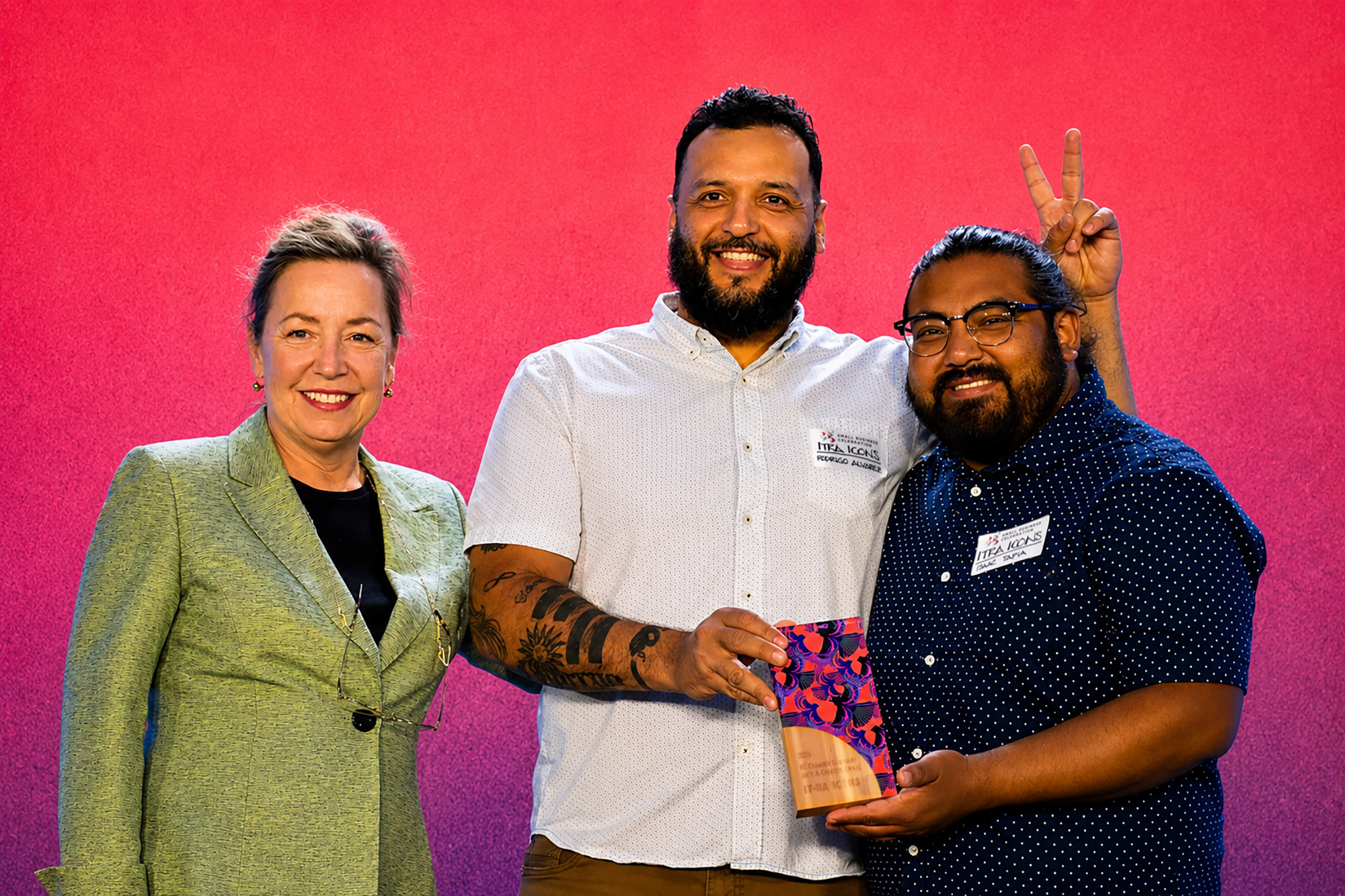
Rico Alvarez and Isaac Tapia accept the KC Chamber’s Luminary Arts and Creative Award on behalf of IT-RA ICONS during the 2026 Small Business Celebration Luncheon; photo by Nikki Overfelt Chifalu, Startland News
IT-RA ICONS received the Luminary Arts and Creative Award from the Greater Kansas City Chamber of Commerce at the organization’s May Small Business Celebration Luncheon. It was one of four immigrant-owned businesses honored at the event — a culmination of a weeks-long showcase of small business vying for the Small Business of the Year Award.
Café Corazón, Kansas City’s first Latin and Indigenous coffee house and roastery earned the prestigious Mr. K Award for Small Business of the Year. MADE MOBB, a Crossroads-based streetwear brand rooted in collaboration and community, won the Spirit of Inclusion Award, while also placing in the Top 10 for Small Business of the Year, along with RK Contractors, a general contractor focused on community-centered construction across Kansas City that equips immigrants and refugees with trade skills and wraparound support for long-term stability.
Click here to read more about the winners.
RELATED: Where the world meets Midwest on KC’s map
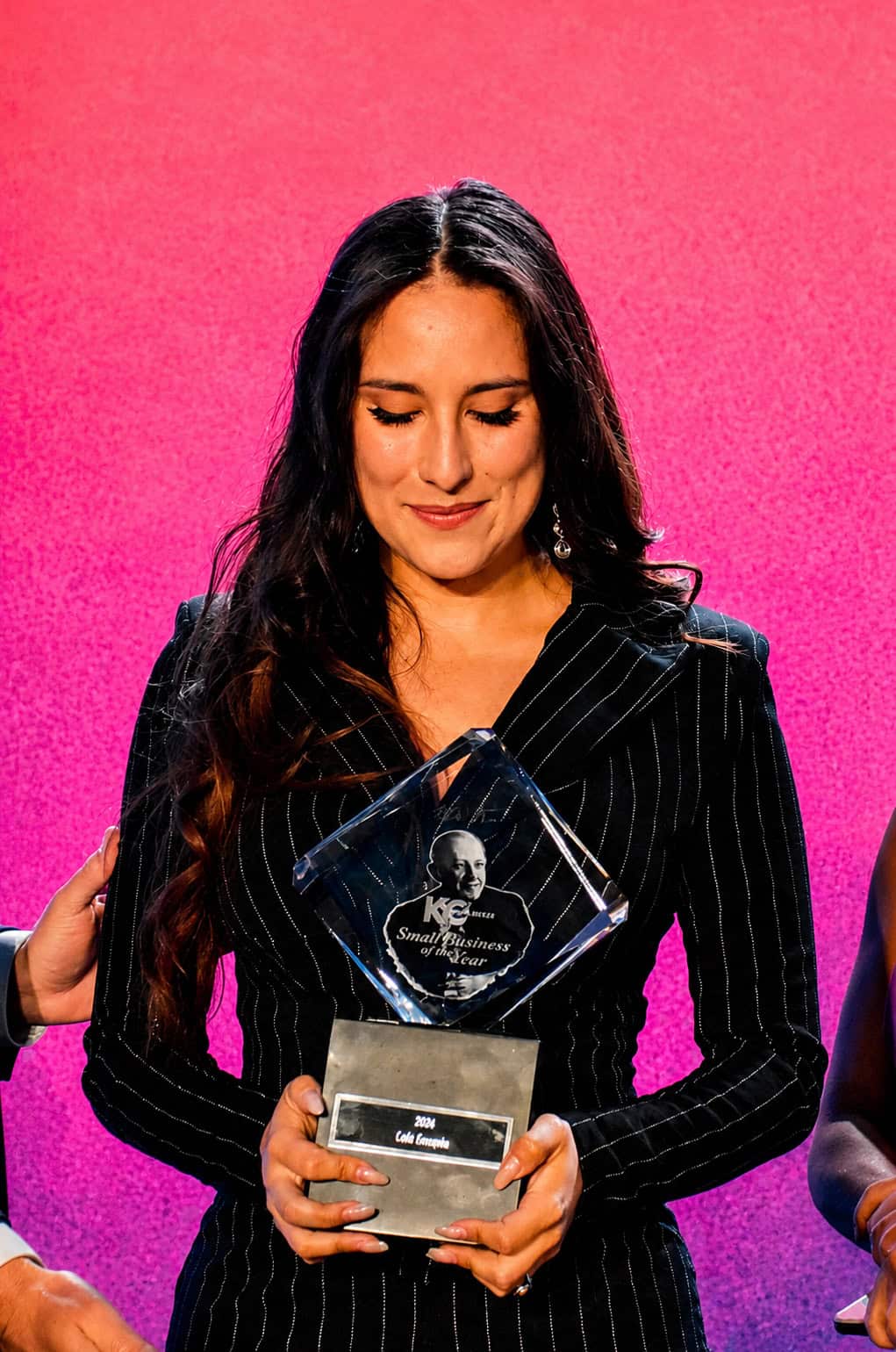
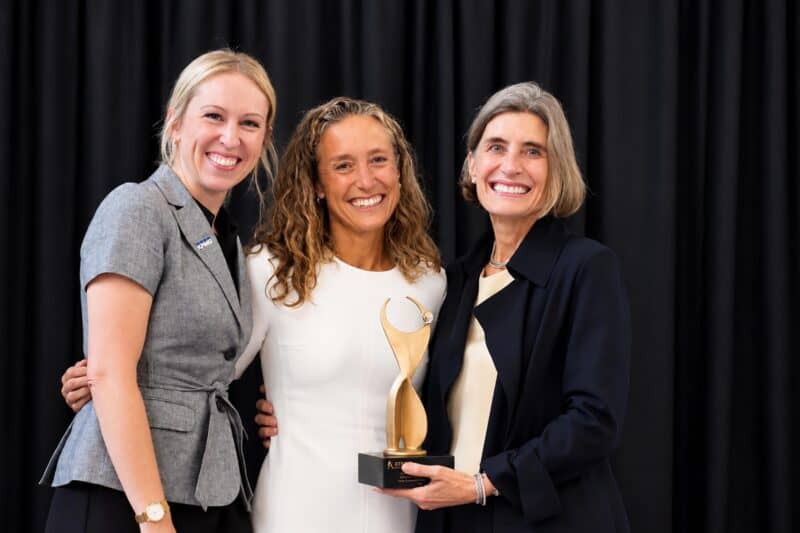
Dulcinea Herrera pauses on stage after Café Corazón was awarded the Small Business of the Year honor by the KC Chamber; photo by Taylor Wilmore, Startland News
“My family’s story taught me that success is built through resilience, sacrifice, and community,” noted Dulcinea Herrera, co-owner of Café Corazón alongside her parents, Miel Castagna-Herrera and Curtis Herrera. “My Mexican and Argentinian family came to this country searching for opportunity, while my Mescalero Apache heritage reminds me that this land also carries a much older story — one of stewardship, resilience, and preserving culture despite adversity.”
Those perspectives live side by side in Herrera every day, she said.
“To me, the promise of America has never been that success is guaranteed,” added Herrera. “It’s that people from vastly different backgrounds can build something meaningful that may not have existed before.”
But there’s a disconnect, noted Reda Ibrahim, founder of RK Contractors, ranked among the Chamber’s top 10 for multiple years.
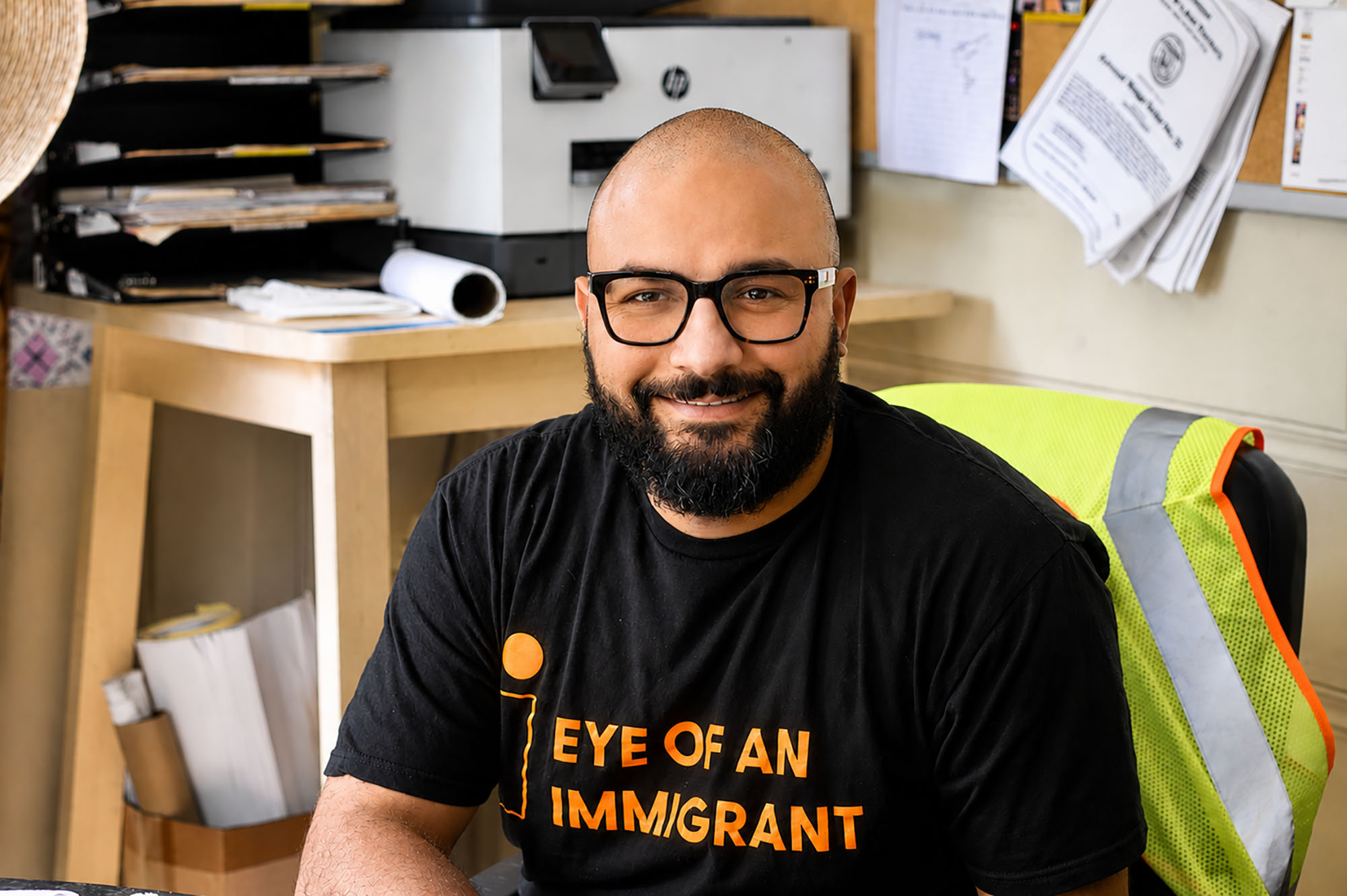
Reda Ibrahim, founder of RK Contractors, in his office in Kansas City’s historic Northeast; photo by Nikki Overfelt Chifalu, Startland News
At the same time Kansas City — a certified Welcoming City — recognized June as Immigrant Heritage Month and the Chamber honored IT-RA ICONS, Café Corazón, MADE MOBB and RK Contractors and their importance in the community, the political climate out of Washington D.C. is less than inviting to these founders and other immigrants, he said.
Ibrahim is left with mixed feelings as the premise of “the American dream” hits its 250th milestone.
“The atmosphere here in the country is leaning toward being more hostile against immigrants instead of welcoming to immigrants,” said Ibrahim, who is originally from Egypt. “This is one of the issues we face a lot.”
He believes the American dream just needs to be adjusted and renewed, away from profits and toward people.
“America is not the greatest country in the world from the elements of the corporate world, where profit is first and people only care about their own profit and don’t care about their neighbors,” Ibrahim said, noting many Egyptians imagine they’ll find happiness and prosperity in the U.S. but can feel crushed by the reality of the quest for money. “America is the greatest country in the world when welcoming refugees, when welcoming immigrants, and when we welcome the diversity of each other.”
Giving ‘home’ a fresh coat of paint
For the 4th of July, Alvarez planned to hang out with family and friends to grill, despite the complicated feelings surrounding identity that the holiday brings.
“As an immigrant, there’s things that are a little dissonant with the celebration,” he explained. “At the same time, this is home, but you’re reminded that it isn’t through so many avenues.”
A couple of years ago, when Tapia returned to Mexico for the first time, this idea of belonging was at the forefront of his mind, he shared.
“It was very interesting to go back and feel like you’re back home, but not necessarily home,” he continued.
The Mexico City that Tapia barely remembers — and that his mom tells stories about — changed while he grew up in Kansas City.
“So it was really interesting to feel like I blended in, but at the same time, it felt like I didn’t belong,” he explained. “While I was there I did a lot of writing, and I remember writing, ‘I want to go back home, I miss my home.’ And interestingly enough, I was talking about Kansas City.”
The adjustment period for Tapia and Alvarez — who initially met in high school at Paseo Academy of the Arts — wasn’t always easy.
“I just remember on the drive over here from California, playing in my head, like, ‘Is yes going to be no and no going to be yes?’” Tapia recalled.
Alvarez struggled with the language, he shared.
“Coming here and not knowing a single word in English at all was terrible,” Alvarez explained. “In fact, I had English classes in Uruguay and I was failing them.”
“I learned sign language, though, because I did not like my accent,” he added. “I had a friend who was deaf and he taught me, so I communicated to him like that through the first year of high school, maybe two.”
Despite the struggles, they both nurtured their passion for art at Paseo Academy; Alvarez in metal sculpting and Tapia in drawing and painting. And after high school, it’s what brought them back together.
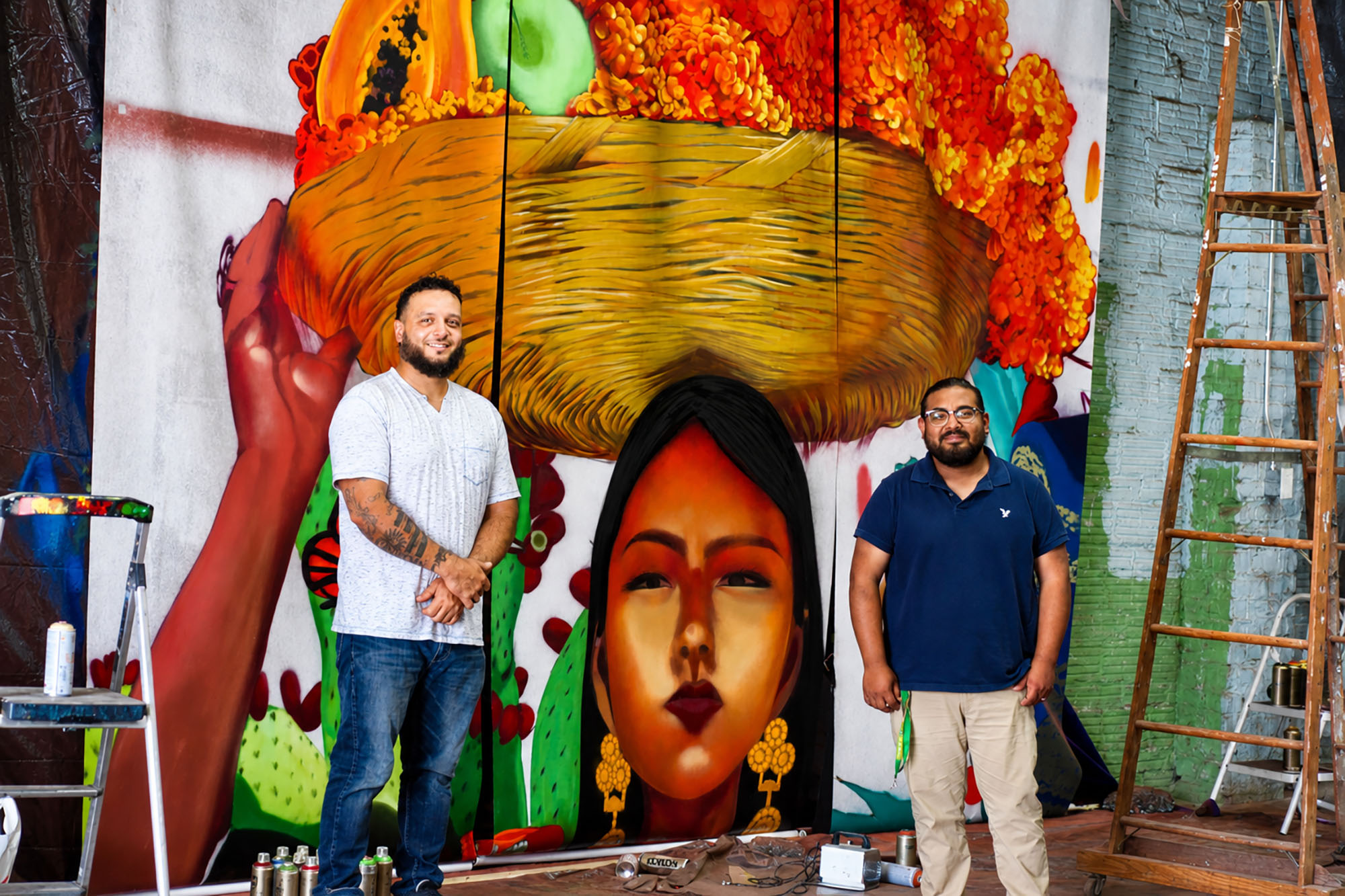
Rico Alvarez and Isaac Tapia, IT-RA ICONS, stand in their studio with a mural planned for the Sunfresh grocery store in Kansas City, Kansas; photo by Nikki Overfelt Chifalu, Startland News
In 2017, Alvarez’s sister — who worked for the KCMO school district — reached out to him about doing a mural for the Richardson Early Learning Center after the slated muralist had a scheduling conflict.
“I said, ‘Sure, I’ll give it a try,” he recalled. “I brought brushes in and I’m painting with tiny little brushes.”
Then he thought about Tapia, who he’d reconnected with a few months prior, discussing life as an immigrant and watching their parents sacrifice so much to bring them to the U.S.
“We had a pretty deep conversation and it stuck with me,” Alvarez said.
He reached out to Tapia for help with the mural.
“So Isaac shows up with spray paint,” Alvarez recalled, “and I had not ever done anything with spray paint whatsoever.”
Their first mural was such a success that they ended up doing a second one at the same school. IT-RA ICONS flourished from there, they said. And as their portfolio grew, the duo eventually quit their full-time jobs in 2021 to focus on the business.
“We went through with it, which was pretty cool and very exciting and very scary,” Tapia noted.
“We were lucky because we started maybe at the beginning of the boom of the mural culture that started here in Kansas City,” he added. “So we were able to ride along with it.”
They now have more than 80 murals, mostly across the Kansas City metro area — including at Café Corazón — plus in other states like Iowa, Wisconsin, Massachusetts, and Nevada. They just finished one at 27th and Forest and are working on one for the SunFresh on 18th Street in Kansas City, Kansas.
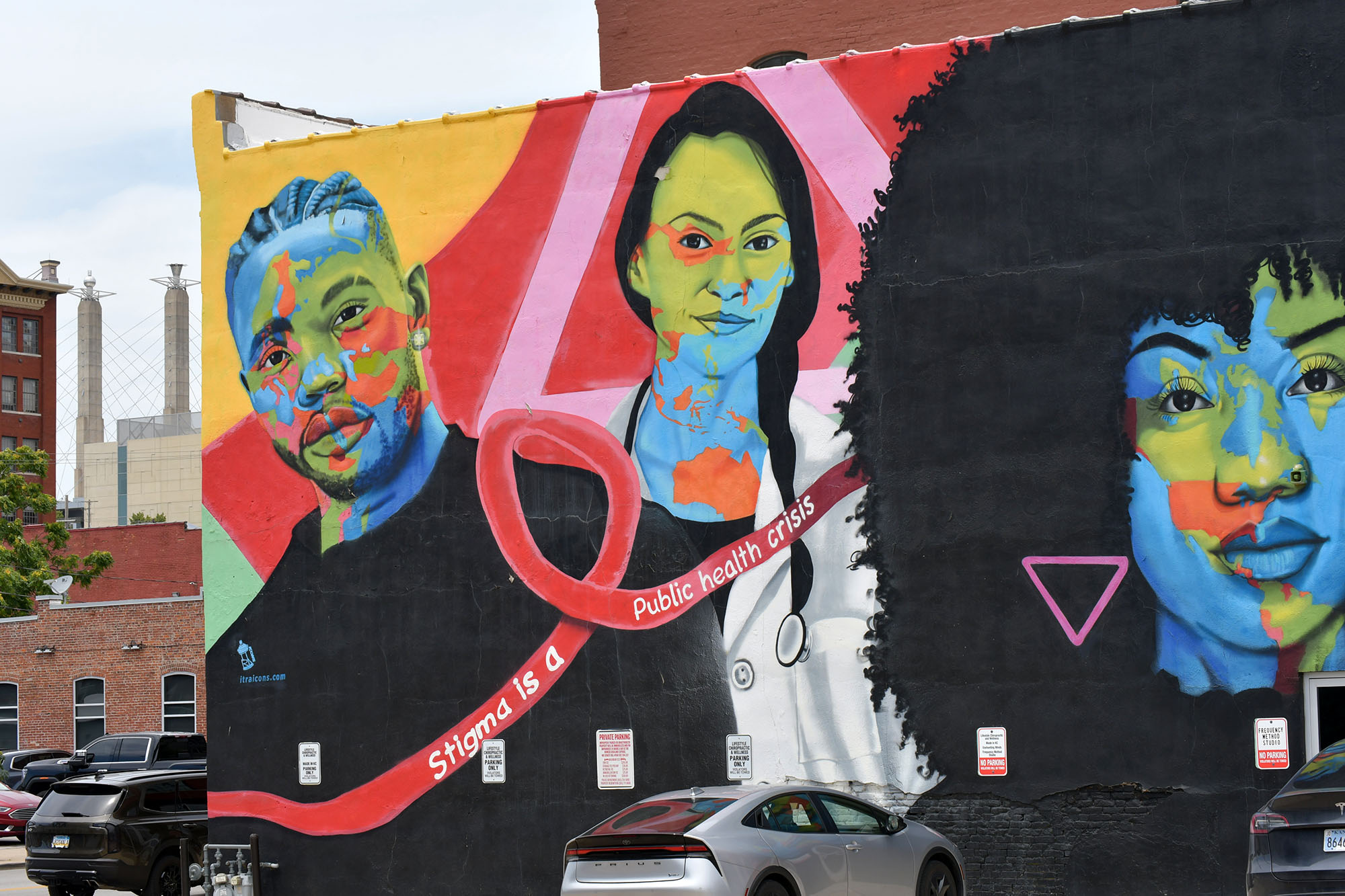
A mural by IT-RA ICONS at 18th and Walnut streets in Kansas City’s Crossroads Arts District; photo by Tommy Felts, Startland News
The duo’s diverse body of work is united by vibrant colors, evolving designs, and themes that celebrate their communities and honor their identities as artists who migrated to the U.S. at a very young age, according to their website.
“I think that’s what our murals bring forth, visibility to communities that aren’t highlighted, stories that are shoved under the rug,” Alvarez said.
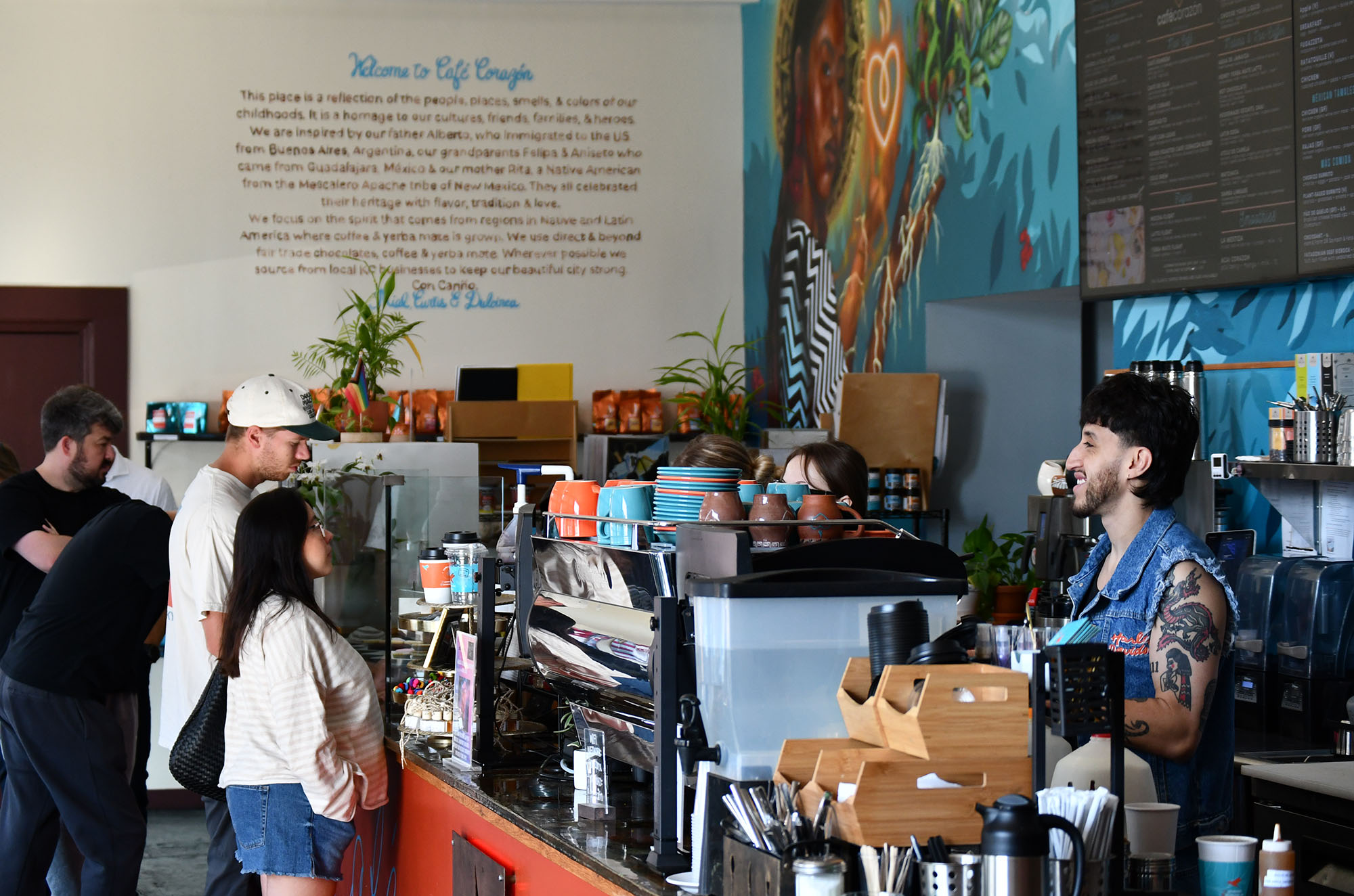
A mural by IT-RA ICONS provides a cultural backdrop inside Café Corazón’s Crossroads coffee shop; photo by Tommy Felts, Startland News
“Representation matters to us a lot,” Tapia added. “So whenever we paint a mural, we have to make sure that what we put up there represents what the community looks like and respects some of the stories that come from the neighborhood.”
Tapia and Alvarez — who helped to launch M.A.S.A. (Migrating Assembly for Art and Stories), a collective of 22 KC Latino artists — feel privileged to be doing what they love with IT-RA ICONS, they shared.
“If I were in Uruguay, I think the possibilities of me doing what I’m doing right now aren’t great,” Alvarez said. “So realistically speaking, I would say that I am living the American dream. Setting the political stuff aside, it’s a good dream to have.”
The concept of the American dream for Tapia, he noted, harkens back to his conversation with Alvarez when they first reconnected: whether they were living up to the sacrifices that their parents made in giving up their own dreams.
“I would say yes, we’re living up to it,” he continued. “And I feel like that’s a good American dream.”
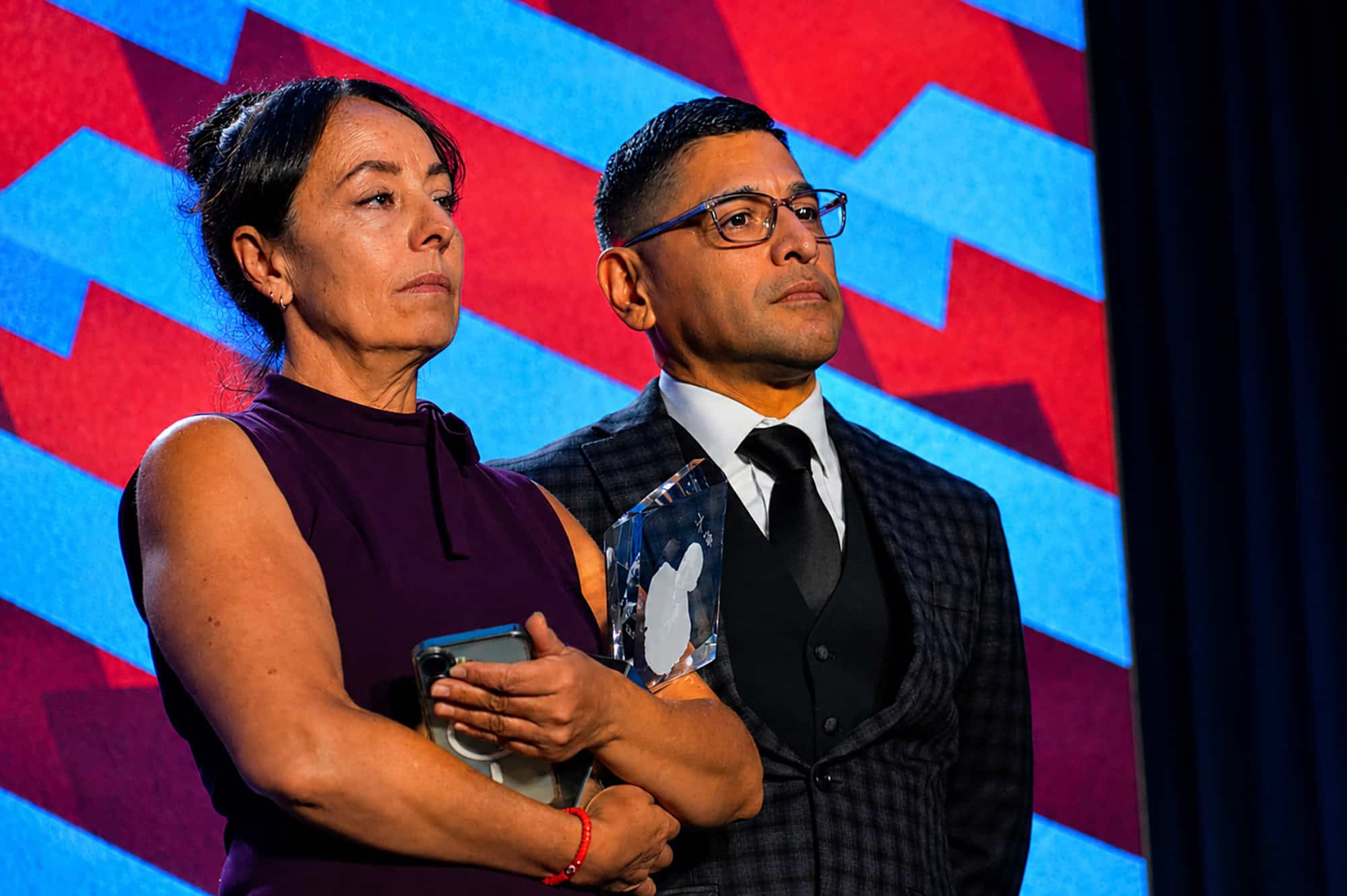
Miel Castagna-Herrera and Curtis Herrera, co-owners of Café Corazón, listen as their daughter, Dulcinea Herrera, accepts the KC Chamber’s Small Business of the Year award; photo by Taylor Wilmore, Startland News
Hungry for authenticity
While Herrera was raised in the U.S., her family’s immigrant experiences shaped her journey and the story of Café Corazón, she shared.
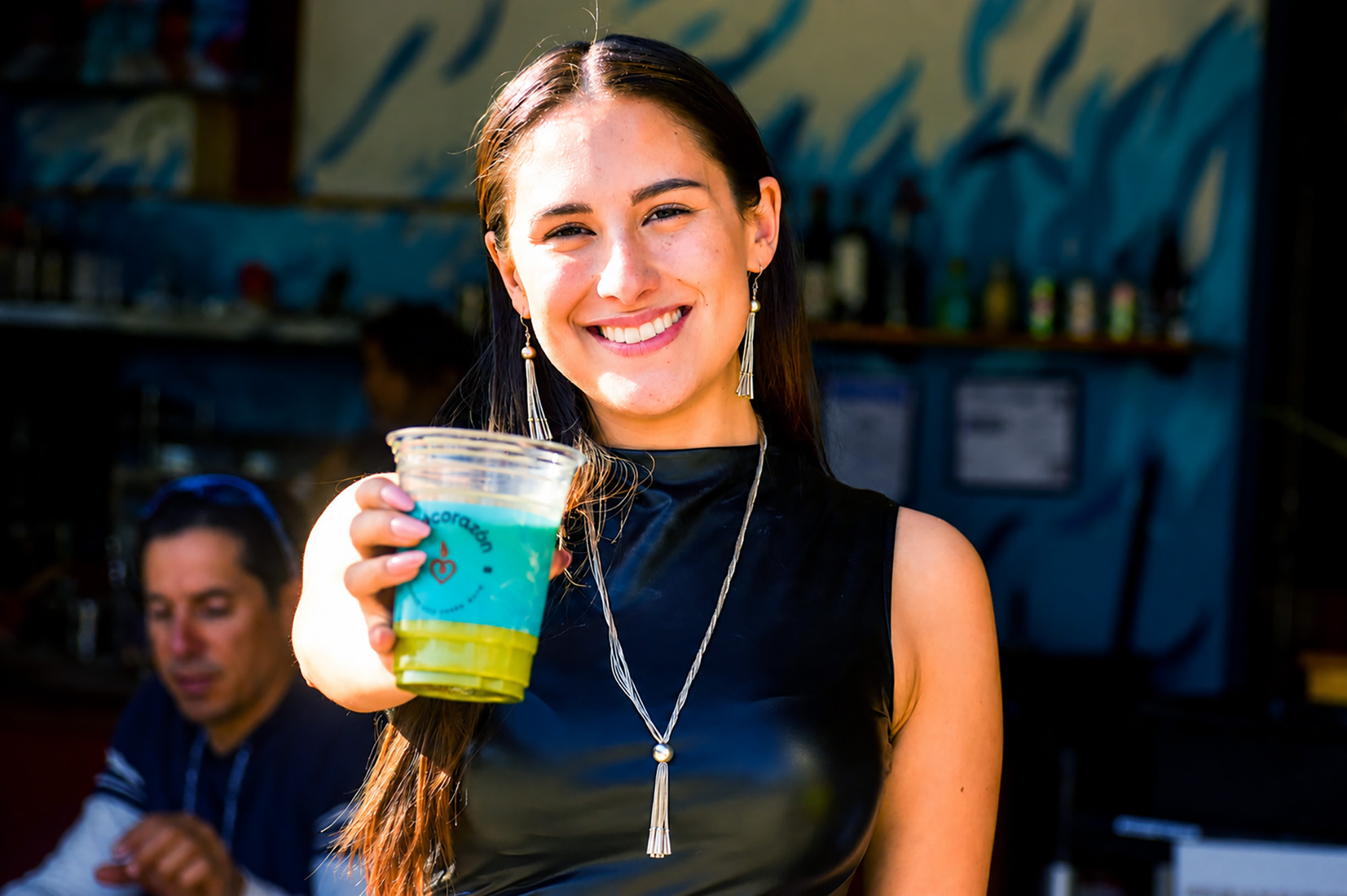
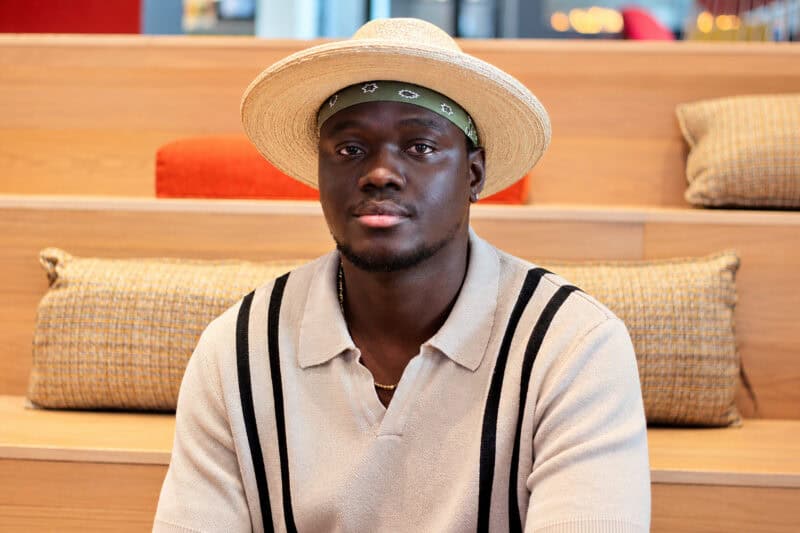
Dulcinea Herrera, Café Corazón; photo by Taylor Wilmore, Startland News
“Growing up, I watched my family work incredibly hard, often taking on jobs that weren’t glamorous but allowed future generations to dream bigger,” she explained. “They taught me that every person deserves dignity, that relationships matter more than transactions, and that your culture is something to celebrate rather than hide.”
“That philosophy became Café Corazón,” she continued. “We don’t just serve coffee — we tell the stories of the people who grow it, celebrate Latin and Indigenous traditions, create opportunities for local artists and entrepreneurs, and build a space where everyone feels they belong. My family’s journey reminds me that business can be profitable while also creating opportunity, preserving culture, and strengthening community.”
Founded in 2019 on Westport Road, Café Corazón has grown from a single storefront to additional hotspots in the Crossroads Arts District and Brookside. It’s since launched wholesale coffee operations, acquired a new roasting and distribution facility, and introduced an expanding line of ethically sourced products, including coffee, yerba mate, canned beverages, and specialty offerings.
“As an Argentinian, Mexican, and Mescalero Apache entrepreneur, I’ve experienced both the barriers and the opportunities that come with building a business,” Herrera noted. “There were moments when doors didn’t open easily, but there were also people and organizations willing to believe in our vision. That’s the America I believe in — one where hard work matters, where communities invest in one another, and where diversity isn’t just welcomed but recognized as a source of innovation.”
Building Café Corazón in Kansas City has shown her that people are hungry for authentic stories and authentic connection, she said.
“Every day we see people from different cultures, generations, and backgrounds gathering over coffee and conversation,” she explained. “And that’s the America I hope continues to grow: one where our differences become reasons to come together instead of reasons to stay apart.”
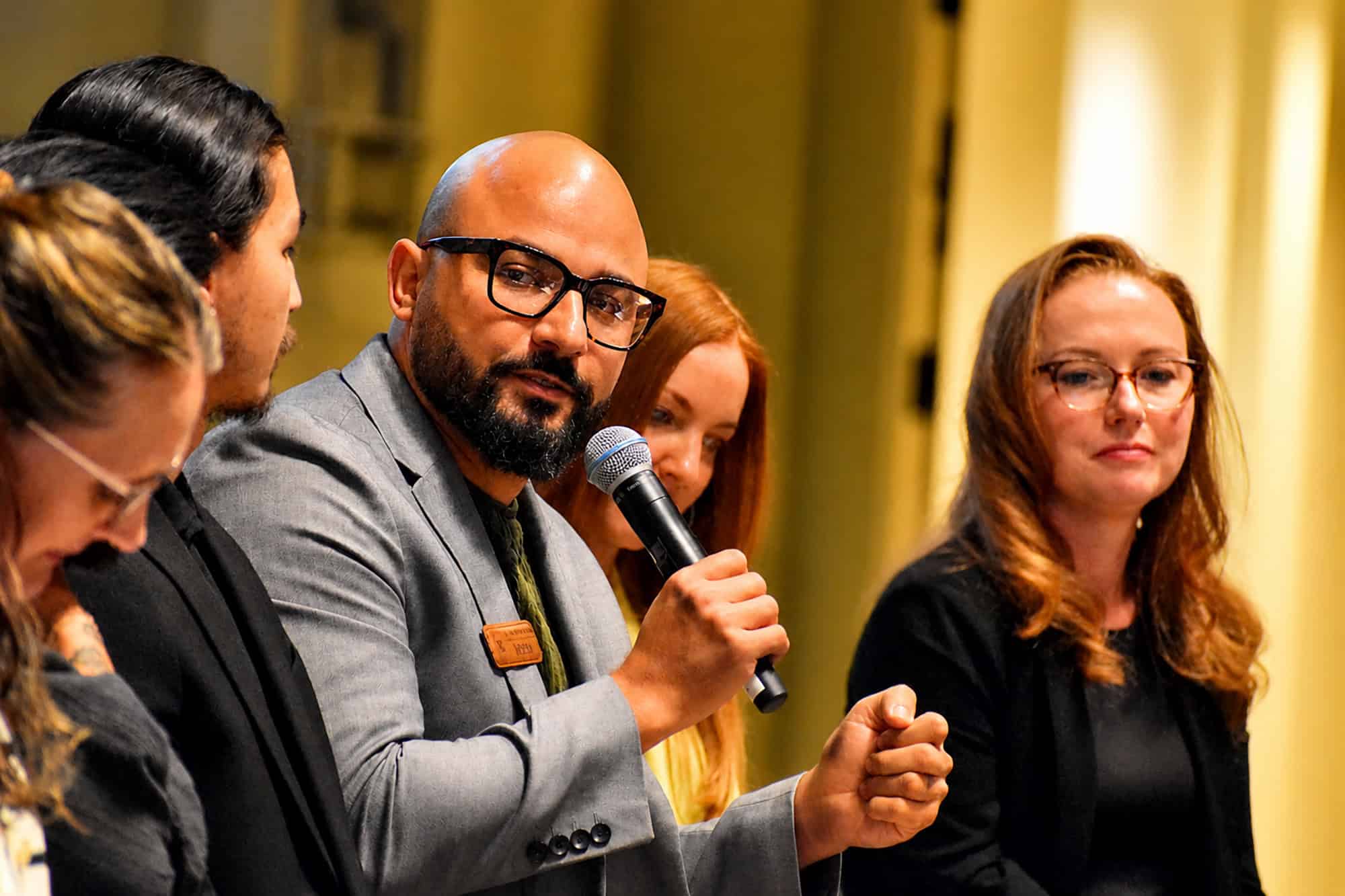
Reda Ibrahim, founder and CEO of RK Contractors, shares his philosophy on the language of leadership during the KC Chamber’s CEO panel conversation; photo by Nikki Overfelt Chifalu, Startland News
‘What actually benefits my neighbor?’
RK Contractors’ Ibrahim, who didn’t initially want to move to the United States, ultimately made the move for love.
He met his future wife while she was working in ministry in Cairo, where he served as a pastor. After six months, she moved back to the U.S. and tried unsuccessfully to help him get a student visa.
“It was very hard with the immigration system,” Ibrahim recalled.
They ended up moving to Tanzania together — where the rules around dating weren’t as strict as in Egypt — got married and lived there for 18 months until his immigration paperwork was complete. After that, they moved to Kansas City in 2015.
Culture shock set in for Ibrahim when he started working for a roofing company. While he quickly was forced to overcome his fear of heights, finding belonging among the work crews was even more of a challenge.
“I am African,” Ibrahim explained. “But when I go to African Americans or East Africans, they look at me like ‘You look white.’ When I go to the Latino community, if I said, ‘Hola, como estas?’ you’d think I’m from El Salvador or Mexico. But I still did not fit in the moment they knew I cannot speak the language.”
“I tried to fit in with each one of these groups,” he added, “but there was no place for me at the table. That’s why I had to build a new table.”
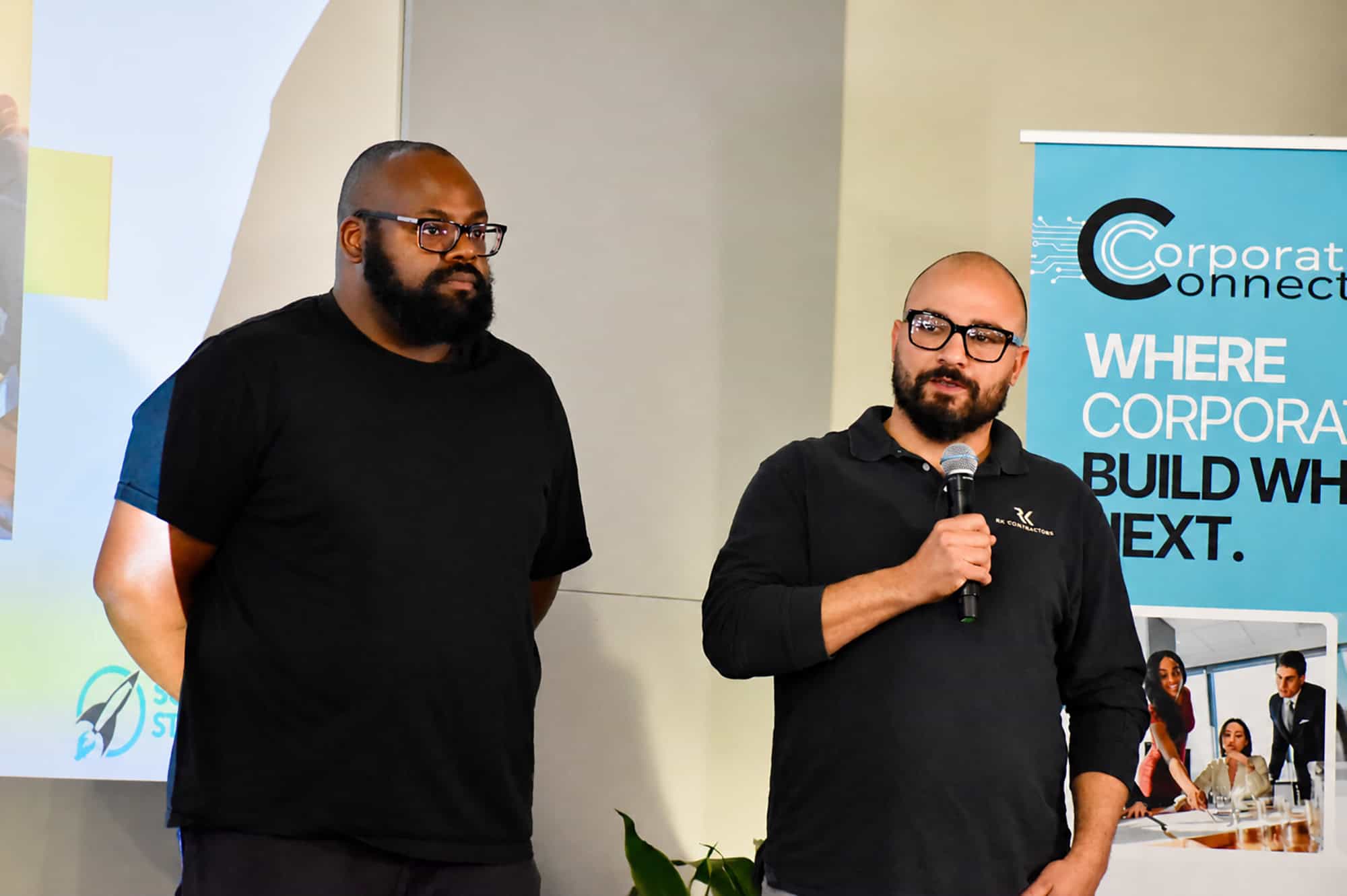
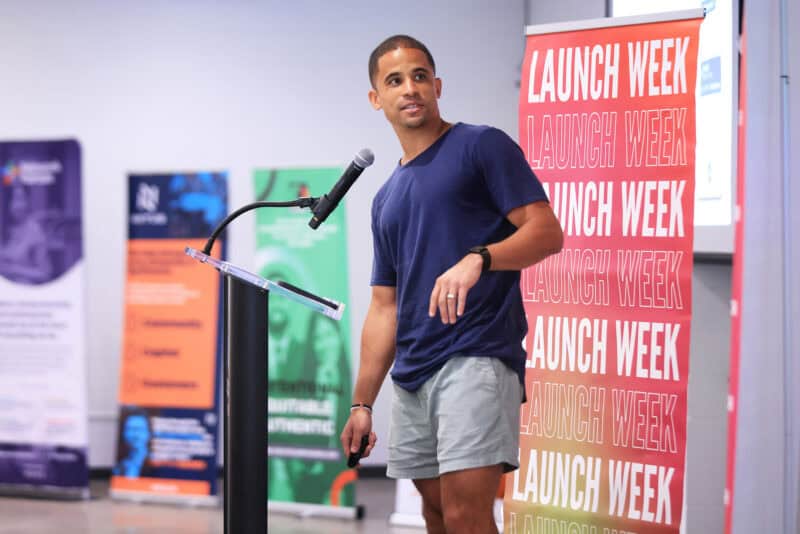
Elvis Eneh, COO for RK Contractors, and founder Reda Ibrahim pitch their company at a LaunchKC Social Venture Studio reveal event at Keystone CoLab; photo by Nikki Overfelt Chifalu, Startland News
RK Contractors — where Ibrahim employs fellow immigrants, refugees, and those who need a second chance — aims to create a culture of inclusivity, he continued.
“Instead of cursing the dark, you just light a candle and just be the change you need,” he noted. “And this is what we did.”
Ibrahim sees the beauty in the diversity of Kansas City.
“In 15 minutes, I can go anywhere and I can get any type of food,” he said. “This is very powerful. We don’t have that in Egypt. You can meet a Salvadorian, a Mexican, white American, an African American. That power of diversity just gives you so much color in culture.”
“We need to embrace that diversity,” he added, “instead of seeing it in a fearful eye, just seeing you’re beautifully made in God’s image. That integrity and respect shifts everything in life.”
Ibrahim — who also started the nonprofit Mercy in the City, which works to bring quality, sustainable and affordable housing options to minority, refugee, and displaced communities in Kansas City — is still adjusting to the individualistic and materialistic culture of the U.S., he said. Egypt is much more community-oriented.
“I feel like America has had a front-porch crisis for almost 70 years,” Ibrahim said. “People don’t sit on the front porch anymore. It’s not healthy for you as a human being not to be connected to your neighbor. It’s very isolating and it’s very lonely.”
“The human living in America just needs a mindset shift,” he added. “What actually benefits my neighbor? The economy is locked in to keep us running and keep us not seeing the beauty in our diversity. It makes us compete with each other instead of working with each other.”
Hope for the melting pot
Despite the current political climate, Ibrahim, Herrera, Alvarez, and Tapia expressed hope for the country they now call home.
“We still live in the greatest country in the world with the free speech element and when we welcome refugees and immigrants,” Ibrahim explained, “because they add on to the beauty of America. Seriously, they don’t take anything away from any other people. They just add more beautifulness to the beauty that already exists.”
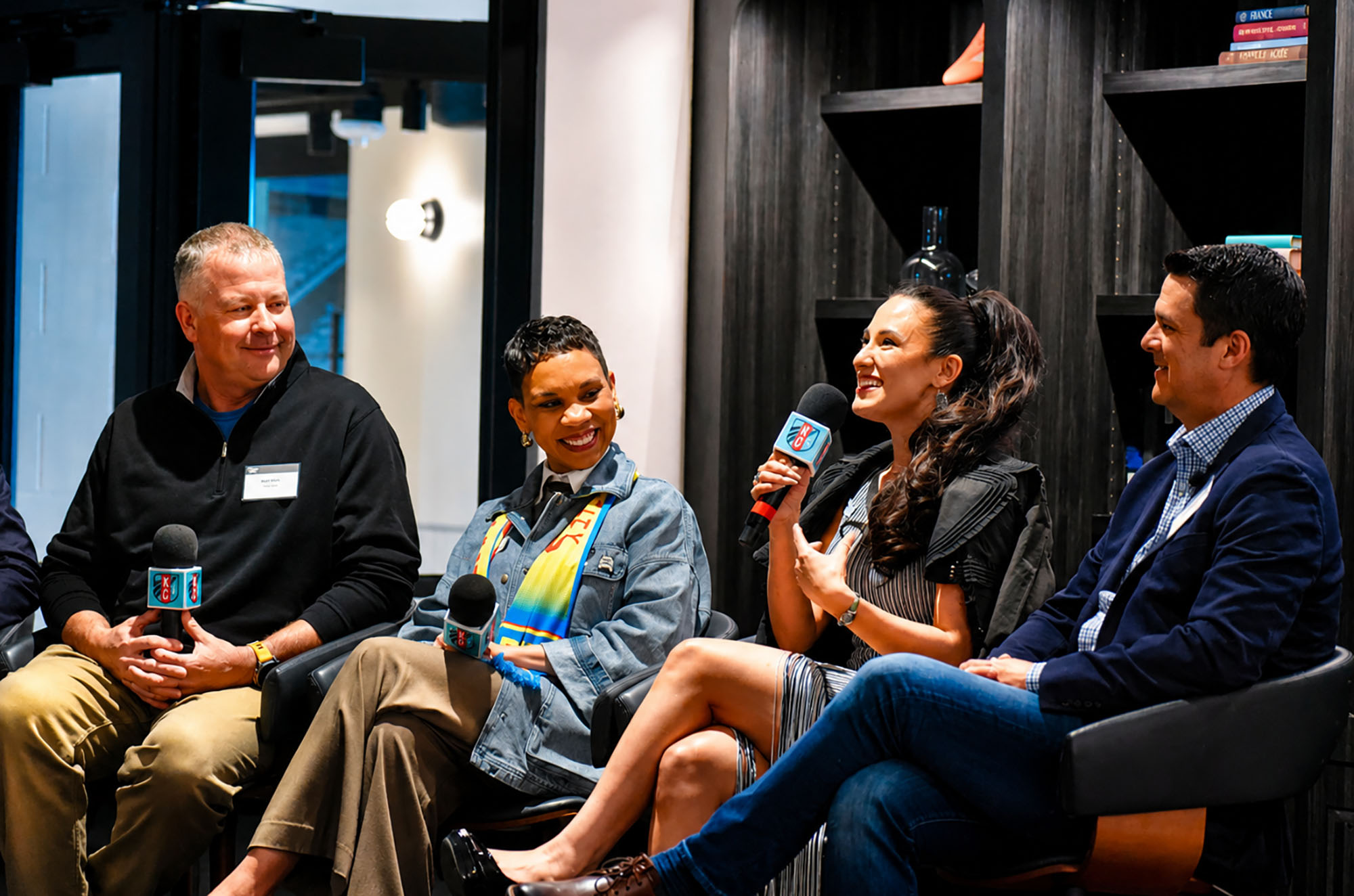
Dulcinea Herrera, co-founder and CEO of Café Corazón, center, speaks during a panel conversation on World Cup readiness; photo by Nikki Overfelt Chifalu, Startland News
Herrera’s vision for the next 250 years is that more entrepreneurs are able to build businesses without feeling like they have to leave behind who they are to succeed, she said.
“I hope we continue creating opportunities for women, immigrants, Indigenous communities, and young entrepreneurs to lead industries, shape culture, and build generational wealth,” she continued. “I hope we invest more deeply in small businesses because they’re often the heartbeat of our neighborhoods and the places where community is created.
“Most of all, I hope the next 250 years are defined by curiosity instead of fear — where we spend more time learning about one another’s cultures, sharing meals, supporting local businesses, and building relationships across differences,” she added. “If Café Corazón has taught me anything, it’s that a simple cup of coffee can start conversations that change lives. Imagine what an entire country can do when we choose connection over division.”
Tapia feels optimistic when he sits at Concourse Park in the historic Northeast neighborhood, he noted.
“Going to that park during the summer and watching the kids play, speaking so many different languages, and families from all over the world in this park,” he explained. “My wife and I, we’ve been invited to sit with other people there. We’ve shared coffee. We’ve shared food with them. That to me is maybe the ideal of what I see as the American dream. That’s amazing.”
“It never left,” Alvarez added of hope for an American dream like his own. “It was always there. It’s just demonized for political reasons.”
Ibrahim — who lives in the Northeast — said he doesn’t understand why Americans stopped calling the U.S. “the melting pot.”
“It’s just a beautiful saying,” he continued. “That is what makes America beautiful.”
“It’s what makes us strong,” Alvarez added. “It makes us unified.”
Fund More Stories
This story was made possible by readers like you. Join them — make a one-time contribution or become a monthly member to sustain our work.