Why this architect rebuilds KC’s blighted history ‘floor by floor’ (hint: it isn’t just the tax credits)
September 29, 2026 | Brian Escobar, Economic Development Corporation of Kansas City, Missouri (EDCKC)
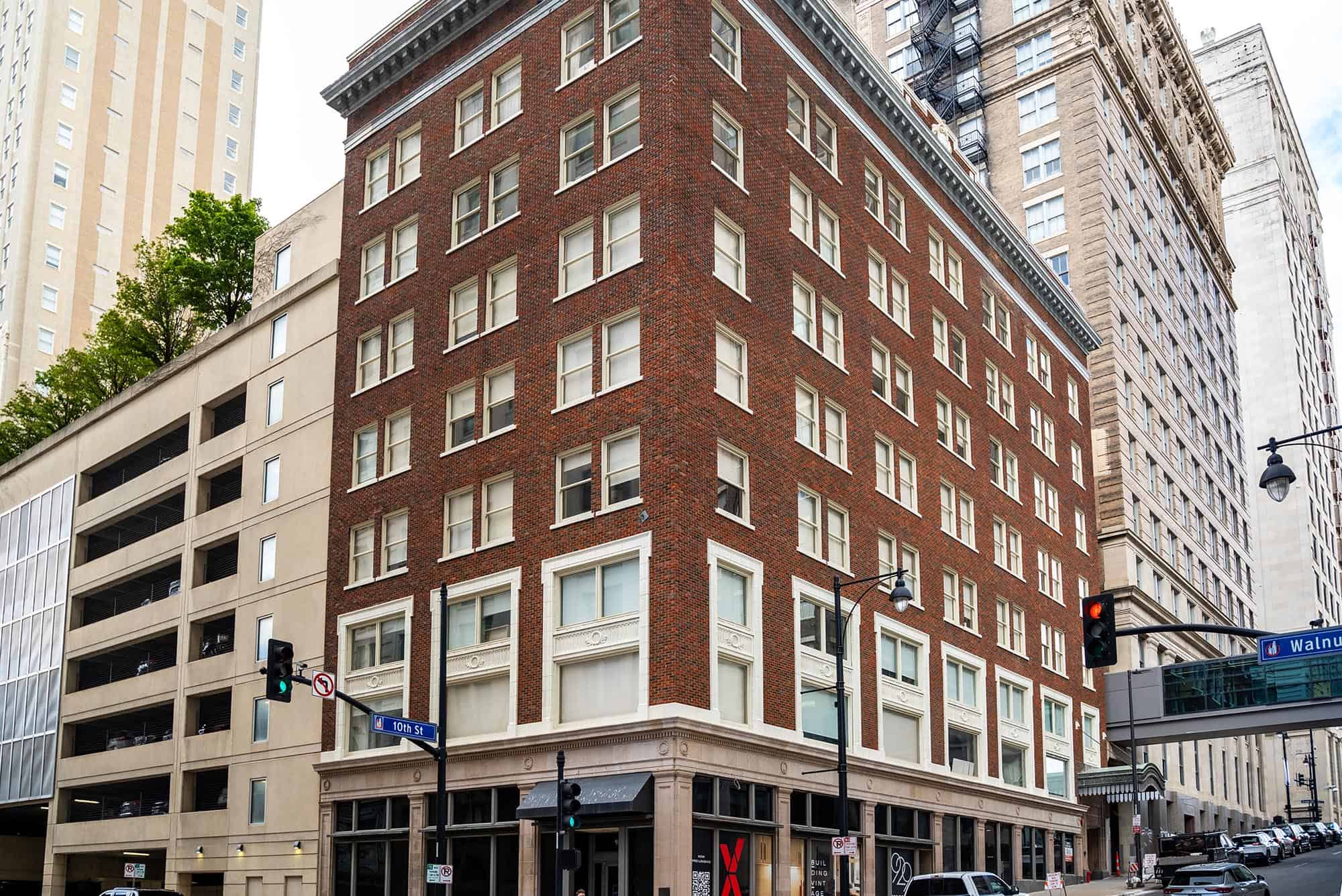
Exact Architects' 929 Walnut revitalization project in downtown Kansas City; photo by Treasure Advertising
This story was originally published by Economic Development Corporation of Kansas City, Missouri. Click here to read the original piece.
In the 1990s, Bob Mayer helped start downtown Kansas City’s first wave of reinvestment. Thirty years later, he’s back on the same streets.
Ask Mayer how he has watched downtown Kansas City grow, and he starts with the hard part. “Well, I’ve seen the decline,” he said.
He has also seen what came after it.

Bob Mayer, Exact Architects
Mayer grew up in Ohio and came to Kansas City decades ago. In the early 1990s, under Mayor Emanuel Cleaver, he chaired the city’s Tax Increment Financing Commission, when a lot of people had written off downtown. The commission created the 11th Street Corridor TIF plan, which used surplus public dollars to rebuild sidewalks and storefronts up and down Broadway. It was part of a first wave of investment that helped bring people back to the city’s center.
Much of that work held. Downtown now has a streetcar running down Main Street and apartments in buildings that once sat dark. Some of the buildings from that era are ready for their next chapter, and Mayer is back on those blocks, this time as a developer.
On Tuesday, his firm, Exact Architects, will open 929 Residences at 929 Walnut St. — celebrating the revitalized space with a grand opening more than a century after it first debuted.
The seven-story brick building went up in 1922 for the Kansas City Title & Trust Co., which kept track of who owned property across the city and insured those titles. Its most valuable asset was downstairs: a 2,400-square-foot basement vault holding thousands of real estate records, built to survive fire, flood and theft. The building was also one of the first to rise downtown after World War I, the start of a construction boom.
Over the years, the offices upstairs slowly emptied. By the time Exact bought the building in 2024, the popular Spokes coffee shop on the ground floor and a pair of lawyers were among the last tenants left.
From the archives: Spokes Café banks on new downtown coffee spot

929 Walnut St. in 2015; courtesy photo
Still, Mayer said, it was a solid building, in far better shape than some Exact has taken on, including one that had been condemned.
The original vault didn’t survive, but the idea of it did.
The vault became the theme of the new building, and on the second floor residents have their own version: an amenity space called The Vault, with a lounge and a small gym. Much of the original building remains, including the brick facade, marble walls along the stairs, travertine floors and a stairwell that climbs all the way to the top. Between the second and third floors, original railings wrap an open atrium, with apartments arranged around it like an old hotel.
Now the building holds 44 apartments, and a coffee shop called Remedy on the ground floor will serve espresso in the morning and cocktails at night.
Across downtown, buildings like this one have outlived the banks, title companies and department stores they were built for. Mayer and his partner, architect Caleb Buland, see that as an opening.
“Our approach is to take blighted buildings that have the potential to be historic,” Mayer said.
Turning an office building into apartments means rebuilding it floor by floor, and the cost can outrun what the finished building is worth to a lender. At 1044 Main St., the firm’s next project, about $6.5 million of the $26.9 million budget comes from historic tax credits, which reward developers for restoring buildings instead of replacing them. Mayer said those tools are why many of the buildings Exact has taken on are still standing.
The credits make the numbers work, but for Mayer they’re not the point. Preserving a building’s historic character, he said, keeps “the fiber of Kansas City.”
The rest of the gap is often closed through the Land Clearance for Redevelopment Authority, which is administered by the Economic Development Corporation of Kansas City. The $11.2 million rehabilitation of 929 Walnut moved forward under an LCRA redevelopment agreement signed in 2024.
From the archives: Here’s how five urban renewal projects could transform blighted areas across KCMO
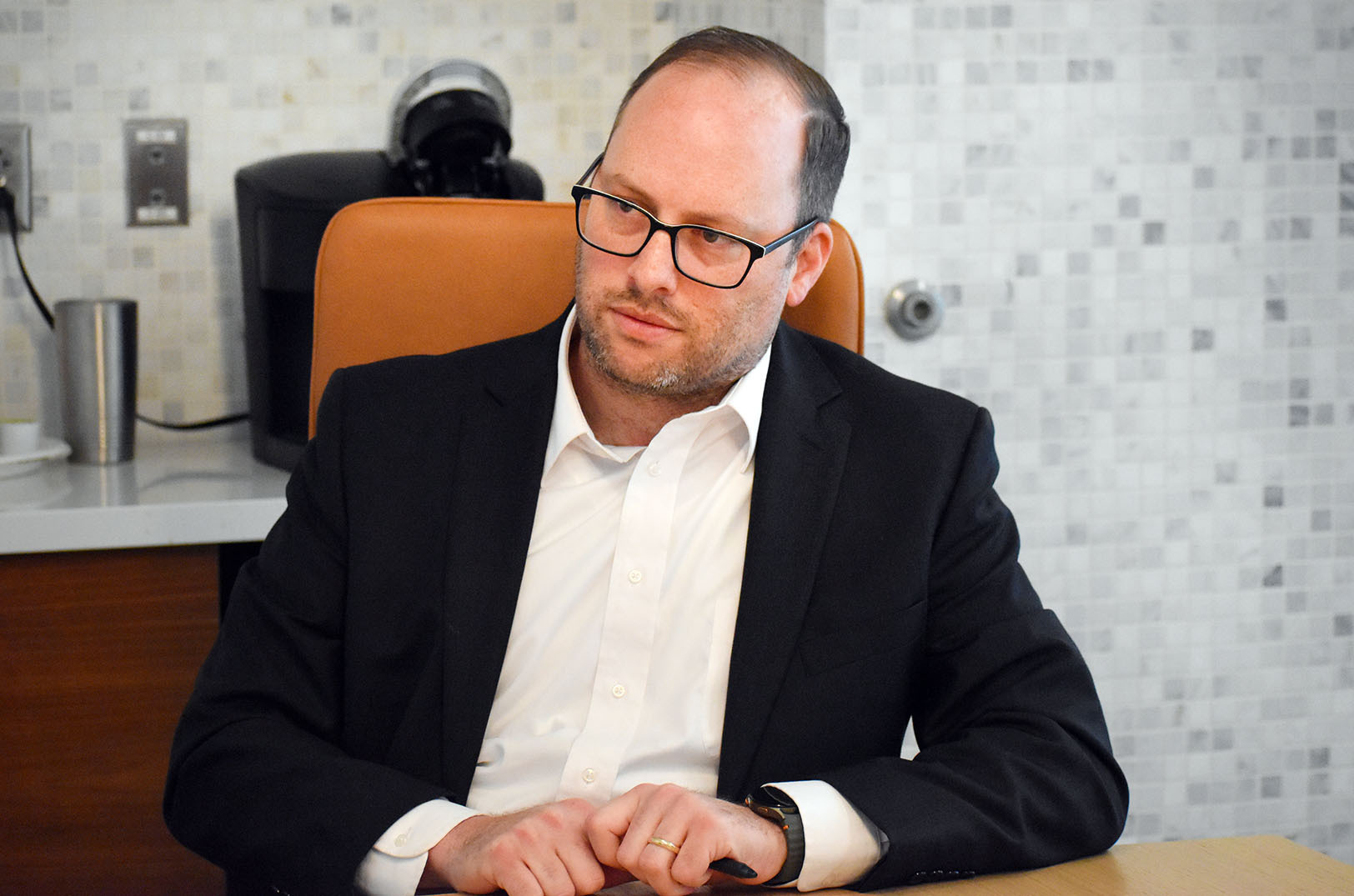
Dan Moye, vice president of land development for the Economic Development Corporation of Kansas City, at EDCKC’s offices in River Market; photo by Taylor Wilmore, Startland News
EDCKC’s ties to the block go back further. The parking garage connecting 909 and 929 Walnut was built in the 1990s with financing through EDCKC, Mayer said.
“Preserving a historic part of the central business district while also adding new residents and commercial activity adds vibrancy to the growing neighborhood,” said Dan Moye, vice president of land development at EDCKC and executive director of the LCRA. “The LCRA board looks for projects that make intentional impact in their communities, and the investment at 929 Walnut promises to do just that.”
Exact has been doing this in Kansas City for more than a decade. It worked with EDCKC on the Netherland and the Monarch near 39th and Main streets. It also did 802 Broadway in the Garment District, which opened about two years ago and brought a quiet corner back to life. Veil, the coffee shop downstairs, has become the kind of place Mayer says everybody’s bragging about.
He has watched the same thing happen at nearly every building. Once the renovation starts, the phone starts ringing.
“All of a sudden commercial stuff comes out of the woodwork,” he said.
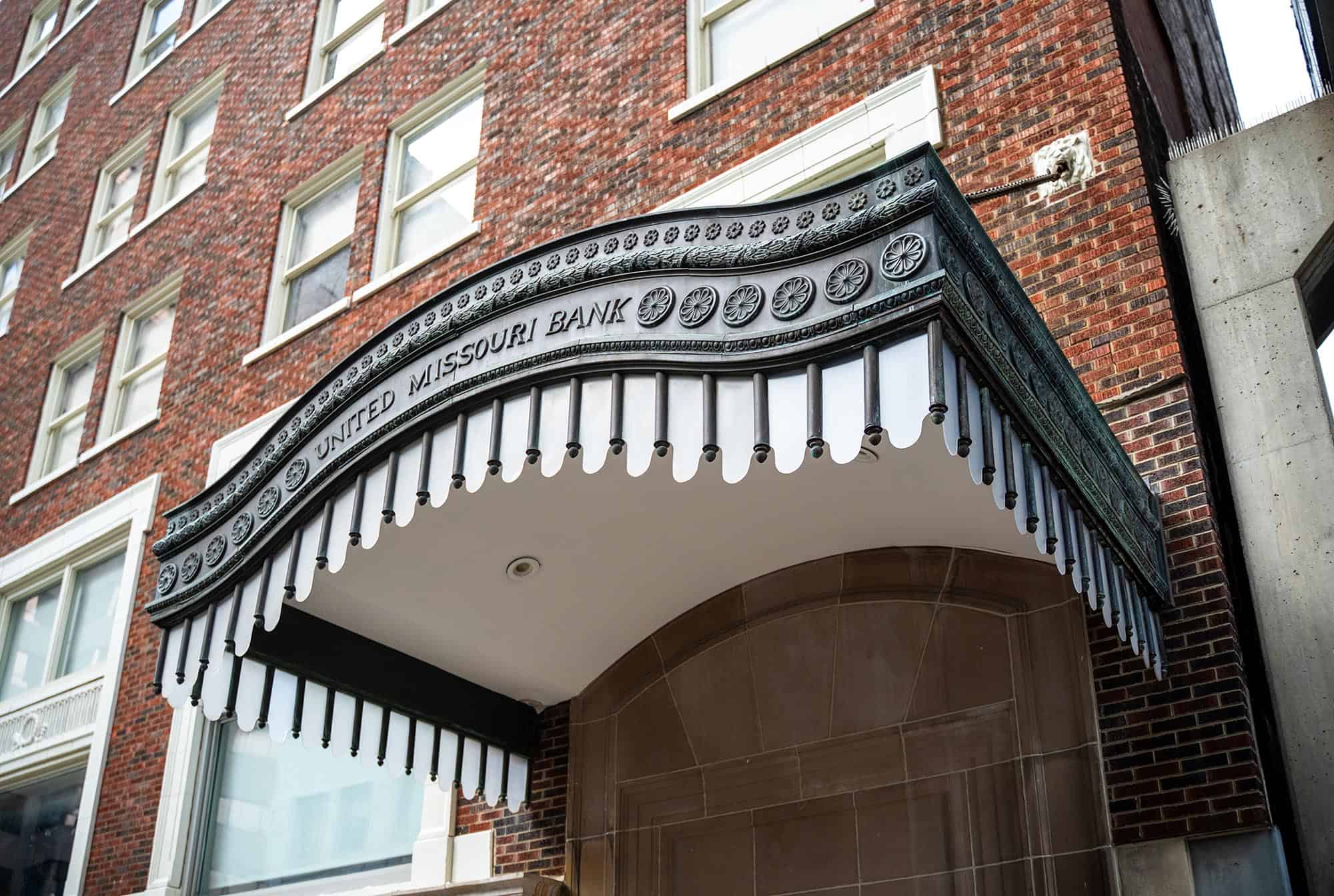
The Missouri Bank and Trust marquee awning at Exact Architects’ 1044 Main project; photo by
The next building is a few blocks away. The George B. Peck Dry Goods Co. building at 1044 Main opened in 1914, later became home to Missouri Bank and Trust and has waited years for its next use. Exact plans 74 apartments on the upper floors and new offices for the firm in the lower levels.
Mayer said Exact takes every project to the neighbors before the plans are set.
“We get the neighborhoods, the community involved in it, so that we get their input,” he said.
For 1044 Main, that meant an evening at the Central Library answering questions from downtown residents. By the time the plan reached the LCRA, which approved it earlier this year, it had the backing of the neighborhood association, the Downtown Council and the area’s councilmembers.
Mayer sees the constant renewal as a sign of a healthy city, not a struggling one, he said. Some of what Kansas City saved in the 1990s is ready for another round, and he expects the buildings he’s finishing now to get theirs someday.
“Every 10 years there’s got to be a regeneration,” he said. “We’re saving a piece of history for the next generation, and for the current generation of Kansas City.”
On Tuesday evening, Remedy will be pouring drinks at the corner of 10th and Walnut, and guests will head up to the eighth-floor roof deck. A few blocks south, 1044 Main is waiting its turn.