Weight of the world (cup): Global visitors, weekday wanderers stress test Rock Island Bridge’s summer outing
July 21, 2026 | Taylor Wilmore
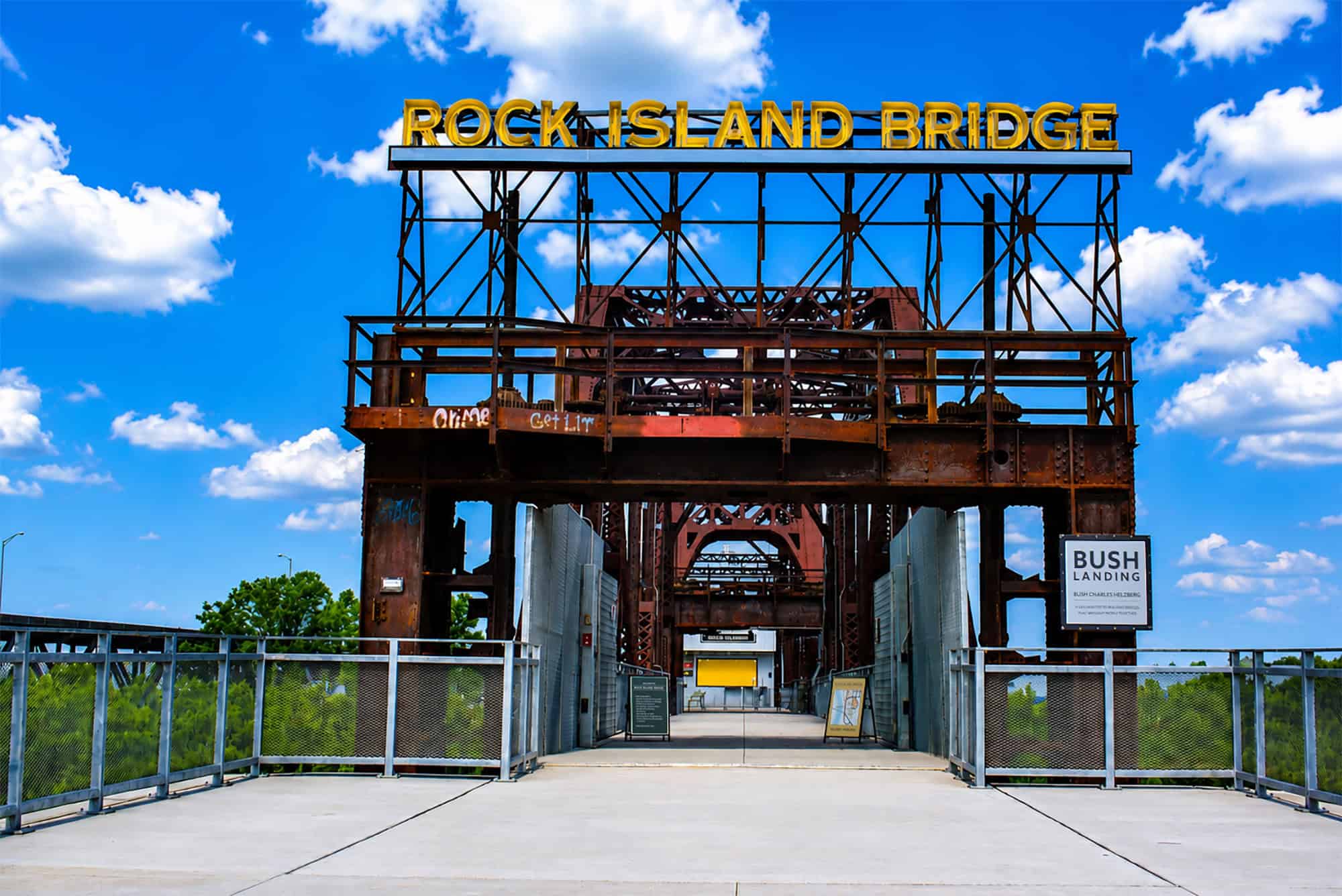
Rock Island Bridge, 1799 American Royal Dr, extends over the Kansas River, connecting Missouri to Kansas in July 2026; photo by Taylor Wilmore, Startland News
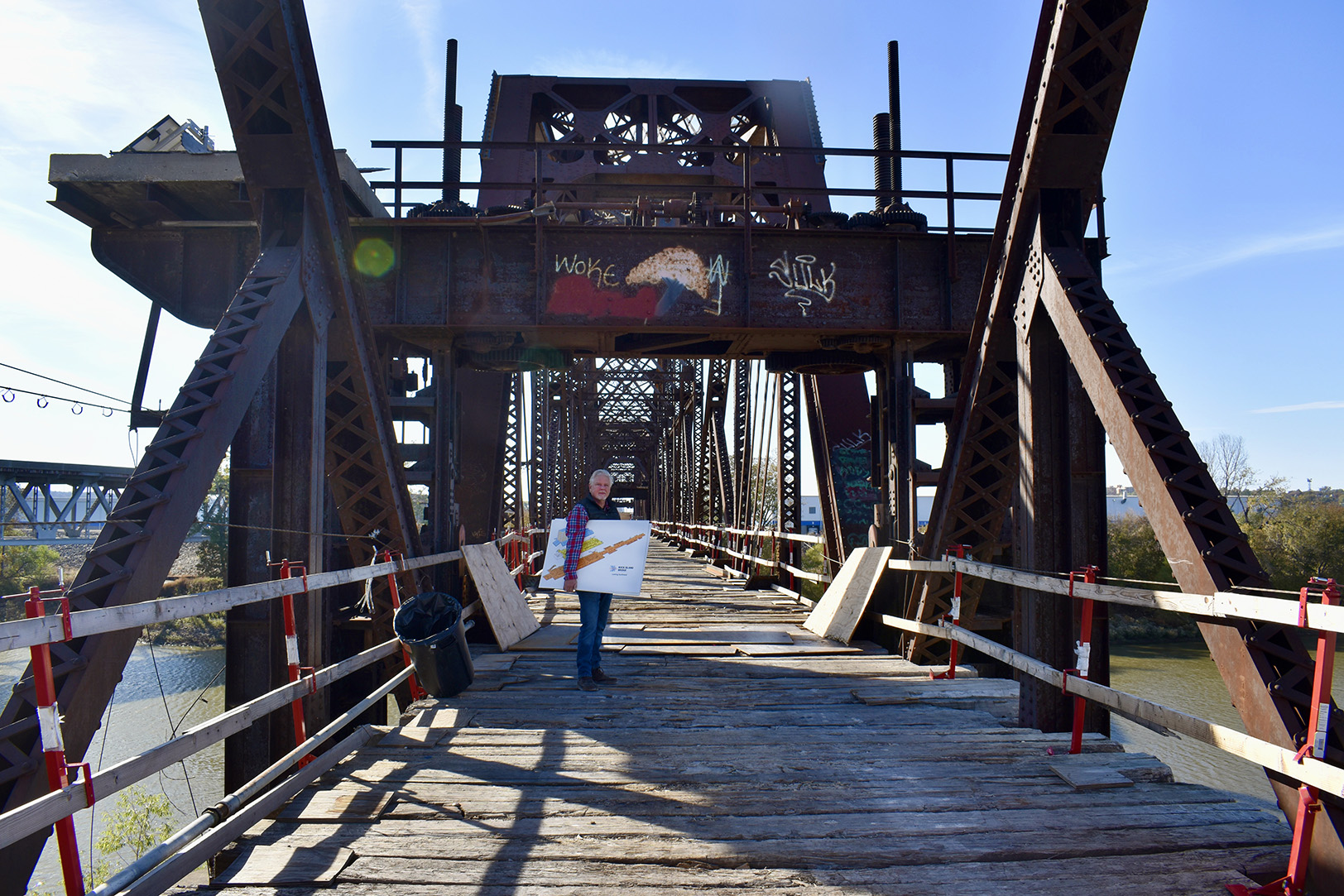
When Rock Island Bridge opened this spring, the century-old railroad span became the country’s first entertainment district built on a bridge.
A few months later, operators are no longer asking whether the concept works. They’re focused on building what comes next as community organizations, entrepreneurs and new programming continue to shape the venue, said Mike Zeller, founder and CEO of Rock Island Bridge.
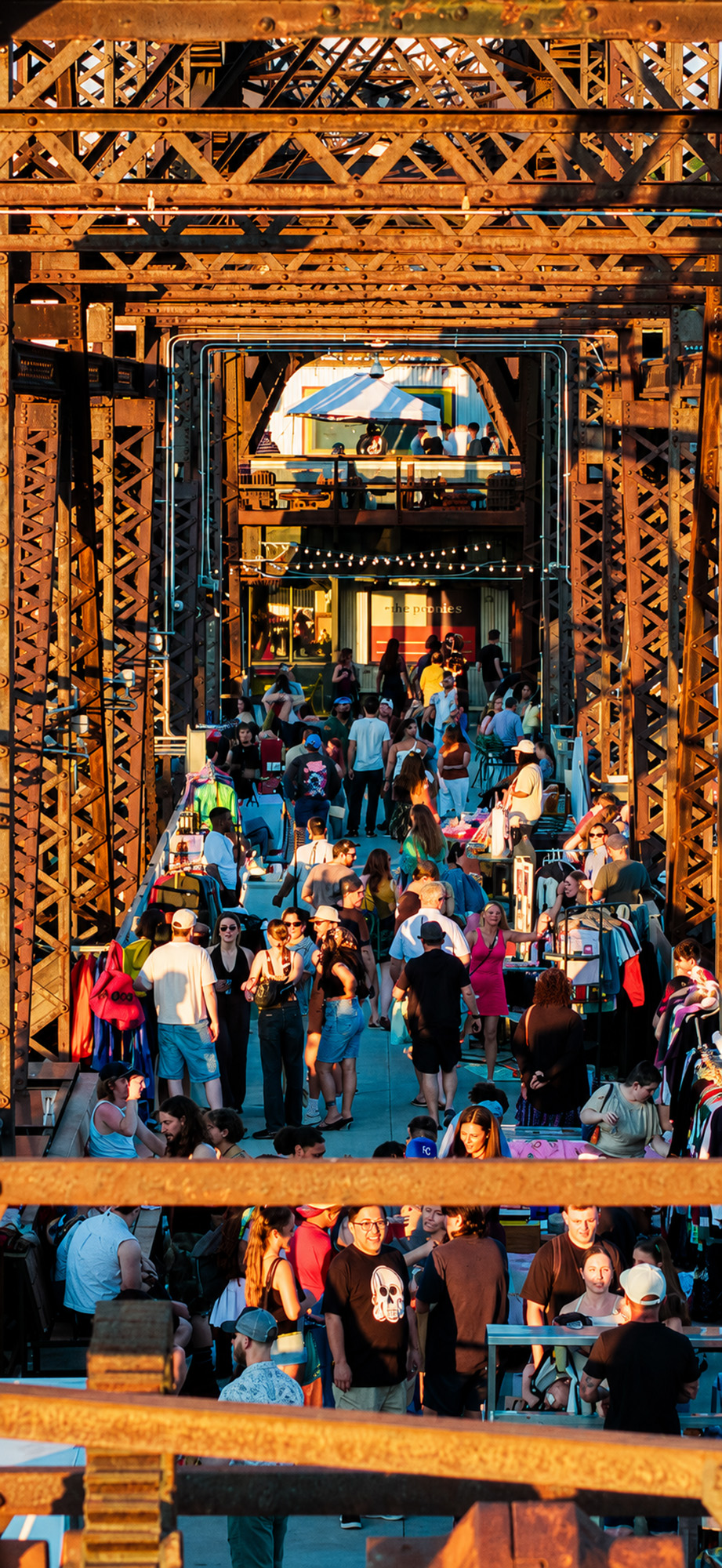
Attendees pack Rock Island Bridge for a Soul Sunday Market event; courtesy photo
“We built it believing that people would find it delightful to be hanging out over a historic railroad bridge with food and drink and live music and all the creature comforts, but you never really know until you know,” he said.
Early response has reinforced the project’s vision of creating a destination that brings people together from both sides of the state line. What surprised Zeller most, he said, is how quickly local organizations have embraced the venue as a place to host events, reach new audiences and build community.
“It has been really heartening to see the delight on people’s faces and just how many people are turning out,” Zeller told Startland News. “And so many great community partners have come forward to help us program this new kind of town square.”
Partnerships drive next phase
While Rock Island Bridge has drawn national attention for its pioneering concept, one of the biggest lessons since opening has been the value of partnerships, said Zeller.
He pointed to organizations like the Central Avenue Betterment Association, Soul Sunday Markets, and other community groups that have brought existing events and audiences onto the bridge’s renovated platform.
“People who already have a community and an activity want to reach more people by doing it in a new and exciting place,” he said.
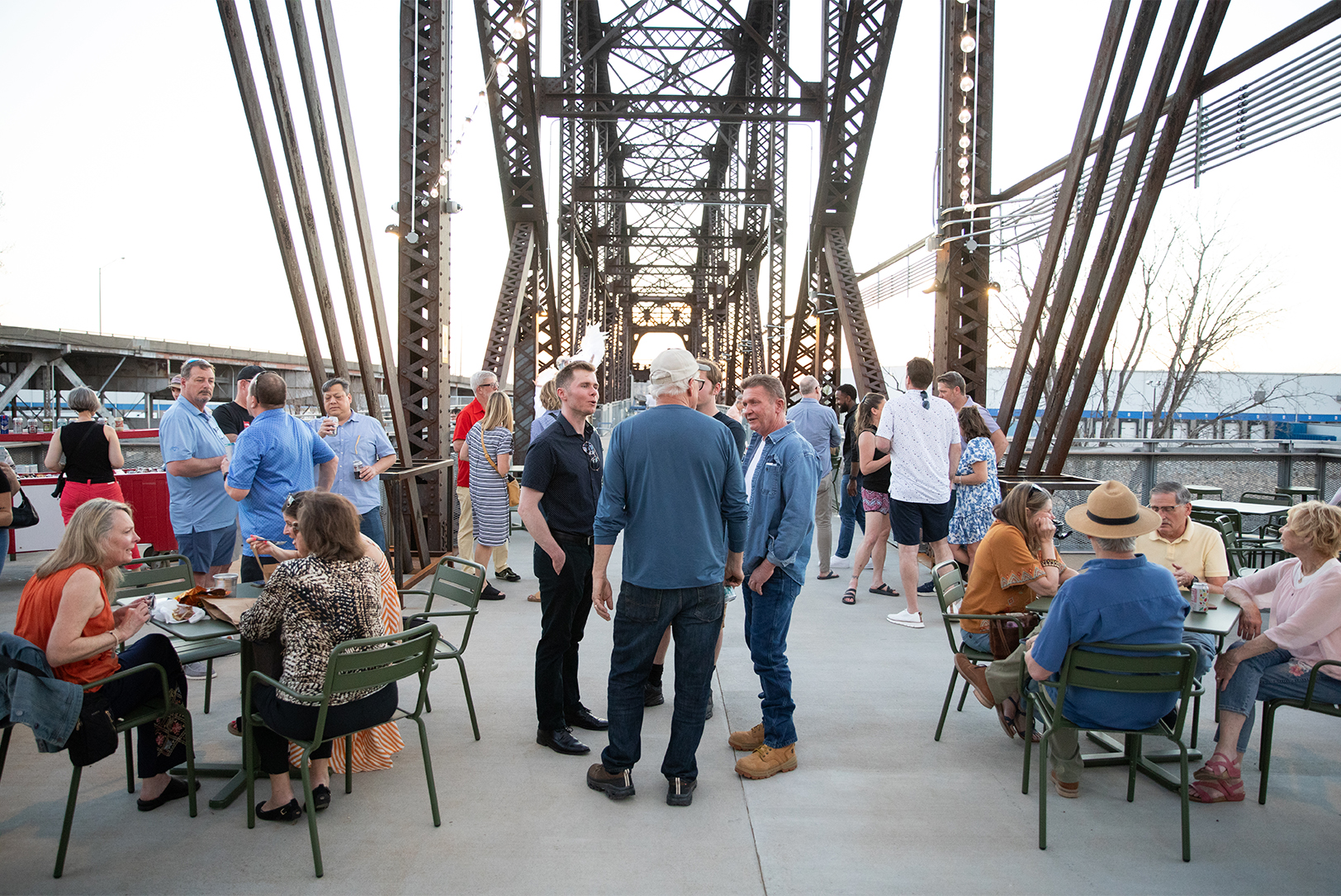
Those partnerships have helped create different experiences throughout the week. Weekday visitors use the bridge differently than those attending concerts, festivals and other weekend events, Zeller observed.
“On a Wednesday afternoon, we have the lingerers. They’re playing checkers with their grandkids or enjoying a quiet lunch with their laptop open in River House,” he noted. “But on a Saturday night, with live music, people dancing and a festival going, it’s more about community.”
Visitors of all kinds are drawn to both the views and the communal atmosphere, he said.
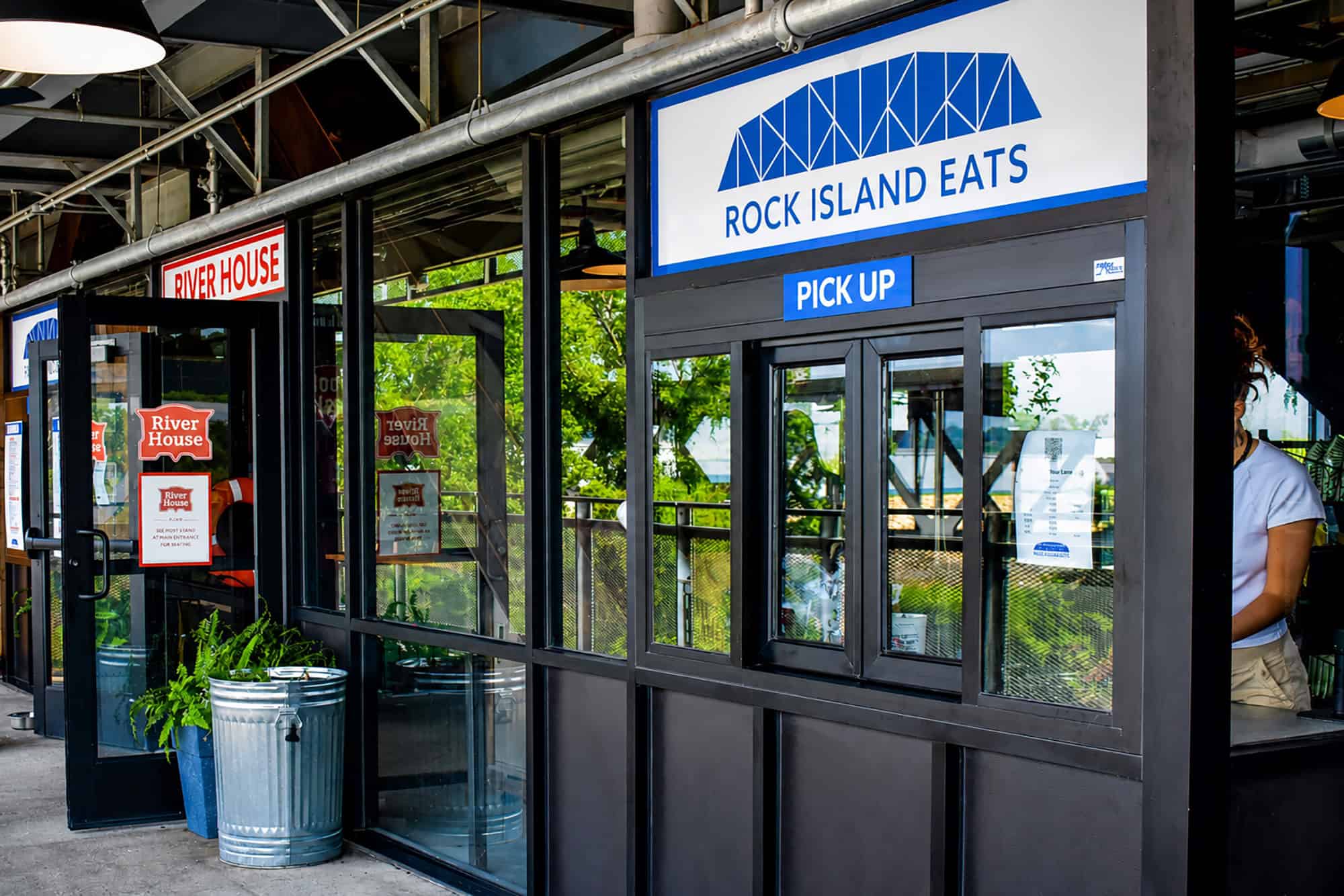
The River House walk-up window at Rock Island Bridge; photo by Taylor Wilmore, Startland News
River House anchors bridge experience
The River House bar and restaurant space was designed as a key part of the bridge’s business model rather than an amenity added after the fact.
It opened April 1 alongside the bridge as its permanent food and beverage anchor. In addition to a more-elevated, 200-seat dining room and bar experience, River House includes a walk-up window where visitors can order Americana-infused food and enjoy it picnic-style anywhere on the bridge.
“It’s a vast bridge, and we had the space for a 200-seat table-service restaurant and bar, so we took the opportunity,” he said.
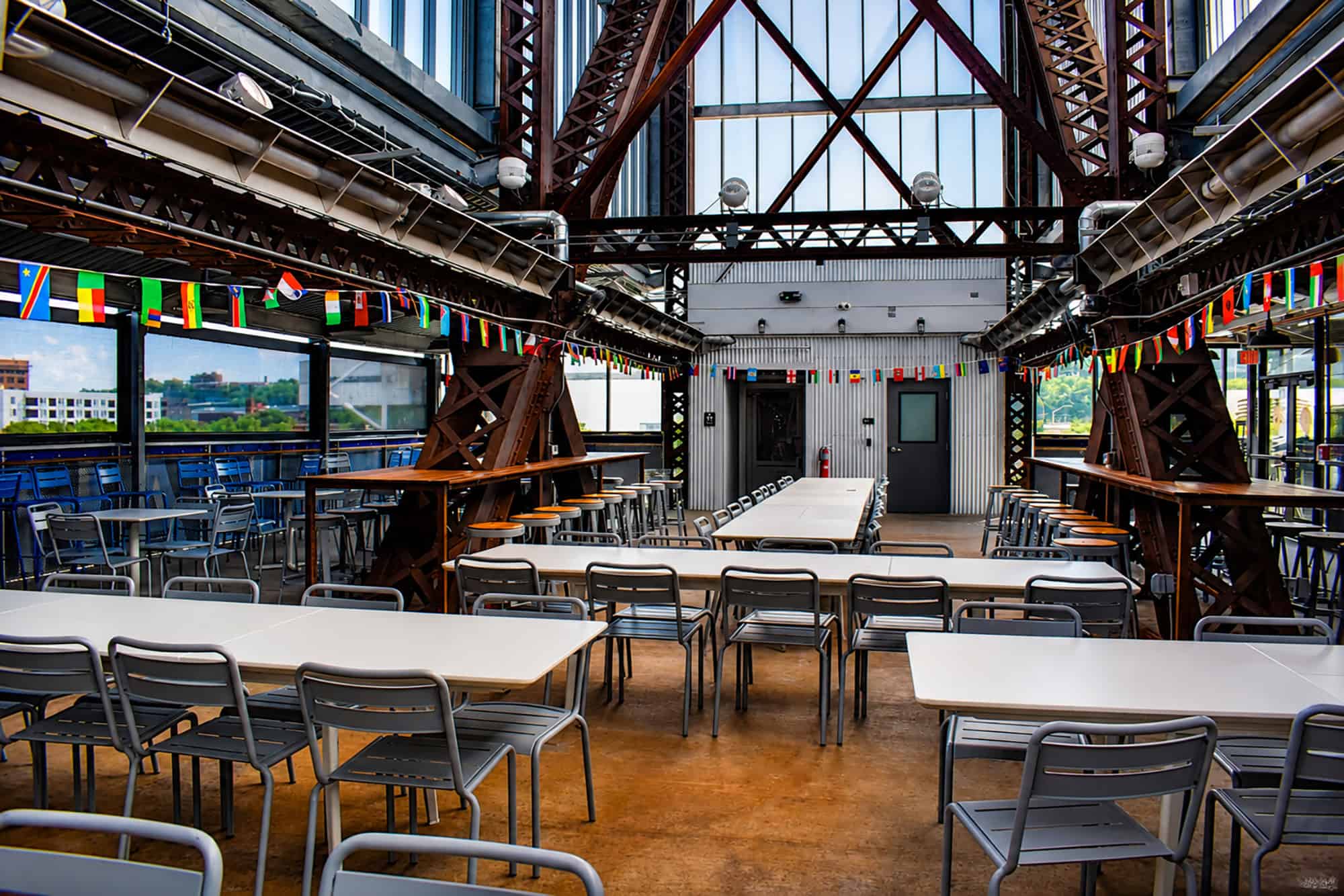
Inside the River House space at Rock Island Bridge; photo by Taylor Wilmore, Startland News
The partnership came together well before core construction was complete. Zeller credited restaurant operators Andy Miller, owner of Guy’s Deli in Westport and Arthur Bryant’s, and Bradley Gilmore, chef and co-founder of Lula Southern Cookhouse in the Crossroads, with recognizing the project’s potential long before opening day.
“They’re both serial entrepreneurs. They’re very creative and have a lot of experience in food and beverage,” he said. “They make perfect partners with Rock Island Bridge because, long before the bridge was even finished, they could see the potential.”
Launching a 200-seat restaurant at the same time as a first-of-its-kind entertainment venue required building a staff of about 80 employees, but customer response has been encouraging, Zeller said.
“We’ve noticed table times are a lot longer over the river,” he said. “People tend to linger, and that’s OK with us.”
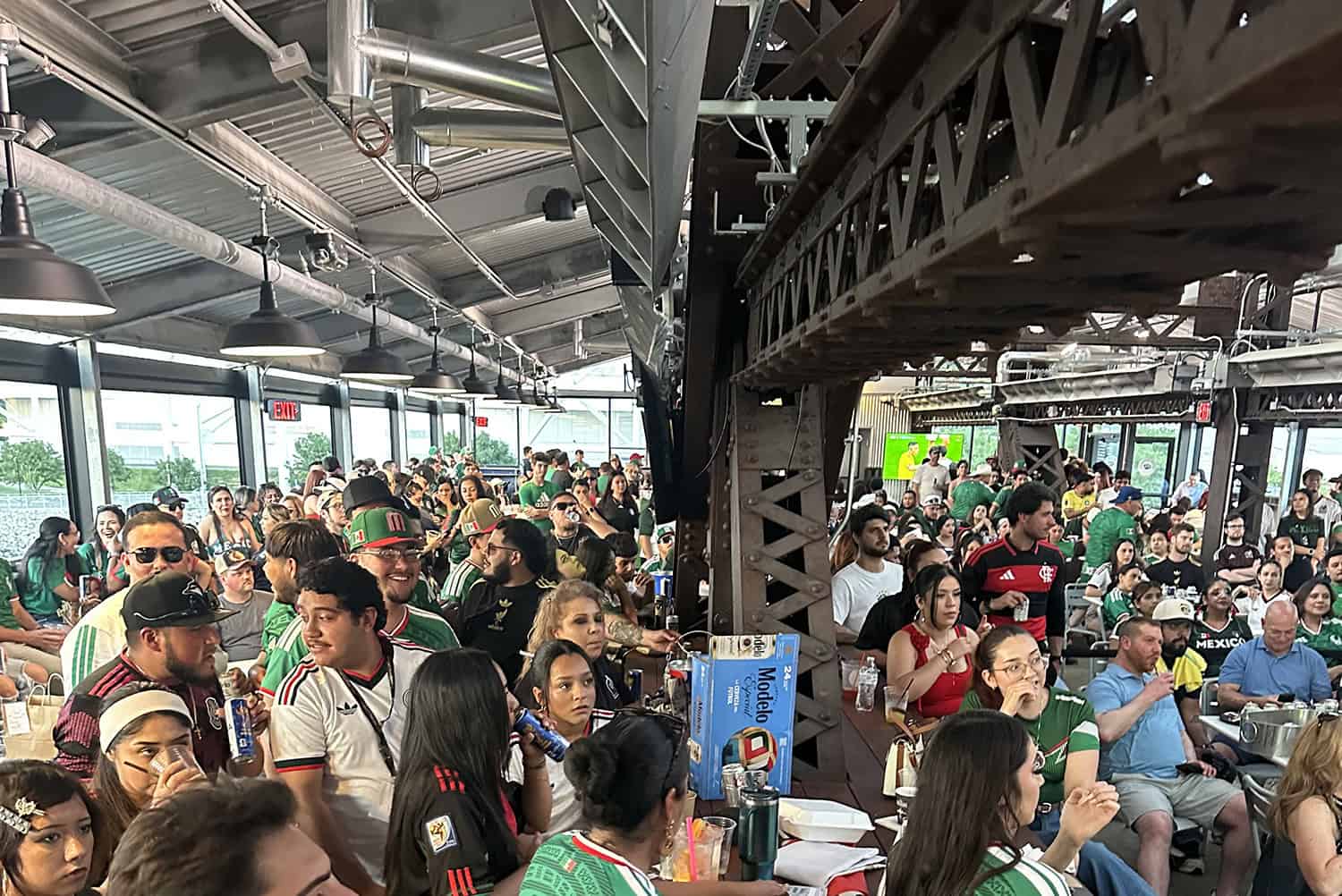
Team Mexico fans pack Rock Island Bridge for a FIFA World Cup watch party; courtesy photo
World Cup crowds offered an early test
This summer’s FIFA World Cup gave the bridge one of its first opportunities to host large international crowds, though the impact wasn’t exactly what operators expected.
“The World Cup’s been a mixed bag for us,” said Zeller.
Some regular customers appeared to stay away from the city’s center during tournament play, he said, while others were drawn to official World Cup destinations elsewhere in the metro.
The World Cup also created some of the bridge’s biggest nights to date.
“We had 800 to 1,000 Mexico supporters on the bridge several nights,” Zeller noted. “They brought live music and pop-up vendors. It was a real cultural festival, a lot of fun to watch.”
Another evening featured Ecuador supporters celebrating well into the night.
“Ecuador was on the West Truss until 2 o’clock in the morning, singing, chanting and jumping up and down in their yellow jerseys,” he said. “It was great.”
The experience reinforced the bridge’s ability to host large cultural gatherings while highlighting the challenge of balancing major events with its regular customer base.
The tournament also accelerated investments the bridge team had already planned, including large outdoor televisions and upgraded sound systems for watch parties and future events.
Still growing after opening
Although the bridge is fully open, the project is still evolving, Zeller said. The team is planning additional festivals, more public art, expanded historical programming and new retail opportunities.
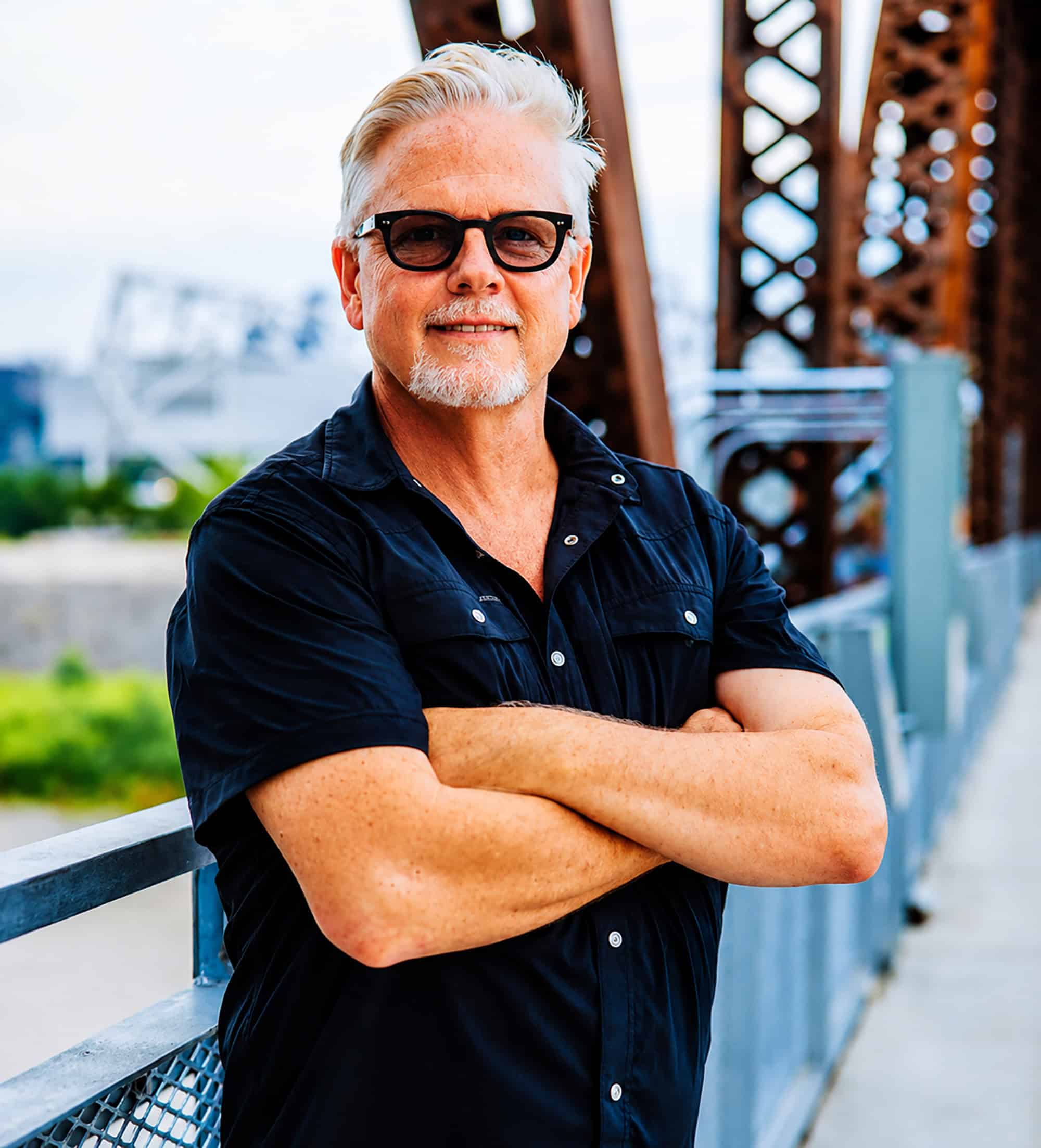
Mike Zeller, Rock Island Bridge
One event already in development: River Fire, a fall festival featuring floating bonfires on the Kansas River beneath the bridge.
Programming has also evolved faster than expected. Live music, originally envisioned as a secondary part of the experience, has become one of the bridge’s biggest draws.
“We’re probably doing more of it than we imagined before we opened,” he said.
The first few months have also changed how the team defines success.
Rather than focusing only on attendance, the goal is to create a venue that people use in different ways throughout the week, from weekday lunches and remote work to concerts, festivals and community events, he said.
“Success looks like all kinds of people, all ages, from different walks of life and different parts of the city, enjoying the bridge in different ways at different times of the day,” he said.
1799, American Royal Drive, Kansas City, Jackson County, Missouri, 64102, United States
Fund More Stories
This story was made possible by readers like you. Join them — make a one-time contribution or become a monthly member to sustain our work.