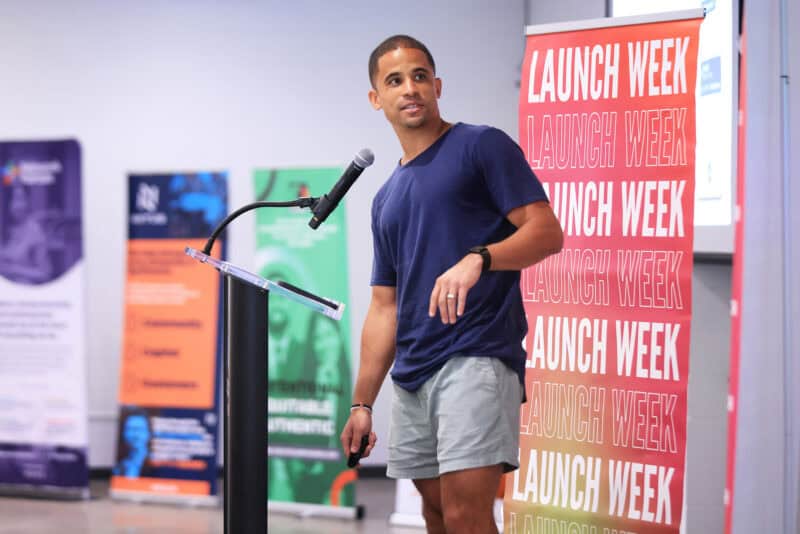
Good data can light the path: Kauffman celebrates impact of 30 years of entrepreneur research
May 21, 2026 | Nikki Overfelt Chifalu
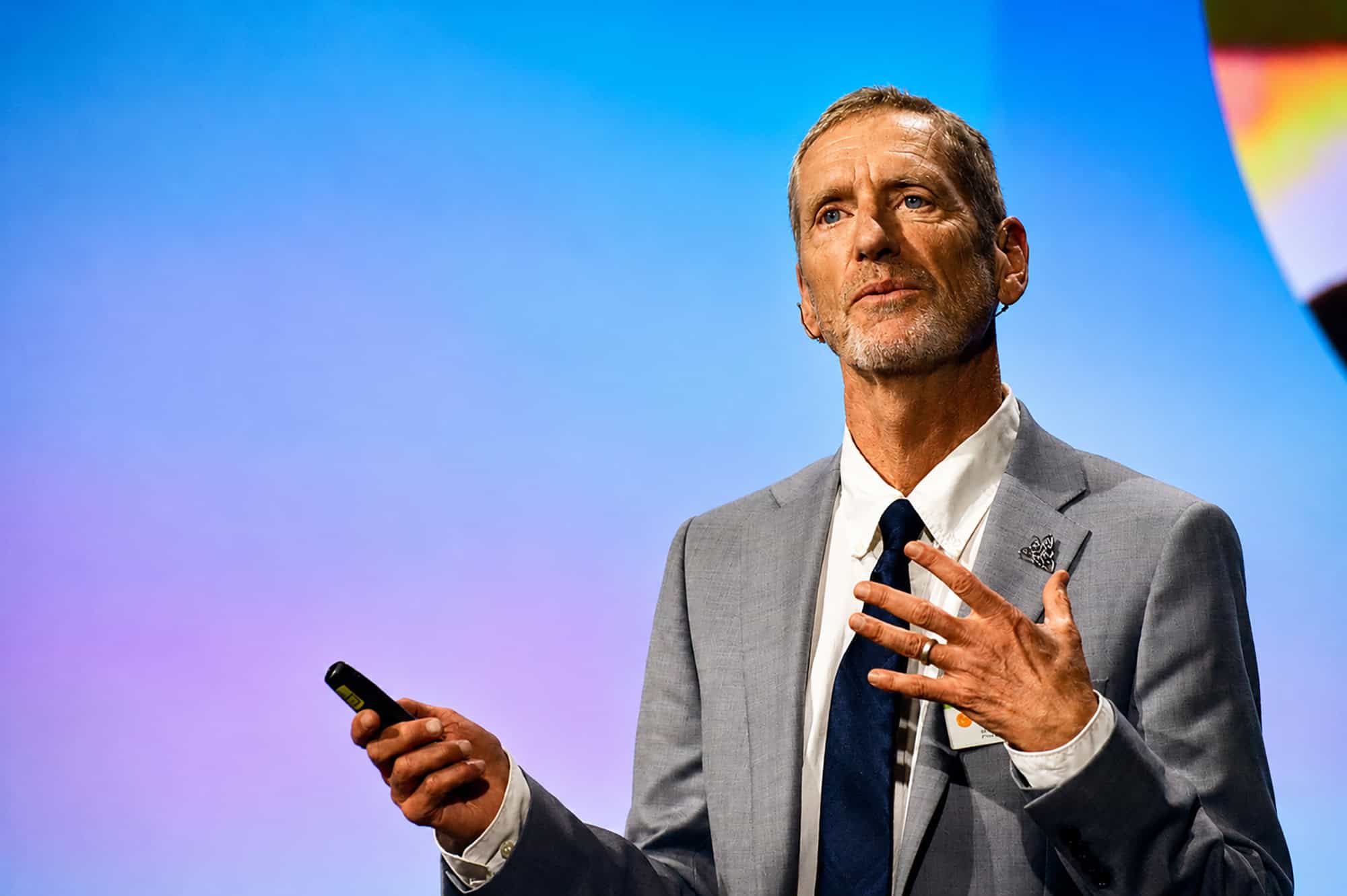
Dr. Robert Fairlie, professor of public policy and economics at UCLA and member of the National Bureau of Economic Research, presents data insights from the Kauffman Indicators of Entrepreneurship report; photo by Nikki Overfelt Chifalu, Startland News
Necessity is driving a burst of entrepreneurial activity — especially among immigrant, Latino and Black communities, according to new data released this week by the Kauffman Foundation, reflecting mixed news for the state of American entrepreneurship as the influential Kansas City nonprofit celebrated 30 years of research.
Data shows the number of Americans starting new businesses has rebounded to pre-pandemic levels — demonstrating resilience and signaling renewed economic confidence — but driven primarily by populations who might not have many options beyond choosing entrepreneurship.
The foundation’s Kauffman Indicators of Entrepreneurship report serves as a leading source of national and state-level data on new business creation and early-stage startup activity in the United States.
“I can tell you for a fact that I’ve had other countries contact me to try to find out how their country can create the Kauffman index and do it as a measure of entrepreneurship,” explained Dr. Robert Fairlie, professor of public policy and economics at UCLA and member of the National Bureau of Economic Research, who detailed results of the study Tuesday during an event at the National World World I Museum and Memorial.
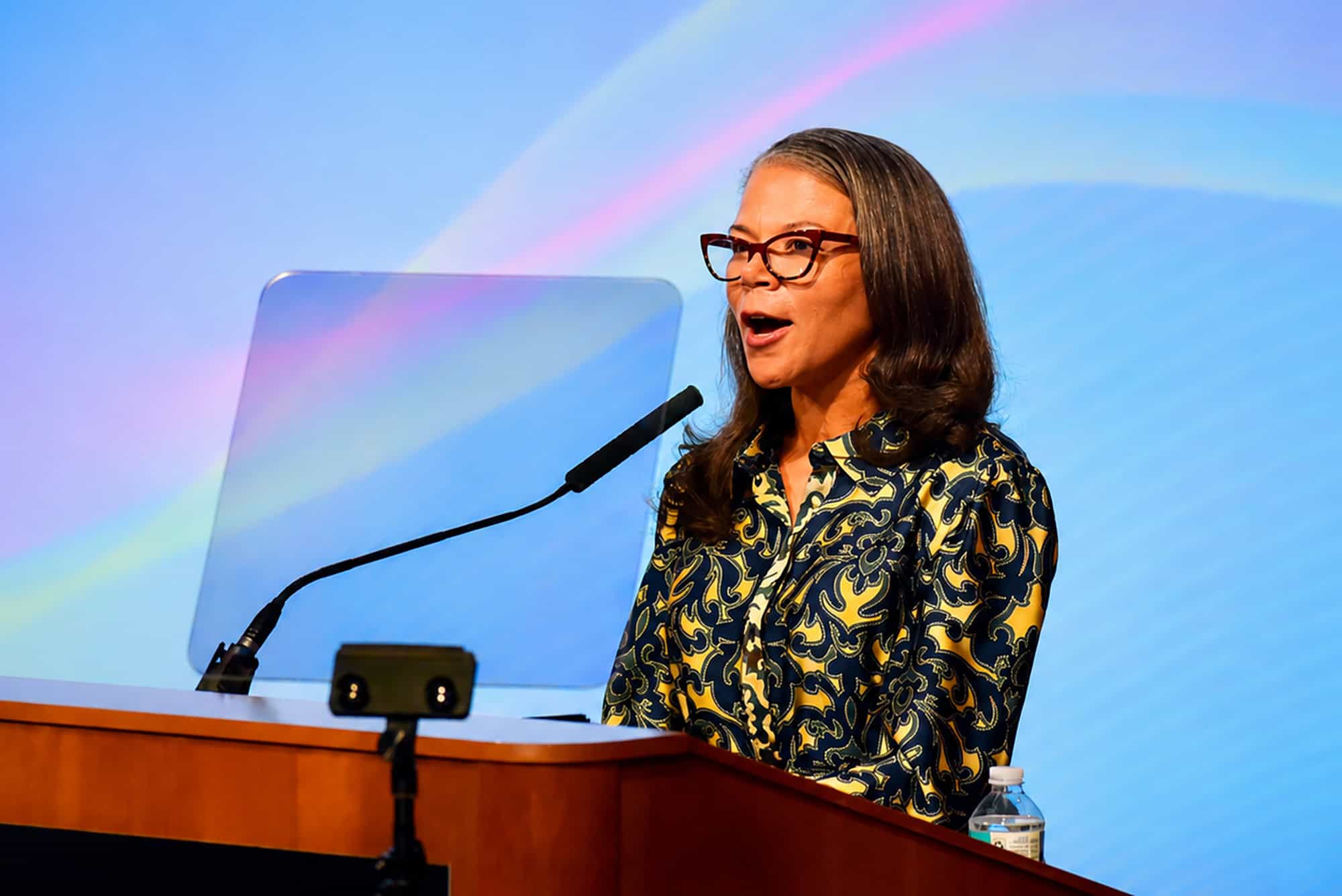
Dr. Yvonne Owens Ferguson, chief research, learning, and evaluation officer at the Kauffman Foundation, speaks during a presentation event for the Kauffman Indicators of Entrepreneurship report; photo by Nikki Overfelt Chifalu, Startland News
The report is the most comprehensive longitudinal analysis of its kind, according to the Ewing Marion Kauffman Foundation.
“Since their inception, the Indicators have helped us understand some fundamental questions, like who starts businesses in America, why they do so, and what happens next,” said Dr. Yvonne Owens Ferguson, chief research, learning, and evaluation officer at the Kauffman Foundation. “That work has never been more important.”
“Today, entrepreneurship continues to drive job creation and economic opportunity across the country,” she continued, “yet we see so many persistent challenges in business survival, access to capital, and equitable participation. So, this evening is about reflecting on those insights, and more importantly, using them to shape what’s next.”

Dr. DeAngela Burns-Wallace, president and CEO of the Ewing Marion Kauffman Foundation, speaks during an event spotlighting the Kauffman Indicators of Entrepreneurship report; photo by Nikki Overfelt Chifalu, Startland News
Insight fuels action
The data is gathered not just for data’s sake, noted Dr. DeAngela Burns-Wallace, president and CEO of the Kauffman Foundation; It’s actionable.
“We must turn it into policy,” she explained. “We must turn it into initiatives, ecosystems, support. So, for over 30 years of data that helps us understand the how, the why, the who, but even more importantly, it actually gives us a picture of what’s possible in the future if we support it, if we understand it, and if we are committed to invest in it.”
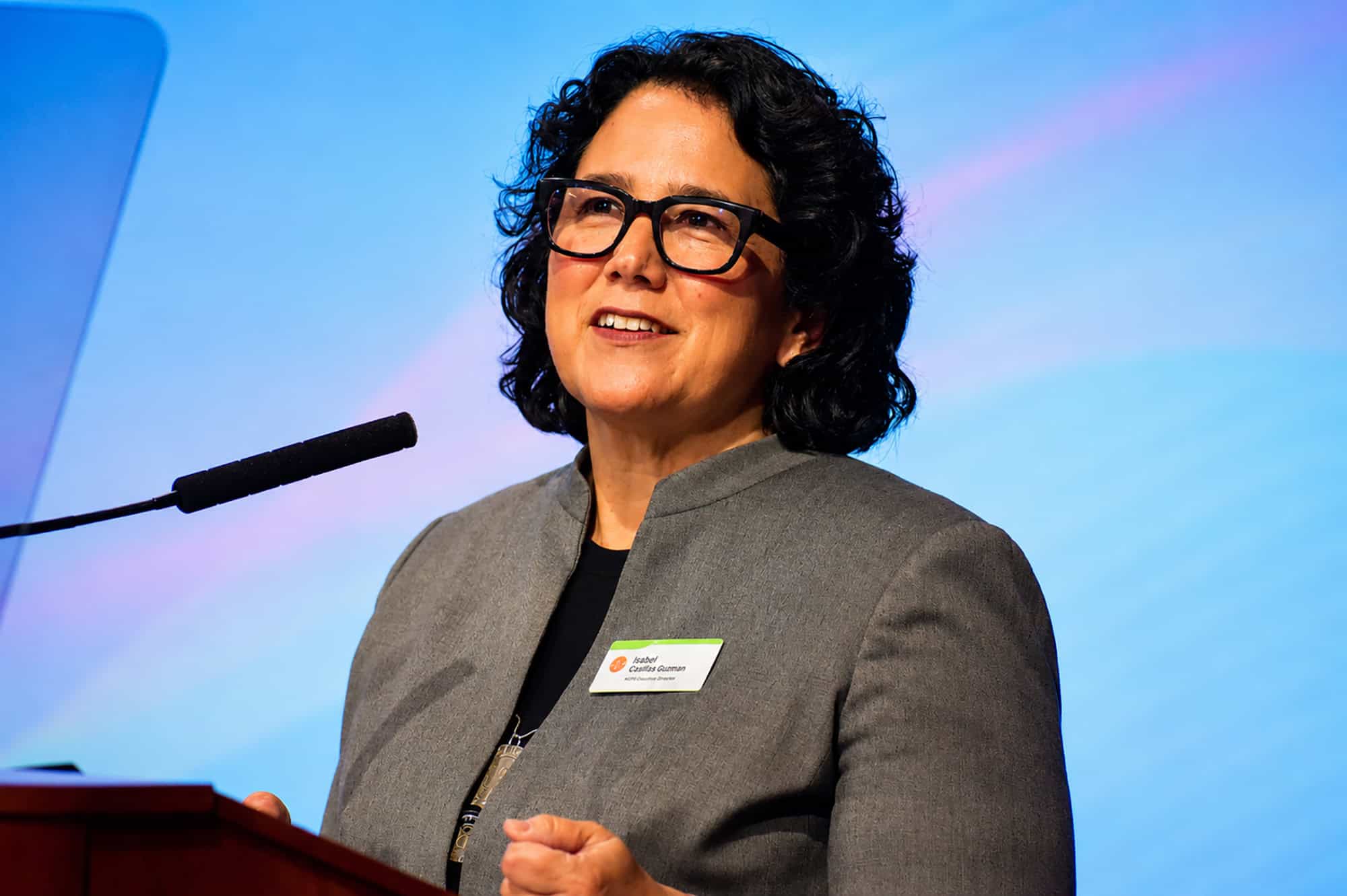
Isabel Casillas Guzman, former administrator of the U.S. Small Business Administration and founder and president of Avenida Advisors, discusses the power of data to fuel understand of entrepreneurship; photo by Nikki Overfelt Chifalu, Startland News
Startups continue to drive new job creation in the economy, according to the report, but the number of jobs created by startups has stagnated and is well below rates seen in the first years of Indicators data in the late 1990s.
“Entrepreneurs are the foundation of our democracy,” said Isabel Casillas Guzman, former administrator of the U.S. Small Business Administration and founder and president of Avenida Advisors. “I believe that at my core because we are a startup nation. We are innovators, risk takers, and driven to that pursuit of the American dream for opportunity. Small businesses have historically created two thirds of net new jobs, which is why, of course, that data is so vital that we’re tracking.”
“Entrepreneurs — who are out there right now, filling gaps, solving problems, building something from nothing — continue to benefit from (Kauffman’s) work that counts them and their impact, and that values them and supports them,” she added.
The people who fund entrepreneurs — as well as those who regulate and train them, rely on them for their supply chains, and design programs for them — all need data that is grounded in science, principled, deep and honest, continued Guzman.
“They need it early and regularly enough to pivot, grow, adapt in response to change indicators that are happening all around us,” she added, “and that’s what Kaufman has been doing for these 30 years.”
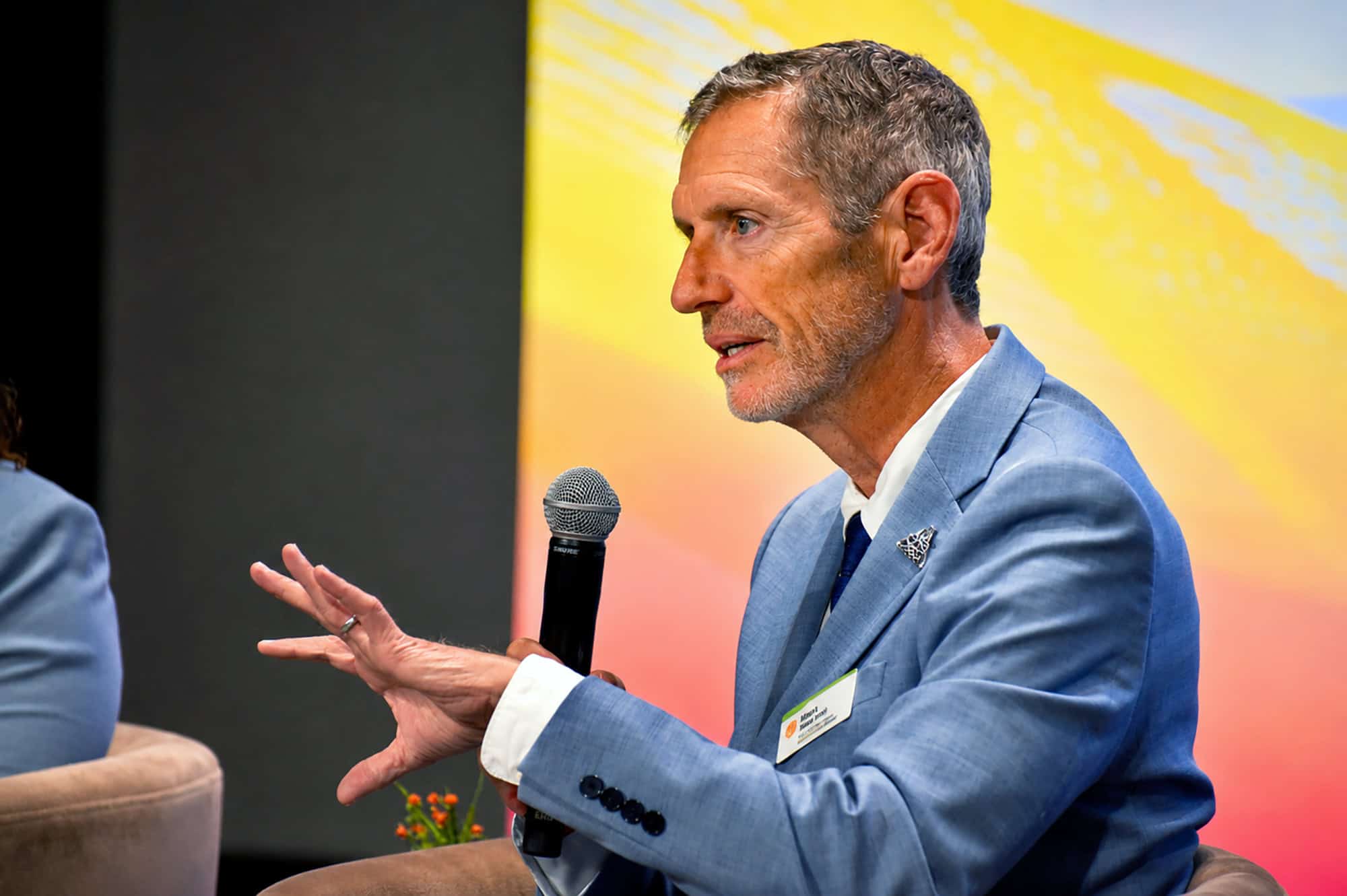
Dr. Robert Fairlie, professor of public policy and economics at UCLA and member of the National Bureau of Economic Research, speaks during a panel discussion on the Kauffman Indicators of Entrepreneurship report; photo by Nikki Overfelt Chifalu, Startland News
Stubborn gaps persist
In 2004, Fairlie met Bob Light, who was with the Kauffman Foundation at the time, during a conference, telling him about his research on who was starting businesses and how it related to the desktop computer, Fairlie recalled.
“He got really interested in this,” he said. “So I have to thank him for having this vision that maybe there’s more to it, and that this is something that Kaufman could actually do and invest in.”
“I explained to him that there were no other data sets that were being provided by the federal government, or even at the state level, that we’re providing this measure of starting up a business at the personal owner level,” Fairlie added, noting that his work then began with Kauffman, though his data dated back to 1996.
The researcher detailed and summarized the findings of the report this week for those in attendance, noting that overall business creation is looking good despite other negative indicators.
“New business entities were 15 percent higher than when they were before,” he continued. “Job creation is where we’re hurting. We’re about 17 percent lower. Then the first-year exit rate is higher, so that’s another set of bad news. But it’s not as bad. It’s about 6 percent higher.”
One key finding, Fairlie noted, is an incredibly consistent gender gap. The rate of entrepreneurship for men and women are both trending well above pre-pandemic levels, yet the gap between them widened slightly in 2025, according to the report.
“That gap is being extremely stubborn and not going away,” he explained. “So that’s something that we’re very worried about.”
Another point Fairlie emphasized: post-COVID era growth is being driven by Black, Latinx, and Asian business activity. The report details that immigrants opened about 2.3 million businesses last year, double the rate of native-born Americans. Latino and Black Americans were also highly active, starting about 2 million and 1.1 million businesses respectively, while white Americans, making up nearly 75 percent of the working-age population, started about 4 million businesses.
“White business activity has actually dropped in this recovery period,” he added.
These indicators have been used extensively in policy development at the federal level, state level, and local government level, Fairlie noted.
“One of the things that I’ve been excited about is knowing that the state numbers have been used for budget forecasts,” he continued. “These are the very nerdy things that are really exciting to me, as an economist. Entrepreneurship really is a good barometer of how a local economy is doing, and so that’s been good to see.”

Jeff Pinkerton, director of economic research for the Missouri Department of Economic Development, speaks alongside Romaine Redman, chief innovation and strategy officer for the Kansas Department of Commerce, about insights from the Kauffman Indicators of Entrepreneurship report; photo by Nikki Overfelt Chifalu, Startland News
Influencing state economic policy
Kauffman Indicators also detail state-level trends, for example, showing that business starts have grown significantly in Kansas and Missouri, up 35 and 23 percent respectively, since the pandemic. But a challenge remains open in both states: nearly one in four businesses close after the first year, a rate below the national average.
“As important as entrepreneurship is, it’s not always an easy thing for economists and researchers to be able to measure,” noted Jeff Pinkerton, director of economic research for the Missouri Department of Economic Development. “And as such, we don’t have as much insightful, reliable data as we do in other areas of the economy. I, like you, am thankful for the Kauffman Foundation’s ongoing leadership to help fill this important information gap.”
In Missouri, the report states, people starting businesses by choice — a position of strength — is well above the national average. But at the same time, the likelihood a business closes after one year is higher than nearly every other state in the country.
“The high level data we have seen over the past few years does suggest that entrepreneurship is very much alive and well in Missouri,” Pinkerton explained. “The Show Me State ranks high in new business creation, however, the data also tells us that we’re not doing as well in keeping those businesses going over the long term with low business survival rates. But obviously we need to know more, particularly in this era where technology can help get interesting ideas to actual viable businesses in record time.”
“A state or a region’s efforts to make their economies more entrepreneurial can go a long way in determining their economic growth,” he added, “but we need to know we’re going down the right path. And good data can light that path.”
In Kansas, according to the Kauffman Indicators report, the business survival rate is just below the national average, but the number of people starting businesses out of necessity has risen every year since 2019.
“We’ve used this data to think about how we structure the Excel Kansas program and to think about how we work with our ecosystem partners to strengthen them to deliver the kind of support that our ecosystem needs,” said Romaine Redman, chief innovation and strategy officer for the Kansas Department of Commerce. “At the Kansas Department of Commerce, we have a firm belief — a resolute belief — that if we empower our entrepreneurs and our innovators to create the future that we want, then prosperity will reach the lengths and bounds of our state.”
Fund More Stories
This story was made possible by readers like you. Join them — make a one-time contribution or become a monthly member to sustain our work.