UMKC debuts ‘Bloch Talks’ with five perspectives on how entrepreneur opportunity is shaped (and who’s shaping it)
April 29, 2026 | Taylor Wilmore

Tiffany Misha Thompson, founder of Petrichor Projects, shares insights during the Bloch Talks speaker series organized by the Henry W. Bloch School of Management at UMKC; photo by Taylor Wilmore, Startland News
A new storytelling-focused speakers event at UMKC’s Bloch School shines a spotlight on the diverse experiences that shape entrepreneurship, said Marvin Carolina Jr., drawing a parallel to the university’s boundary-crossing Regnier Venture Creation Challenge.

Marvin Carolina Jr., professor and director of the Community Entrepreneurship Program at UMKC, welcomes the audience to the inaugural Bloch Talks; photo by Taylor Wilmore, Startland News
“Entrepreneurship and innovation don’t live in isolation,” said Carolina Jr., professor and director of the Community Entrepreneurship Program at UMKC. “They live in systems, relationships, and access.”
The “Bloch Talks” series, which debuted on the eve of the April 24 RVCC competition, aims to complement the popular innovation and venture challenge — along with its broad approach that touches technology, health, retail, and the creative arts.
RELATED: Full-circle victory for UMKC grad who retook the stage to win RVCC with her startup
Hosted by the Regnier Institute for Entrepreneurship and Innovation, the event featured leaders from startups, corporate innovation, public policy, and the arts. It builds on more than 15 years of the RVCC, expanding beyond pitching and competition to examine the systems that shape how ideas are created, funded, and sustained.
“This is the first time we’ve gathered five perspectives on entrepreneurship and innovation in one room,” Carolina told a crowd gathered at the Nelson Atkins Museum of Art. “Not everyone on this stage built a startup from scratch. Some are building ventures. Others are shaping the conditions that allow entrepreneurs to survive.”

Emily Brown, founder of Attane Health, shares her journey during the Bloch Talks speaker series at the Nelson Atkins Museum of Art; photo by Taylor Wilmore, Startland News
Relationships to go further
Speaker Emily Brown, co-founder and CEO of Attane Health, described an entrepreneurial journey rooted in lived experience with food insecurity and chronic illness within her family.
She first founded the Food Equality Initiative, a nonprofit focused on improving access to medically appropriate food. That work helped pioneer early “food prescription” models that directly connected nutrition with healthcare outcomes.
Over time, those efforts evolved into the for-profit startup Attane Health, which she co-founded in 2021 to scale “food as medicine” solutions through healthcare systems and digital infrastructure.
One of her biggest challenges was not developing the idea, Brown said, but convincing others it was viable.
“Many people did not immediately see the opportunity,” she said. “At the time, I was told directly that venture capital would not back a founder like me coming from a nonprofit background.”
That perception gap often outweighed the operational hurdles, she added.
“Being a Black woman without an MBA or traditional corporate experience meant I had to prove not just the idea, but the category,” she said.
Brown credited early mentors and relationships for helping her persist, including founder Denise Woodard of Partake Foods.
“At one point in my journey, less than 1% of Black women had raised more than $1 million in venture funding,” she said. “Having someone who had navigated that path before me changed everything.”
Today, Attane Health works with major healthcare organizations to integrate nutrition into care for patients with chronic conditions. Brown said mentorship reshaped her understanding of scale and possibility.
“Relationships matter,” she said. “If you want to go far, go together.”

Bryan Shannon, TreviPay, discusses his path from RVCC competition to exited founder; photo by Taylor Wilmore, Startland News
Putting ideas to the test
Entrepreneurship begins with rigor — not attachment, said Bryan Shannon, managing director of TreviPay and founder of legal tech company TicketRX, which was acquired in 2019.
“Don’t fall in love with the idea. Fall in love with solving the problem,” he said.
He traced his company’s origin to his experience as a student dealing with traffic tickets, which revealed a broader challenge for professional drivers. Instead of assuming the solution would work, he intentionally tried to break it.
“Try to disprove your idea,” he said. “Break it, stress test it, find the weak spots.”
Shannon noted that the strongest ideas are often those that survive repeated scrutiny, while early failure can prevent larger setbacks later.
Reflecting on his past experience at the Regnier Venture Creation Challenge — in which his company did not receive funding — he said the experience still proved valuable.
“That next step doesn’t come from validation,” Shannon said. “It comes from belief.”
He also emphasized that entrepreneurship ultimately depends on people, not individual execution.
“Entrepreneurship isn’t about doing everything,” Shannon said. “It’s about building the right team to do the right things.”
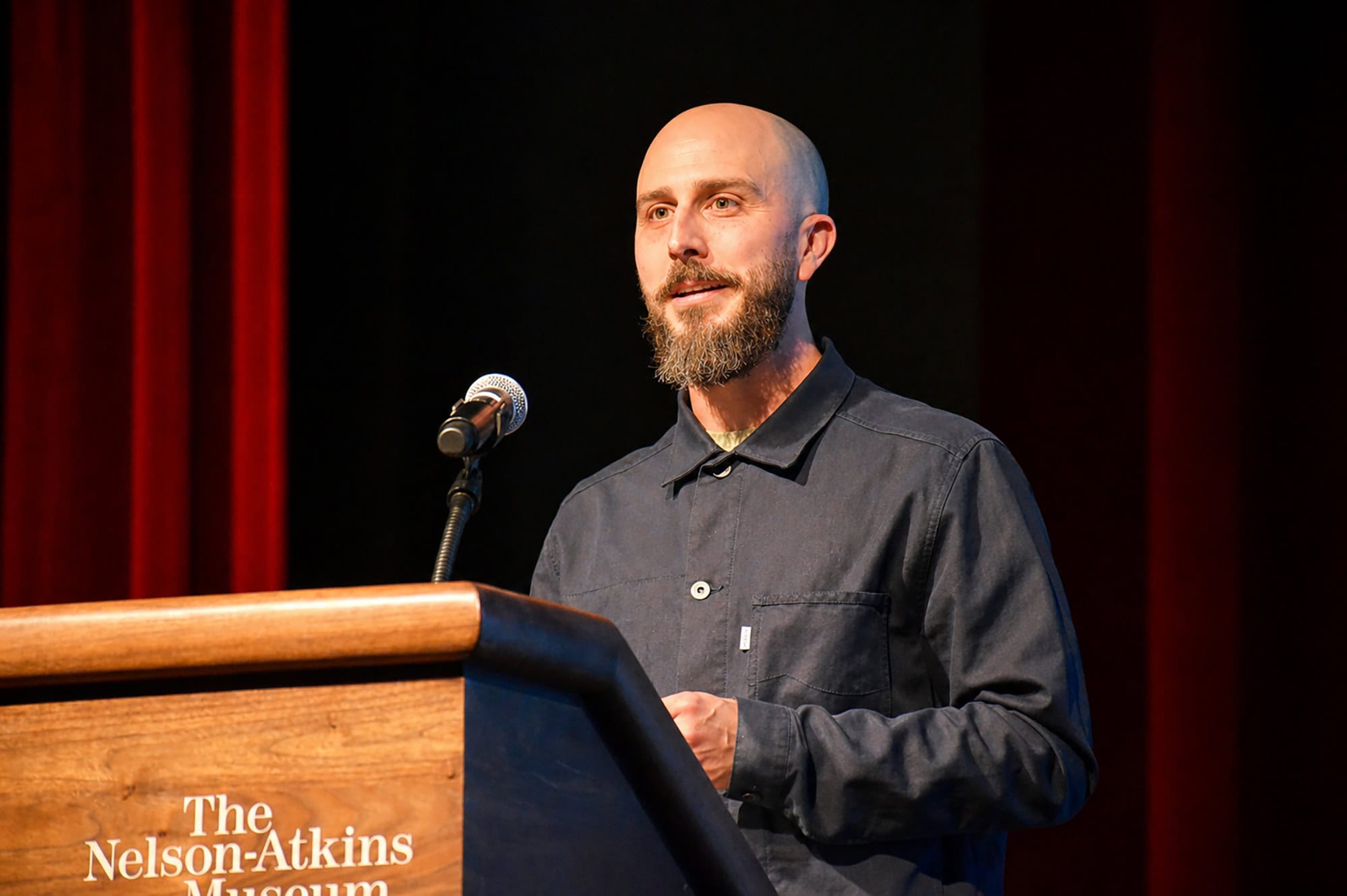
Andrew Clark, executive creative director at Sonos, speaks during the Bloch Talks speaker series. Clark also was the Mentor of the Year award winner at the Regnier Venture Creation Challege; photo by Taylor Wilmore, Startland News
Beyond startups
Other speakers focused less on building startups themselves and more on the environments where innovation emerges.
Andrew Clark, executive creative director at Sonos, described curiosity as a competitive advantage inside large organizations, where established systems can suppress experimentation.
“A fresh idea doesn’t have a case study yet,” he said. “It’s a feeling. It’s a question no one has answered.”
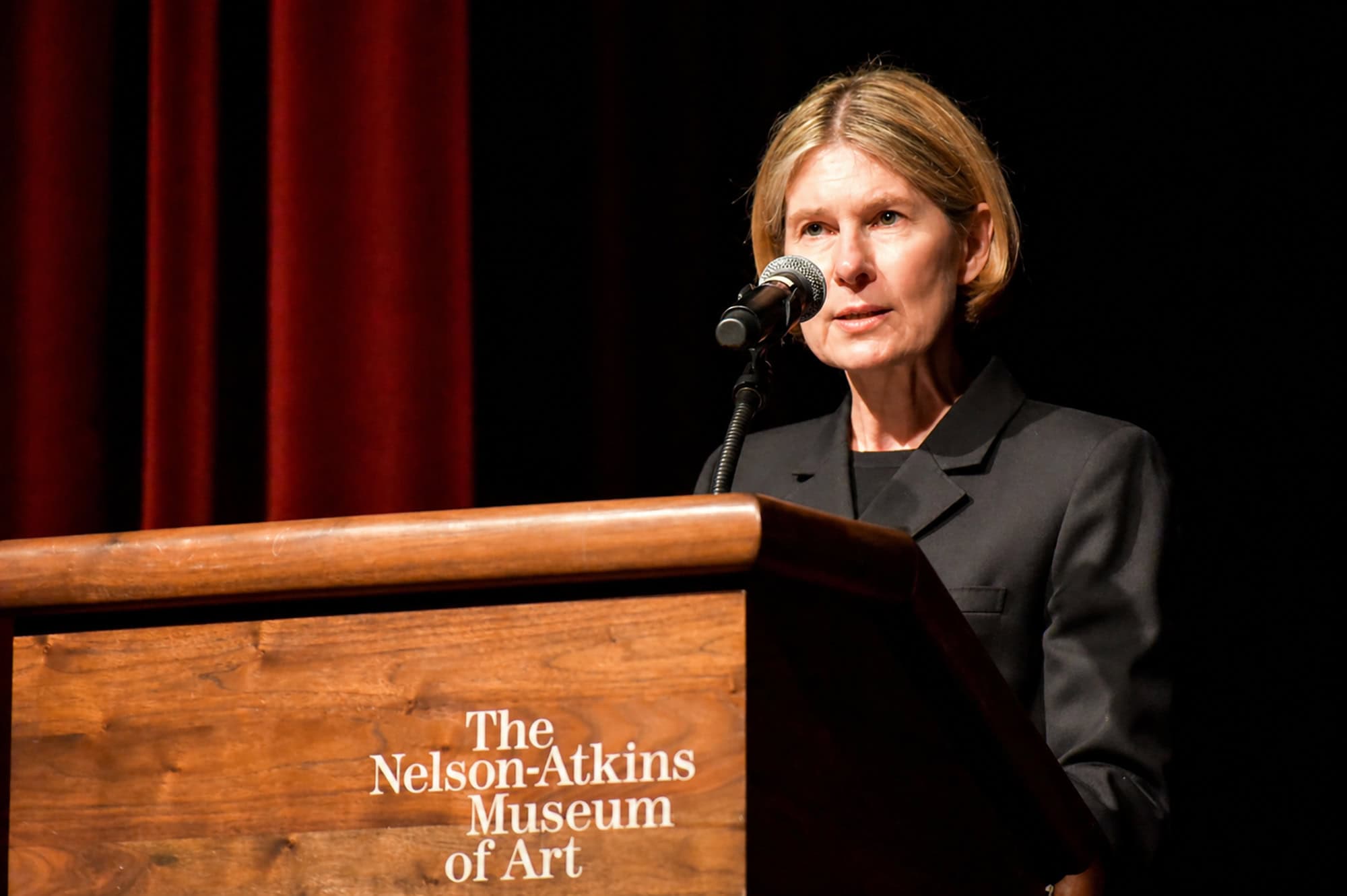
Wendy Doyle, president and CEO of United WE, highlights how entrepreneurs operate within and can be limited by the systems in which they build; photo by Taylor Wilmore, Startland News
Wendy Doyle, president and CEO of United WE, highlighted how policy structures quietly determine access to opportunity, often becoming visible only when challenged.
“Opportunities are hiding all around us in plain sight, cleverly disguised as broken systems,” she said.
And Tiffany Misha Thompson, founder of Petrichor Projects, emphasized perception as a central barrier to innovation, particularly when new ideas disrupt familiar ways of thinking.
“The best organizations design how people feel as carefully as what they deliver,” she said. “Cultural value is economic value.”
Fund More Stories
This story was made possible by readers like you. Join them — make a one-time contribution or become a monthly member to sustain our work.