How Dolly Parton’s sparkle lit the way for this entrepreneur’s outlook on self, the business of beauty
August 28, 2026 | Nikki Overfelt Chifalu
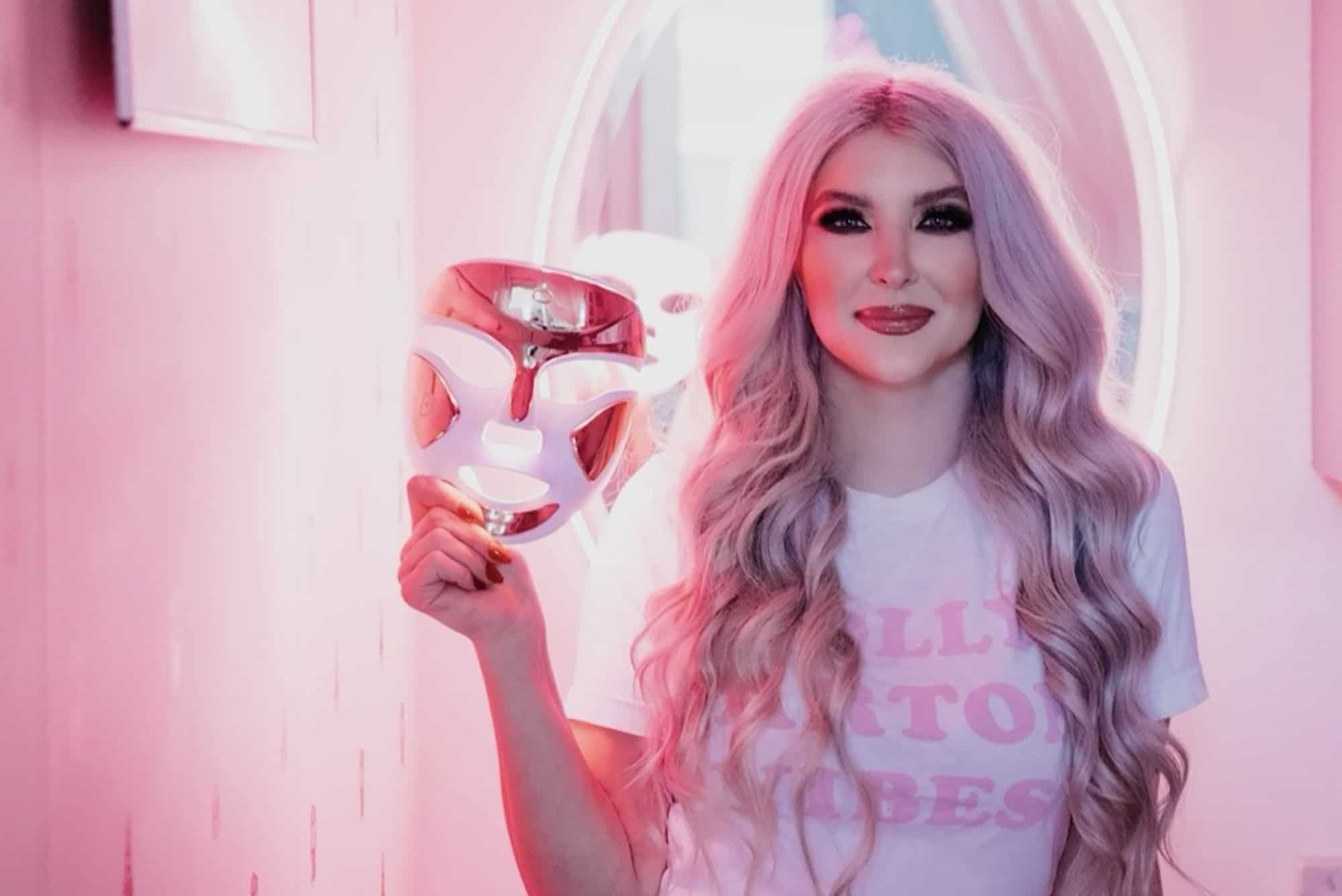
Alley Gage, owner of Alley Gage Beauty, sporting a "Dolly Parton Vibes" tee; courtesy photo
Alley Gage won’t say sorry for crying so hard that she needed to take off her lashes this week after learning about the death of entertainer-turned-business mogul Dolly Parton — her favorite glamour girl and an American icon.
Parton wouldn’t have apologized either, the owner of Alley Gage Beauty said, noting the star never let anyone dull her sparkle.
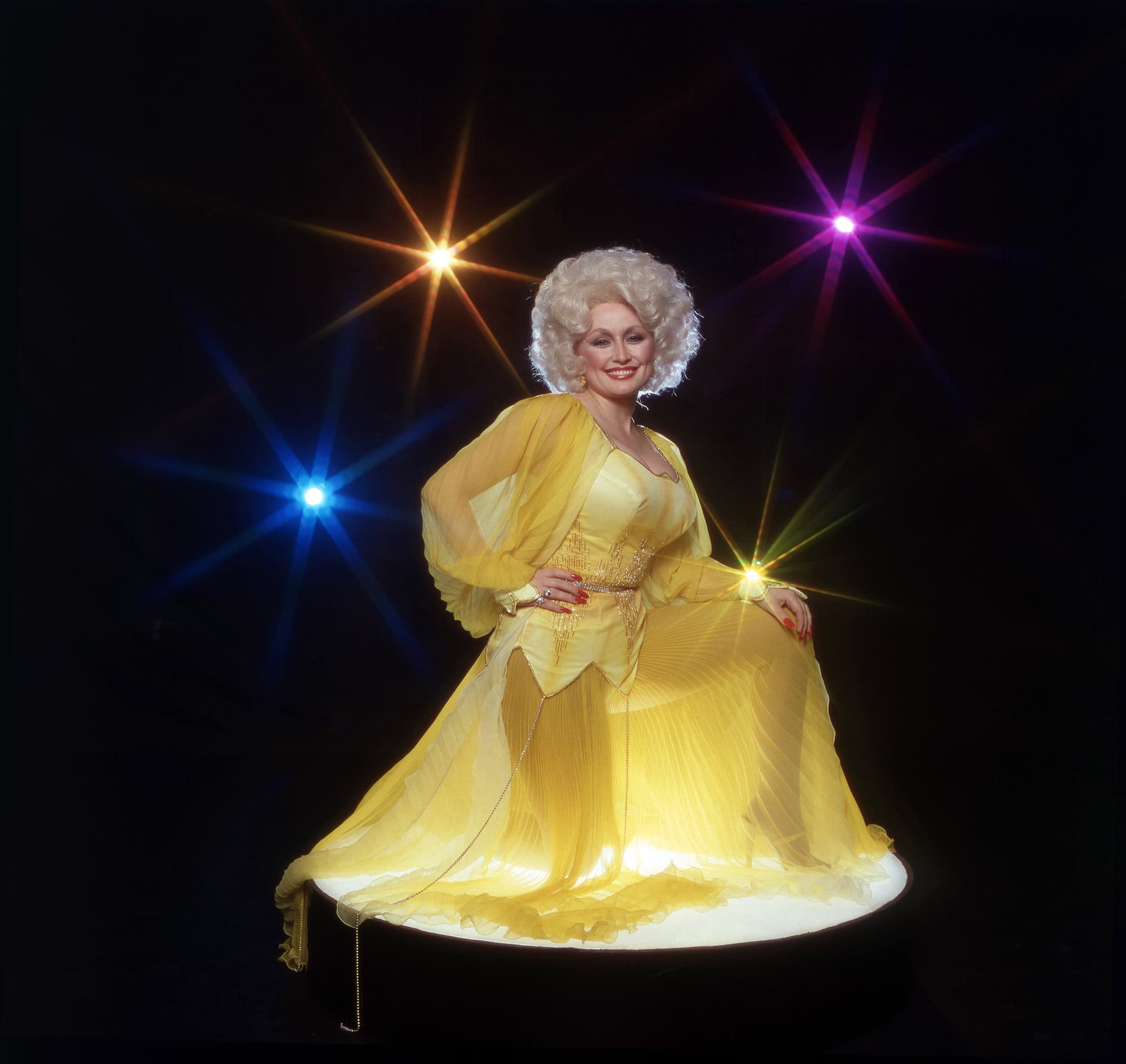
Dolly Parton portrait by Harry Langdon; credit to Rock Negatives, MediaPunch, IPX
Gage called the country music legend, actress, and philanthropist her barometer — someone who helped her gauge the right move forward whenever others’ made her feel small, overdressed or simply too much.
“I always think, ‘But what would Dolly do?’” explained Gage, who found out Parton had died Tuesday at age 80 while she was doing her nails. “I also ask: if she would have shrunk herself at all throughout her very long career in the public eye, what would everybody have missed?
“And the answer is everything. We would have missed all of this joy.”
Though they never met and were separated by generations, Parton gave Gage permission to live fully as her truest self, she emphasized.
“And when people are mad or they say some off-color comment about my effort or my look or whatever, I don’t get upset about it now. I feel like I’m walking in Dolly’s light,” she said. “You get to sparkle and shine as big and as bright as you want.”
“If it’s something Dolly would love, I know I’m probably being true to myself,” Gage added.
As America mourns Parton — who the Associated Press called the rare celebrity whose appeal transcended generations, geography and politics — and celebrates her legacy, Gage is reflecting on how her favorite icon has shaped who she is and the beauty business she built in Kansas City.
From the archives: That purple smokey eye? It’s a mask of confidence, KC beauty entrepreneur says
“Dolly taught me that beauty can make you visible, but kindness is what makes people feel safe being seen,” Gage said. “That’s part of why losing Dolly feels so profound. She had this extraordinary ability to make millions of strangers feel like they belonged with her. She could feel like your aunt, your grandmother, somebody you’d known your whole life. There was this sense that if you met Dolly, you knew you were going to be treated with kindness.”
“That’s something I want people to feel when they come into my space,” she added of her pink and sparkly Midtown studio where she offers services like make-up tutorials and facials. “There is a place for you here. You belong here. You don’t have to be a certain kind of person to be welcomed here.”
Beauty in reflection
Gage’s love of Parton and beauty began at an early age, she shared. She spent a lot of her childhood at her grandparents’ cattle ranch in rural Nebraska, being outside with the horses, dogs, and calves. But that country life also included glamour.
“My grandma and my great aunts were very grounded, country women, deeply rooted in their faith, but they loved their makeup, their hair, their lipstick, their perfume, their nails,” she explained, noting they all loved Parton. “Even if they were just staying home, they still got ready.”
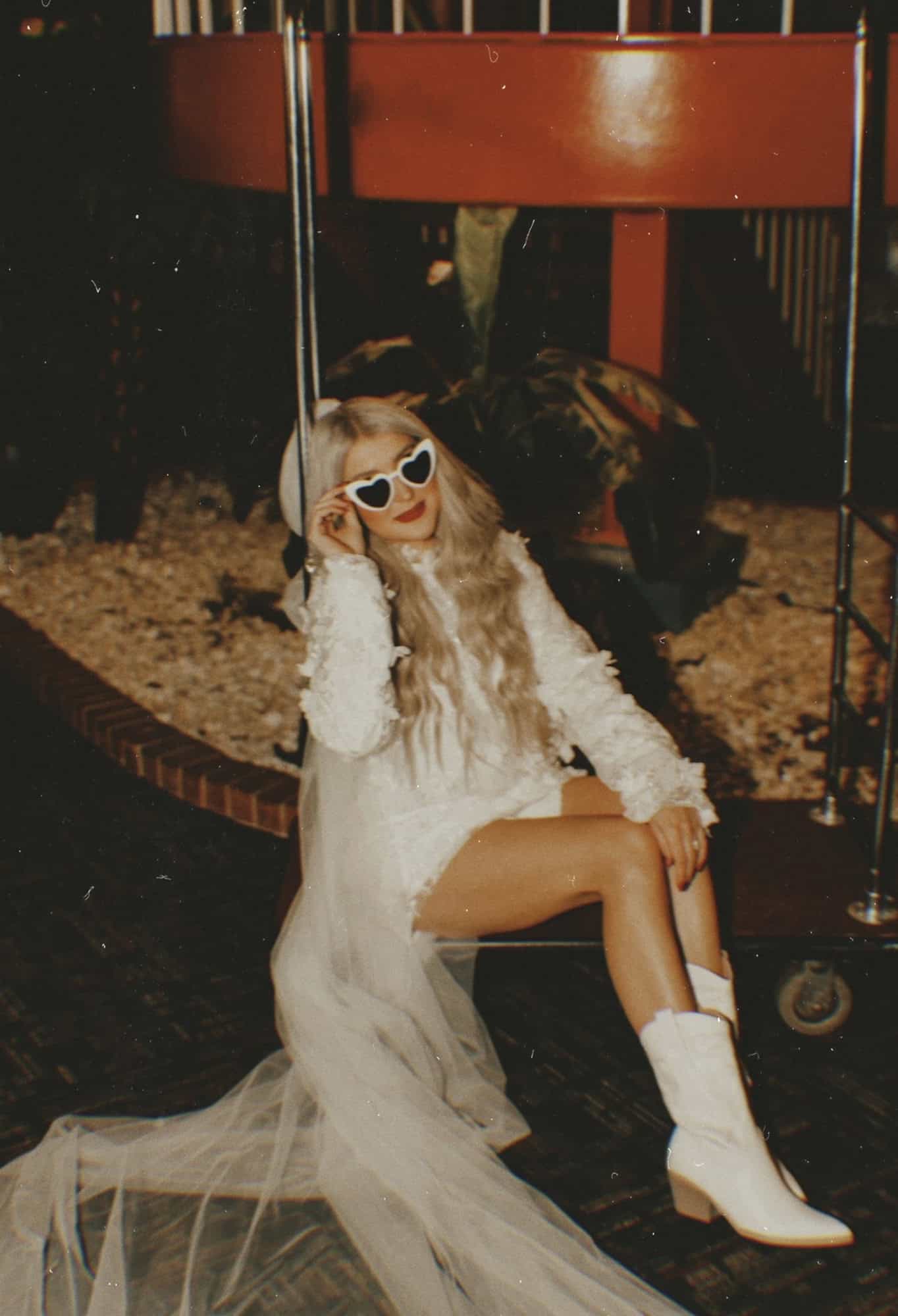
Alley Gage in a look inspired by Dolly Parton; courtesy photo
From a young age, they taught Gage that a person doesn’t have to choose between being humble and being glamorous, she noted, even when the rest of Midwest society made her feel like she was too over the top.
“You can be country and feminine,” she continued. “You can be hardworking and love beauty. You can spend the morning on a cattle ranch and still put on lipstick. There was never an idea that glamour had to be reserved for a special occasion or that someone had to be going somewhere important to enjoy it.”
That’s one reason Parton always felt so familiar, Gage said.
“She embodies that same combination I grew up seeing in the women I loved: faith, hard work, humility, and being deeply rooted in where you come from, while also being completely glamorous and unapologetically feminine,” she explained. “She made me feel like those things don’t just coexist. They belong together.”
“And I think that’s something I’ve carried with me my whole life,” she added. “You can be glamorous anywhere.”
That sentiment informs Gage’s approach to beauty, she noted.
“Beauty can be a celebration,” she continued. “It can be play. It can be joy. And it can be a way of giving someone permission to take up space.”
“Sometimes the very things we’re told are too much are the things that make us uniquely ourselves,” Gage added. “Our color, our enthusiasm, our softness, our ambition, our weirdness, our sparkle. Those aren’t necessarily things we need to overcome. They might be the things we need to protect.”
Parton never made herself smaller so other people could be more comfortable, she emphasized.
“She wore the hair,” Gage noted. “She wore the rhinestones. She wore the color. She wore the makeup. She was completely visible, and she did it with joy. And her visibility was never about taking something away from somebody else. She wasn’t saying, ‘Look at me instead of everyone else.’ She was saying, ‘Look at me. I love being me.’”
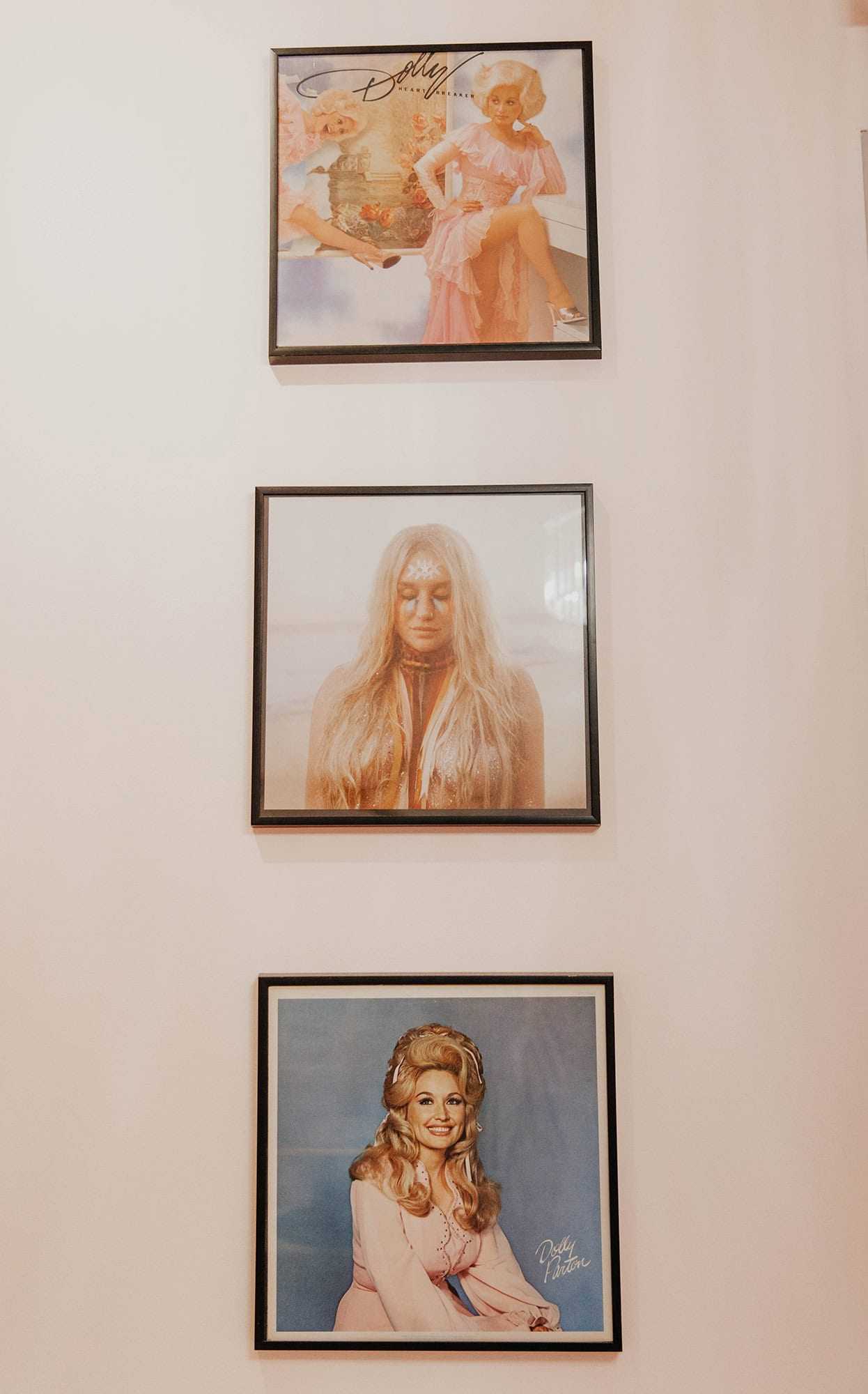
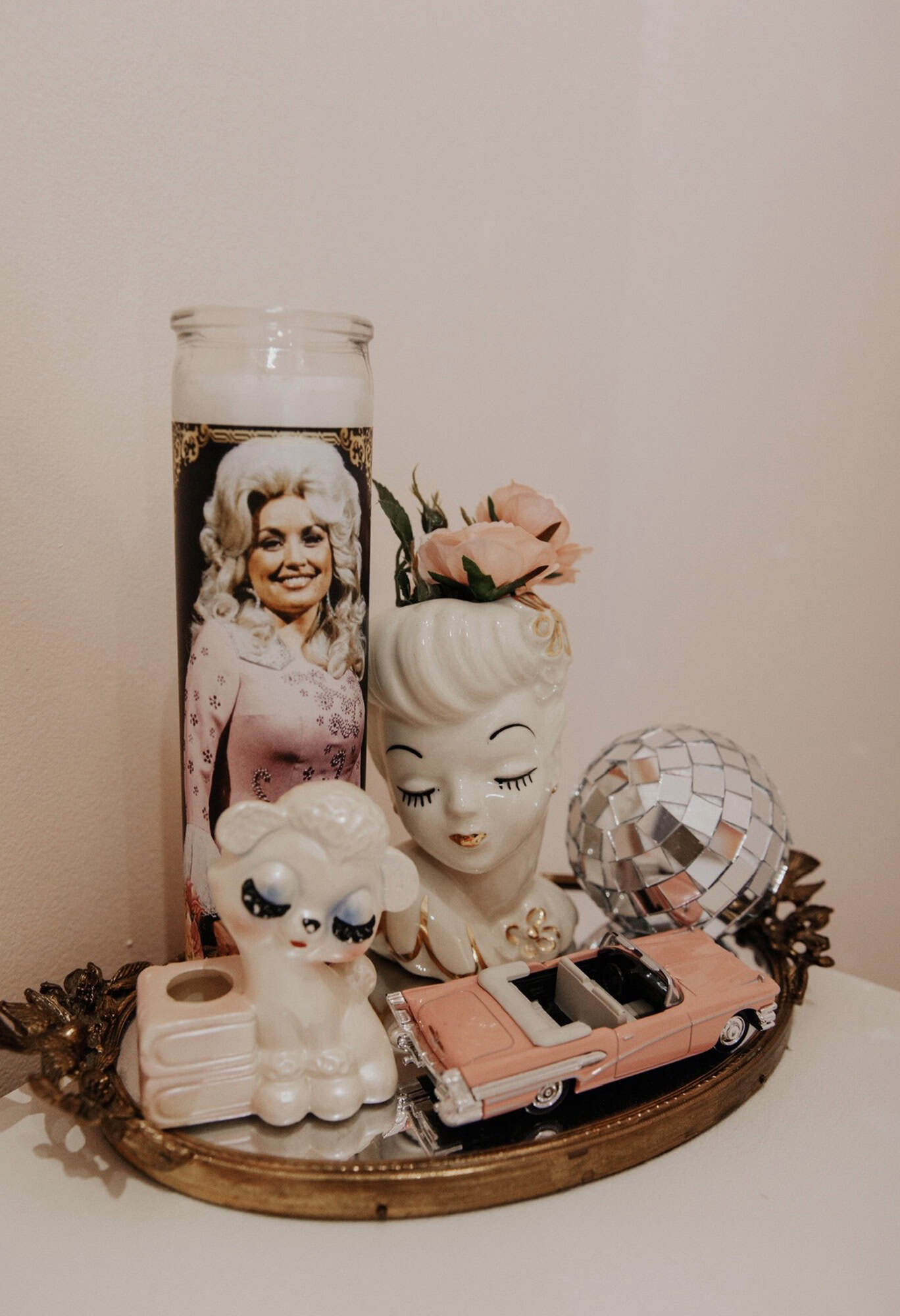
No expiration on sparkle
When Gage welcomes clients into her Midtown studio — a space where Parton records hang on the wall, a Parton candle lights the way, and “she’s looking down on us with her wisdom and magic while we’re in there” — Gage knows women are often feeling vulnerable, whether it be from being seen without makeup or skin issues with which they might be struggling.
“When someone trusts me enough to put their face in my hands, I don’t take that lightly,” she explained. “Something (Parton) said that has always stuck with me is, ‘I see something in every person I meet that reminds me of somebody I love.’ So when someone sits in my chair, I don’t want to find all the things we need to fix. I want to find all the things we can celebrate and turn the light toward.”
The country girl-turned-glamour icon embodied the idea that beauty and kindness can coexist, Gage said.
“I’ve had people sit in my chair and tell me afterward that they honestly thought I was going to be mean,” she continued. “And I always think, ‘Why did you assume those things couldn’t exist together?’”
“It’s this idea that if you’re glamorous, you’re intimidating. If you’re confident, you’re conceited. If you’re beautiful, you’re vain. If you’re powerful, you’re difficult. If you’re feminine, you’re frivolous.”
“That if a woman is visibly beautiful or glamorous, there must be something unkind underneath it,” she continued.
But Parton completely blew that framework apart, Gage noted. She was beautiful. She was glamorous. She was funny. She was smart. She was ambitious. She was larger than life.
And she was deeply kind.
“She never seemed to believe she had to sacrifice one part of herself to be another,” she explained. “She showed me that I can sparkle and still be soft. I can be powerful and still be kind. I can be completely visible without becoming hard.”
“There were times when I felt like the safest thing to do was make myself a little smaller,” Gage said. “And then I watched Dolly live her life and thought, maybe I don’t have to.”
Parton has also given her permission to feel good about getting older and still live in her full self, she said.
“She was proof that getting older didn’t mean becoming less relevant, less beautiful, less feminine, less ambitious, or less visible,” Gage noted. “She didn’t seem to believe femininity had an expiration date. And she certainly didn’t seem to believe women had to disappear as they got older.”
“You don’t have to stop dressing up,” she added. “You don’t have to stop wearing sparkles. You don’t have to stop wearing the bold lip. You don’t have to stop wearing lashes. You get to decide what makes you feel amazing at any age.”
Fund More Stories
This story was made possible by readers like you. Join them — make a one-time contribution or become a monthly member to sustain our work.