Privacy-first startup reimagines how cities, enterprises access real-world intelligence
July 2, 2026 | Nikki Overfelt Chifalu
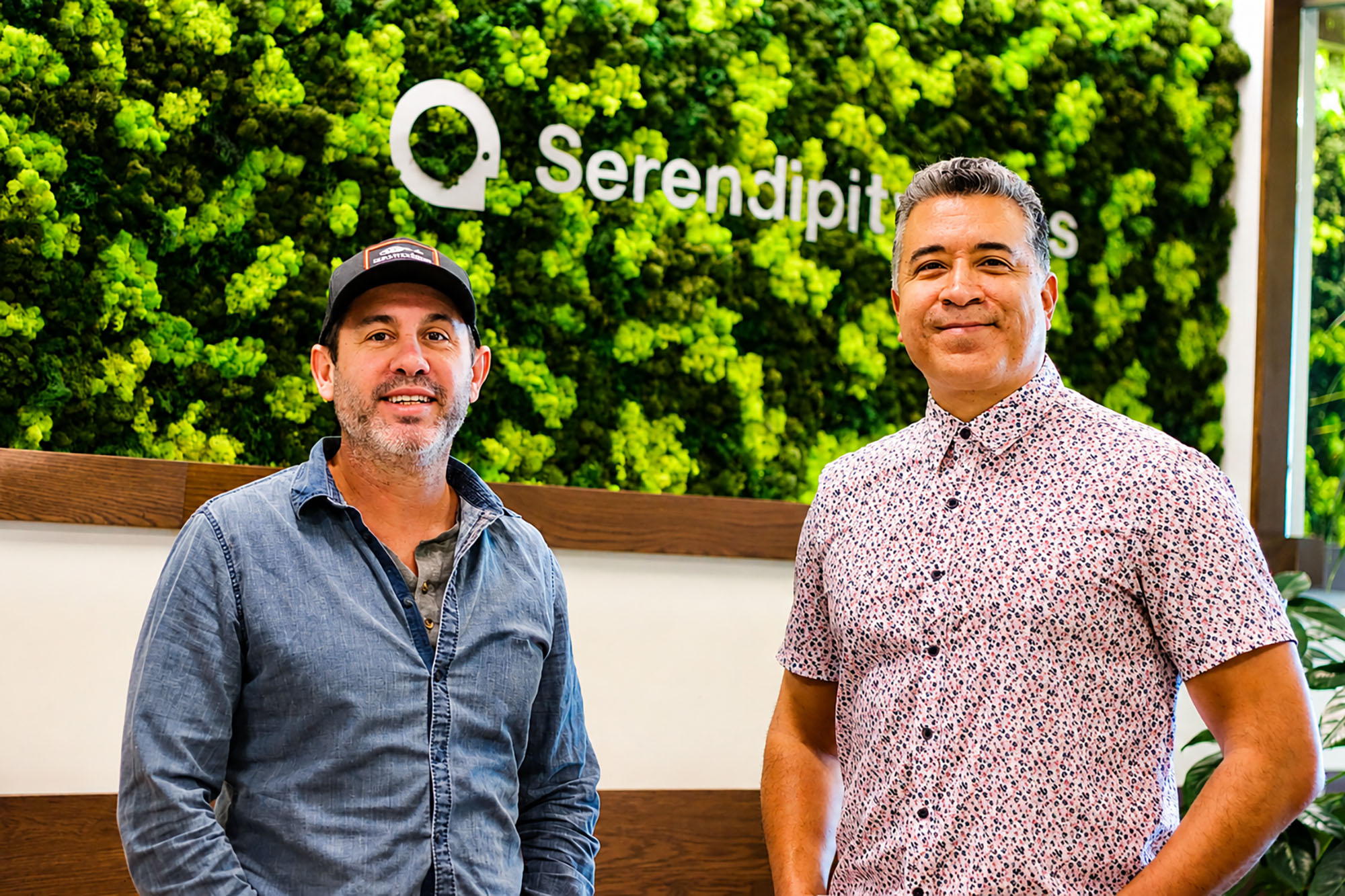
Brandon Richman and Miguel Jaramillo, Surge; photo by Nikki Overfelt Chifalu, Startland News
Life gets real — and real fast — at intersections in major cities, shared Miguel Jaramillo, co-founder and CEO of Surge Networks, an Overland Park-built startup that’s creating a real-time nervous system for the physical world, one stoplight at a time.
As AI moves beyond screens and into streets, buildings, and logistics networks, Surge is meeting such real-world demands by providing data delivered continuously and in real time to build an infrastructure layer that smart cities and autonomous systems actually need to function, continued Jaramillo, who co-founded the business in 2024 alongside CFO Brandon Richman.

“That’s where we’re headed with what we’re trying to build,” Richman explained, “giving something back to the city, the municipalities, the residents, the citizens by using the intelligence within infrastructure to make a city smarter and safer.”
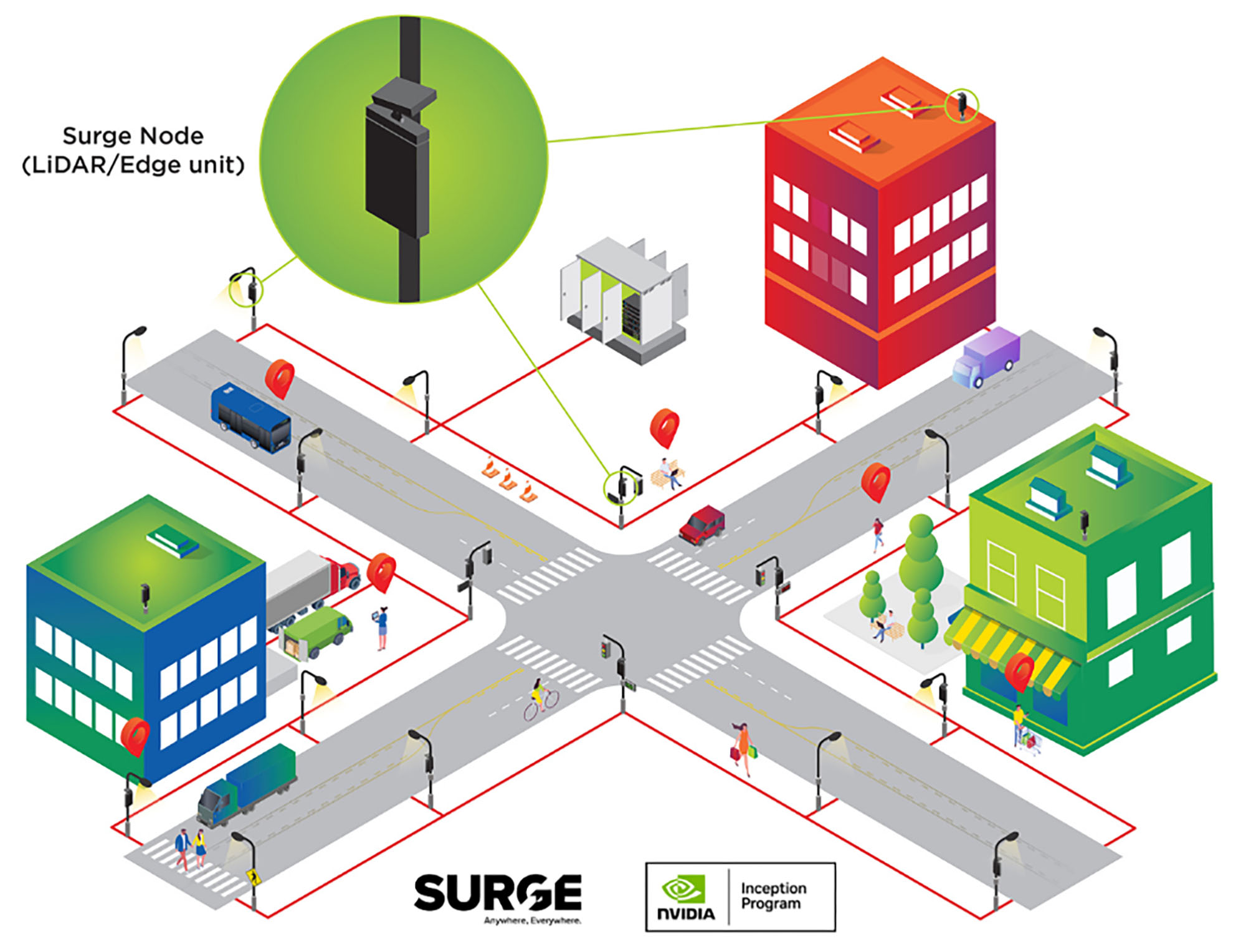
Surge installs small, powerful computing units — with sensors (including LiDAR), an NVIDIA-powered edge computer, and industrial-grade wireless networking — on streetlight poles at signalized intersections, said the co-founders, who are both Kansas City-area natives.
The technology is live in New Orleans and planned soon for Kansas City, Atlanta, and Raleigh, North Carolina. Surge’s units capture anonymized data about traffic, pedestrians, and environmental conditions, processing it locally in under 10 milliseconds, and feeding intelligence to AI systems, autonomous vehicles, transit agencies, and logistics networks.
“Then you can start taking software and start setting up zones,” Richman noted. “And you can say, ‘OK, well, this is how many people went through this intersection; this is how many near misses you had; this is the proximity of a car and a person or proximity of the cyclist and a car or truck, etc. Then you can start getting intelligence from those intersections to make them better, safer, smarter and start implementing real-world solutions on top of that.”
“We think of it as a trusted, privacy-first nervous system for the physical world,” Jarmillo added. “It helps create better information that benefits communities, infrastructure owners, and intelligent systems alike.”
Surge is a public benefit corporation — meaning the company is legally required to consider its impact on communities, not just shareholders, a fundamentally different approach to who profits from the AI economy — and its technology is privacy-first, they assure. It uses no facial recognition, no personal tracking, no individual identification.
“Our platform is privacy-first by design,” Jaramillo said. “We don’t collect facial recognition, personal identities, or personally identifiable information.”
After just two years, the startup has 70 locations planned for 2026 and a strategic deployment pipeline targeting 2,200+ locations through 2028, plus it’s a member of the NVIDIA Inception program and has strategic partnerships with CronAI, Blueband, and True North.
“We’re taking proven technologies, and in many cases, leveraging strategic partnerships within those industries to help comprise what we ultimately design and build in our nodes,” Jaramillo explained. “But we’re also agnostic. The whole point of what we’re building is to create a platform where we can stack as many different solutions on top of it that ultimately not only share the same value but the value of the specific communities.”
“Customers recognize that we’re building intelligence infrastructure, not surveillance infrastructure,” he added. “Our focus is creating privacy-first insights that help communities operate more safely and efficiently.”
While most of their focus is on placing nodes at public right-of-ways for clients like municipalities, geospatial companies, and retailers, Richman said they’ve also started to track private deployments for industries like logistics.
“There’s a lot of times where the forklifts are driving around and people aren’t paying attention,” he continued. “There’s a lot of safety stuff, and it can alert and it can predict. So we’re seeing a lot of avenues in the private space where there’s a lot of need for this in logistics or dredge or casinos, even. There’s a lot of avenues that we’re exploring there.”
Deep tech, deep expertise
Before launching Surge, both Jaramillo and Richman — who initially met in college — spent time at North Carolina-based Next Wave Partners, where Surge started to blossom, as well as Integrated Roadways, a Kansas City-based smart infrastructure company that transformed roads into sensor, data, and connectivity corridors for connected and autonomous vehicles.
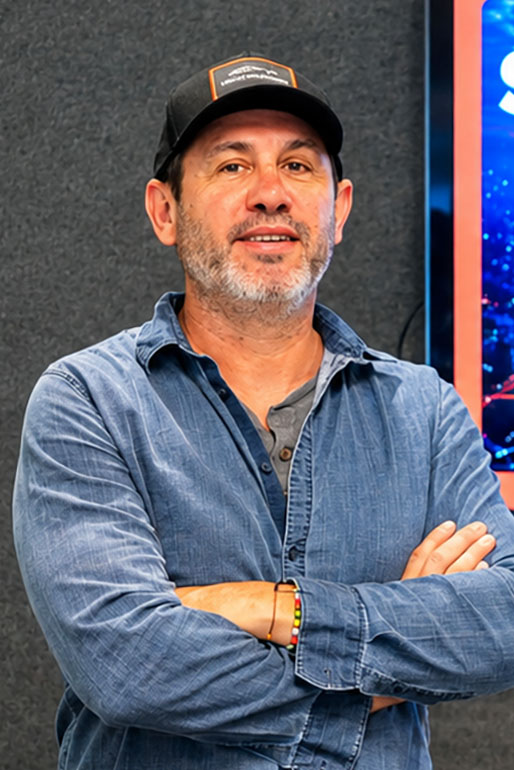
Brandon Richman, Surge
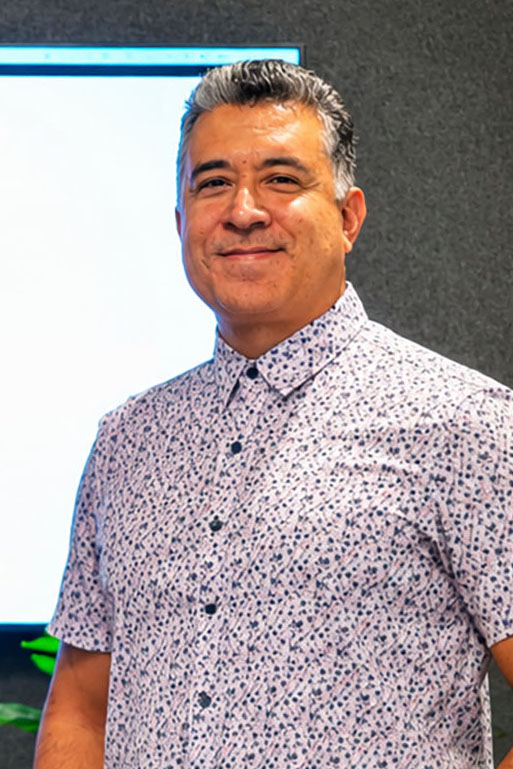
Miguel Jaramillo, Surge
For the past 20 years, Jaramillo has worked at the intersection of innovation, real estate, and infrastructure, he shared. He’s seen how challenging it is for emerging technology to be deployed both in a public and private space.
“Being involved in the Kansas City startup world, I’ve heard firsthand from stakeholders — whether they be cities, organizations, just everyday citizens — about the gaps that exist in the big infrastructure world,” continued Jaramillo, who was the director of business development at Integrated Roadways, managing partnerships with municipalities and state departments of transportation.
Richman spent more than a decade at Black & Veatch — the Overland Park-headquartered global engineering firm — in roles spanning energy economics, business development, and renewable project development, then served as director of renewable projects and sustainability at Diode Ventures (a B&V subsidiary) before joining Integrated Roadways as the vice president of project management.
“We’re like, ‘There’s a lot of great stuff here that could make cities smarter, safer, more intelligent, but could have a less expensive form factor,” he said of lessons learned at Integrated Roadways. “How do we take this out of the road to this next evolution and do all the stuff that we want to do?”
Even during his time at Black & Veatch, Richman was working on smart city initiatives as early as 2006, he noted, but that translated to projects like kiosks, ads, and wi-fi connections.
“To us, a smart city isn’t about kiosks or public Wi-Fi. ” he explained. “It’s about giving communities better information to improve safety, mobility, infrastructure, and everyday decision-making.”
With their backgrounds rooted in the infrastructure and telecom institutions that define the Kansas City region, Richman and Jaramillo shared, planting their flag here gives them an advantage.
“Given our history in this region — the telecom organizations, the engineering firms — Overland Park felt like a natural home for what we’re building,” Richman said.
Generating real-world value
Surge — recently approved as a qualifying business under the Kansas Angel Investor Tax Credit program — is currently raising capital through a Regulation CF community round on Wefunder.
“One of the reasons we did a reg CF campaign is to create a brand name and image and allow retail investors to own asset classes that historically have been away from them,” Richman explained. “When I was doing M&A (mergers and acquisitions) work for Black & Veatch and even later, there were always large-scale private equity firms like the Blackstones, the BlackRocks, the Brookfields, they’re the buyers. They’re the owners of infrastructure.”
The ultimate goal, they noted, is for the communities that generate the data to also share in the economic value by creating local LLCs for each municipality where they deploy their technology.
“Our long-term vision is to give local investors the opportunity to participate in the value created by the infrastructure in their own communities,” Richman continued. “That creates a more circular model where communities can share in the economic benefits of the data they help generate.”
“So it’s not only making their city smarter, but it also provides residual payments,” he added.
Fund More Stories
This story was made possible by readers like you. Join them — make a one-time contribution or become a monthly member to sustain our work.