No Recognition: Founder speeds up anti-surveillance tech in face of mass identity sweeps
June 4, 2026 | Taylor Wilmore
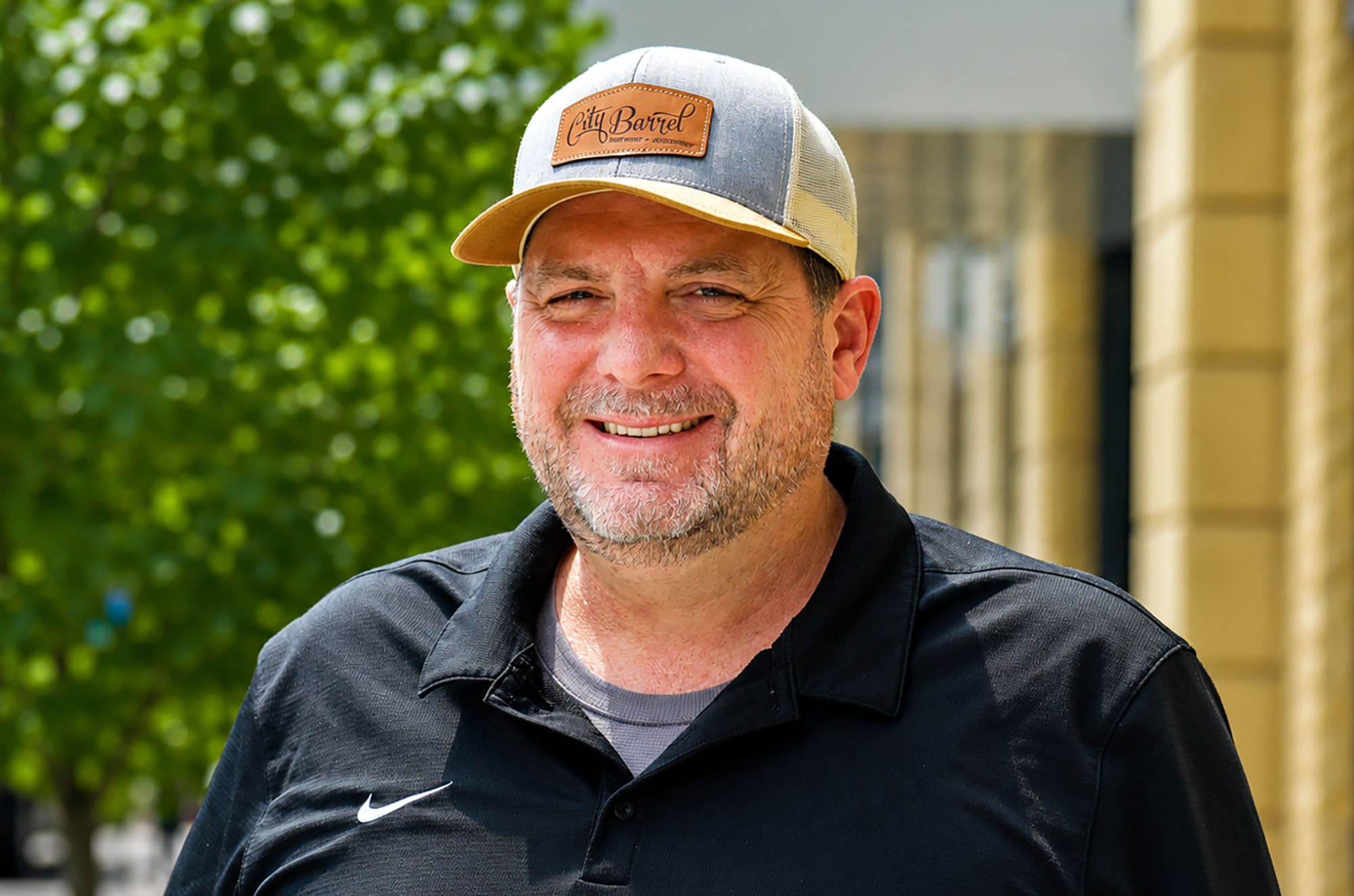
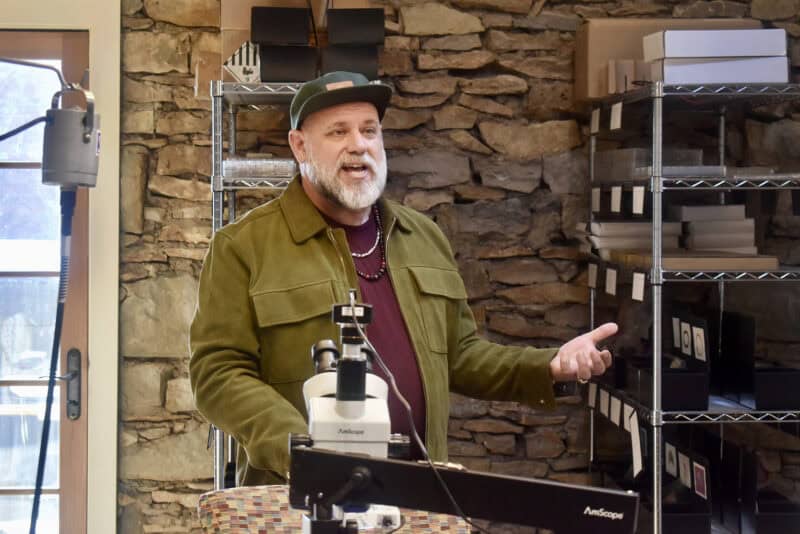
Bill Swearingen, SIXCYBER, No Recognition; photo by Taylor Wilmore, Startland News
Bill Swearingen thinks sharing your identity should come with an off switch. The Kansas City cybersecurity veteran and founder of SIXCYBER is building technology designed to interfere with one of artificial intelligence’s fastest-growing capabilities: surveillance.
Through his project, No Recognition, Swearingen is developing AI-generated clothing patterns meant to confuse systems used for person detection, face detection and facial recognition.
“I’m trying to give power back to the people,” he said.
A shirt, scarf or hoodie printed with one of his patterns could stop a camera from recognizing someone as a person or connecting them to a specific identity. Swearingen said the technology is already showing promising results in testing, and support from Digital Sandbox KC has dramatically sped up development.
The technology is not meant to make someone invisible, he emphasized.
“You’re still on video; you’re still recorded, but it doesn’t say, ‘Jim walked by at 11,’” he said.
A response to growing surveillance
The idea for No Recognition began about a year ago after Swearingen considered attending a protest rally.
He started thinking about what could happen if participation in protests or public events became easier to track through expanding networks of cameras and facial recognition systems.
“I just got a little bit nervous,” he said. “What happens if I go to a protest and it’s like, ‘Hey, here are the people that have attended these types of protests?’”
That concern pushed him deeper into research on surveillance technology and the role private companies increasingly play in collecting movement and identity data.
Swearingen pointed to companies like Flock Safety, Palantir and Clearview AI as examples of how surveillance systems are rapidly expanding.
“What I’m really trying to solve is, I think that there is a leap shift and overreach from the way that public and private companies work,” he said.
His concern is not necessarily with cameras themselves. Cameras can be useful if crimes happen, he said. What worries him is the identity tracking layered on top of them. Private surveillance systems often operate under different rules than government agencies, he noted.
“These are private companies that don’t have to really follow the same laws,” he said. “They can sell that data to whoever they want without any kind of warrant or anything like that.”
No Recognition, Swearingen said, is designed to create a middle ground. People would still appear on video, but systems may struggle to identify them or track their movements.
A veil of privacy
Behind No Recognition is a process that blends AI research with constant experimentation.
The platform tests generated clothing patterns against multiple surveillance models to identify which designs disrupt person detection or facial recognition systems.
The company describes the work as adversarial pattern research, with testing across 10 AI surveillance models and a goal of validating printed fabric against physical cameras. Swearingen said his system tests millions of possibilities.
He starts with baseline images of people wearing plain clothing, then swaps in generated patterns to measure how AI models respond.
“The only thing that’s changed is I’ve changed it from a green shirt to a pattern,” he said.
Sometimes the software still recognizes a person but loses the face. Other times, it misses the person entirely.
“Every second I’ll find a new one that defeats some person detector,” said Swearingen.
The patterns themselves have evolved over time. Early versions looked obvious, he said, making it clear something unusual was happening. Now, he is aiming for something far more subtle.
“What I want is, I want you to be wearing a scarf, and I’m sitting right next to you, and I have no idea that that’s anti-surveillance,” said Swearingen.
The ideal design, he explained, would look completely normal to other people while quietly disrupting surveillance systems in the background.
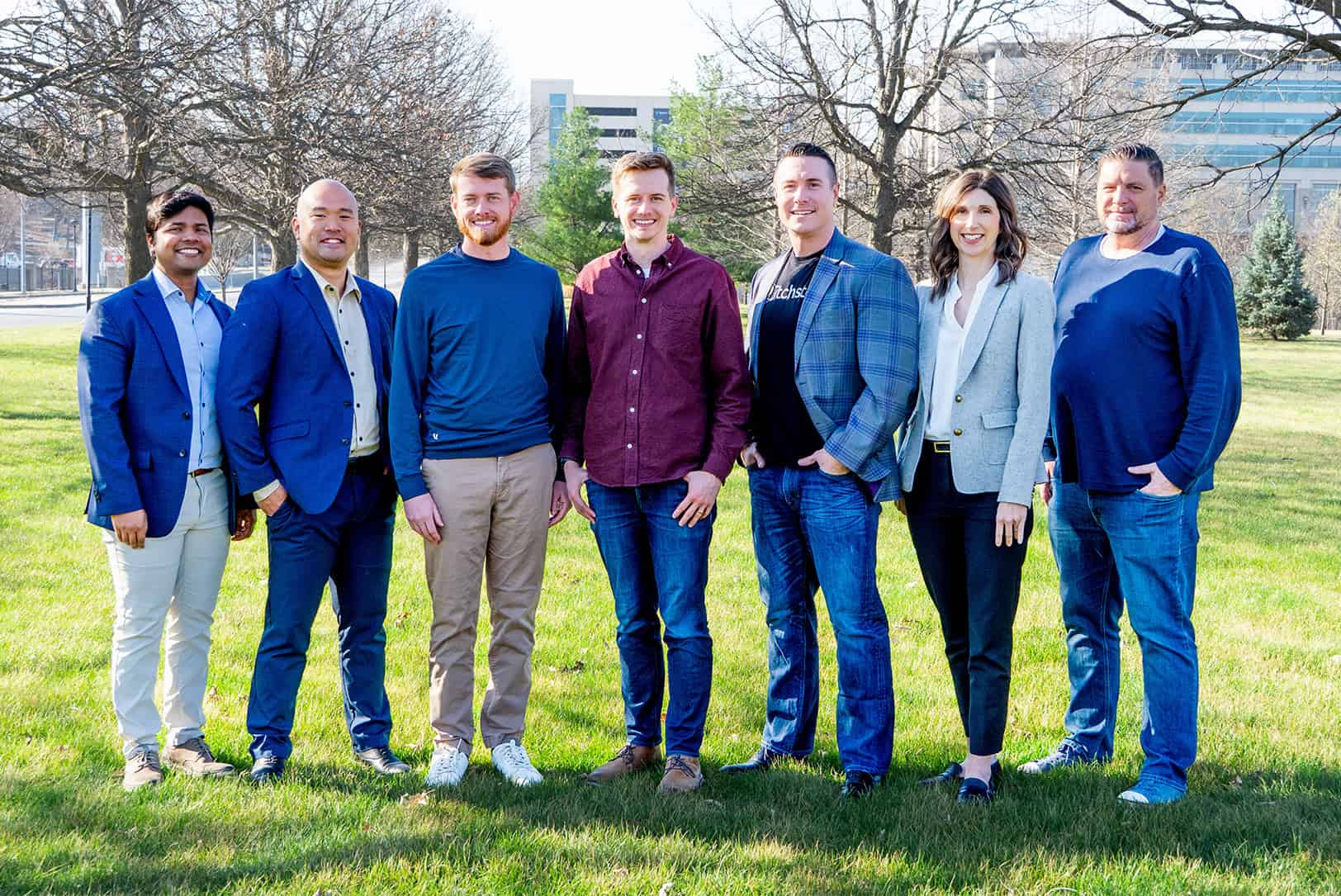
Digital Sandbox KC Q1 2026 awardees: Allwyn John Kancherla, WynPhos Systems; Phillip Ko, Rumio; Kyle Blackman and Brandon Blackman, Prefrd; Fielding Brenner, Pitchster; Sarah R. Cox, Aurexus Health; and Bill Swearingen, SixCyber; photo courtesy of UMKC Innovation Center
Digital Sandbox helped fast forward tech
No Recognition recently received a boost through Digital Sandbox KC, the regional proof-of-concept program that helps early-stage tech founders move ideas forward.
For Swearingen, the support helped solve one of his biggest obstacles: computing power.
“With the computer that I had in my house, it was going to take me about seven years to finish,” he said. “They built me the biggest computer, and took it down to three months.”
That additional computing power has allowed him to move toward real-world testing faster than expected.
Much of the work currently happens in simulations, but Swearingen hopes to soon test the patterns in front of actual cameras.
“Let’s wear this, let’s go in front of the camera and watch it disappear,” he said.
He also plans to submit the work to Black Hat and DEF CON, two major cybersecurity conferences in Las Vegas known for showcasing new hacking and security research.
Bigger questions around privacy
Swearingen sees No Recognition as part of a broader conversation around privacy, consent and bias in technology.
He pointed to research showing facial recognition systems can struggle more with darker skin tones, leading to higher rates of false identification.
“Just depending on studies, they are 10 to 100 times more likely to be falsely identified,” he said.
Because his system tests different ages, races and body types, Swearingen said he can see some of those differences appear in the results.
“You could be walking down the street and be identified as somebody that committed a crime, and it’s not you,” he said.
Swearingen said people often raise concerns about criminals using anti-surveillance technology, but he believes people already have ways to conceal their identities if they choose.
“They can already wear masks,” he said.
The final product could take many forms, from T-shirts and scarves to licensed patterns for apparel brands. For now, Swearingen said he is focused on proving the research before thinking too much about commercialization.
He hopes to continue testing and move toward real-world demonstrations by August.
“Quite honestly, I think that privacy is a fundamental right,” he said.
Fund More Stories
This story was made possible by readers like you. Join them — make a one-time contribution or become a monthly member to sustain our work.