Analysis: Stability helped KC’s tech workforce survive COVID better than most; it could be slowing growth today
June 4, 2026 | Haines Eason, Freelance Kansas

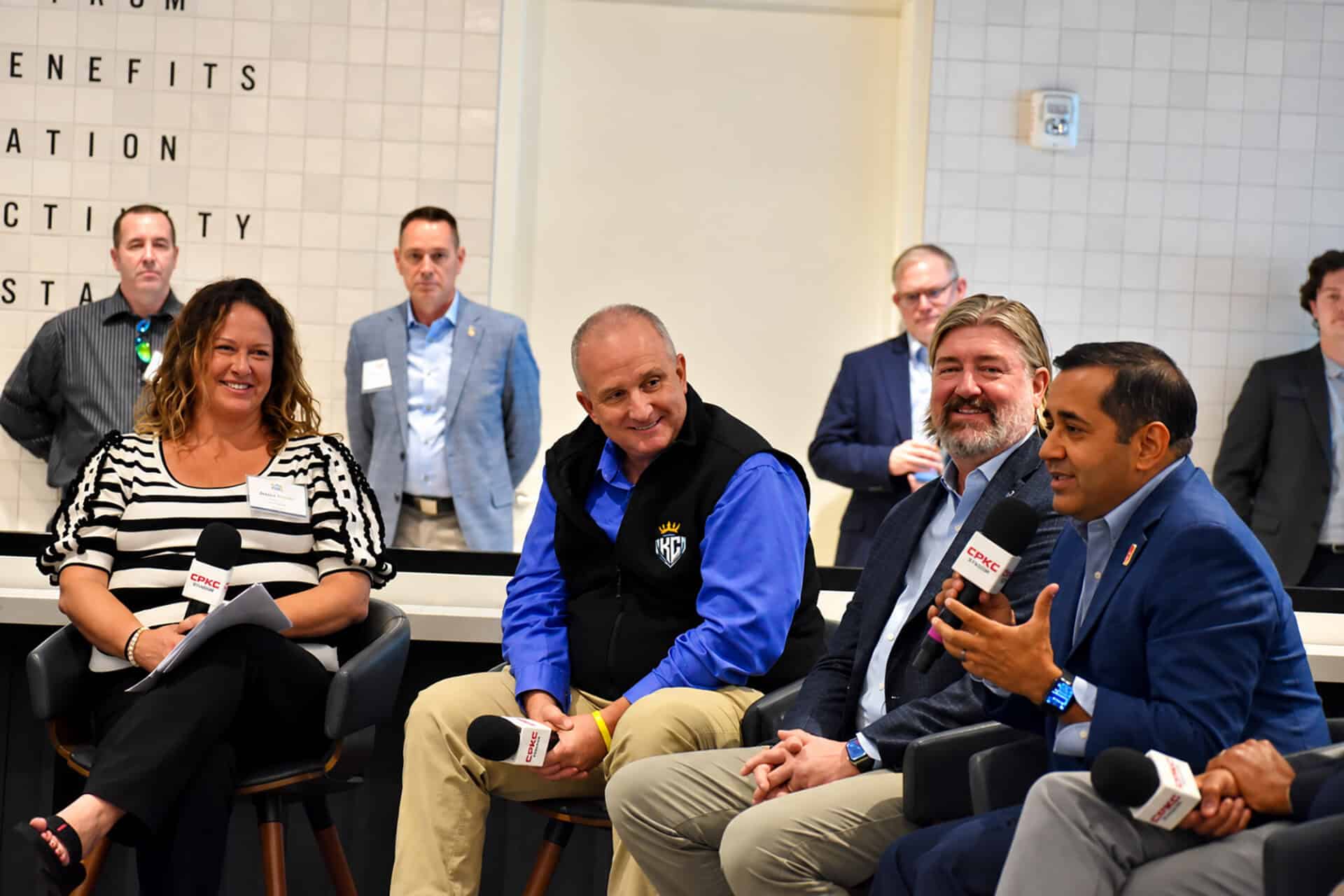
Neelima Parasker, founder of SnapIT Solutions, speaks in October 2024 at Avila University during a founder panel organized by Startland News; photo by Tommy Felts, Startland News
Editor’s Note: The following analysis of Kansas City’s tech community was produced in collaboration with Philadelphia-based Technical.ly, comparing trends in Kansas City and Pittsburgh, Pennsylvania.
Kansas City’s tech sector didn’t fall apart during the pandemic. If anything, it held steady — even grew — while larger coastal markets rode sharper boom-and-bust cycles.
In general, data shows the region avoided the kind of dramatic contraction that defined parts of the national tech economy.
But stability can hide threats, analysts told Startland News, pointing to trends that impact Kansas City and beyond.
On the east coast, Pittsburgh, for example, has drawn more national attention for robotics, AI and university-led research, but it faces a similar question of whether those strengths are turning into enough local companies, jobs and career paths.
Kansas City and Pittsburgh have built different kinds of tech economies. Both are still working out whether those economies can keep reproducing opportunity over time.
Beneath the surface, a more complex story with serious stakes has been simmering since the pandemic. Kansas City’s tech scene survived — and even rebounded — but the crisis and new technologies have driven changes that may shape the sector’s long-term health.
A reset — not a collapse
From a data standpoint, Kansas City looks relatively healthy.

Jeremy Hill, Federal Reserve Bank of Kansas City
Jeremy Hill, an economist with the Federal Reserve Bank of Kansas City, describes the region’s trajectory as more measured than dramatic — particularly compared with national swings.
“The U.S. has grown faster in the technology workforce than both Kansas City and Pittsburgh,” Hill said, noting that while the region remains competitive, it hasn’t accelerated at the same pace.
Kansas City still maintains a higher-than-average concentration of tech workers — about 1.1 times the national average, according to Hill’s analysis — and saw meaningful gains in 2022 and 2023.
But beneath that stability, the adjustment was real.
Workers, Hill explains, often absorbed it directly — taking pay cuts or accepting less favorable roles while waiting for the market to rebound.
“It might be a 10% haircut,” he says, describing how some workers adjusted their expectations in the short term.
That response reflects a broader assumption that the market would eventually return to its pre-pandemic shape; higher salaries and more abundant opportunities would come back with time.
So far, those expectations haven’t fully materialized.
The post-COVID period also coincided with a major shift in one of the region’s cornerstone tech employers.
Cerner’s acquisition by Oracle in 2022 reshaped a significant portion of Kansas City’s tech workforce, introducing uncertainty and movement at a scale the region hadn’t seen in years.
Hill notes that disruptions at large firms can ripple through local labor markets — redistributing talent, altering expectations and reinforcing the kind of “wait-and-see” dynamic that defined the post-pandemic period.
In practice, many of those workers didn’t remain on the sidelines for long.
Much of that talent was absorbed by other employers across the region — including both large, established companies and smaller, growing firms.
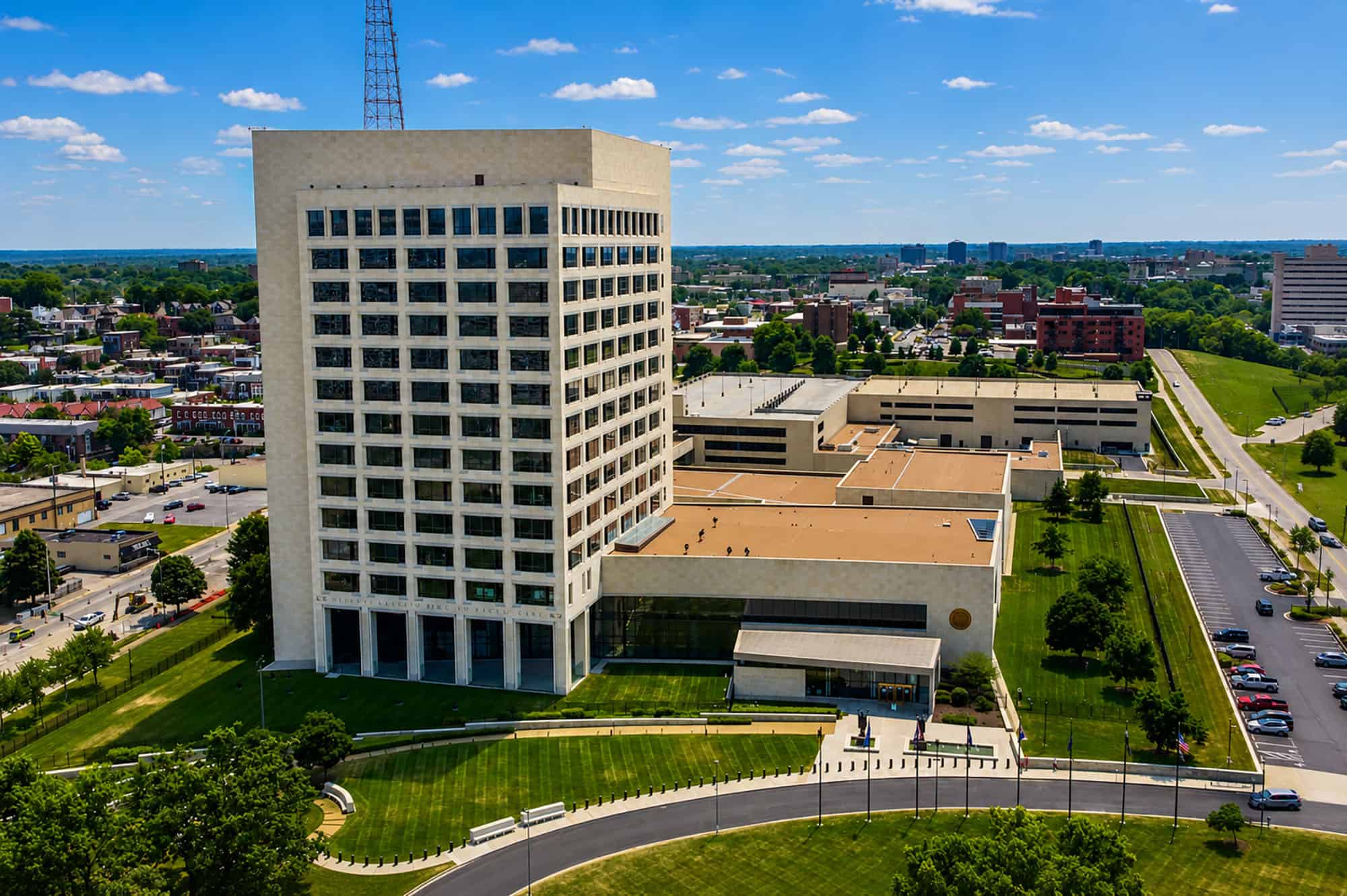
Federal Reserve Bank of Kansas City; courtesy photo
Hill points to firms like Garmin, Accenture, Deloitte, TEKsystems and T-Mobile as among those actively hiring and “soaking up” available talent in the market.
At the same time, smaller firms — including emerging healthcare tech startups connected to the Cerner ecosystem — have also begun to draw from that pool, even if at a smaller scale.
In Kansas City, the strain came into view through one dominant employer and the labor-market churn around it. Pittsburgh’s version is easier to miss because its ecosystem is spread across universities, startups, robotics companies and public-sector initiatives.
But the underlying issue is similar: how much of a region’s tech strength reaches the broader labor market, and how much remains concentrated in a narrower set of firms and institutions.
That redistribution hasn’t translated into broad wage declines. Instead, the adjustment has been more uneven — with some workers accepting lower compensation or less ideal roles, even as overall wage data remains relatively stable.
Stability isn’t the same as progress
A market can appear stable while still losing ground — especially if peer regions are growing faster or evolving more quickly, Hill said.
His data shows that dynamic taking shape. The national tech workforce has outpaced Kansas City in recent years, even as the local ecosystem remained intact.
At the same time, some of the structural shifts triggered by the pandemic — particularly around remote work — are beginning to normalize.
From an industry vantage point, those changes look less like disruption and more like a market settling into a new equilibrium.

Kara Lowe, KC Tech Council
“The share of fully remote job postings… peaked in the couple years following 2020 and has ticked back downward,” said Kara Lowe, president and CEO of the KC Tech Council, pointing to a renewed emphasis on local hiring or relocation.
That shift signals more than a return to office — it reflects a broader recalibration in how companies think about talent, geography and risk.
In the immediate aftermath of COVID, companies expanded their search radius and competed more aggressively for workers, often prioritizing speed over selectivity.
As those pressures have eased, Lowe’s observation suggests a tightening — not just in where companies hire, but in how they hire.
Kansas City also moved through that reset inside a hiring market that changed well beyond the region. By 2024, entry-level software hiring had tightened amid layoffs, fewer junior openings and remote recruiting that widened the pool of applicants.
Kansas City isn’t experiencing a dramatic rebound because it never experienced a dramatic drop.
But that also means it hasn’t been forced to change as quickly.
That distinction looks sharper in comparison with Pittsburgh.
The city has real weight in robotics, AI and advanced manufacturing. But even there, the question is whether strong institutions and high-profile sectors are producing broad local growth.

Kevin Grawe, Centriq; courtesy photo
Where the system starts to break
For training providers and employers working closest to the labor market, the issue isn’t whether Kansas City has talent.
It’s whether that talent is moving through the system.
From his vantage point leading Centriq, a Kansas City-based tech training provider, Kevin Grawe has watched demand shift sharply over the past few years — especially at the entry level.
“We saw a big boom from 2020 through about 2023,” Grawe said. “Then things got much more competitive.”
The most visible impact has been at the entry level, where software development roles — once a clear on-ramp into the industry — have tightened significantly.
At one point, the shift became so pronounced that Centriq stopped offering its full-stack development program altogether.
“It wasn’t that the talent wasn’t there,” Grawe said. “It was that the market wasn’t absorbing it the same way.”
The shift hasn’t been uniform across tech roles. Centriq’s IT and infrastructure-focused programs — including network administration and cybersecurity — have remained more stable, reflecting continued demand in those areas even as entry-level software development roles tighten.
Instead, employers have begun recalibrating what qualifies as “entry-level.”
“They’re trying to redefine what an entry-level is,” he said.
That shift is subtle — but consequential.
Employers aren’t necessarily hiring fewer people overall. But they are asking more of the people they do hire — increasingly favoring candidates who can step in and contribute immediately, with less need for training or onboarding.
That reduces risk for employers, but it also narrows the pathway for new entrants — particularly in roles that once depended on on-the-job development.
Kansas City’s bottleneck is fairly direct: employers want more experience, while the path to get that experience has narrowed.
Pittsburgh shows a version of the same problem in a less obvious form. It has a denser network of research institutions, startup programs and tech community infrastructure than many peer cities. That does not necessarily answer the question of how new workers land their first role, build experience and stay in the region as companies grow.
Grawe notes that pressure from the top is playing a role in that shift.
As companies face tighter expectations from investors and leadership, the tolerance for bringing on less-experienced talent — and investing time to develop it — has declined.
The result is a growing disconnect: experienced workers continue to find opportunities, while newer entrants face a narrower and more competitive path into the industry — one that, in some cases, might no longer exist in the same form.
The pipeline is slowing — and splitting
That pressure at the entry level has downstream effects.
If fewer people can get in, fewer people can move up.
And over time, that creates gaps in the middle of the workforce — the experienced, mid-level talent companies rely on most.
Grawe sees that tension clearly.
“There’s still demand at the mid- and senior-level,” he said. “But getting people into those first roles — that’s the challenge right now.”

Neelima Parasker, SnapIT Solution
Neelima Parasker, founder and CEO of SnapIT Solutions, sees a similar dynamic from a different angle.
“We can generate enough software engineers?” she said. “We’re just not giving them the opportunity to use those skills on the job.”
In her view, the issue isn’t a lack of talent — it’s a disconnect between talent and opportunity.
“There’s a hole in the middle,” Parasker said. “You have senior talent that’s settled, and you have emerging talent trying to break in — but not enough opportunity connecting the two.”
But the pipeline isn’t just thinning — it’s uneven.
Parasker describes a workforce that’s splitting in different directions: experienced software developers who remain in demand, alongside a growing pool of infrastructure- or network-oriented talent that doesn’t always align with what companies need most.
That disconnect is showing up in how Kansas City is growing.
The region continues to attract large-scale tech infrastructure projects — particularly data centers — drawn by available land, geographic centrality and energy capacity.
But those projects don’t require the same kind of workforce the region is producing.
Many of the roles tied to that growth align more closely with IT support and infrastructure — the kinds of pathways Centriq continues to fill — rather than the software development roles where entry-level candidates are struggling to break in.
The result is a mismatch: a pipeline that’s still producing talent, a market that’s still growing — and a system that isn’t fully connecting the two.
Pittsburgh offers a useful contrast. It is built more around research strength, robotics, advanced manufacturing and a handful of major institutions. But that model has its own limit: the difficulty of turning technical leadership into broader local scale.
In Kansas City, the gap shows up between training and software opportunities. In Pittsburgh, it’s seen between elite capability and wider diffusion.
Parasker views this moment as pivotal — not just for Kansas City, but for the broader U.S. tech economy.
How regions respond to such misalignment, she suggests, will shape whether today’s workforce gaps become long-term constraints.
Companies haven’t fully changed — it’s the market
Part of the disconnect, Parasker argues, comes down to how companies make decisions.
“Companies are still operating inside the same playground they’ve always known,” she said. “They’re not looking beyond it.”
That can show up in hiring practices, technology choices or simply a reluctance to invest in developing new talent.
At the same time, the rise of artificial intelligence is reshaping expectations — though not always in the way people assume.
“If I can use AI to compensate, then I will hire more junior people,” Parasker said. “I can teach everything else.”
In Pittsburgh, where AI has become a larger part of the region’s identity, a related question is taking shape: whether the technology will push employers toward candidates who already have strong resumes, or give them more room to train people earlier in their careers.
Kansas City might end up answering that question through hiring practice before it answers it through branding.
Rather than eliminating roles, Parasker sees AI as a tool that could expand access — if employers are willing to rethink how they build teams.
So far, that shift hasn’t been balanced.
Kansas City is stable. The system isn’t.
Taken together, the picture is more complicated than Kansas City’s relative stability might suggest.
The region still has employers, talent and a record of avoiding the sharpest swings of the national tech market. What is less clear is whether the links between those pieces are still working as well as they once did.
Pittsburgh helps sharpen that point. It leans into strengths in robotics, AI and university research, yet it still faces the question of how much of that strength turns into broad local growth. Kansas City’s challenge is more straightforward: whether a market that held up through the pandemic can still create enough openings for people trying to get in and move up.
The risk is not a sudden collapse. It is a slower weakening of the routes people use to enter the industry, gain experience and build careers in it. Kansas City did not lose its tech sector after COVID. The harder question now is whether stability is enough.
Signals point to a region that has avoided the worst of the tech sector’s volatility — but now faces a quieter, more structural challenge.
Kansas City has talent. It has employers. It has a track record of steady growth. What’s less clear is whether the systems connecting those pieces are keeping up.
The risk isn’t immediate collapse. It’s something slower. A workforce that looks stable on paper — but struggles to regenerate itself over time.
Kansas City didn’t lose its tech workforce after COVID. But beneath that stability, the system that builds that workforce is starting to strain.
What comes next will depend on whether the region adapts — or continues to operate inside a system that no longer fits the market it’s in.
Katie Malone — who edits for Technical.ly‘s Philadelphia, Pittsburgh and Maryland markets, and oversees the publication’s national coverage and commentary — contributed to this report.
Fund More Stories
This story was made possible by readers like you. Join them — make a one-time contribution or become a monthly member to sustain our work.