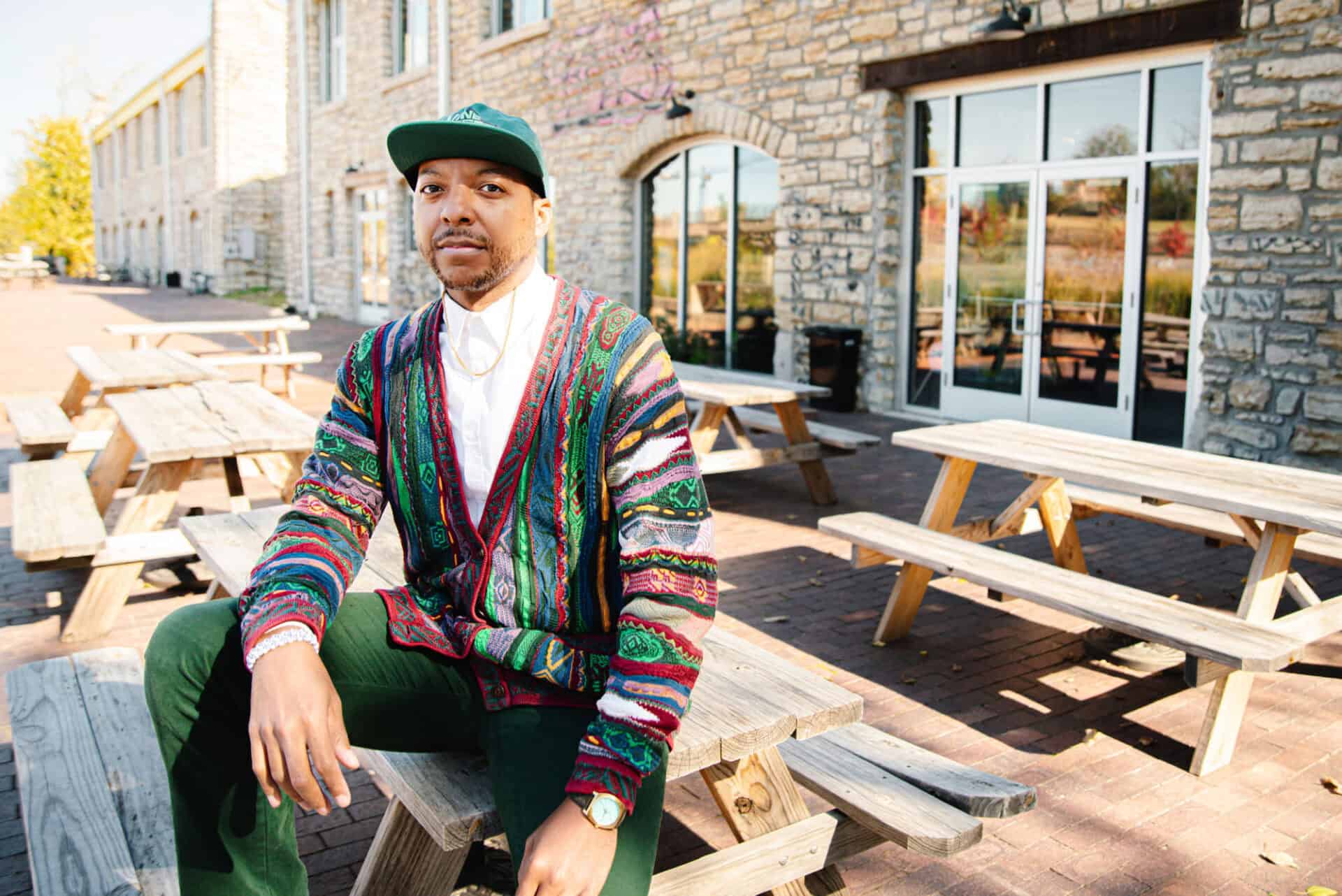
Rep Urs: City of Entrepreneurs reframes KC hustle as open door to community-backed culture of wealth
April 15, 2026 | Taylor Wilmore
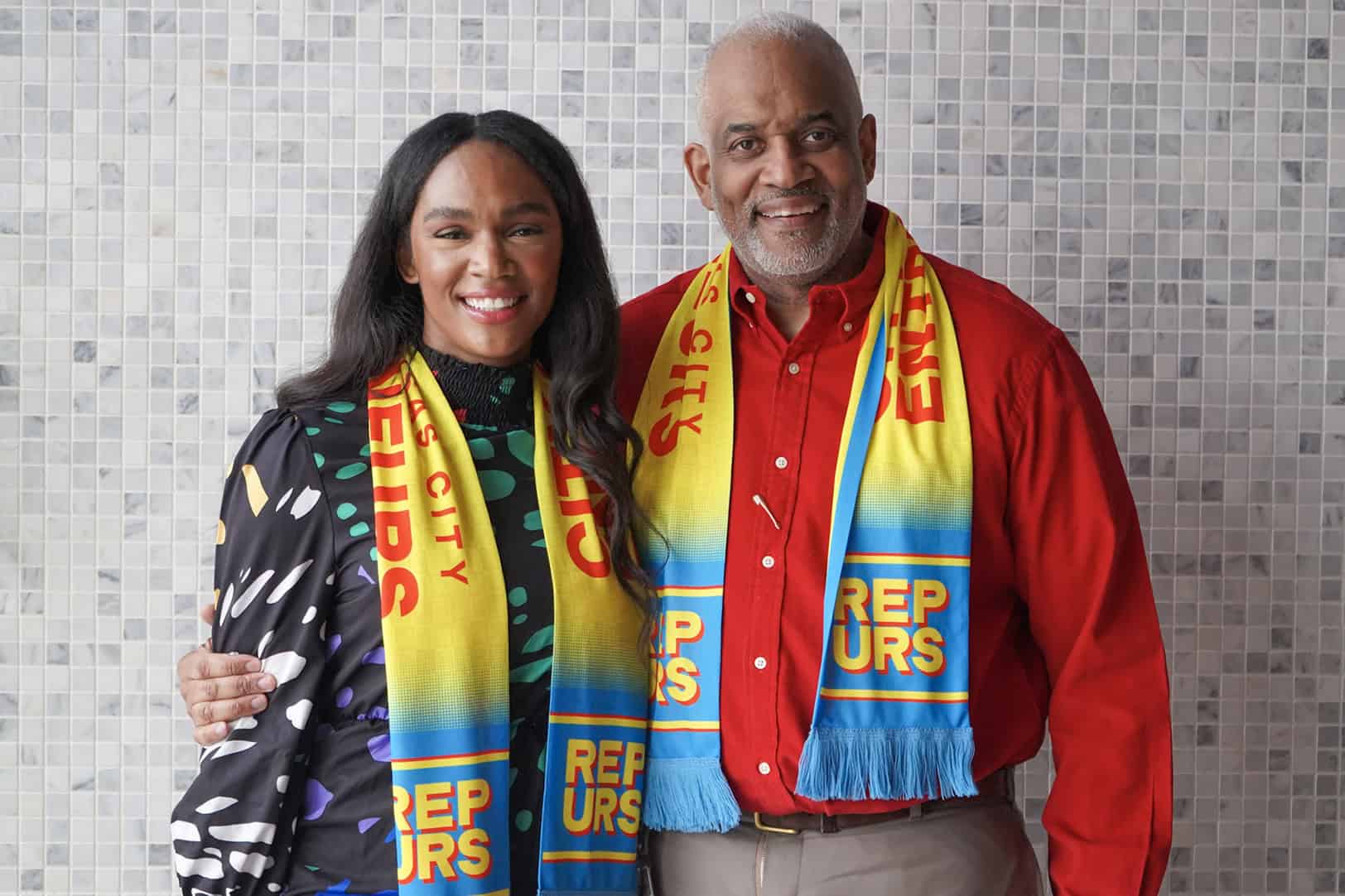
Racquel Rodriguez, founder of El Café Cubano, and Tracey Lewis, president and CEO of the Economic Development Corporation of Kansas City (EDCKC); photo by Brian Escobar, EDCKC
Kansas City’s entrepreneurial engine is getting louder and easier to see, said Nia Webster.

Across policy rooms, storefronts, and public spaces, leaders are working to define the city not just as affordable or accessible, but as a place built by entrepreneurs, she explained. What has long existed in pockets across neighborhoods is now being brought together, shaped into strategy, and pushed forward with intention.
Such visibility is part of what stands out to local leaders like Webster, assistant director of the neighborhood services department for the city of Kansas City, Missouri.
“That’s what makes Kansas City unique. You can actually see and feel the entrepreneurs in the community,” she said.
At the center of that effort is City of Entrepreneurs (COE), a citywide framework designed to remove barriers and connect resources to help businesses start and grow. The initiative includes activation events and programs like Open Doors!, which provide space, testing opportunities, and support for long-term stability.
And alongside the work is a growing call to action: Rep Urs.
The rallying cry encourages founders to represent their businesses, their neighborhoods, and Kansas City in a way that is visible and connected.
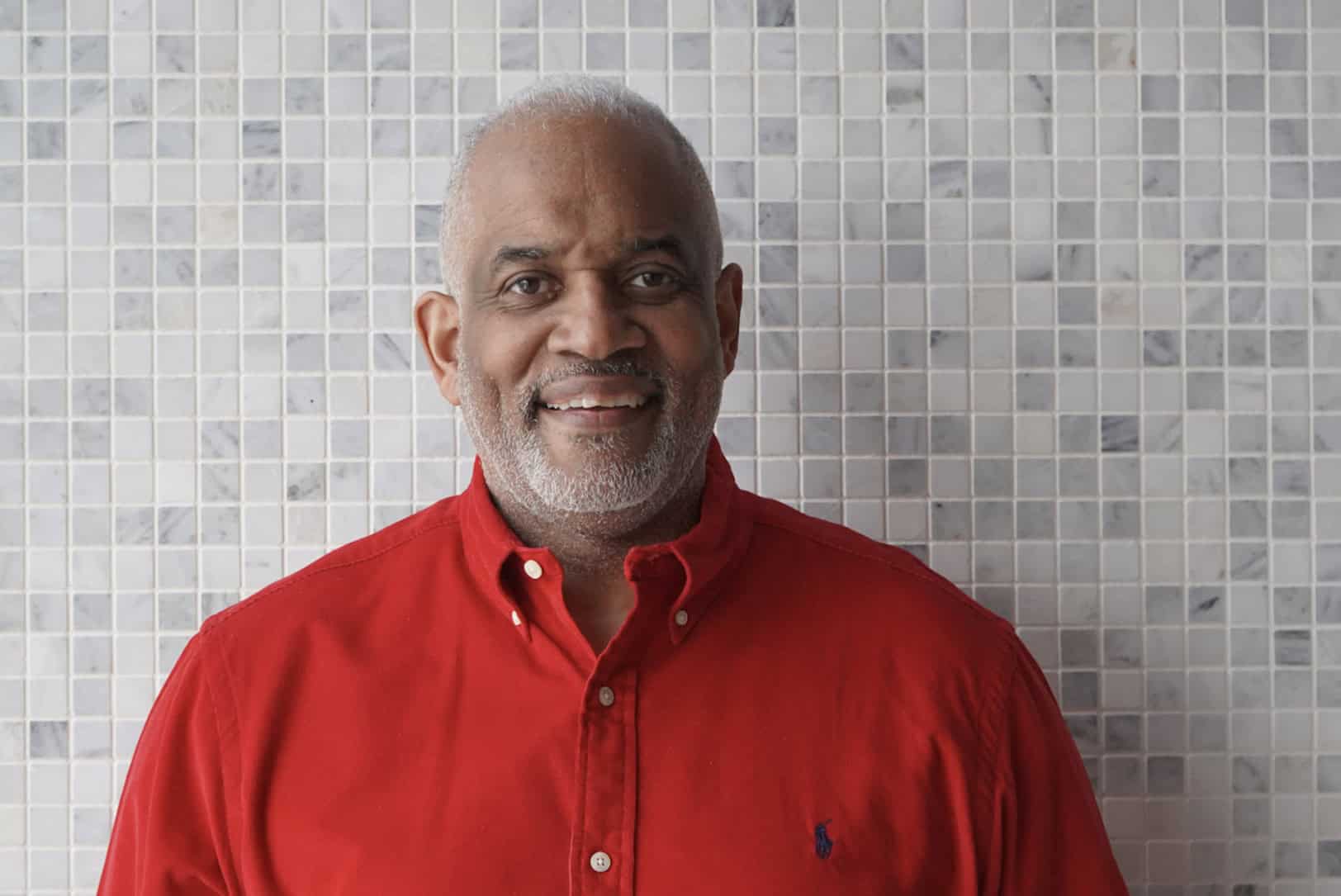
Tracey Lewis, president and CEO of the Economic Development Corporation of Kansas City (EDCKC); photo by Brian Escobar, EDCKC
The idea is less about creating something new and more about organizing what already exists, said Tracey Lewis, president and CEO of the Economic Development Corporation of Kansas City (EDCKC).
“This is an entrepreneurial city. It already was,” he said, pointing to a culture that long predated the entrepreneur-specific branding but lacked coordination.
The number of people building specifically at the neighborhood level helps make Kansas City even more competitive, Lewis emphasized, noting that decentralized energy is now being treated as a strategic advantage, with the EDCKC working to better align efforts across the ecosystem.
“We are that strategic anchor to help direct that and make it easier for entrepreneurs to do business in Kansas City,” said Lewis.
The shift reflects a broader change in how the city approaches economic development, placing entrepreneurship at the center of its strategy.
“We don’t block hope. We don’t impede hope,” Lewis added. “People show up with ideas and curiosity, and that curiosity turns into a dream. The question is how we support that so it becomes sustainable.”
Editor’s note: EDCKC and the KC BizCare Office are financial supporters of Startland News.
Defining the work behind the words
City of Entrepreneurs is not a single program, but a framework connecting efforts across policy, capital access, and physical space, all aimed at making entrepreneurship easier to navigate and more likely to succeed.
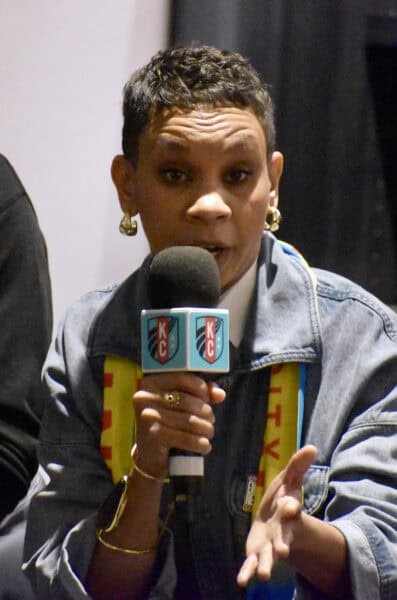
Nia Webster, assistant director of the neighborhood services department for the city of Kansas City, Missouri, shares insights from the city’s City of Entrepreneurs initiatives during a panel on World Cup readiness; photo by Nikki Overfelt Chifalu, Startland News
For Webster, measuring success starts with understanding who and how many business owners the city is actually supporting.
“If I can look up how many entrepreneurs we have per capita, that tells me whether we’ve actually created a city of entrepreneurs,” she said.
But scale alone is not enough. The focus, she emphasized, is on whether founders can build sustainable lives and businesses in Kansas City.
“Are they thriving here? Can they live here, operate here, and hire here? Are there resources here for them?” said Webster.
Those questions are shaping how City of Entrepreneurs is implemented, with an emphasis on both visibility and long-term viability. The framework is also meant to unify efforts that have historically operated in silos.
“Anything you see us doing from a city or EDC perspective connects back to this work,” she said.
Even so, coordination remains a work in progress.
“Right now, we are very siloed, and many of us are trying to figure out how to work together more effectively,” said Webster.
Still, signs of progress are becoming more visible, from stronger infrastructure to better data tracking and more intentional collaboration.
With global attention expected around major events like the World Cup, Webster sees a window of opportunity to highlight what already exists.
“This is the moment to do it,” she said. “We have an opportunity to show what already exists.”
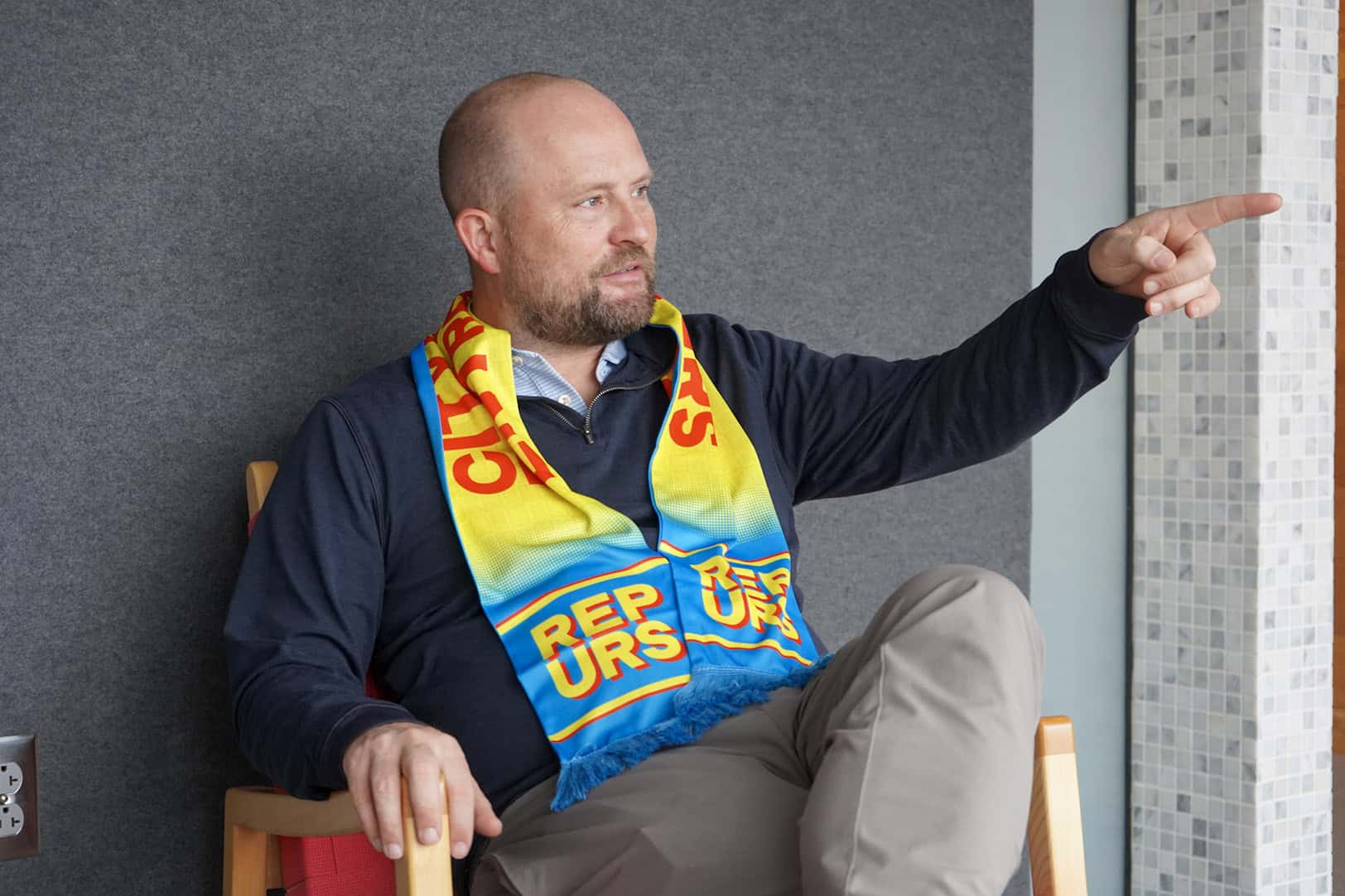
Wes Rogers, chair of the Small Business Task Force for Kansas City, Missouri, speaks during an interview about City of Entrepreneurs; photo by Brian Escobar, EDCKC
Policy, population, and the push to compete
Inside City Hall, City of Entrepreneurs is being framed as a long-term growth strategy that goes beyond business creation.
For Wes Rogers, 2nd District councilman for Kansas City, Missouri, and chair of the city’s Small Business Task Force, entrepreneurship is closely tied to population growth and overall economic sustainability.
“We need more people living here and working here,” he said, noting small businesses play a critical role in that equation, often scaling from small teams into larger employers.
“A lot of these two-person shops turn into 20- and 30-employee businesses, and that adds up quickly,” said Rogers.
But growth depends on the surrounding environment, including active neighborhoods that can support local businesses, he said.
“You can’t sell pizza if nobody lives there,” Rogers added, emphasizing that Kansas City is also competing more aggressively with peer cities for both residents and talent.
“It’s a dogfight to attract people. We have to tell our story better,” he said.
Turning access into opportunity
Programs like Open Doors! are among the ways City of Entrepreneurs turns strategy into action, helping lower barriers that often prevent founders from getting started.
“Open Doors is about activating everything we are doing around entrepreneurship,” said Webster.
Access to space remains one of the biggest challenges for early-stage businesses, she explained. Through Open Doors, the city helps address that gap and gives founders a chance to test and refine their concepts.
“We subsidize leases so businesses can test their concept and get established,” Webster said.
The model is already showing results, with some participants transitioning into long-term leases after their initial support period.
The approach is also being applied to high-visibility opportunities tied to major events. Activation sites for small businesses connected to the World Cup will be hosted at Union Station from June 11 to July 12, giving local entrepreneurs exposure to a global audience.
RELATED: Small biz marketplace planned for high-traffic Union Station hub during World Cup games
For Webster, those moments are about more than visibility. They are about inclusion.
“This is about making entrepreneurship visible,” she said. “Showing what a city of entrepreneurs actually looks like.”
ICYMI: KC’s readiness is a team sport: Why cashing in requires World Cup collaboration

Racquel Rodriguez, founder of El Café Cubano; photo by Brian Escobar, EDCKC
A business, a culture, and a set of keys
For founder Racquel Rodriguez, that pipeline is already taking shape. Her business, El Café Cubano, is preparing to open inside City Hall through the Open Doors! program, marking a shift from temporary setups to a permanent location.
“We just needed the opportunity to execute,” said Rodriguez. “We’re not just giving tents anymore. We’re giving keys to actual buildings.”
Her concept is deeply personal, shaped by time spent in Cuba with her family and a desire to recreate both the quality of Cuban coffee and the cultural connection she experienced there.
“That small cup of coffee made me feel full,” she said. “It wasn’t just about the drink. There wasn’t anything here that made me feel like that, so I wanted to create it.”
RELATED: El Café Cubano brews rich simplicity inspired by ancestors’ appetite for the American dream
With a permanent spot secured, Rodriguez is focused on maintaining that experience while growing her business.
“Having a space in the heart of Kansas City allows me to keep preserving that culture,” she said.
She also sees trust as a key part of the equation for founders navigating programs like Open Doors!
“You have to trust the founders. Trust us to execute when we’re given the opportunity,” said Rodriguez.
From movement to momentum
City of Entrepreneurs is still evolving, but its direction is becoming more clear. The goal is not just to support individual businesses, but to build a system where entrepreneurship is a visible and viable path for more people in Kansas City.
“If this works, we will see a stronger ecosystem, fewer businesses will close, and more people will be able to build something that lasts,” said Webster.
That shift would bring both economic and cultural change, opening the door for more residents to see entrepreneurship as a sustainable career path.
“I hope to see more people choosing entrepreneurship and being able to support their households through it,” she said.
As City of Entrepreneurs continues to take shape, that vision is becoming more visible across the city, from storefronts to public spaces to the way founders talk about their work.
“I would love to get to a point where people are making money here because they are entrepreneurs, and we have the ecosystem to support them,” said Webster.
Fund More Stories
This story was made possible by readers like you. Join them — make a one-time contribution or become a monthly member to sustain our work.