KC’s readiness is a team sport: Why cashing in requires World Cup collaboration
April 10, 2026 | Nikki Overfelt Chifalu
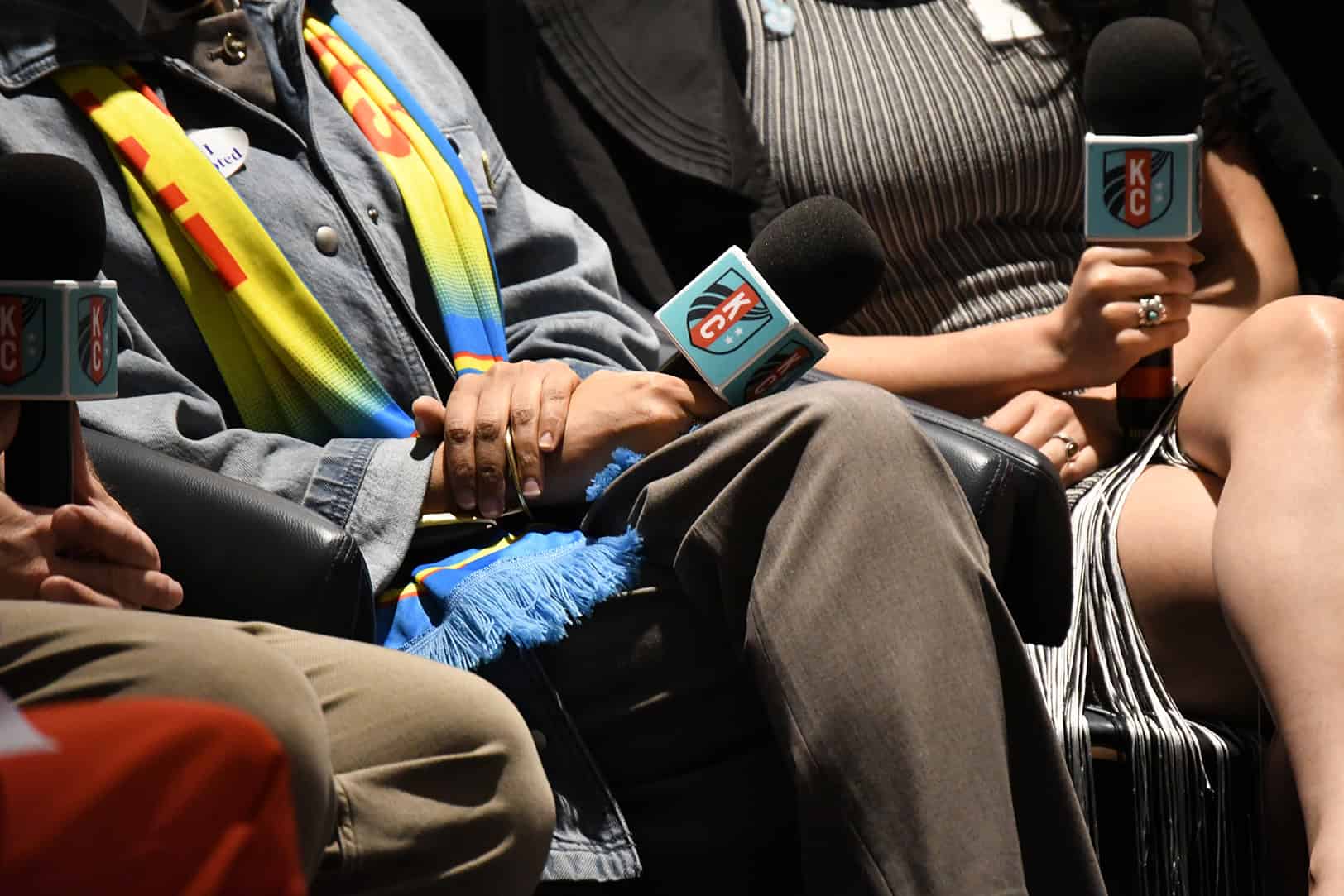
Panelists ready for questions during an event — When the World Shows Up: Is KC Ready to Cash In? — at CPKC Stadium, sponsored by Bank of America and organized in partnership with Startland News; photo by Austin Barnes, Startland News
It starts with opening the door, said Dulcinea Herrera, encouraging business owners who are preparing for an influx of FIFA World Cup visitors to “think in the mindset of the world” — building inclusive spaces ready to serve customers from whatever team or country that walks in.
“This is the elephant in the room, but we’re at a moment of time where immigrants aren’t really welcome in this country. Yet we’re going to have an influx of immigrants in this country during the World Cup,” said Herrera, co-founder and CEO of Café Corazón, told a crowd gathered Tuesday at CPKC Stadium during a panel conversation sponsored by Bank of America.
“It’s really important that any businesses in this room, we make sure they feel very welcome and safe in our spaces,” she added.
RELATED: Kansas City gains certified Welcoming Star designation by Welcoming America
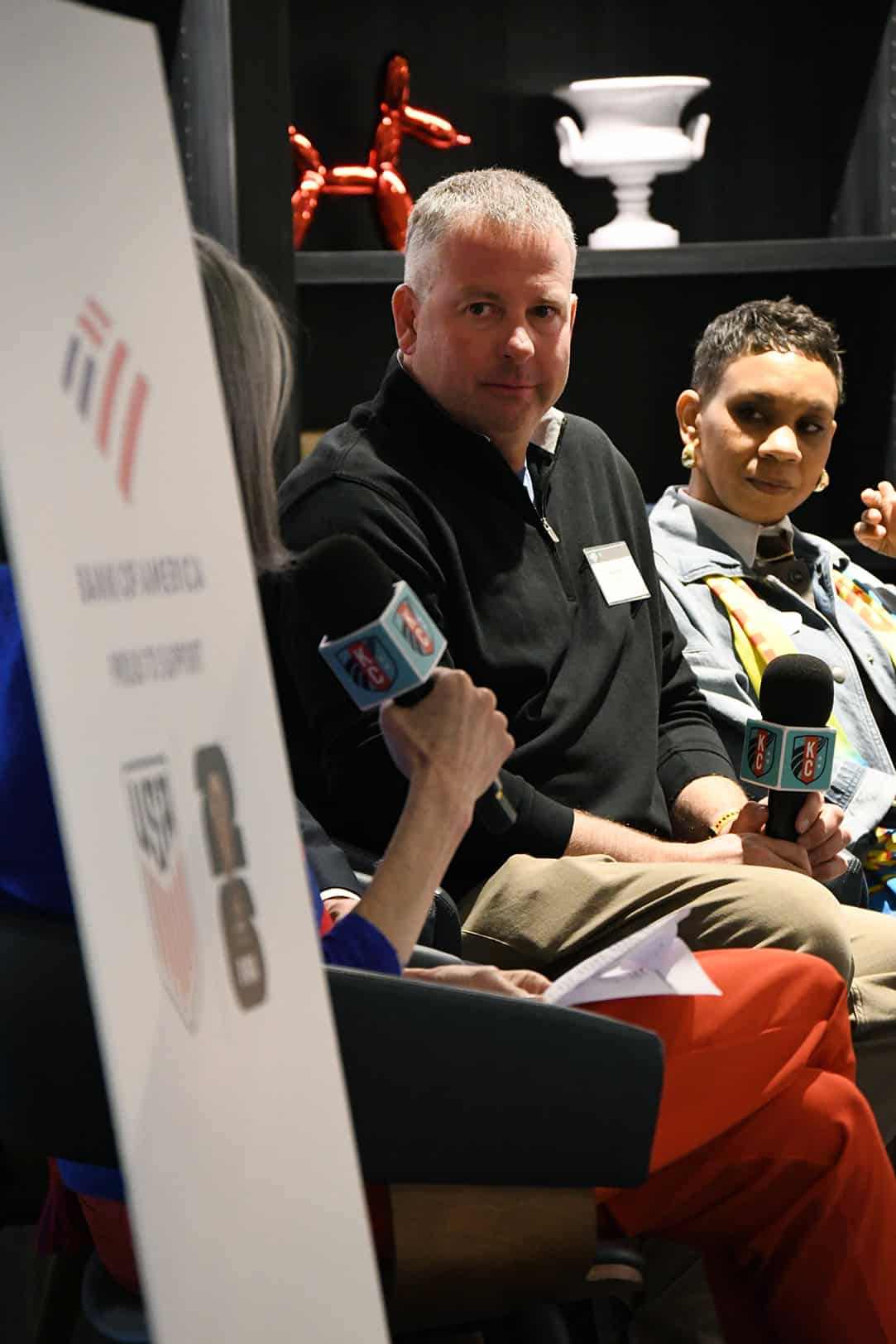
Panelists Matt Shatto, Betty Rae’s Ice Cream, and Nia Webster, KCMO, listen to a question posed by moderator Tracy Whelpley, KC2026, during a panel conversation at CPKC Stadium; photo by Austin Barnes, Startland News
Organized by Startland News, the panel conversation — When the World Shows Up: Is KC Ready to Cash In? — featured small business owners, as well as local and regional officials who are grappling with the realities of World Cup readiness.
“This opportunity isn’t limited to businesses that connect to sports,” noted Marilyn Bush, president of Bank of America St. Louis and market executive for business banking. “Whether you serve customers directly, or even operate behind the scenes, whether you’re a small local shop or you’re a growing company, there’s a chance to be part of this moment and turn it into lasting growth.”
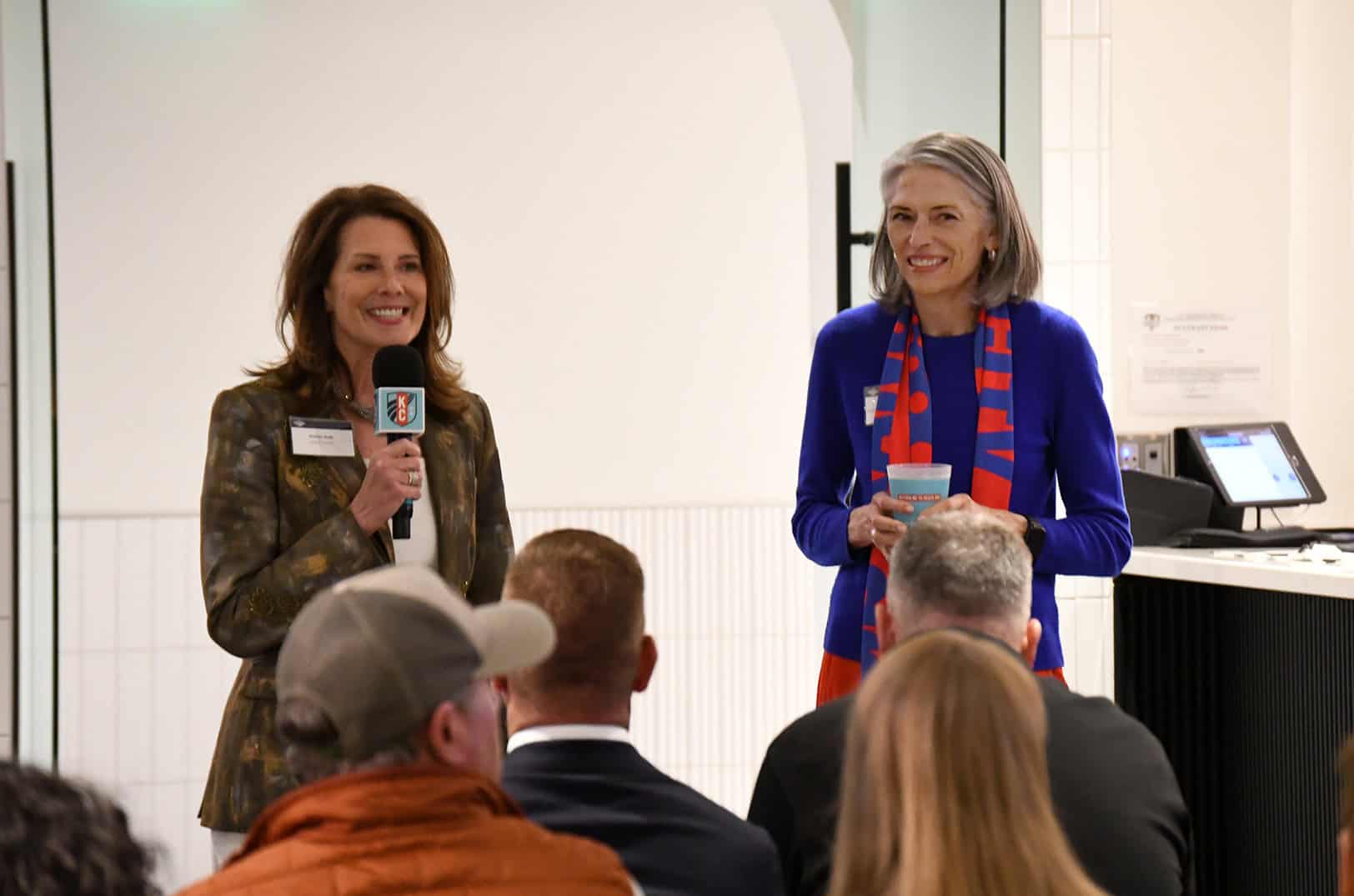
Marilyn Bush, president of Bank of America St. Louis and market executive for business banking, opens a panel conversation at CPKC Stadium, alongside Tracey Whelpley, director of regional impact for KC2026; photo by Austin Barnes, Startland News
An estimated 650,000 global soccer fans are expected to arrive in Kansas City from mid-June to mid-July as the region plays host to six matches in the international soccer tournament.
The countdown is on, as fewer than 65 days remain until players take the pitch.
“That’s the alarm clock every day that gets me up — not just in the morning — but in the middle of the night,” joked Tracy Whelpley, director of regional impact for KC2026, and moderator for Tuesday’s event.
RELATED: Soccer icon Matt Besler: Other World Cup hosts are asking ‘How can we follow KC’s lead?’
Drafting a better game plan
Many business owners viewed Kansas City’s experience with the NFL Draft in 2023 as a fumble, acknowledged Nia Webster, noting the city is working hard to avoid a repeat of those missed opportunities.
Nia Webster, assistant director of the neighborhood services department for the city of Kansas City, Missouri, shares planning insights behind KCMO’s World Cup support initiatives; photo by Nikki Overfelt Chifalu, Startland News
“We learned lessons from the NFL Draft,” said Webster, assistant director of the neighborhood services department for the city of Kansas City, Missouri.
After the national spotlight faded and the $164 million economic impact from the 2023 three-day draft event was seen as having bypassed most small businesses — other than the few selected through an NFL program to be on-site — city leaders and local business officials pledged to build a new framework around how local government better supports entrepreneurs when massive crowds show up on Kansas City’s doorstep.
During Tuesday’s panel, Webster and Whelpley discussed subsequent city initiatives — including the Open Doors! Program (which has secured 14 vacant properties and has another possible five or more in the works), the Local Business Marketplace at Union Station, and the Small Business Playbook (complementing KC2026’s playbook) — intended to ensure that small businesses have the best chance to thrive this summer.
“How do I get people to our businesses so they don’t pass them by?” Webster said of a key question facing her office. “The number of days for the World Cup compared to the NFL Draft is way longer, and we’re probably going to see more like 90 days of people coming in and out, not just 30 or 40 days. So it creates such a great opportunity for us. How dare we miss it?”
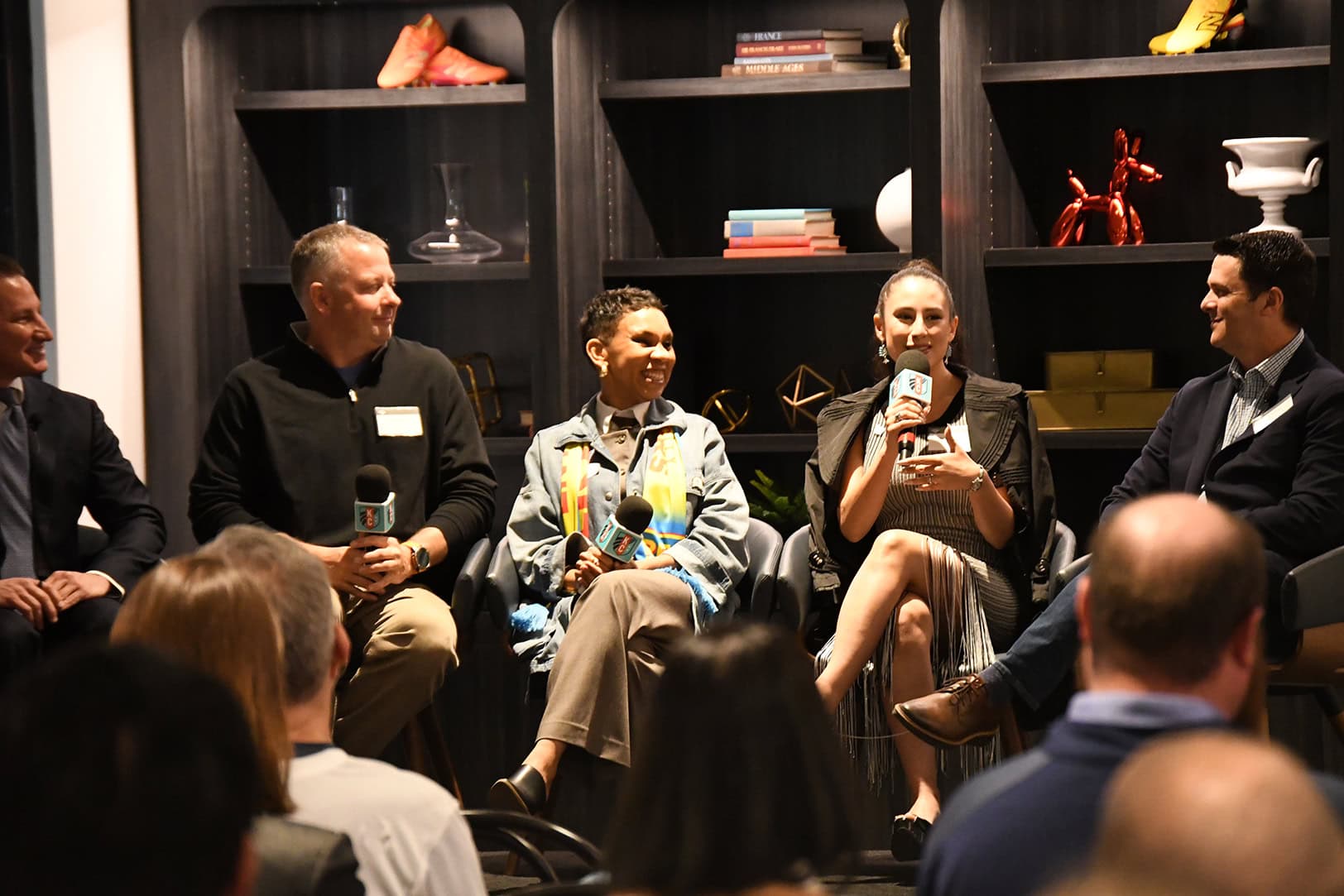
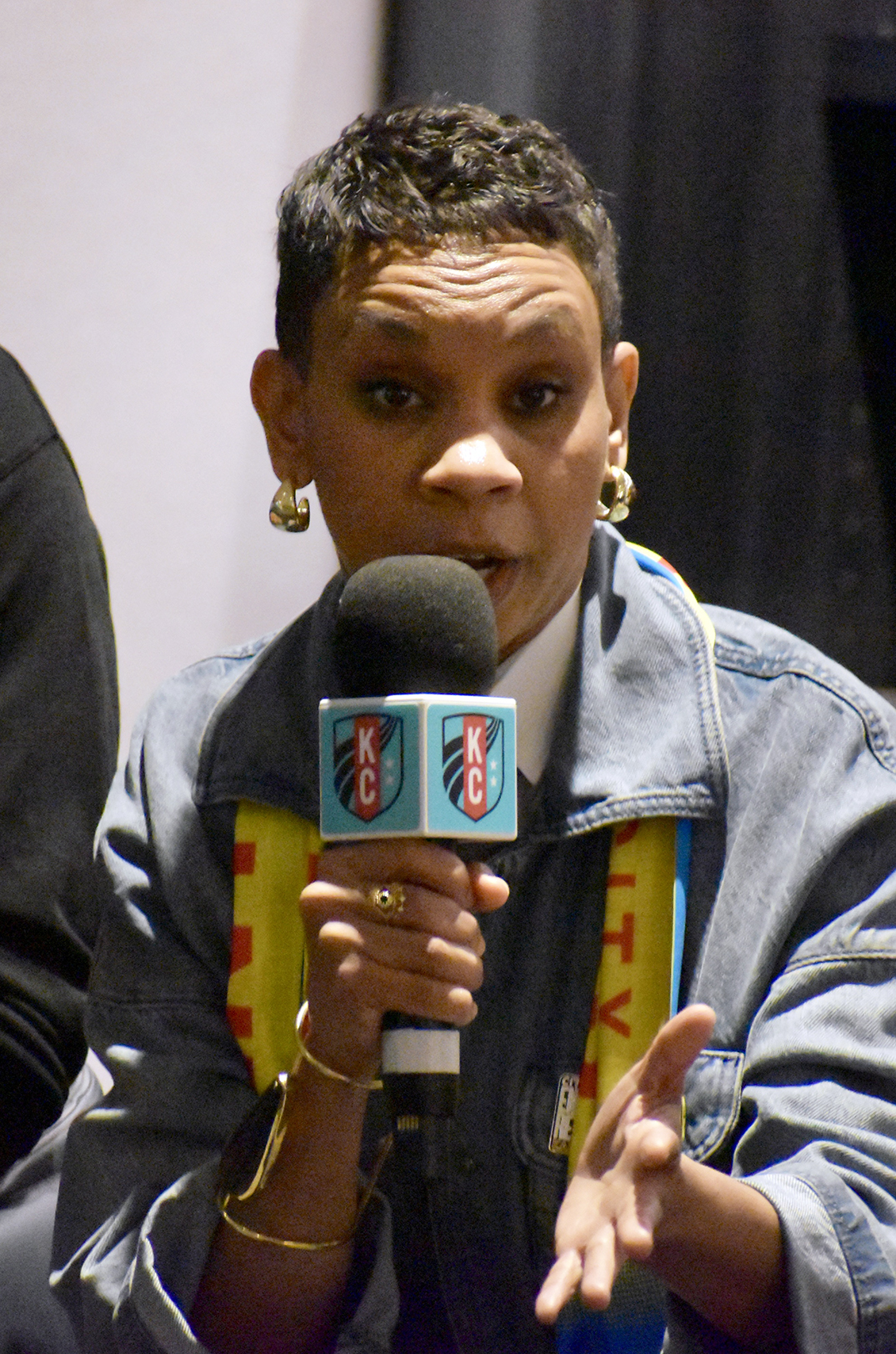
Dulcinea Herrera, co-founder and CEO of Café Corazón, center, speaks during a panel conversation on World Cup readiness; photo by Austin Barnes, Startland News
Small business panelists — including James Westphal, owner of Meat Mitch BBQ, Char Bar, and Beer Kitchen and principal at Culinary Virtue Restaurant Collective; Matt Shatto, CEO of Shatto Home Delivery and owner of Betty Rae’s Ice Cream; and Café Corazón’s Herrera, whose business is among the KC Chamber’s Top 10 finalists for Small Business of the Year — detailed their plans to make sure they and their employees are ready for the world.
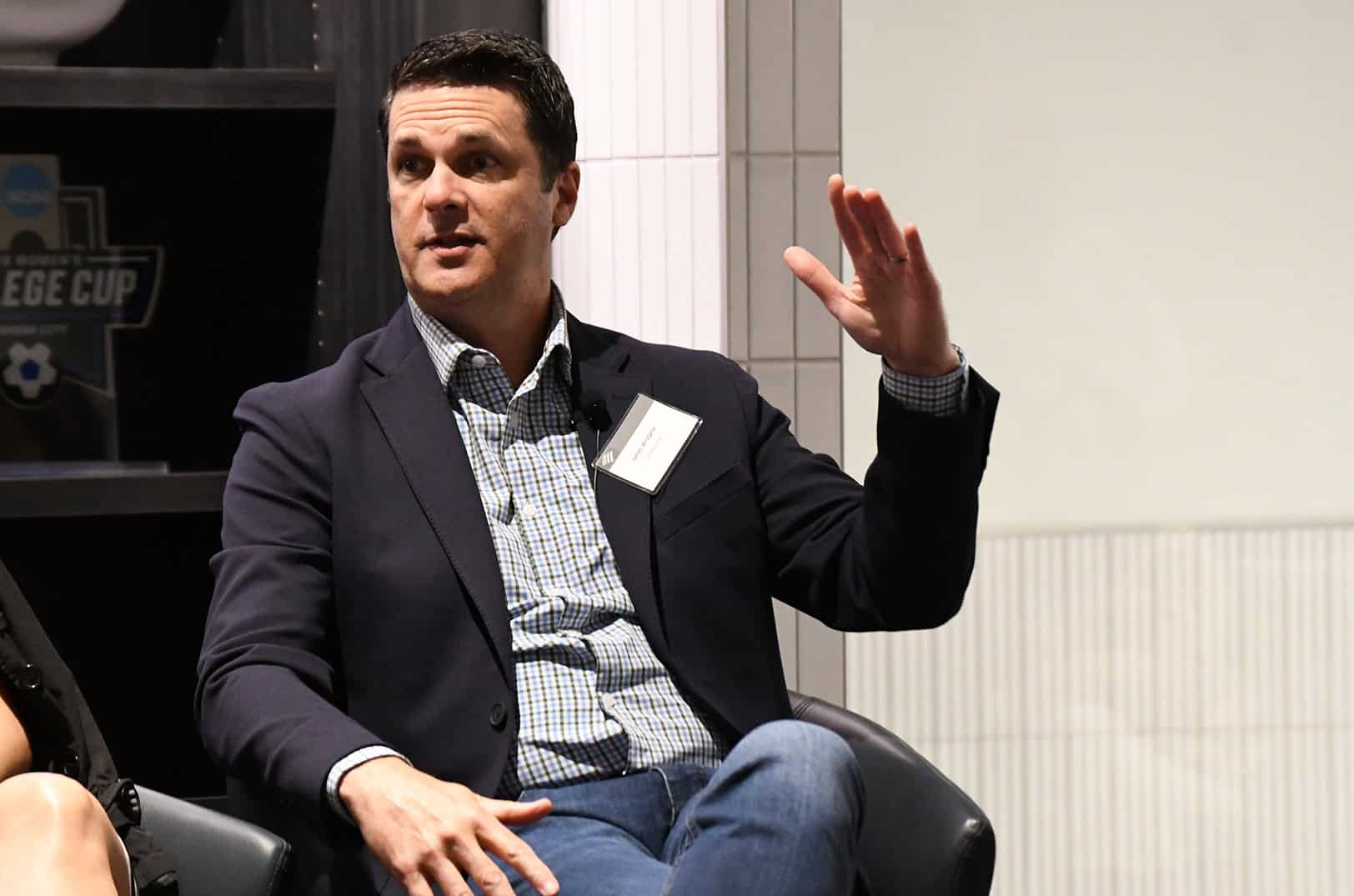
James Westphal, principal at Culinary Virtue Restaurant Collective, offers insights during a panel conversation on World Cup readiness; photo by Austin Barnes, Startland News
Westphal’s restaurants are focusing on how to connect to tourists — through avenues like hotels — plus maintain a local presence by evaluating workforce capacity and managing inventory. They will also be creating QR codes for their menus in various languages and will be converting to pay-at-the-table systems.
“Our readiness plan is all about getting to that starting line with less things to think about and then just to enjoy the ride and whatever happens,” he explained. “It’ll be a roller coaster. I think there’s going to be these peaks where the city is going to have more people, and moments in between, when it’s less. But when there are no games being played here in this community, there’s still games to watch. So I think we’re going to be pretty steady from a business perspective.”
Teams at Shatto Milk and Betty Rae’s are moving up their usual summer hiring and are embracing the atmosphere by launching special flavors and “World Cone” and “World Cow” merchandise — such as ice cream goblets and T-shirts — with slogans like “For Country, Cone, and Cup,” Shatto said.
“We’re looking at it as an opportunity to take Betty Rae’s to people versus necessarily people having to come to Betty Rae’s to get it,” he added.
Herrera — whose mom is from Argentina, one of the teams playing in Kansas City during the games — noted that Café Corazón will offer a special menu, showcasing the countries playing in Kansas City, and hosting events like a banderazo (popular in Argentina), plus translating menus into various languages and educating staff on cultural customs.
“You have to innovate and have a good time,” she explained. “People are going to be here to party. They want to experience Kansas City for what it is. So you have to show it.”
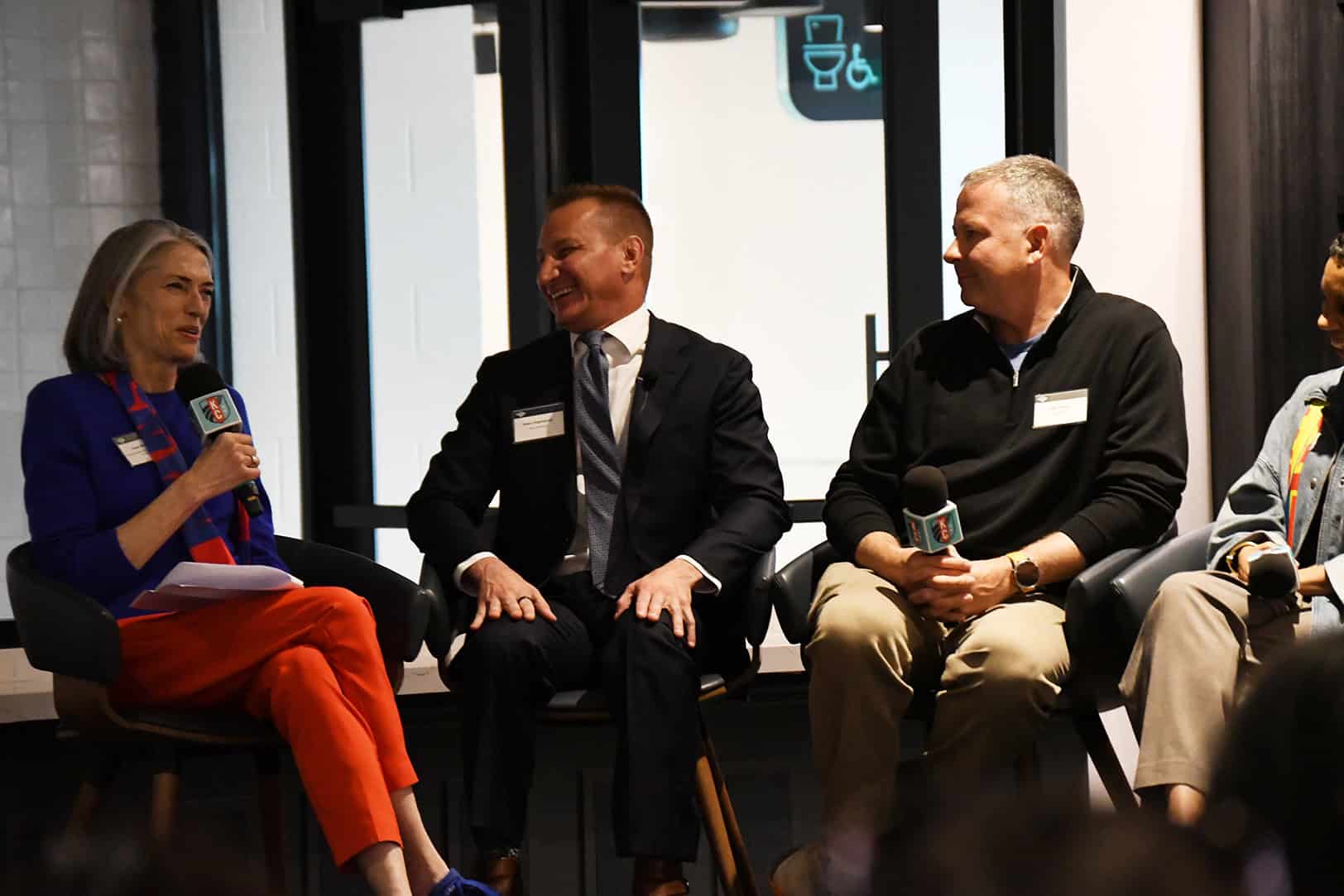
Tracy Whelpley, KC2026, and Rob Ringelspaugh, Bank of America, share a laugh at CPKC Stadium during a panel conversation about World Cup readiness; photo by Austin Barnes, Startland News
Defending the goal
Safety — whether physical or digital — will also be important during the World Cup, panelists acknowledged.
Rob Ringelspaugh — Bank of America senior vice president and info security cyber defense senior manager — said businesses should be minimizing risks by setting up strategies like a password manager and separate networks for sales systems and customers. He suggested visiting the FBI’s site for cybersecurity tips, techniques, and procedures.
“Stress levels are going to increase,” he explained. “Cyber criminals know that we make shortcuts when stress levels increase.”
Webster noted that she’s worried about vandalism on small businesses, which has been an issue recently. So the city is already working on getting the Back to Business Fund back up and running.
“I’m just very, very concerned that with so many people descending upon us and what that looks like when you have 23-hour liquor sales going on,” she continued. “Are we ready and prepared for what might happen to our businesses if a team loses?”
“I don’t know what these fans are like,” Webster joked, “And I’ve already been told England has been kicked out of a few countries for how rowdy they are.”
As someone who also supports the city’s short-term rental office, Webster noted, human trafficking is also on her radar.
“I’m concerned about what may go on,” she continued. “It’s not a hotel. “There are no videos, unless those homeowners have something. So there’s a lot happening to train people about trafficking and things of that sort.”
Strength in teamwork
Tuesday’s panelists agreed that a lot of the success for small businesses during the World Cup rests on collaboration and avoiding a scarcity mindset. Webster and Whelpley challenged entrepreneurs and business districts to get in the game, noting support is a team sport not just the responsibility of the city or KC2026.
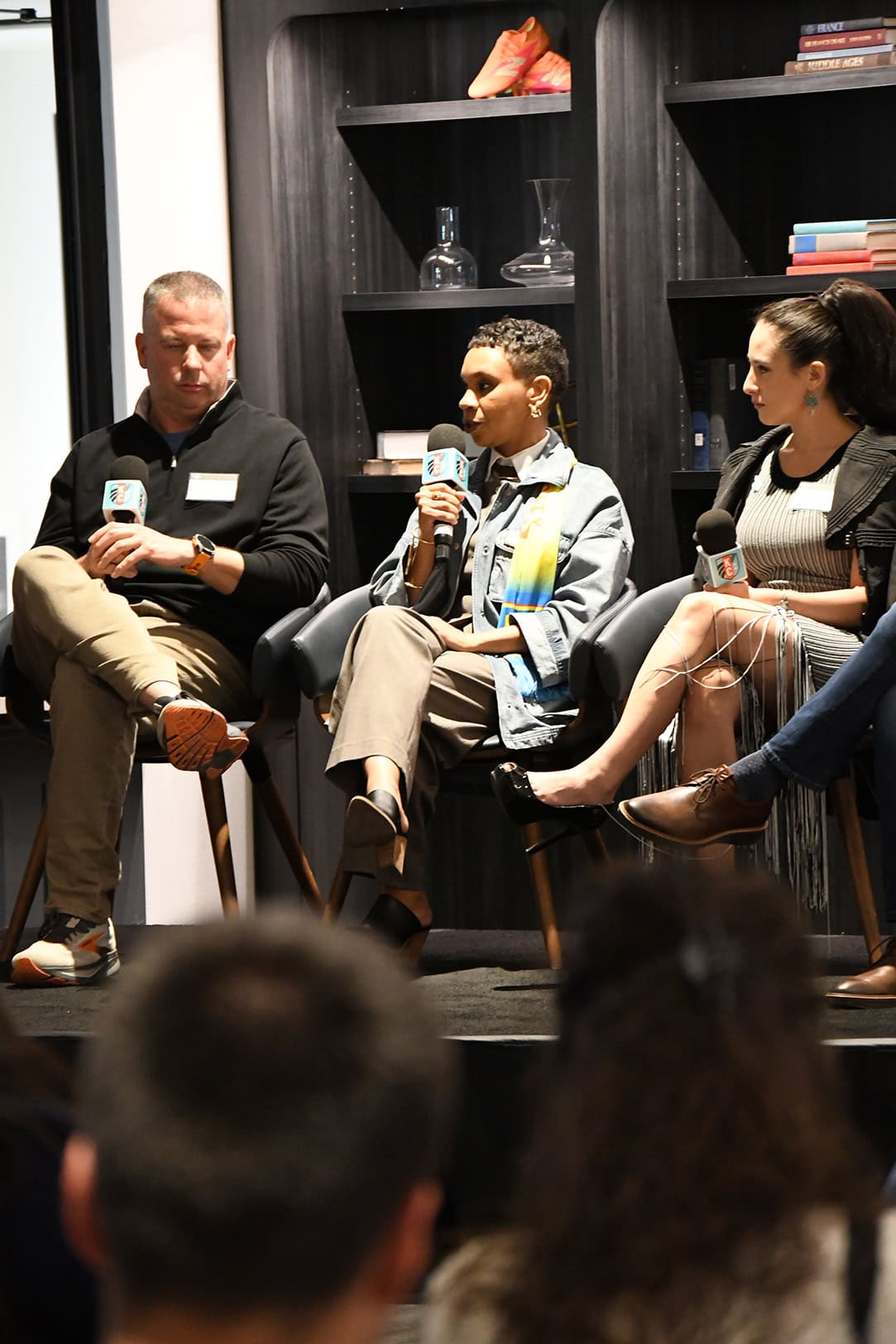
Nia Webster, KCMO, shares perspective on the intersection of support and collaboration during a panel conversation at CPKC Stadium; photo by Austin Barnes, Startland News
“What opportunities are you creating in your community? What events, activations, celebrations are you planning that allow for your smaller, mom and pop businesses — folks that can just come and do a booth or whatever it may be to be able to sell?” Webster asked. “I might not always have the capacity or flexibility of doing so, but I’m willing to support those that are on the ground doing it.”
“Some of our communities may miss out on this opportunity because they failed to plan, assuming that someone else was going to do the planning for them,” she continued. “So I’m hoping that we learn another lesson as a community: don’t wait on others to do the planning for you. Do the planning and tell me what you need to support you to elevate the planning that you’re doing.”
Whelpley acknowledged that some communities have been waiting for strategies to be handed to them. But Clay and Platte counties coming together for the first time to market the Northland as one is an example of community-led collaboration.
“It’s flexing new muscles as a community to try to pull people together,” she added.
For Betty Rae’s, Shatto said they’re trying to figure out new and innovative ways to create long-lasting relationships in the community, whether it’s through restaurant, hotel, or other hospitality partnerships.
“There’s going to be a little bit of hit and miss everywhere, but there’s enough for everybody to go around,” he explained. “That’s why we’re trying to create great relationships with the folks that we’ve never had in the past and that are legacy relationships that we can continue to build.”
Café Corazón plans to collaborate with other local businesses by coming out with a line of branded coffee bags and pods for short-term rentals and creating a Argentina T-shirt with Cherry Co. to sell in Kansas City’s airport.
“Think outside the box, so that people see your name everywhere, even if it’s not in your space,” Herrera said. “Especially if you’re not located downtown — where there’s foot traffic — people need to want to see you. You have to make it desirable and worth their time to go out of their way to see you.”
In terms of cross-border collaboration, Webster said, KCMO is even trying to play ball with KCK.
“They’re taking our Chiefs, so I really should be like, ‘Heck no,’” she said with a laugh. “But the businesses lose if we don’t. Nobody is going to know the difference — coming from outside of Kansas City — which side of the state line it sits on. They won’t know what side of the state line our entrepreneurs sit on. They’re going to be everywhere.”
Fund More Stories
This story was made possible by readers like you. Join them — make a one-time contribution or become a monthly member to sustain our work.





Related Posts