Moving humanity forward isn’t always pleasant, Block founder says, urging innovators to keep crossing the line
April 6, 2026 | Nikki Overfelt Chifalu
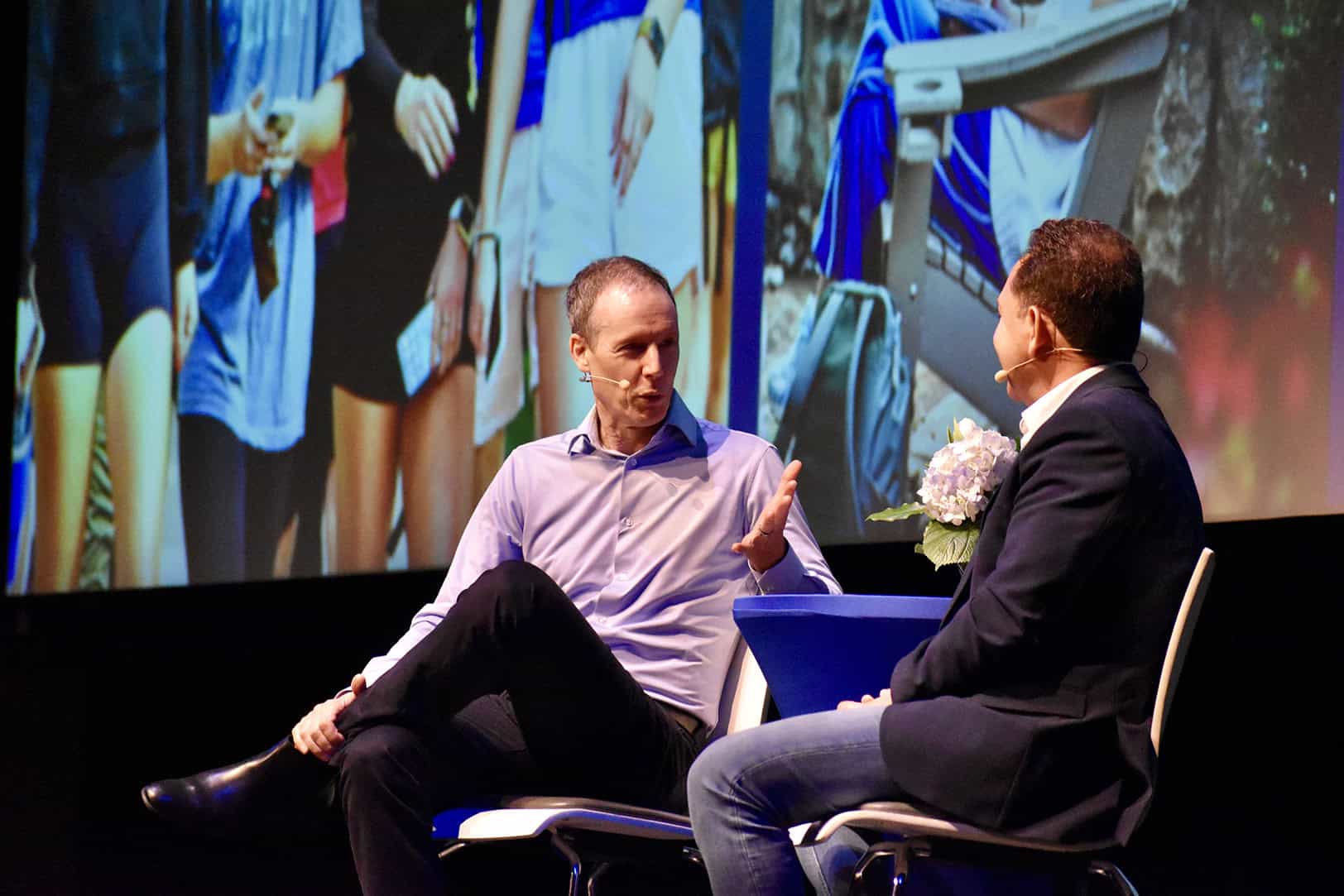
Jim McKelvey, founder of Block (formerly Square), speaks with Peter Mallouk, CEO of Creative Planning, during a fireside chat-style conversation at the Kauffman Center for the Performing Arts during the Rockhurst University Leadership Series; photo by Nikki Overfelt Chifalu, Startland News
Real innovation isn’t cool, said Jim McKelvey; It’s a horrible last resort.
“It isn’t something you want to do all the time,” the serial founder and tech leader behind LaunchCode and Block (formerly Square) explained. “But sometimes it is the only way that we move humanity forward.”
McKelvey, a St. Louis native and former chair of the St. Louis Federal Reserve Bank, spoke to an audience gathered for the Rockhurst University Leadership Series about the realities of forging ahead as an entrepreneur.
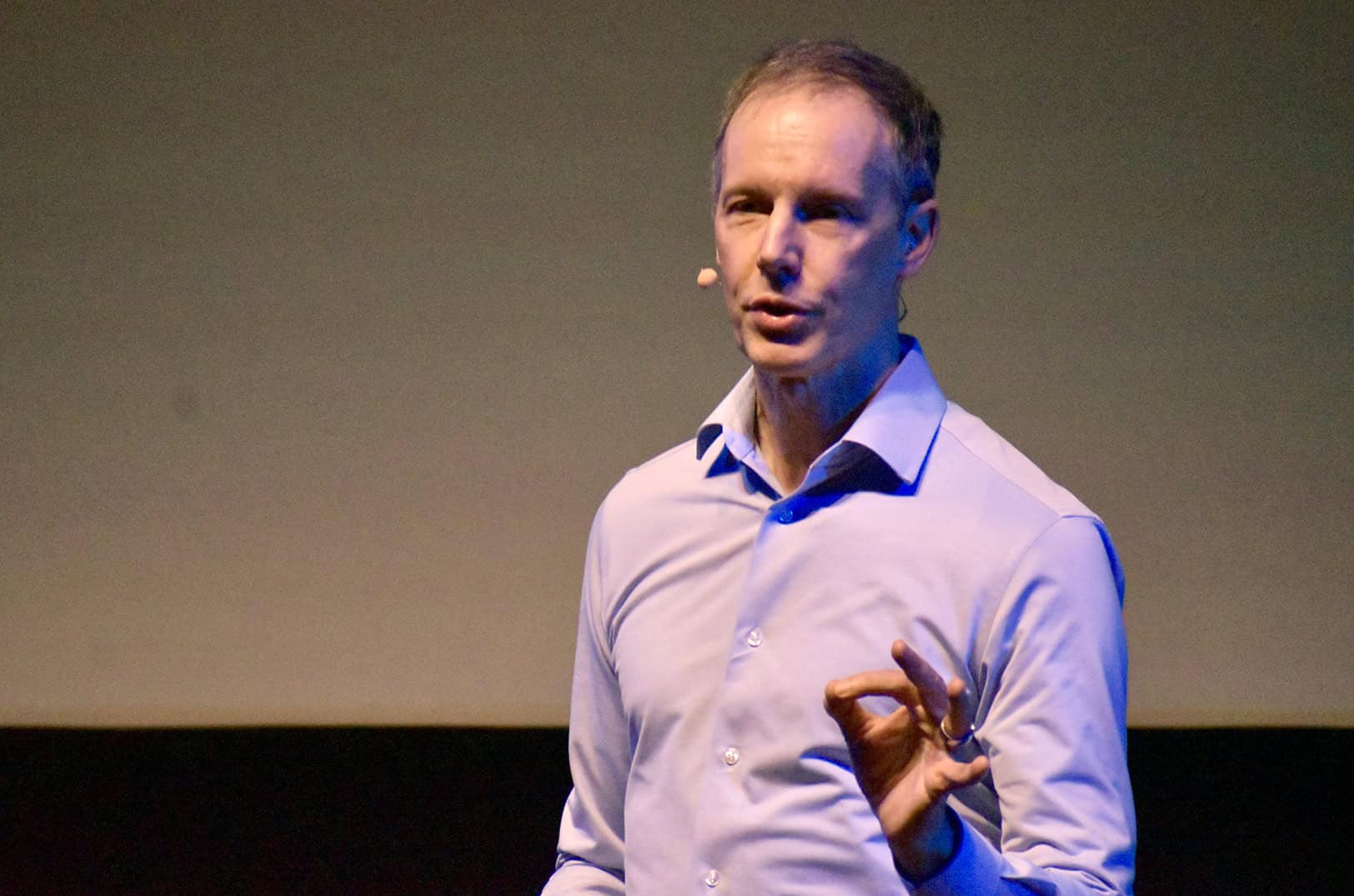
Jim McKelvey, founder of Block (formerly Square), speaks to the Rockhurst University Leadership Series audience at the Kauffman Center for the Performing Arts; photo by Nikki Overfelt Chifalu, Startland News
What’s so cool about getting up every day to do something that you don’t know is going to work? McKelvey asked from the stage at the Kauffman Center for the Performing Arts.
“When we built Square, we broke 17 laws in the first week,” he explained, noting he and co-founder Jack Dorsey built the smartphone payment processor after McKelvey wanted an easier way to take payments as a glassblower. “No, I’m not making this up. It was at least 17. I stopped counting at 17. The number of violations we had by the time we got the product working — which was three weeks from when we had the idea — was incredible. It took a year and a half to finally get compliant with the law.”
“But the problem is that people think innovation is cool,” he added, “and because of that, they quit early.”
A different set of rules applies when the innovator doesn’t already know the answer, McKelvey said, noting humans are pre-programmed to follow patterns, to do only what has already been done before.
“Only a few times in your life, you’ll end up at this frontier of what humanity has done,” he continued. “You’ll find some problem you care about and you’ll say, ‘I wish there was a way for Bob (friend and fellow glassblower) to take payments’ or whatever your dream is. And you’ll come up to this edge of what humanity knows how to do.”
“And if you choose to step across that,” McKelvey added, “you think, ‘Oh, now I’m being innovative. Now I’m being cool.’ It will feel lonely and scary and horrible, and the odds of success are not great, but it’s where progress comes from.”
“We need people who are willing to step across that line,” he said.
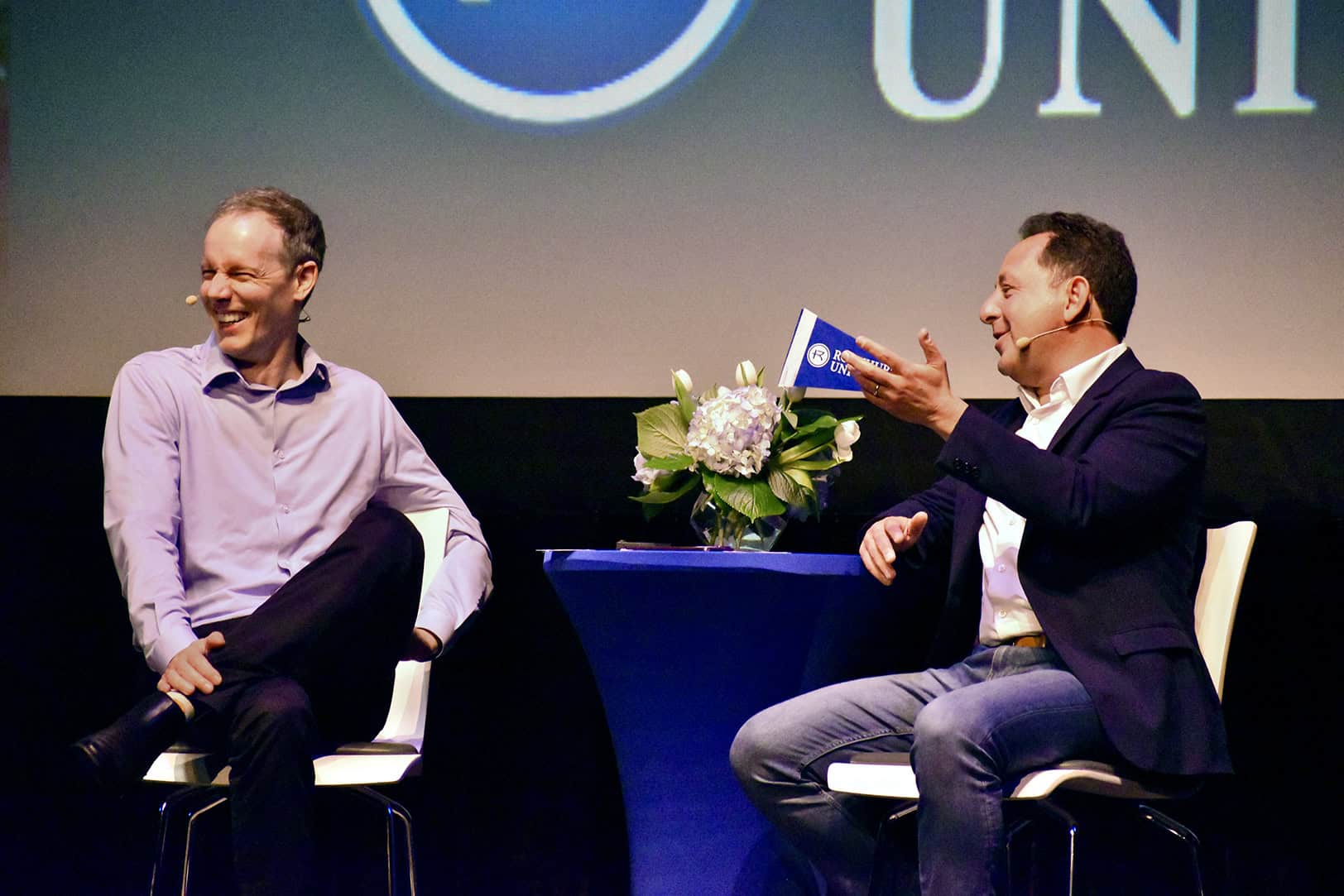
Jim McKelvey, founder of Block (formerly Square), shares a laugh with Peter Mallouk, CEO of Creative Planning, on stage at the Kauffman Center for the Performing Arts during the Rockhurst University Leadership Series; photo by Nikki Overfelt Chifalu, Startland News
During the Leadership Series event, McKelvey also sat down for a one-on-one conversation with Peter Mallouk, CEO of Overland Park-based wealth management giant Creative Planning and majority shareholder of Sporting KC, who asked McKelvey if artificial intelligence is making innovation riskier.
“I don’t think innovation changes,” he answered. “AI is just going to be a massive accelerant.”
AI is also scary, McKelvey acknowledged, because it’s rendering decades of learning useless in a flash.
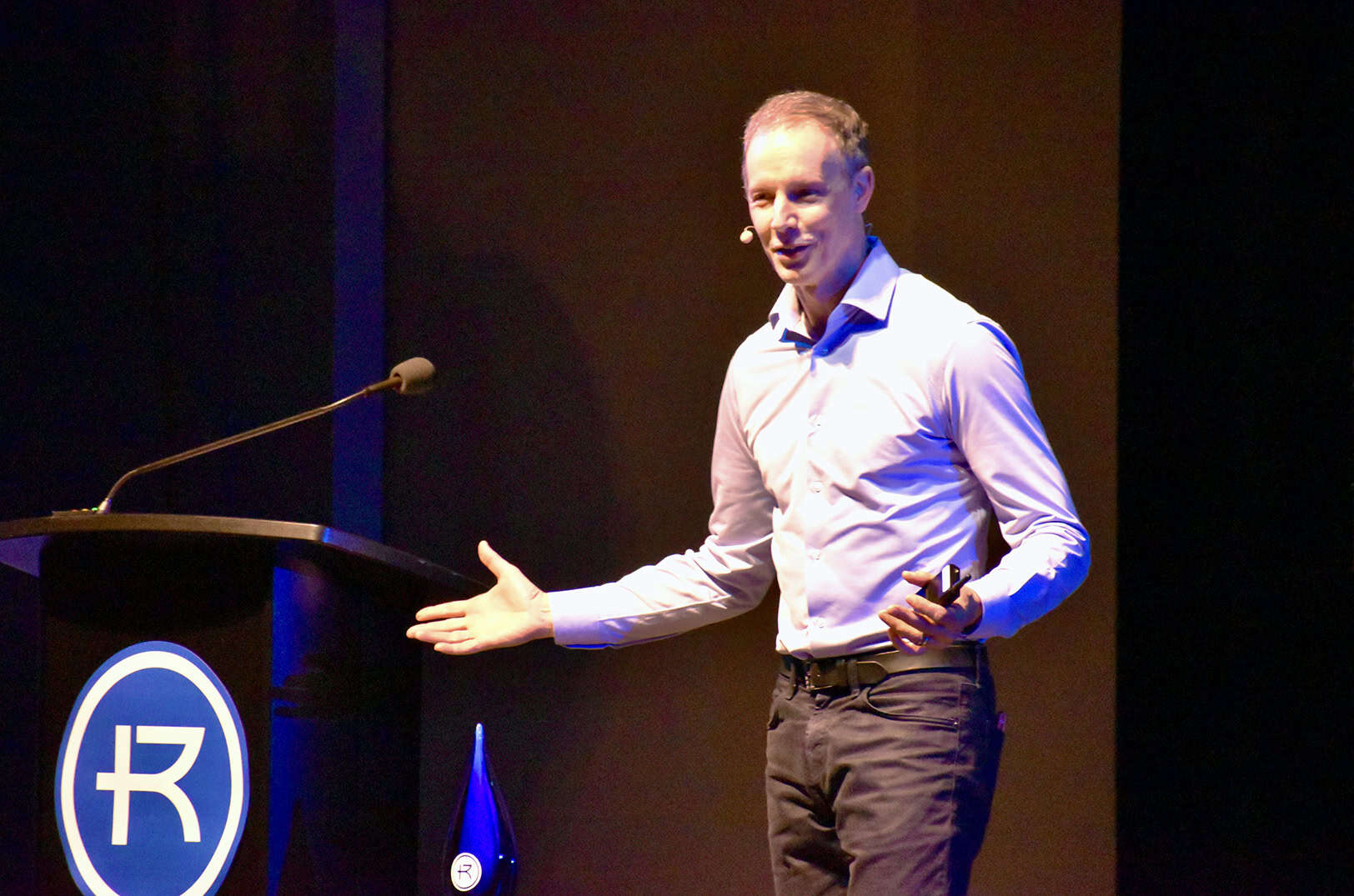
Jim McKelvey, founder of Block (formerly Square), speaks to the Rockhurst University Leadership Series audience at the Kauffman Center for the Performing Arts; photo by Nikki Overfelt Chifalu, Startland News
“‘Pay your dues for X number of years,’ that gets wiped out,” he explained. “The problem is that, those of us who have paid some dues, we’re sunk cost fallacy victims. We are sitting there going, ‘What? But I had to learn how to write and program and do math.’ And it’s terrifying to think that those skills are going to be replaced by something else and we don’t know what that something is.”
At Block — which laid off 40 percent of its employees in early 2026, McKelvey said — AI has separated the people who are really good and creative from the people who are not, he explained.
“It’s so obvious because the good, creative ones no longer have to convince others,” McKelvey continued. “So a lot of times, the really creative people are assholes and they don’t get along with other people. They’re geniuses, but they’re genius assholes. So people don’t follow them, but now they don’t need followers. You can be exceptionally rude to Claude (AI).”
“It was sort of brutal,” he added, “because we were going through these regular layoffs, as we would see people who couldn’t handle it. It was just excruciating. And we thought we’re gonna just give death by a 1,000 cuts. So we did a whole org study of what the tools would be and the best users.”
Mallouk also asked McKelvey if he thought AI will worsen the K-shaped economy — what economists are calling the current U.S. recovery — which has been seen as exceptionally good for the wealthy and bad for others.
“It’s going to accelerate it,” McKelvey said. “It’s not going to be pleasant. In theory, we adjust and I don’t know how that’s going to happen. It’s probably going to be a societal thing.”
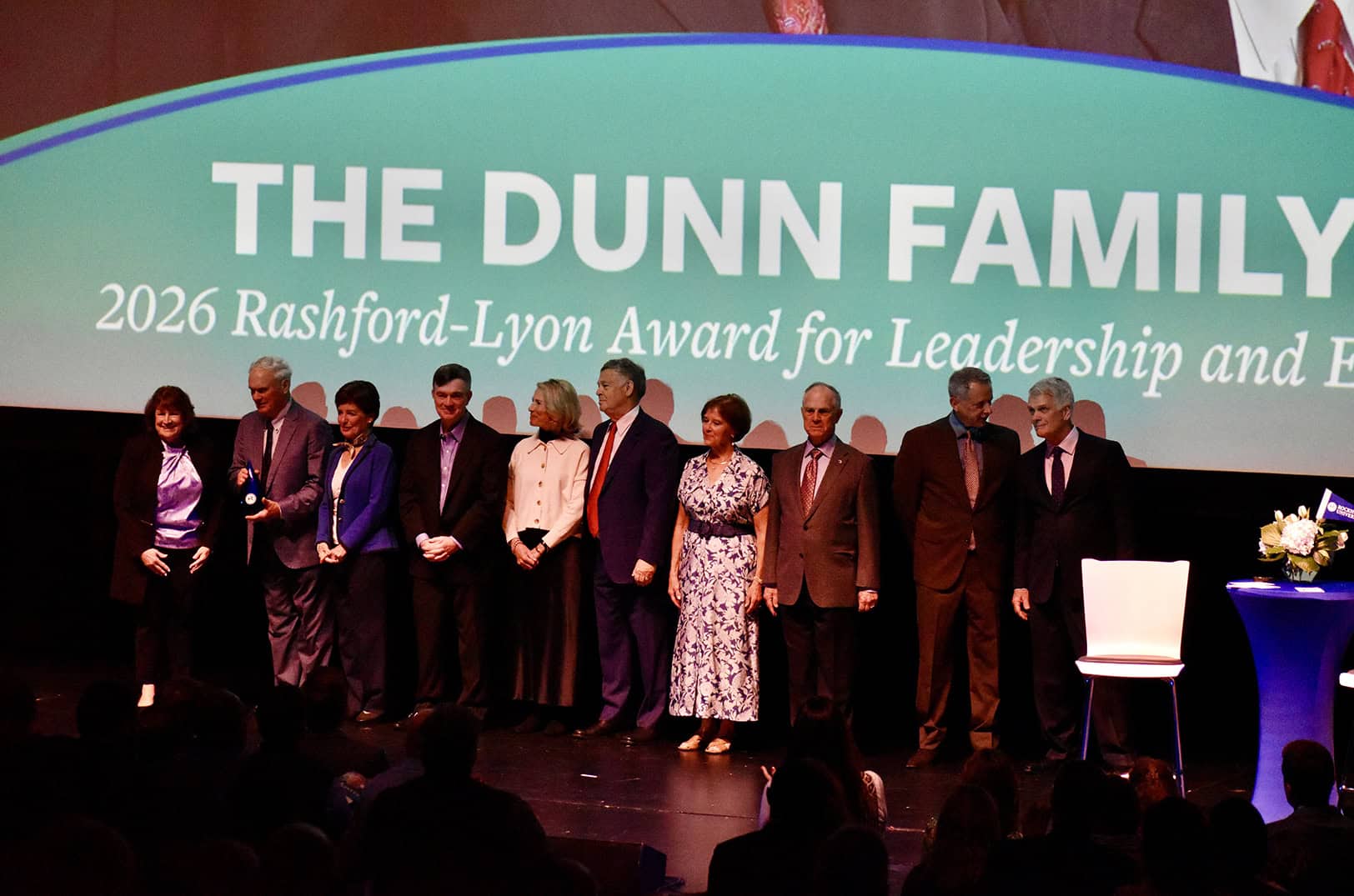
Members of the Dunn Family gather on stage at the Kauffman Center for the Performing Arts to accept the 2026 Rashford-Lynn Award for Leadership and Ethics from Rockhurst University; photo by Nikki Overfelt Chifalu, Startland News
During the event, the JE Dunn family was also presented with the 2026 Rashford-Lynn Award for Leadership and Ethics.
Fund More Stories
This story was made possible by readers like you. Join them — make a one-time contribution or become a monthly member to sustain our work.

Latest Stories