Nature gets a human boost as experts restore KC’s forgotten heart-shaped forest ahead of World Cup
April 9, 2026 | Nikki Overfelt Chifalu
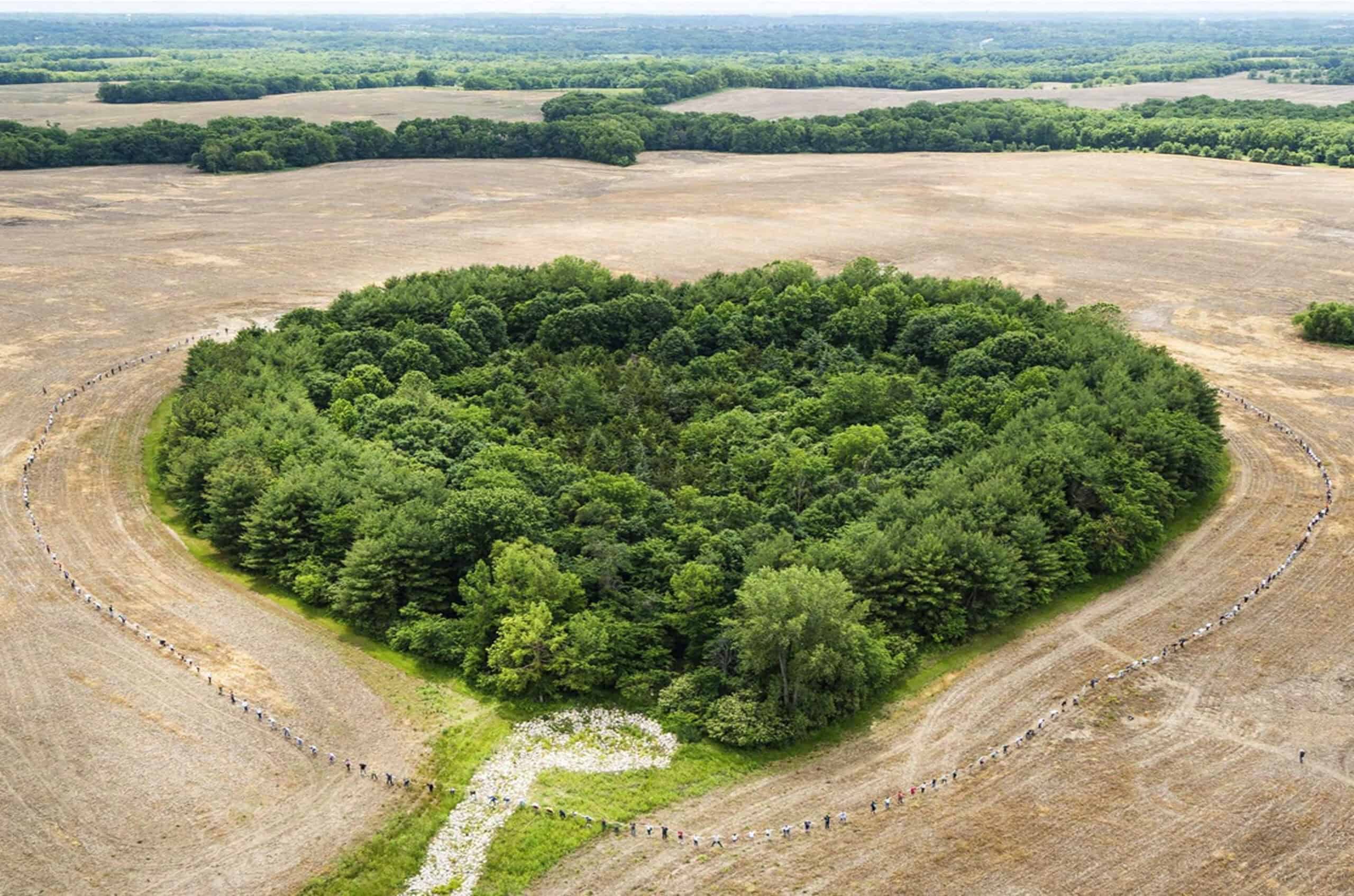
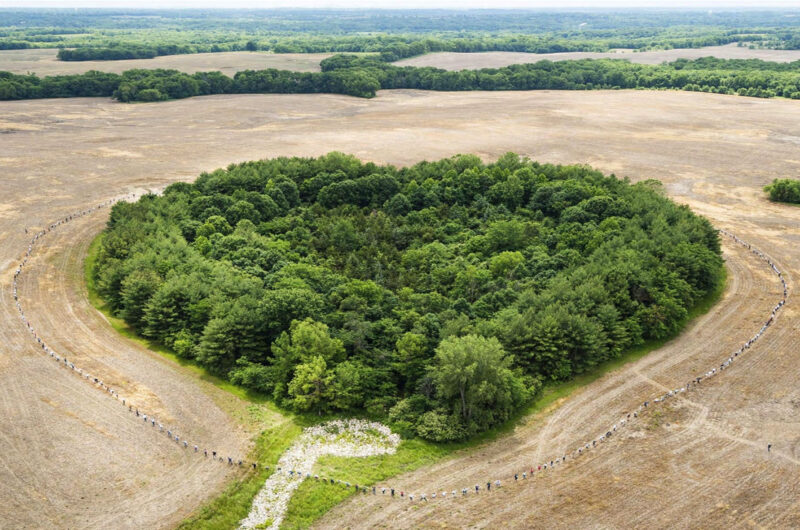
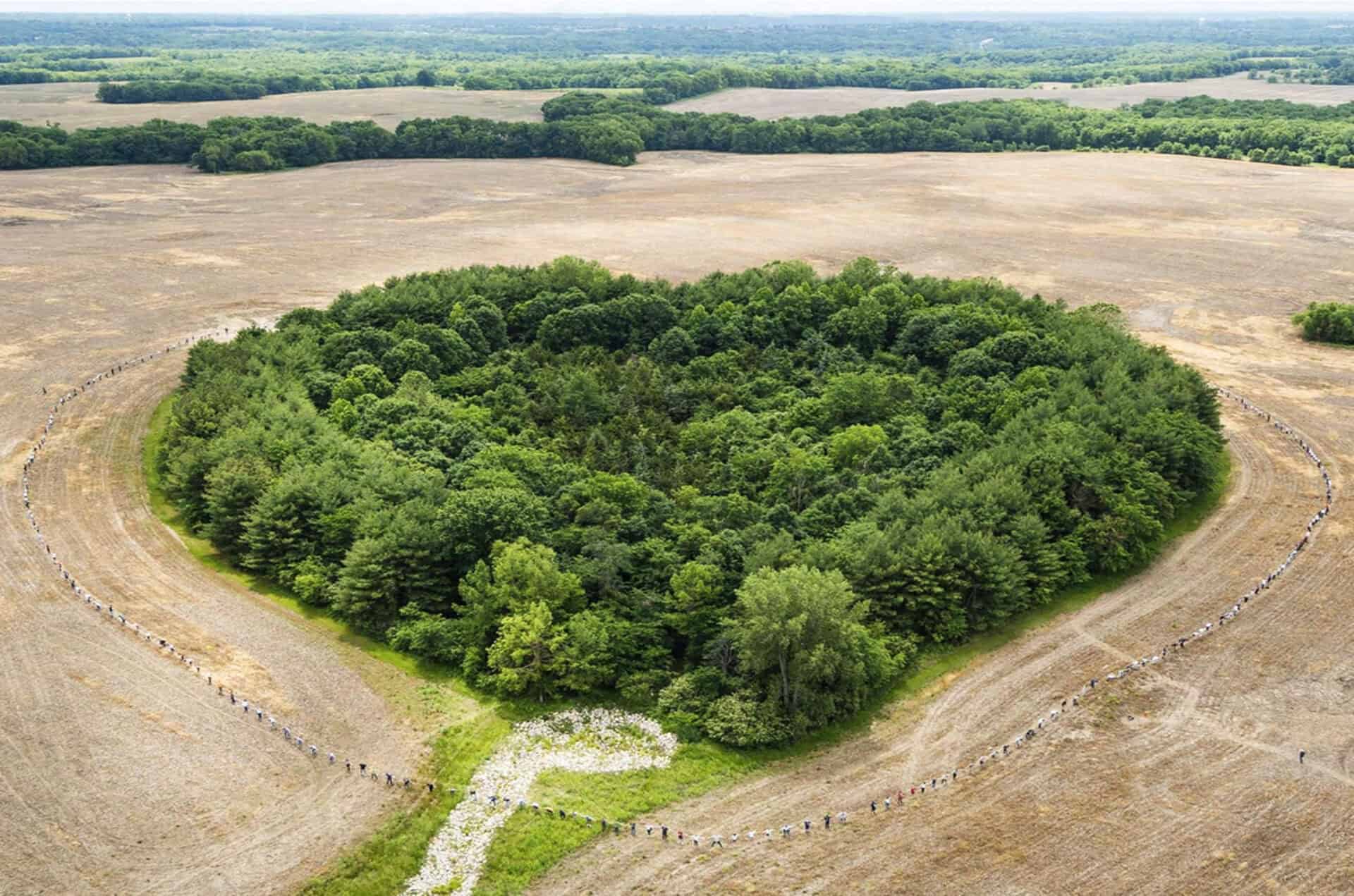
An aerial view of the Heart Forest; photo by Jodi Vander Woude and Michelle Miller
A hidden gem near Kansas City International Airport is being rediscovered and restored — just in time to welcome World Cup visitors flying overhead to the heartland.
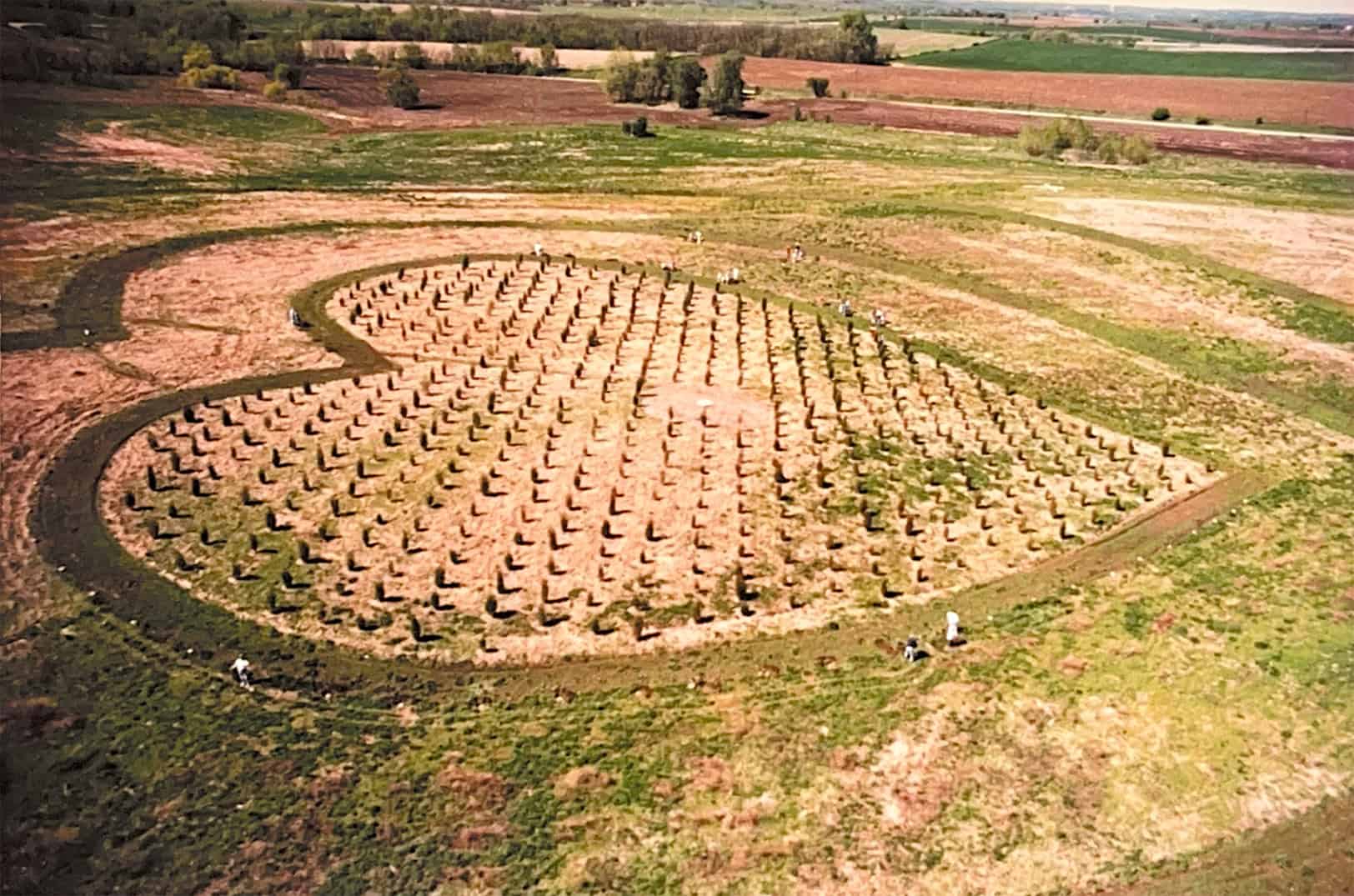
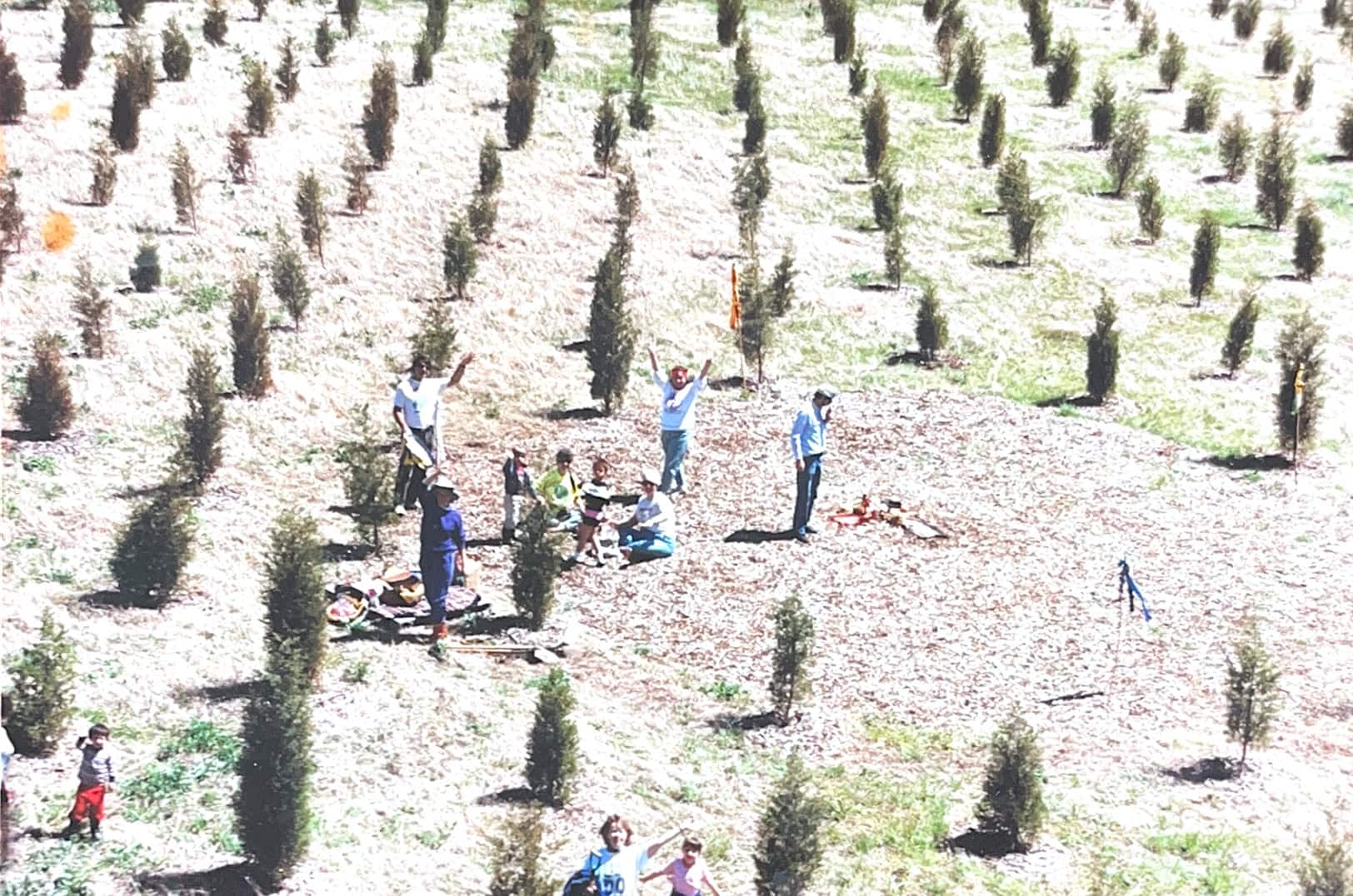
An undated, early aerial photo of the Heart Forest during its planting in 1990; courtesy photo
Originally planted in 1990, the world’s largest heart-shaped forest — aptly named the Heart Forest — has matured into a thriving ecosystem of more than 2,500 trees, but it needs the help of community green thumbs to get ready for the summer spotlight, said Bob Berkebile and Brian Weinberg.
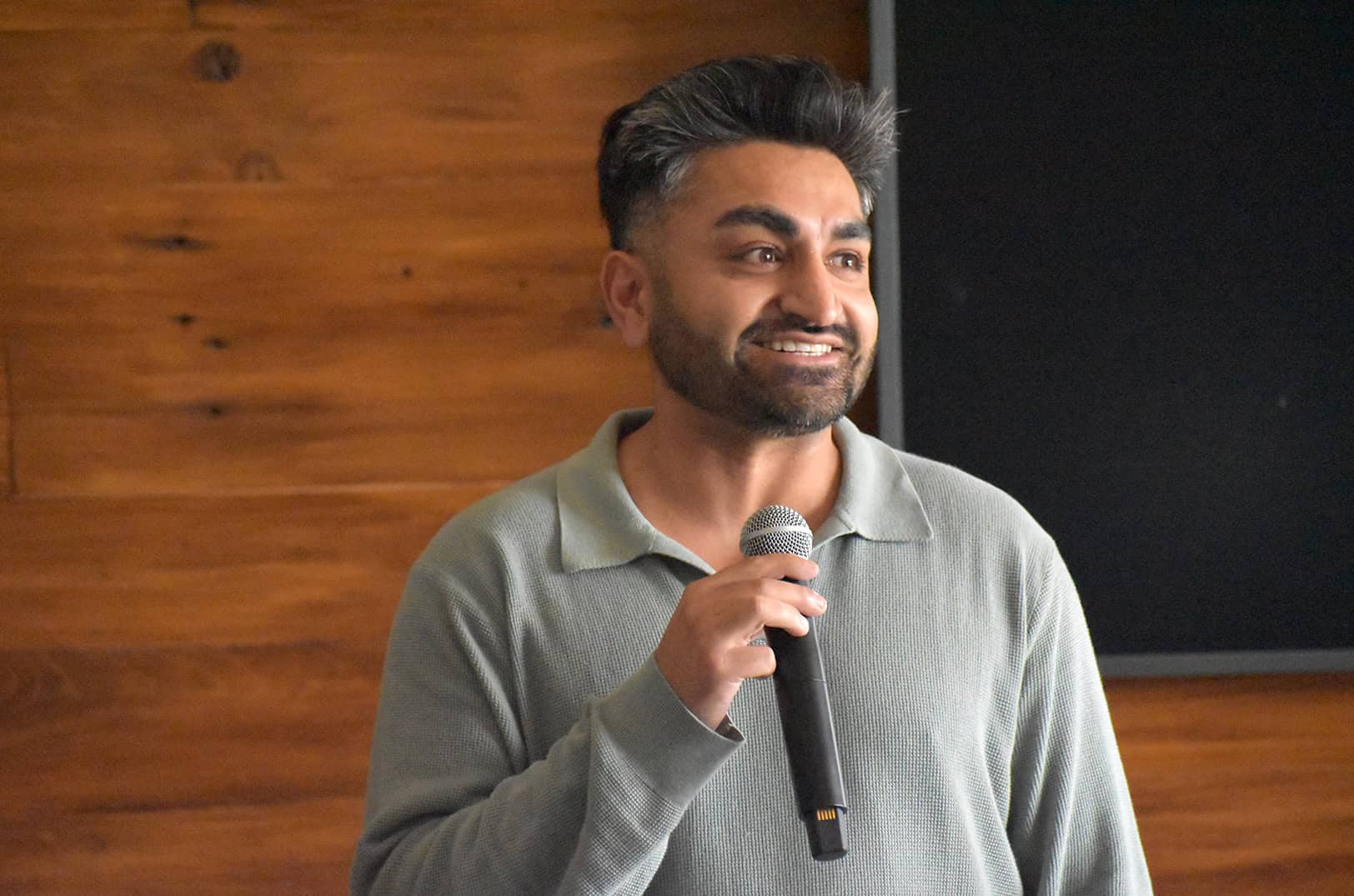
“This is such a feel-good story to tell the world who we are and to show them our hearts,” said Weinberg, director of the Foundation For Regeneration. “It’s the perfect time with so many people flying in to reinforce the shape and also create a new destination so that people can experience something truly unique here in the Heartland.”
Located on eight acres near the airport, the Heart Forest now produces an estimated 24 tons of oxygen annually while storing significant carbon. A planned restoration effort would see its cultural contribution enhanced to match its ecological footprint — adding greater accessibility and refinement of its iconic shape.
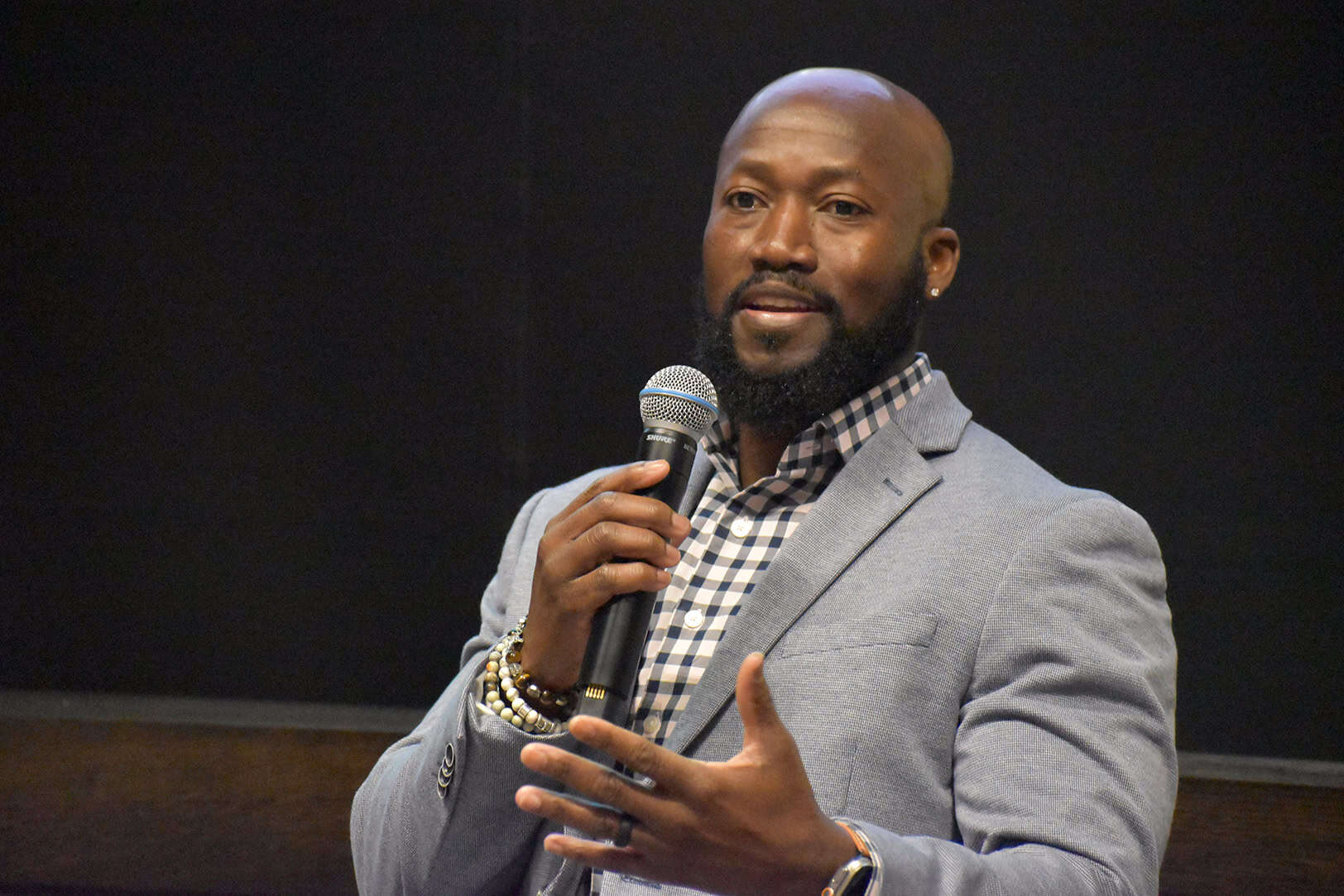
“The most exciting thing for me is that we planted three-foot saplings that the Missouri Department of Conservation provided,” explained Berkebile, co-founder of the Foundation For Regeneration and principal emeritus of the internationally recognized architecture and planning firm BNIM. “And today they’re 50 feet tall and it’s a forest. Thanks to Brian and others, we are renewing it at the perfect time.”
“It’s a sacred place,” Weinberg added. “It’s a place of respite, a place for reflection and contemplation. And the symbolism of the Heart of America — the fact that it’s the largest one in the world — there’s nothing like it anywhere else. That’s what makes it special.”
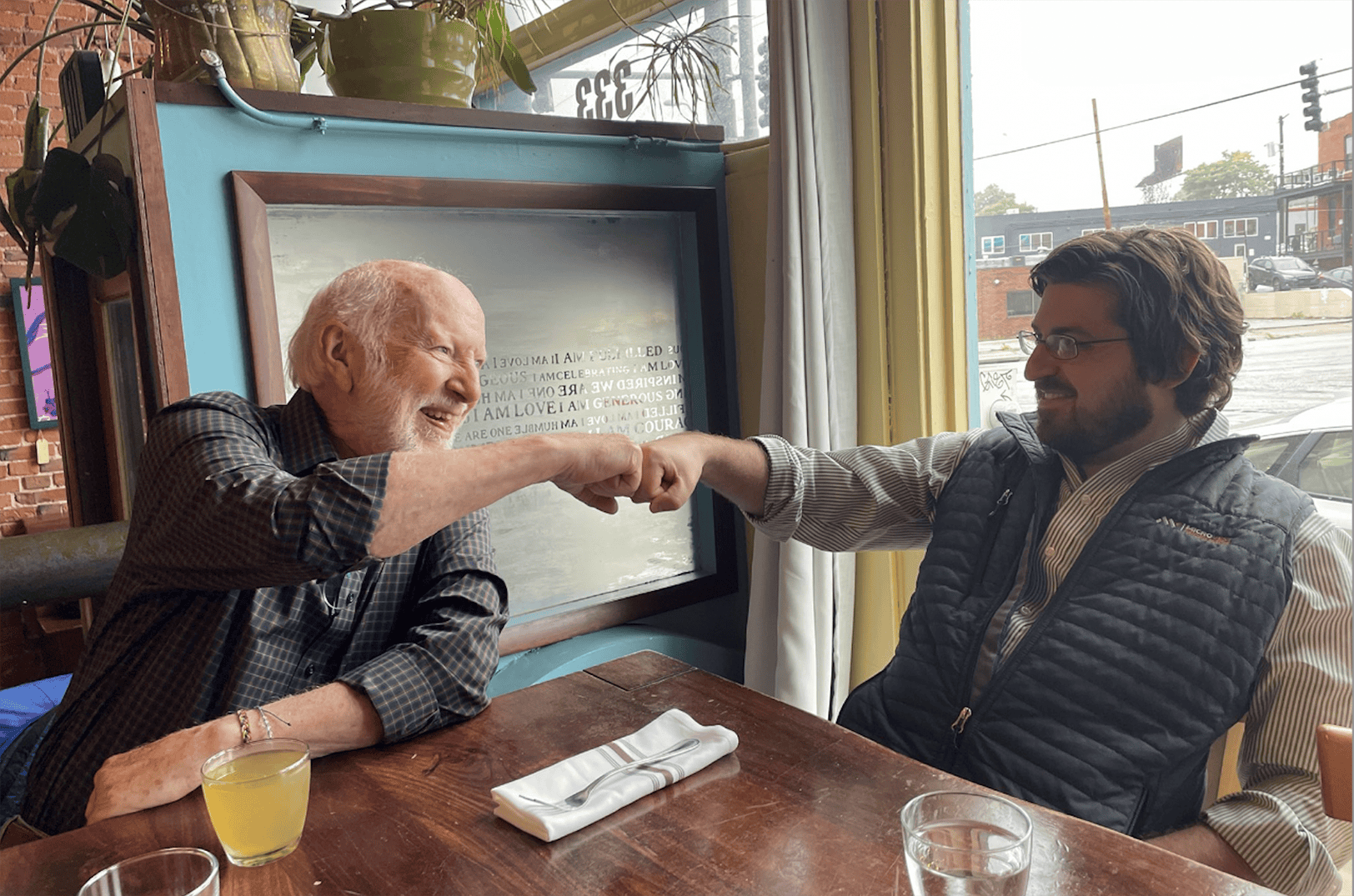
Bob Berkebile and Brian Weinberg, Foundation For Regeneration; courtesy photo
Planting the seeds
Inspiration for the forest came in 1987 during a World Congress meeting in Kansas City, Berkebile shared. Iroquois Chief Leon Shenandoah and United Nations official Robert Muller — speakers at the world peace event — challenged the city to come up with a way to honor what sets Kansas City apart.
“Leon told us that we needed to know that we had a very unique heart spirit that we had created in this area,” Berkebile explained. “According to him, heart was the most important resource on the planet today and we needed to do something to remind ourselves of this and teach our children.”
Having traveled the world on behalf of the UN, Muller reinforced that sentiment, encouraging Berkebile to use his expertise as an architect to find a solution — first suggesting that he plant a row of trees around the city in the shape of a heart that would be big enough to be seen from outer space.
“I worked, actually, for a couple years on what Muller had suggested,” Berkebile explained. “And I discovered a number of things. One of which is — had I resolved the most complicated land deal in the history of America to do that — you would never see it on a commercial flight. You could see it from outer space on a clear day, but from a plane, you would see a row of trees curving over the horizon. So we eventually scaled it down.”
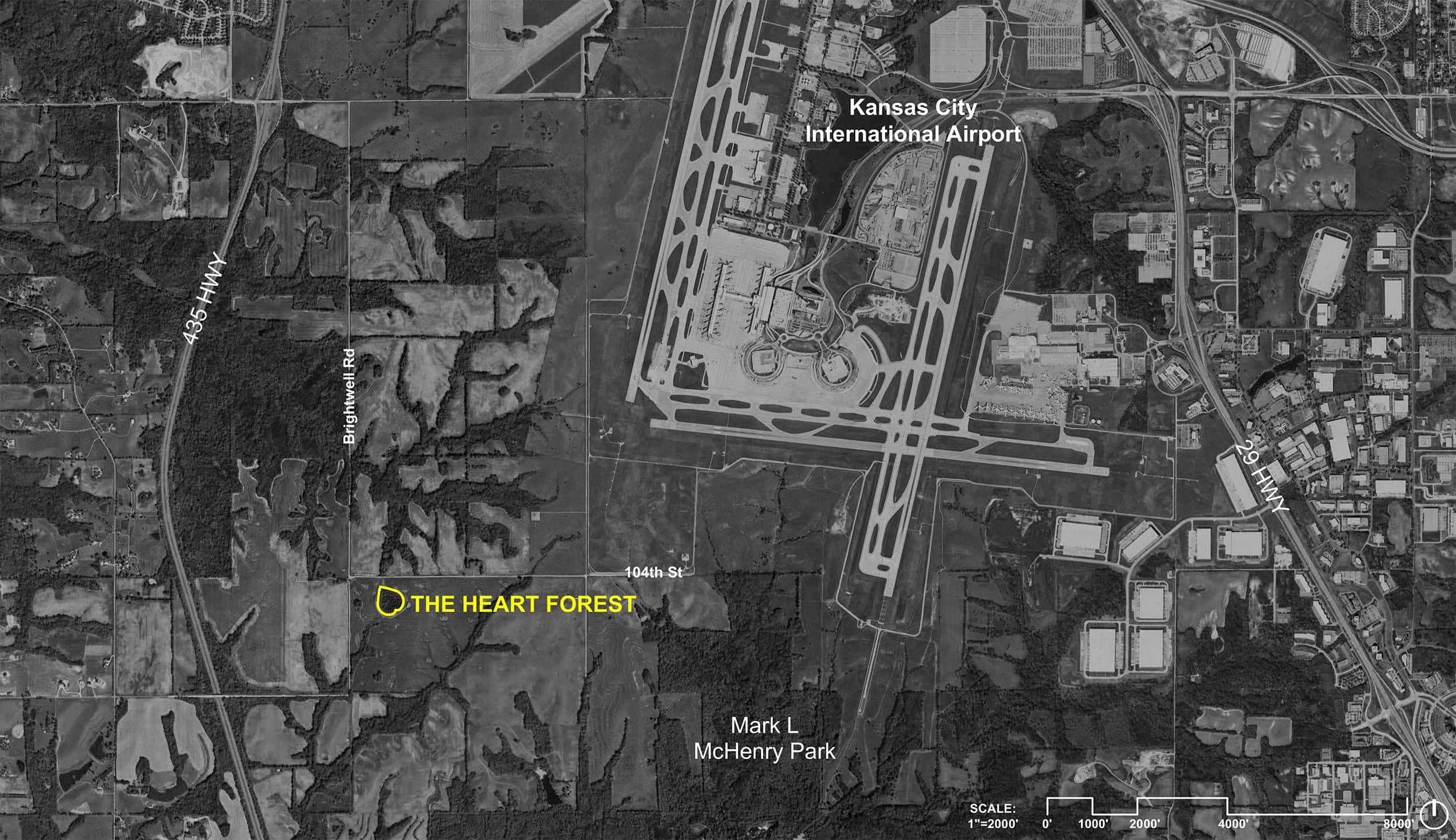
A location map shows the Heart Forest’s relation and proximity to Kansas City International airport; courtesy image
Berkebile then found a spot near the airport’s runways and asked the Aviation Department if they could plant the trees there. They were then referred to the farmer that was leasing the land.
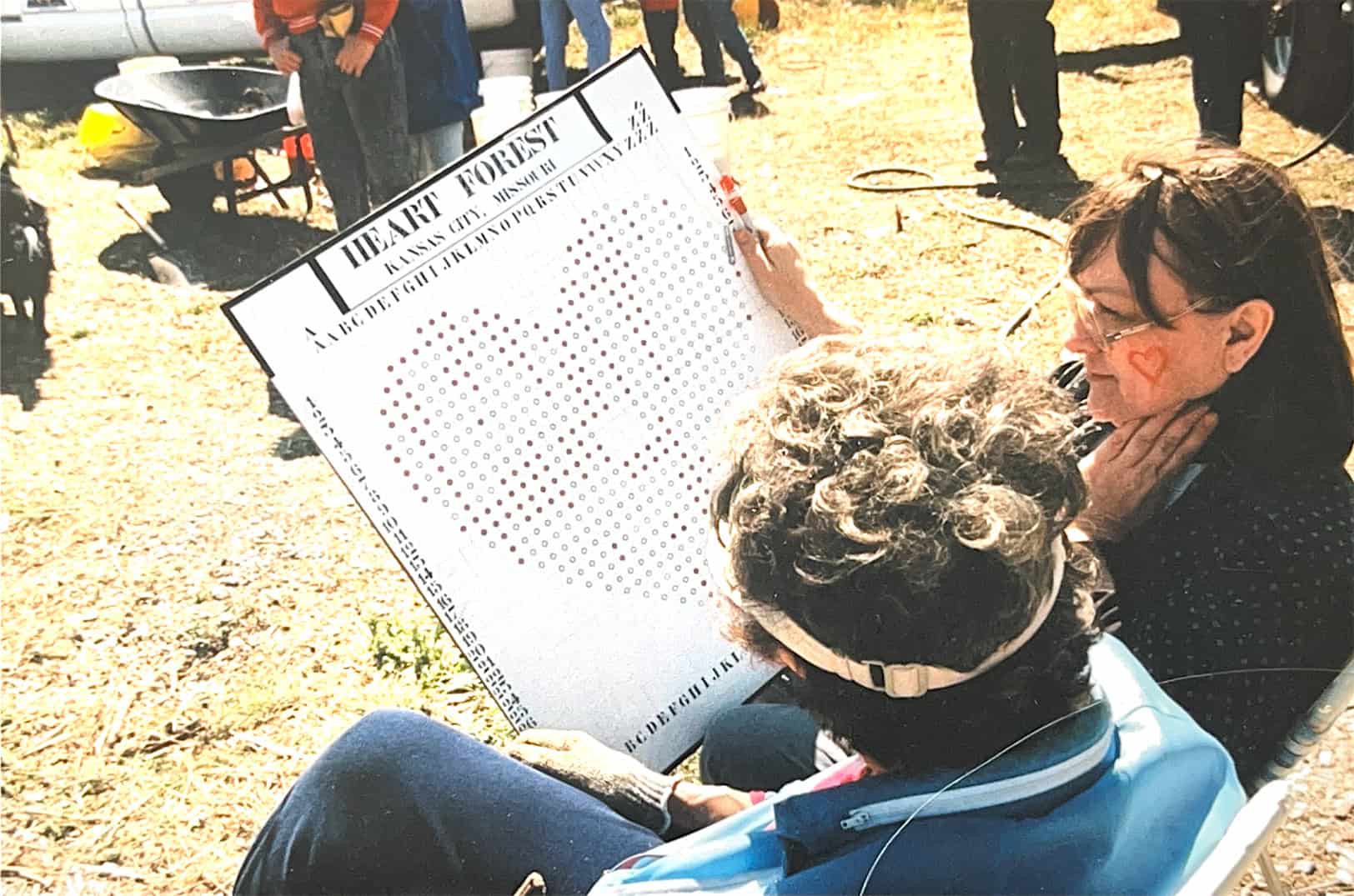
Volunteers hold a planting map for the Heart Forest during a tree planting event in 1990; courtesy photo
“He was excited and we had a sublease,” Berkebile continued. “Then we went to the city, mayor, and council and they passed a resolution. So in 1990 — that all took three years — we did the first planting.”
“I was blessed to have a lot of good political allies at the time,” he added, “and a lot of good friends that range from Girl Scouts and Boy Scouts to family, friends to architects, etc., that helped plant and maintain it.”
Weinberg emphasized that Berkebile, his colleagues, and the civic leaders at the time deserve kudos for having the foresight and stewardship mindset to create a project like the Heart Forest, especially considering the amount of effort required to coordinate it in the late 1980s.
“I found all these photos and slides and presentations and board minutes and leases and legal documents,” he said. “They were faxing things back to each other. They didn’t have PowerPoint. They had to slide trays. The internet didn’t exist. Social media didn’t exist.”
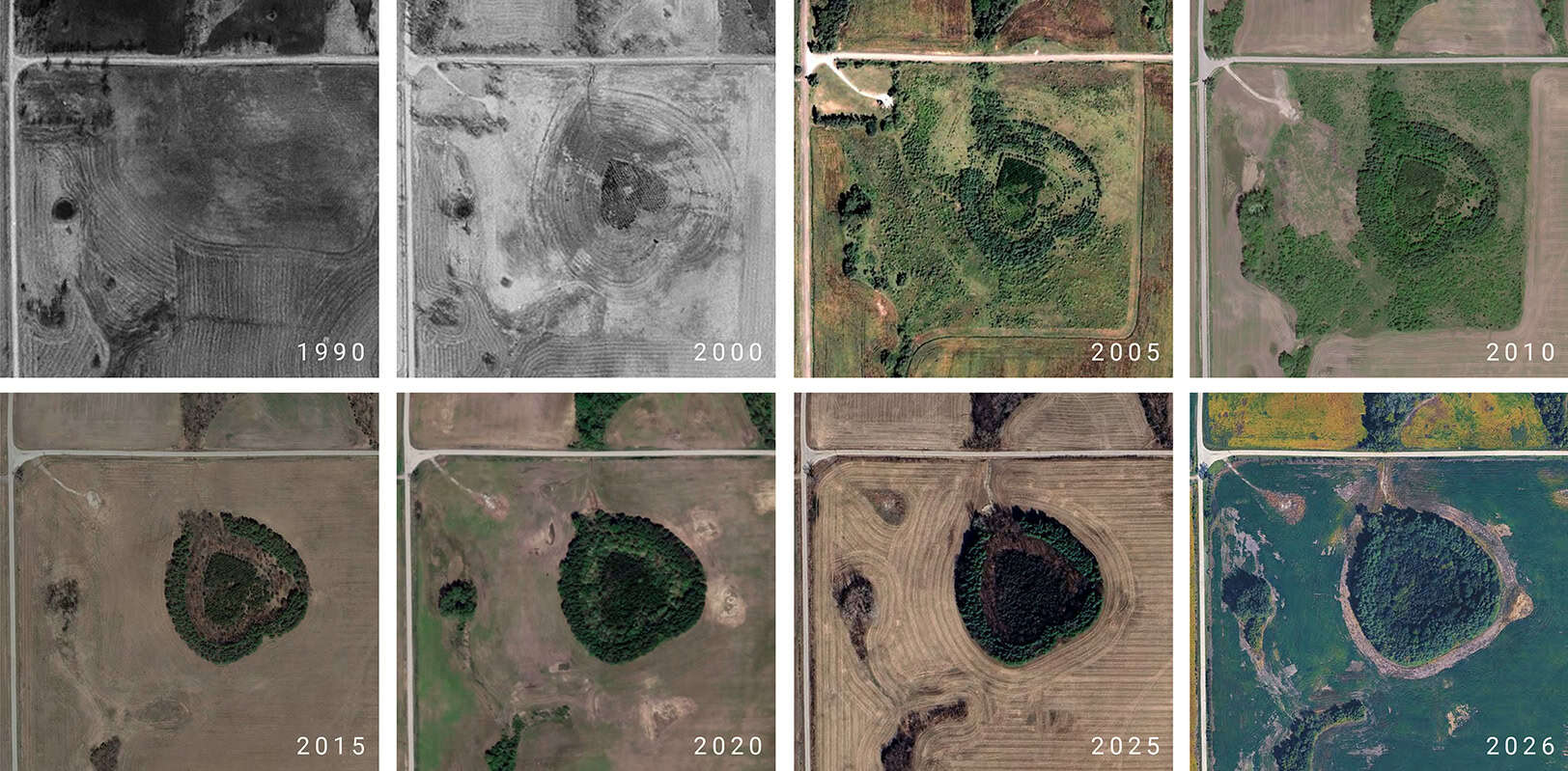
Aerial photos over time show the growth of Heart Forest through the years; photos courtesy of Maria Landoni, Surlandscape
Returning to the heart
Since the early 1990s, the forest has been operating on its own, Berkebile said.
“It finally has the stature and the physical capacity to be the reminder that Leon was encouraging us to create,” he noted.
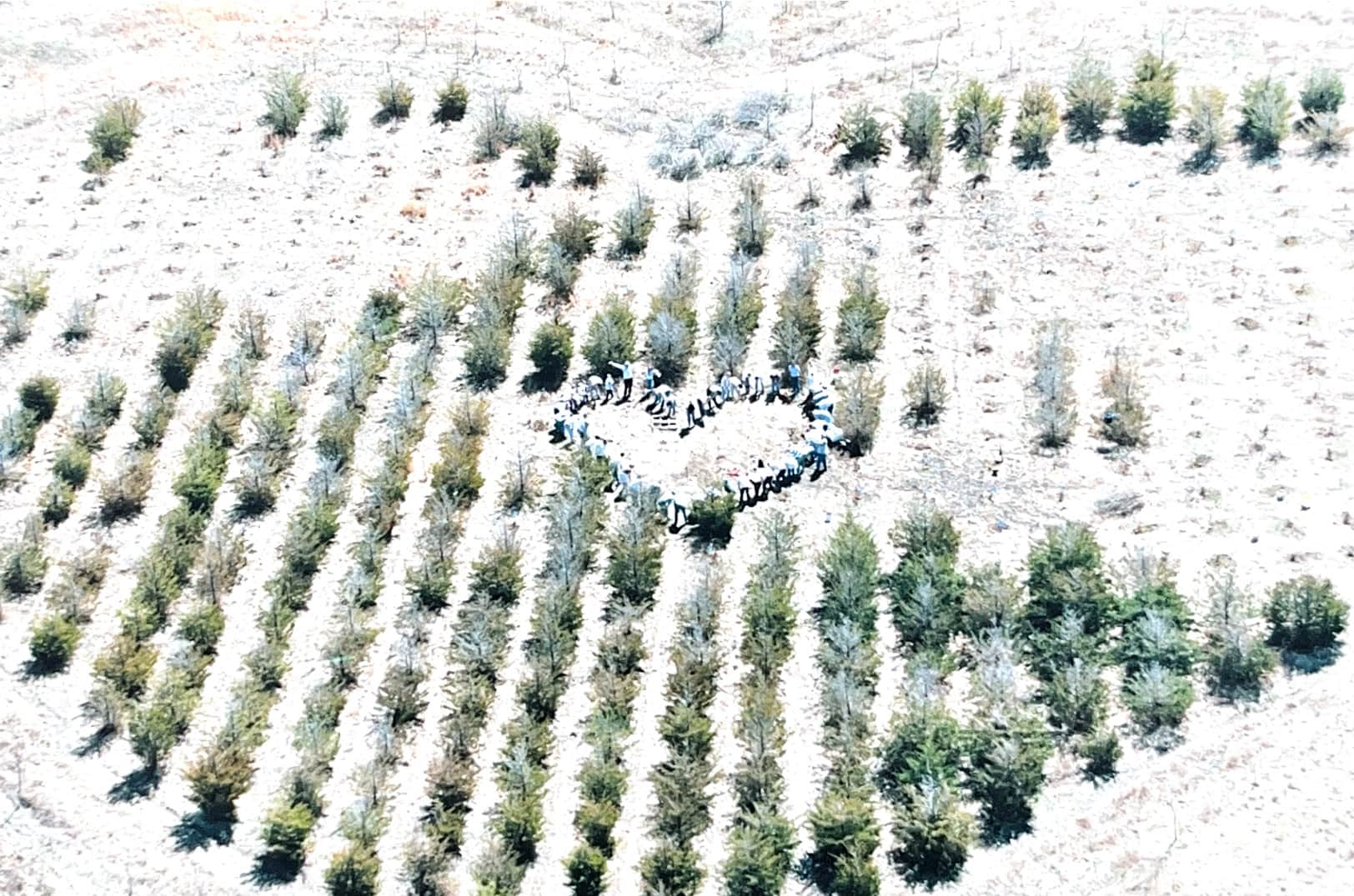
But as the trees have grown, the heart shape that defines the forest has become harder to see from above, they explained. So the Foundation For Regeneration has launched Phase One of a fundraising campaign to raise an additional $100,000 and complete initial restoration by mid-June, just as Kansas City prepares to host a projected 650,000 visitors for the World Cup.
According to officials, Phase One funding will build the Welcoming Gateway and support restoration work underway with key partner JE Dunn Construction to reshape the forest and establish new pathways through the landscape, improving both its visibility from the air and the experience on the ground.
Phase Two will open the experience to all through more accessible trails, gathering spaces, and meaningful programs. And Phase Three will expand and enrich opportunities to connect, learn, and explore, strengthening the landscape for generations to come.
A 20-car parking lot and a welcome plaza with picnic tables and wayfinding signs are planned, Weinberg said.
“Then there will be a trail into the forest with some benches and a ceremony space in the heart of the heart,” he continued. “There’ll be like a mile-long trail all the way around it and through it.”
It’s an opportunity to revitalize the forest, Berkebile noted.
“As natural systems go, there have been invasives that have shown up, thanks to birds and other critters,” he continued. So some of those things — like poison ivy — are being removed. We’re making it safe again, making it more attractive, making it more accessible within the forest, not only getting to it. So it’ll just be a very rich experience for the people who find their way there.”
Bringing humans back to the forest
White rocks will be added around the heart to help it visually pop for viewers in the air, he said, as well as helping prevent water erosion from nearby farming.
“These rocks are part of a new water management program,” he explained. “And beyond the rock, we will ultimately be planning a native landscape. So the rock is a way to capture that water without allowing its force to enter the forest.”
Good Oak — one of Startland News’ Startups to Watch in 2025 — is helping with the conservation efforts, removing invasives, trimming, and helping with landscape planning.
“They’ve been a good partner,” Berkebile added.
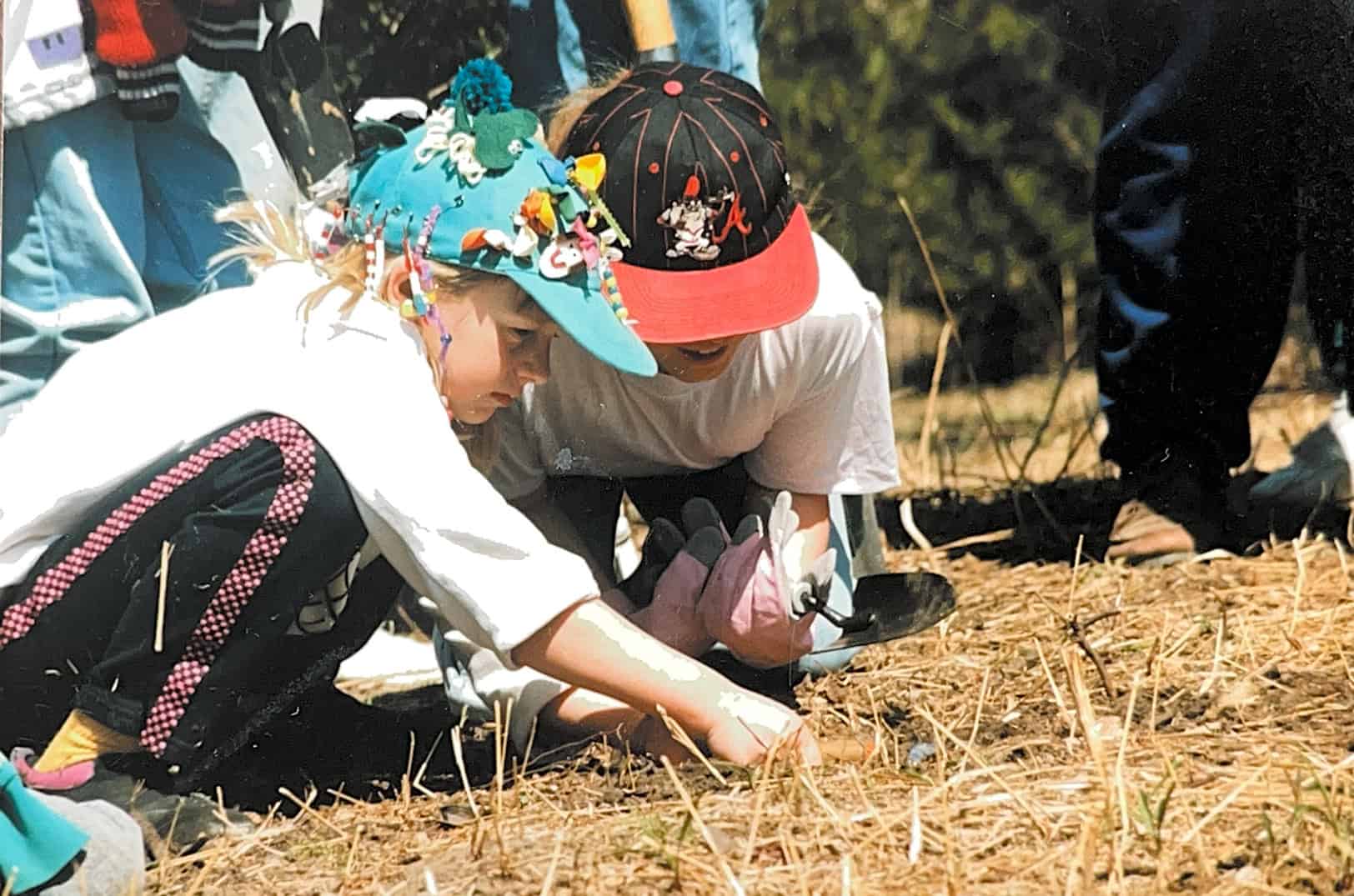
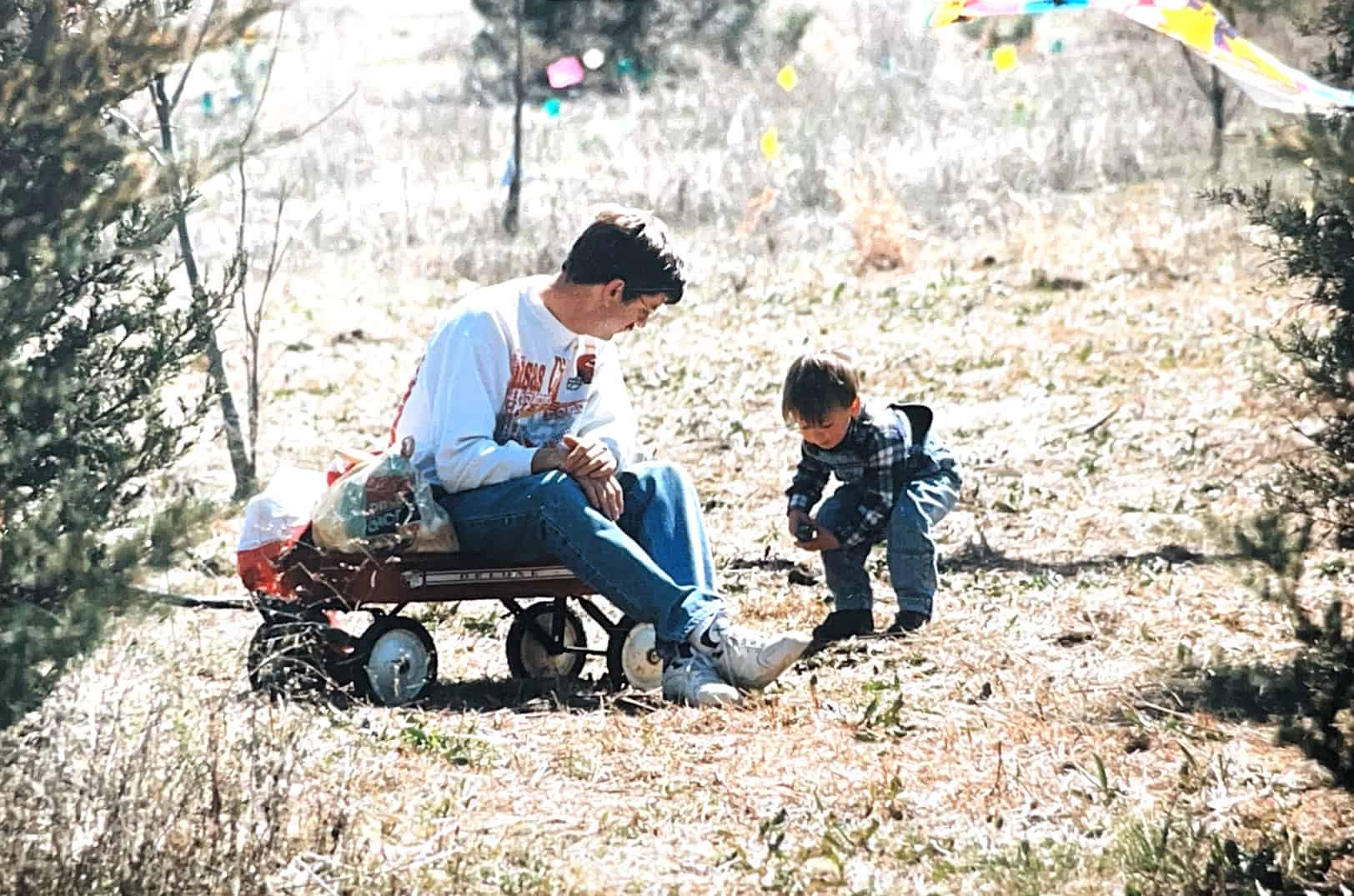
Many of the community members who helped plant the forest — some who were just children at the time — have also stepped up wanting to help, Berkebile noted, whether it be by donating or offering their service or equipment.
“It’s wonderful to see that response and to have the opportunity now to introduce it to the community,” he continued. “Because for the most part, other than those hundreds of people that helped me plant it, the community doesn’t know it exists.”
“It’s been built by the community, for the community,” Weinberg added. “What makes it special is the people that show up, the ragtag group of people that are coming together to make it real. That’s how it started.”
Fund More Stories
This story was made possible by readers like you. Join them — make a one-time contribution or become a monthly member to sustain our work.

Latest Stories