Shifting how work gets done: AI is an accelerant, but keep stop signs ready, C3KC panelists say
April 9, 2026 | Taylor Wilmore
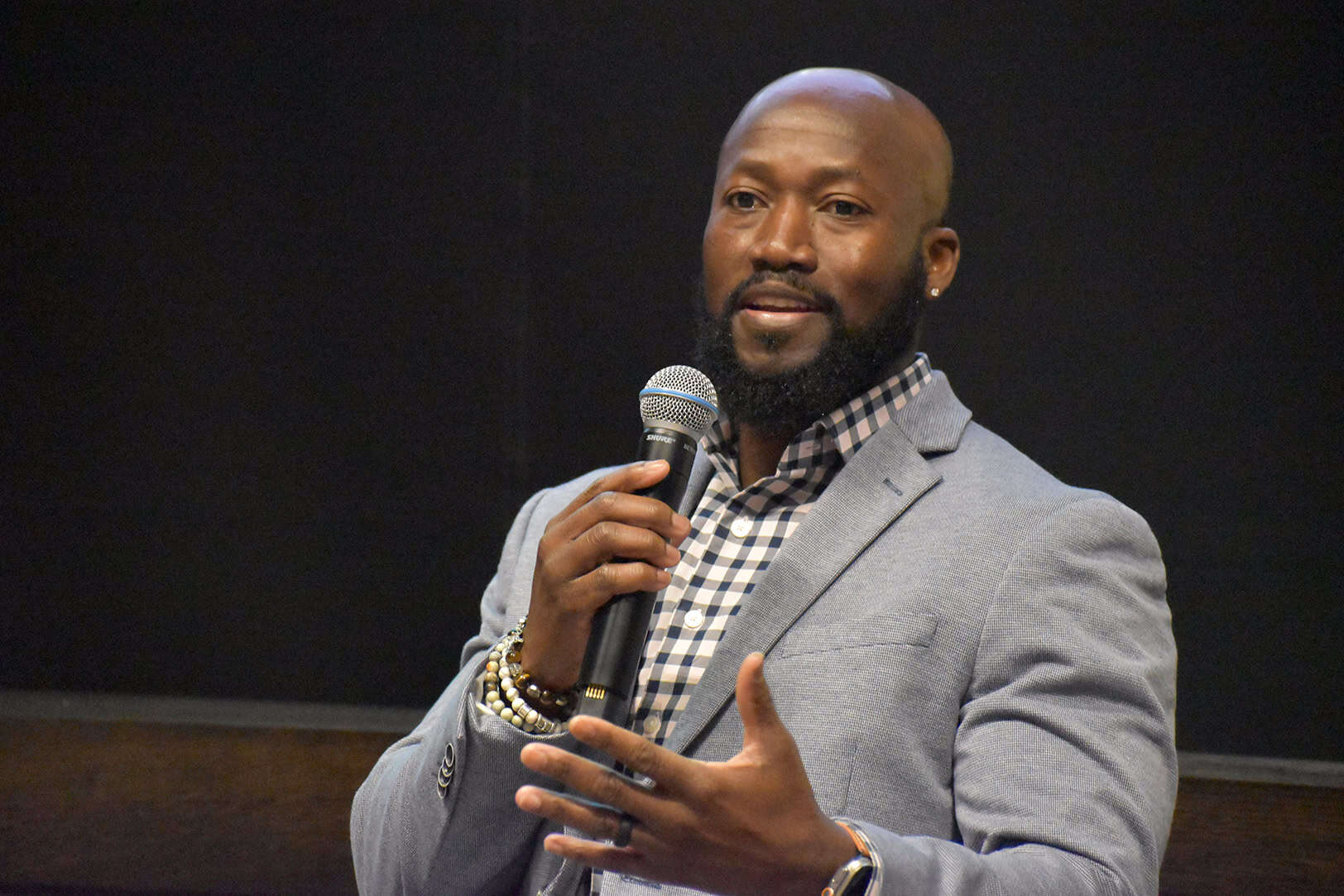
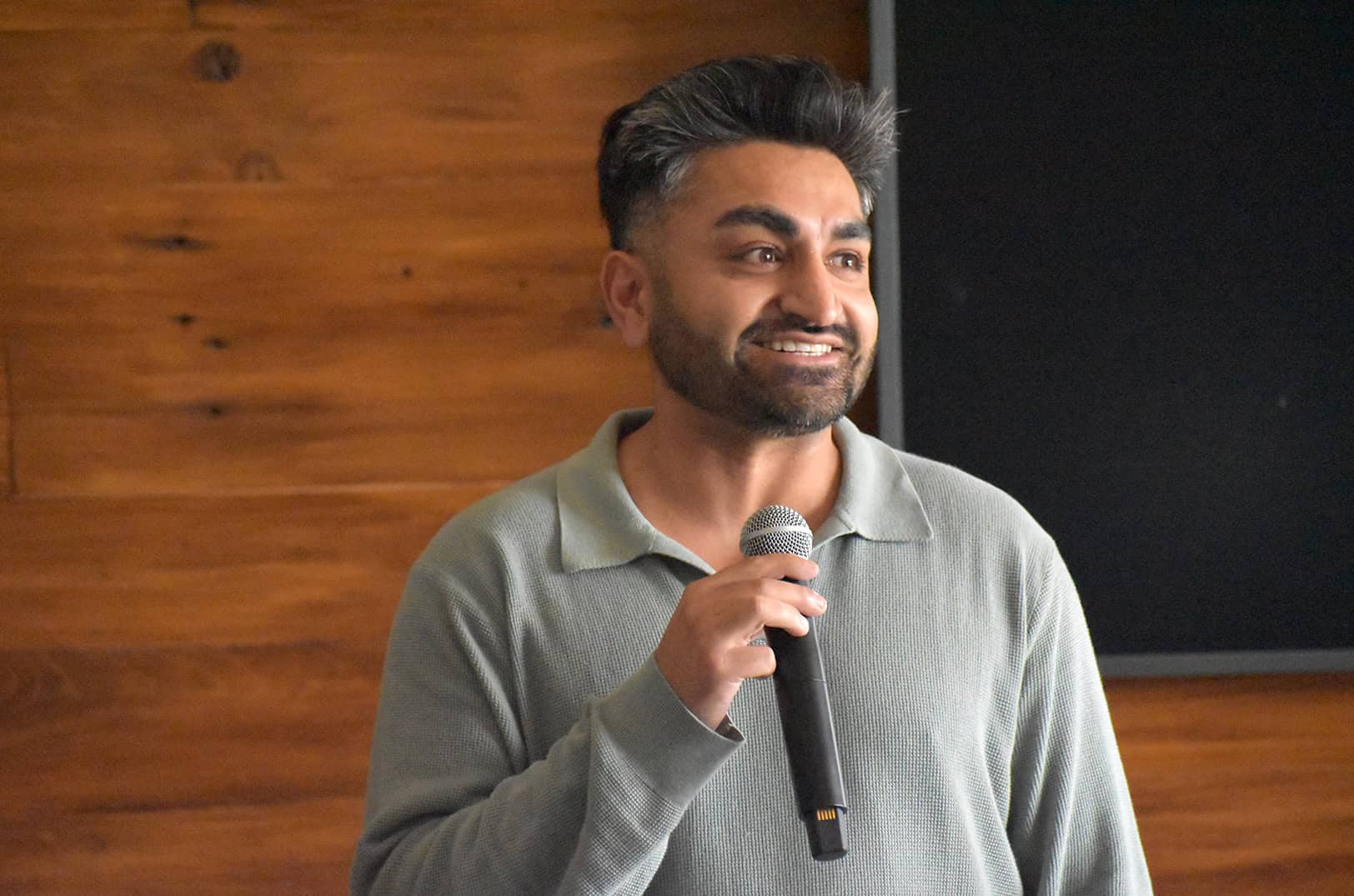
John Duker, services client director at ServiceNow, speaks during a c3KC panel on AI at Work; photo by Taylor Wilmore, Startland News
Kansas City professionals aren’t just talking about artificial intelligence anymore, they’re actively figuring out how it fits into their daily work, from healthcare systems to marketing teams and enterprise software.
“There’s still a lot of noise around what AI actually means,” Anthony Tackett, global creative director at Hill’s Pet Nutrition, said Tuesday during the ninth annual C3KC conference at Union Station. “Most people are really talking about generative AI right now, but that gets mixed up with automation and other tools. There’s an opportunity to clear that up.”
C3KC continued its focus on practical innovation, and this week’s “AI at Work” panel brought together local leaders navigating real-world adoption. Their conversation reflected both the momentum behind AI tools and the uncertainty that still shapes how organizations use them.
The panel featured Tackett alongside John Duker, services client director at ServiceNow; and Kristen Guillaume, chief information and digital officer at NKC Health. Diana Alt, founder of Diana Alt Coaching and Consulting served as moderator.
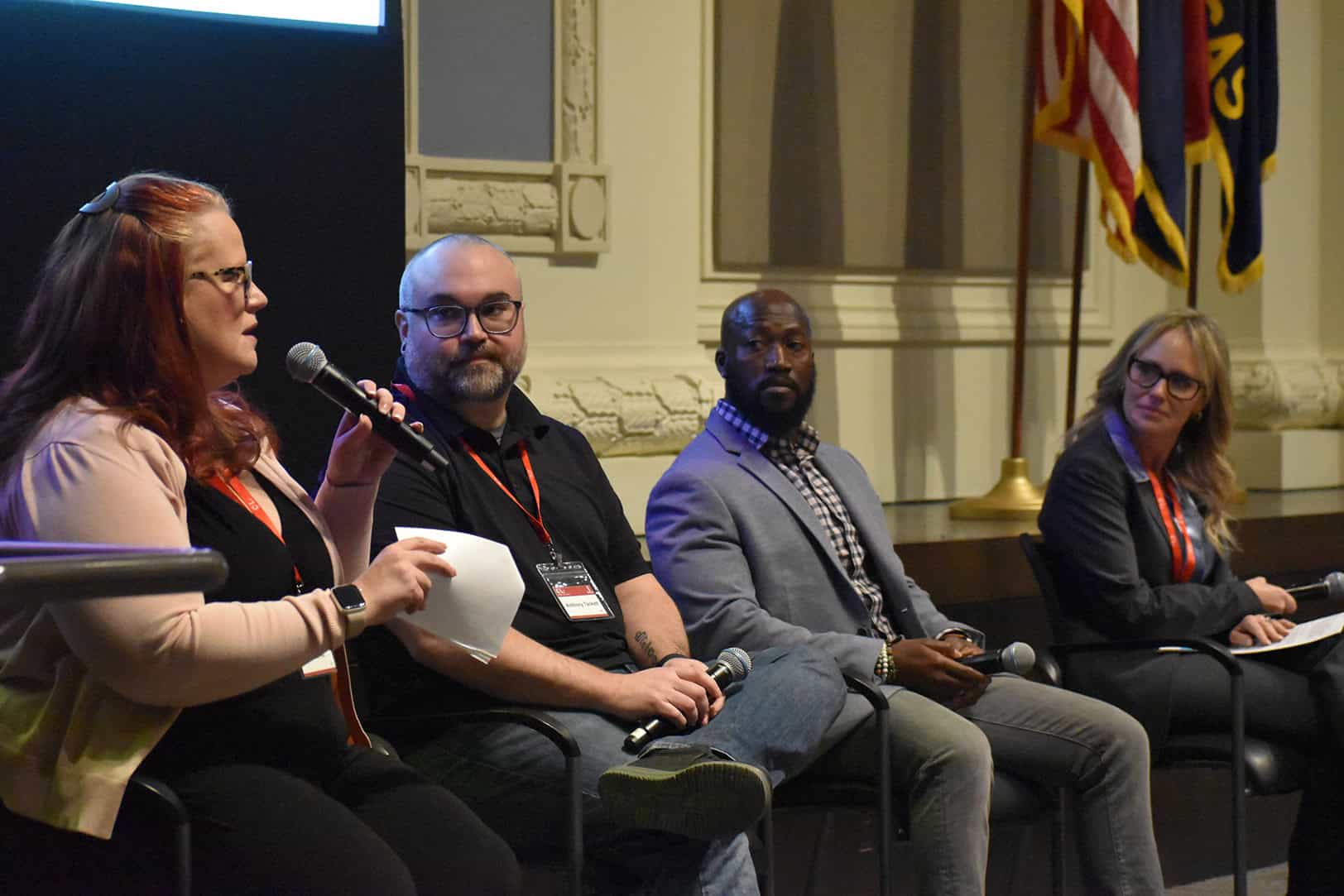
Diana Alt, founder of Diana Alt Coaching and Consulting, left, leads a c3KC panel on AI at Work, alongside Anthony Tackett, global creative director at Hill’s Pet Nutrition; John Duker, services client director at ServiceNow; and Kristen Guillaume, chief information and digital officer at NKC Health; photo by Taylor Wilmore, Startland News
What AI actually means at work
Despite the growing interest, many employees still use “AI” as a catch-all term for a wide range of tools, from chatbots to automated workflows.
That lack of clarity shows up inside organizations, said Guillaume.
“People don’t come to me asking for a specific type of automation,” she said. “They come in saying, ‘I found this new AI tool and we need it tomorrow because it’s going to fix everything.’”
For teams actually implementing the technology, the distinction matters, panelists said. Generative AI tools like chatbots help create content or summarize information, while AI agents are increasingly being used to handle repetitive tasks behind the scenes.
“When we talk about agents, we’re really talking about tools that take over the work you don’t want to keep doing over and over,” added Duker. “That’s where you start to get real efficiency.”
AI in dashboards to daily workflows
Across industries, panelists described using AI less as a novelty and more as a practical tool embedded into everyday routines.
Duker said AI has dramatically reduced the time it takes to research companies and build insights.
“I can ask for the top things I need to know about a company and get it in minutes,” he said. “That used to take hours or even a full day.”
For Tackett, the biggest gains come from connecting tools already built into workplace systems.
“One of the most useful things is just automating your daily briefings. You can have AI summarize emails, flag action items and organize everything before your day even starts,” he said.
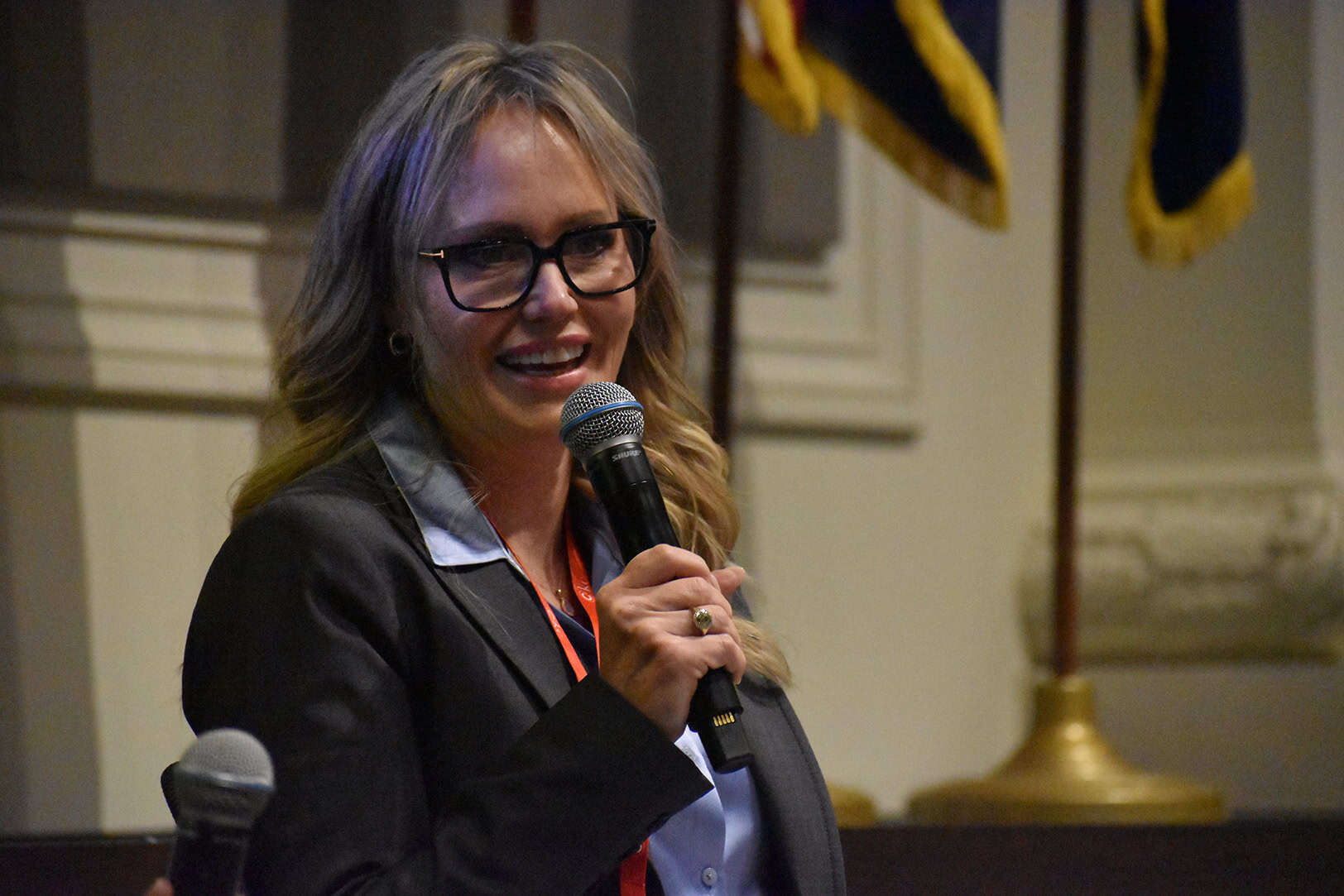
Kristen Guillaume, chief information and digital officer at NKC Health, speaks during a c3KC panel on AI at Work; photo by Taylor Wilmore, Startland News
In healthcare, Guillaume said, the stakes and the scrutiny are much higher, but the impact can be just as significant.
After months of testing, her team recently piloted an AI system that reads and inputs insurance card data into patient records.
“We spent weeks validating it before we ever put it in front of patients,” said Guillaume. “But when we did, we saw thousands of records processed with full accuracy on Day 1.”
Guardrails, trust, and real risks
While efficiency gains are clear, panelists repeatedly emphasized that AI still requires human oversight, especially when sensitive data is involved.
“Don’t put anything into these tools that you wouldn’t say out loud to someone. You have to assume that data could live somewhere beyond your control,” said Duker.
In healthcare, that caution translates into strict governance and slower rollout timelines.
“We have a lot of stop signs in place, and for good reason,” said Guillaume. “We deal with patient data every single day, so every tool has to go through deep validation before it ever reaches production.”
Even in lower-risk environments, blind trust in AI outputs can create problems.
“It’s still garbage in, garbage out,” said Duker. “You have to review what you’re getting back and make sure it actually makes sense.”
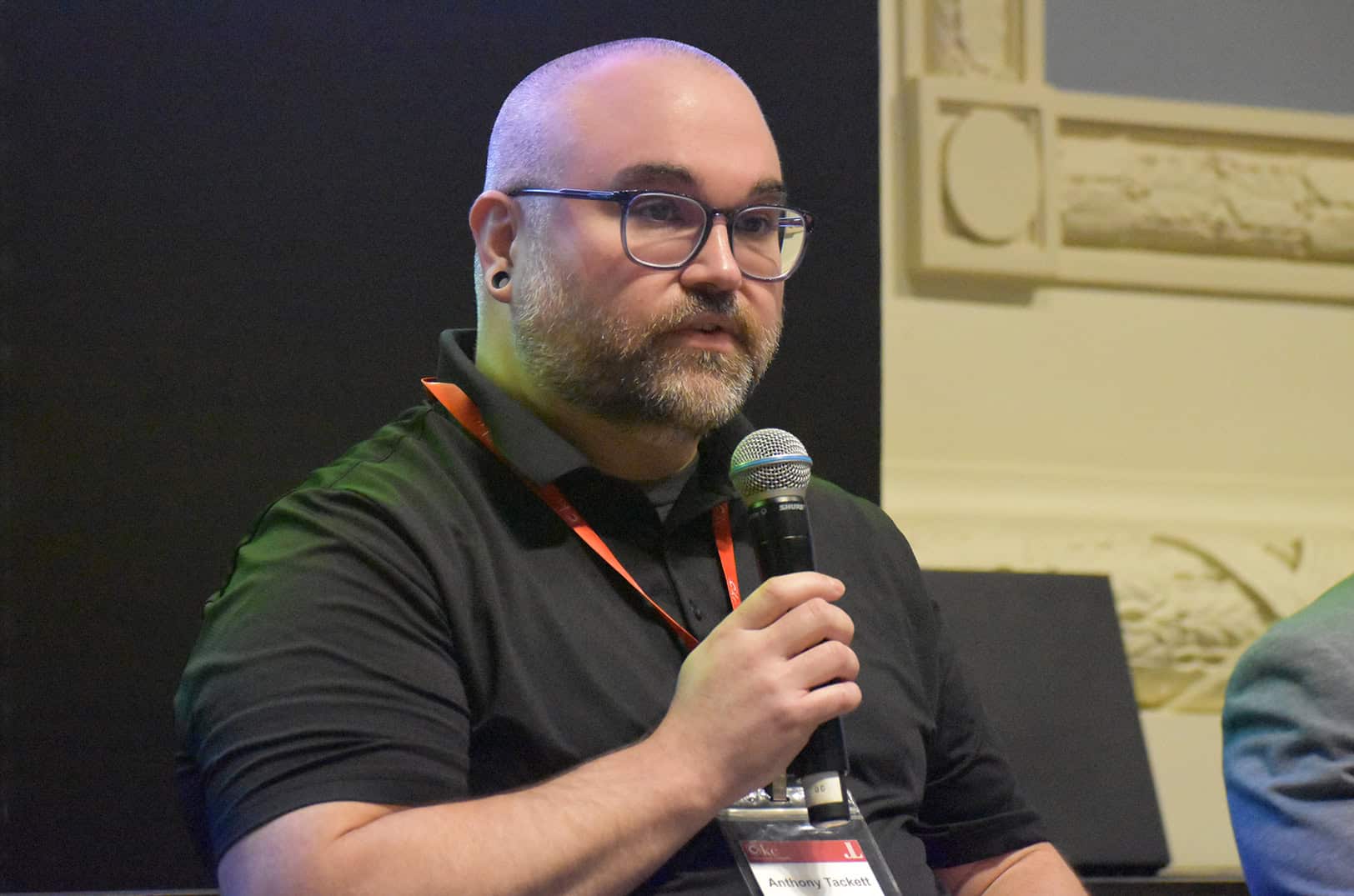
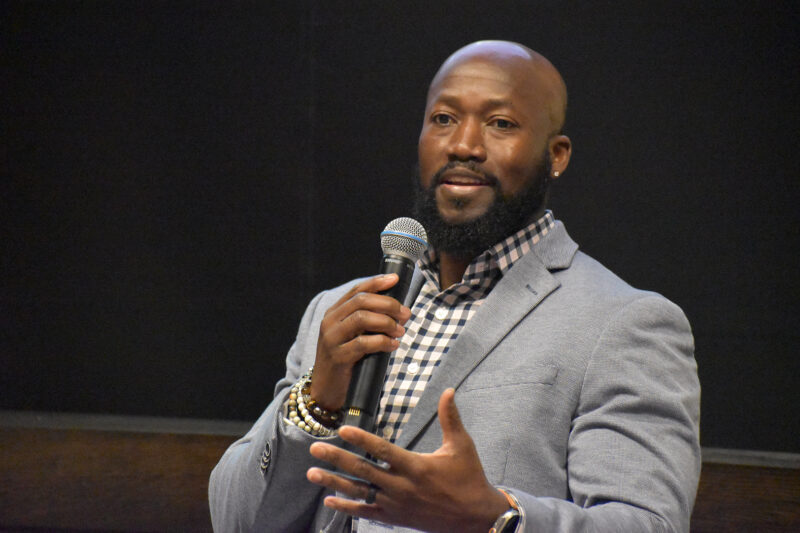
Anthony Tackett, global creative director at Hill’s Pet Nutrition, offers insights on staying ahead of AI’s benefits to workflows; photo by Taylor Wilmore, Startland News
AI and the future of jobs
Concerns about job loss continue to surface, but panelists said they are seeing more of a shift in how work gets done rather than widespread replacement.
“I don’t see AI taking jobs as much as changing how people add value,” said Tackett. “It’s less about what you can produce and more about the judgment and context you bring.”
In healthcare, Guillaume said AI is helping address workforce shortages rather than eliminate roles.
“We don’t have enough people as it is,” she said. “AI helps our teams operate at a higher level, but we still need the people.”
Instead of replacing workers, AI is often removing administrative burden and freeing up time for more meaningful tasks, Guillaume added.
“Our physicians are spending less time typing and more time actually engaging with patients,” she said. “That’s been one of the biggest wins.”
Hiring in the age of AI
AI is also showing up in hiring, both on the employer side and with candidates themselves, and panelists said the shift is forcing companies to rethink how they evaluate talent.
Recruiters are using AI to sort resumes and identify patterns more quickly, but panelists emphasized that humans are still making the final decisions and reviewing candidates directly.
At the same time, candidates are increasingly experimenting with AI during interviews, sometimes in ways that backfire.
“We’ve had candidates clearly reading AI-generated answers during interviews. In those cases, we stop the interview. It raises real concerns about authenticity,” said Guillaume.
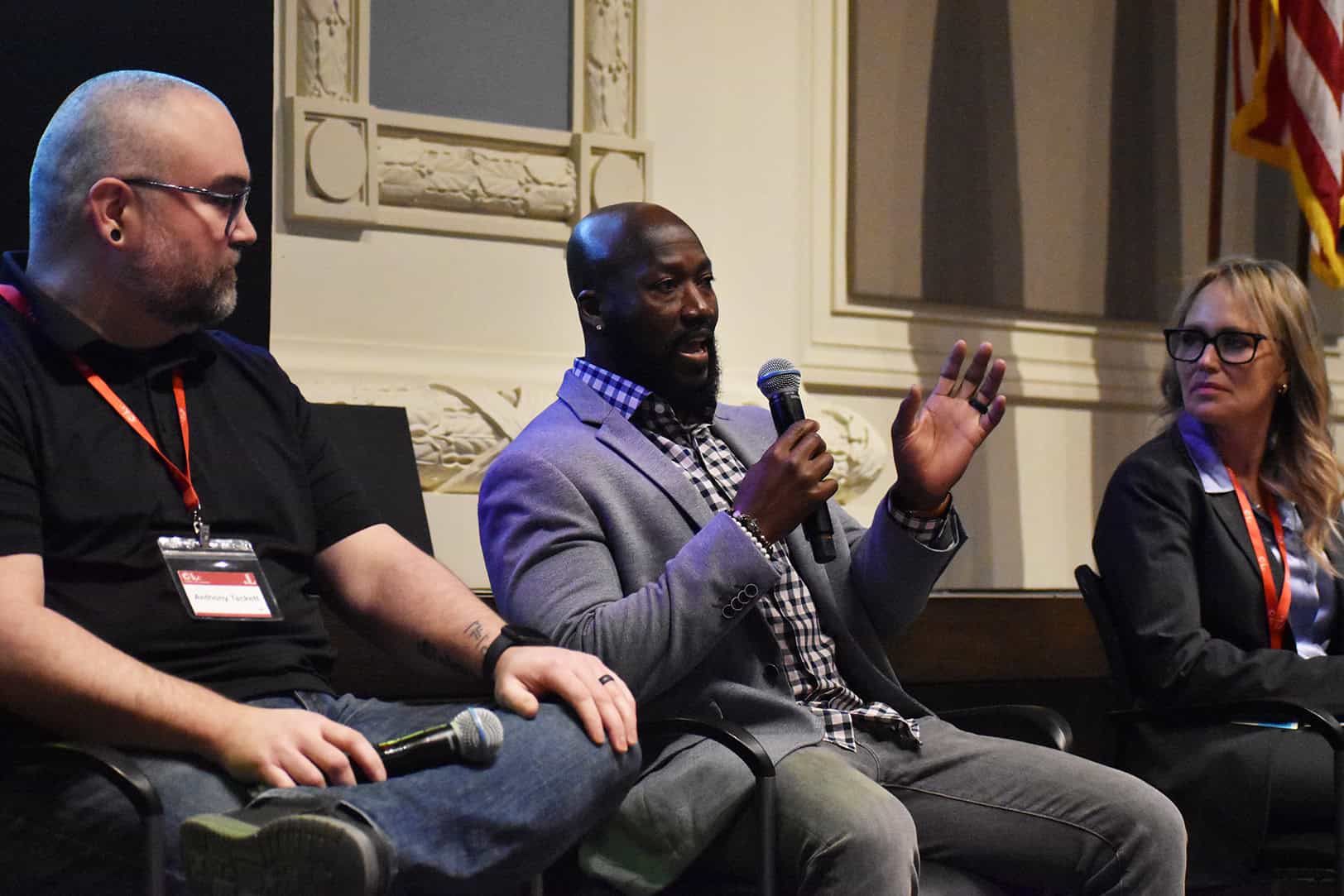
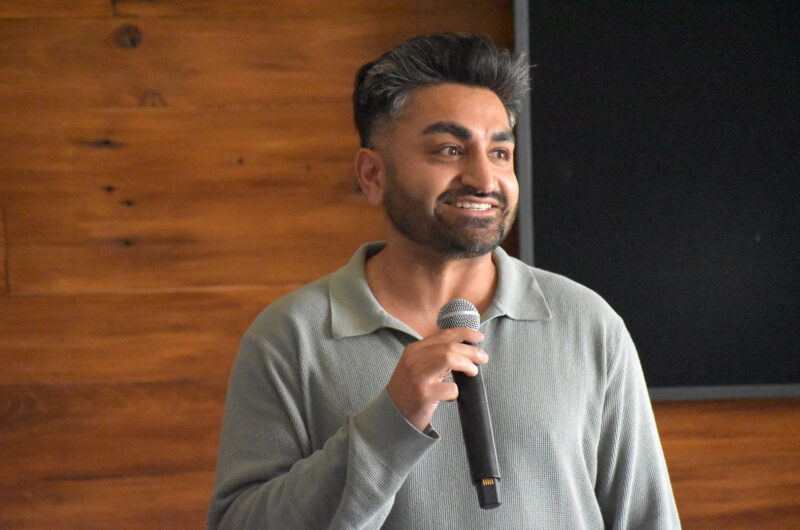
John Duker, services client director at ServiceNow, speaks during a c3KC panel on AI at Work; photo by Taylor Wilmore, Startland News
Panelists said that shift is already influencing how interviews are structured, with more emphasis on live problem-solving, deeper follow-up questions and real-time collaboration exercises that are harder to outsource to a tool.
“The goal isn’t to remove the human side of hiring,” said Duker. “It’s to make better decisions with better information.”
Getting started without falling behind
For those still unsure where to begin, panelists stressed that the easiest entry point is using AI for everyday tasks.
“Start with something simple in your personal life,” said Tackett. “If you would normally Google it, try using an AI tool instead and see what happens.”
They also encouraged users to treat AI as a collaborative tool, not just a shortcut.
“Ask AI how to use AI better,” said Tackett. “It can actually help you improve your prompts and get better results.”
Ultimately, the biggest risk may not be using AI incorrectly, but not using it at all, said panelists.
“If you’re not experimenting with it yet, you’re probably already behind,” said Tackett.
Fund More Stories
This story was made possible by readers like you. Join them — make a one-time contribution or become a monthly member to sustain our work.

Latest Stories